If you ask me, paleo carrot cake cookies are a brilliant solution for health-conscious dessert lovers.
These chewy treats bring together the cozy flavors of traditional carrot cake without any grains or refined sugar. Shredded carrots and warm spices mingle with almond flour and natural sweeteners to create a satisfying cookie that feels like an old favorite.
They’re studded with walnuts and coconut flakes, giving you that perfect bit of crunch in every bite. A light coating of maple-sweetened cream cheese frosting makes them feel extra special.
It’s a feel-good treat that satisfies your sweet tooth while keeping things wholesome – perfect for afternoon snacks or post-dinner dessert.
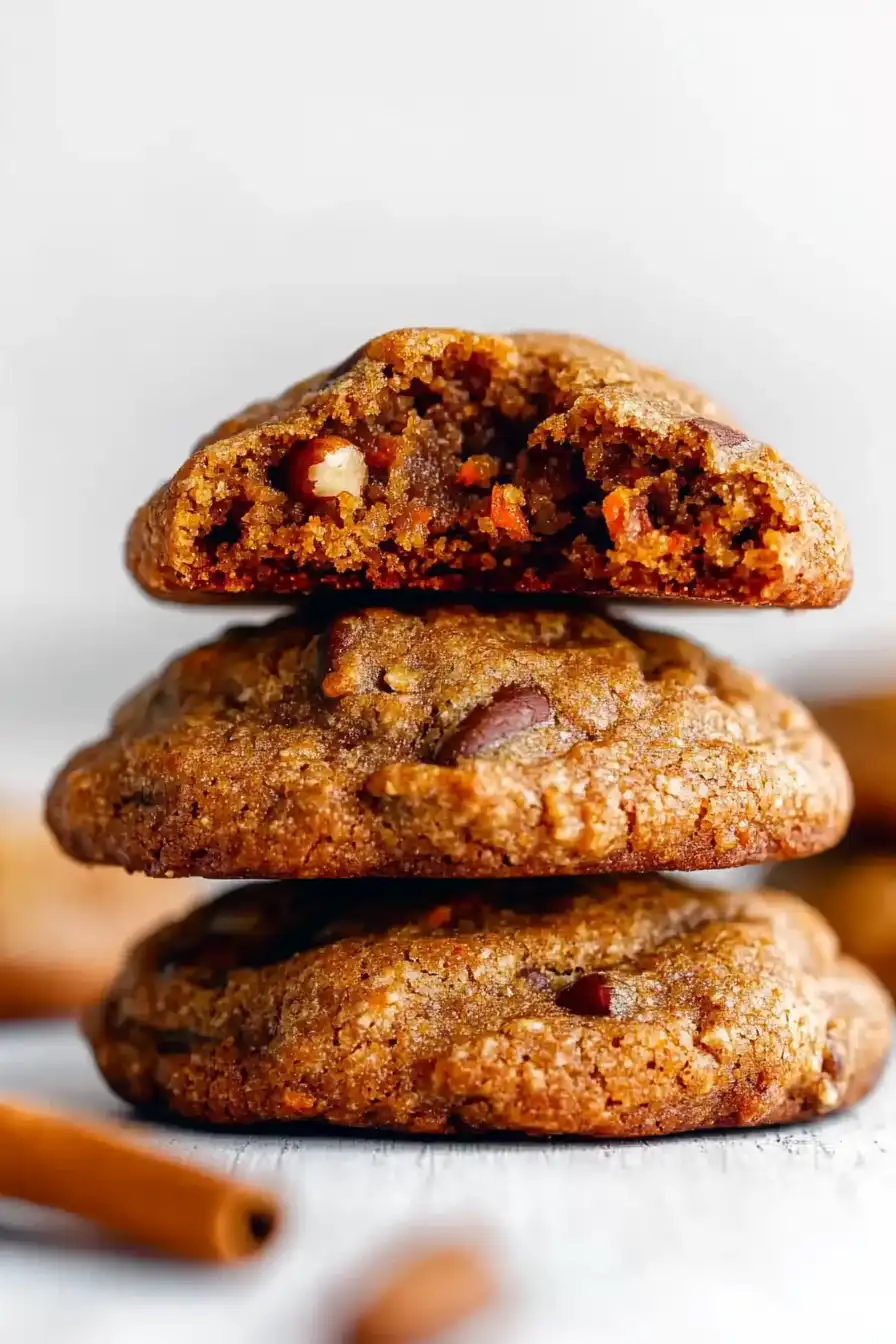
Why You’ll Love These Carrot Cake Cookies
- Diet-friendly treats – These cookies are paleo-compliant, gluten-free, and dairy-free, making them perfect for anyone with dietary restrictions who still wants to enjoy a sweet treat.
- Quick baking time – You can have these cookies ready in just about 30 minutes, perfect for when you’re craving something sweet but don’t want to spend hours in the kitchen.
- Classic carrot cake flavor – All the warm spices, sweet carrots, and crunchy pecans you love in carrot cake, but in a convenient cookie form that’s perfect for snacking or sharing.
- Naturally sweetened – Using maple sugar and natural ingredients means you can enjoy these cookies without any refined sugars or artificial additives.
What Kind of Carrots Should I Use?
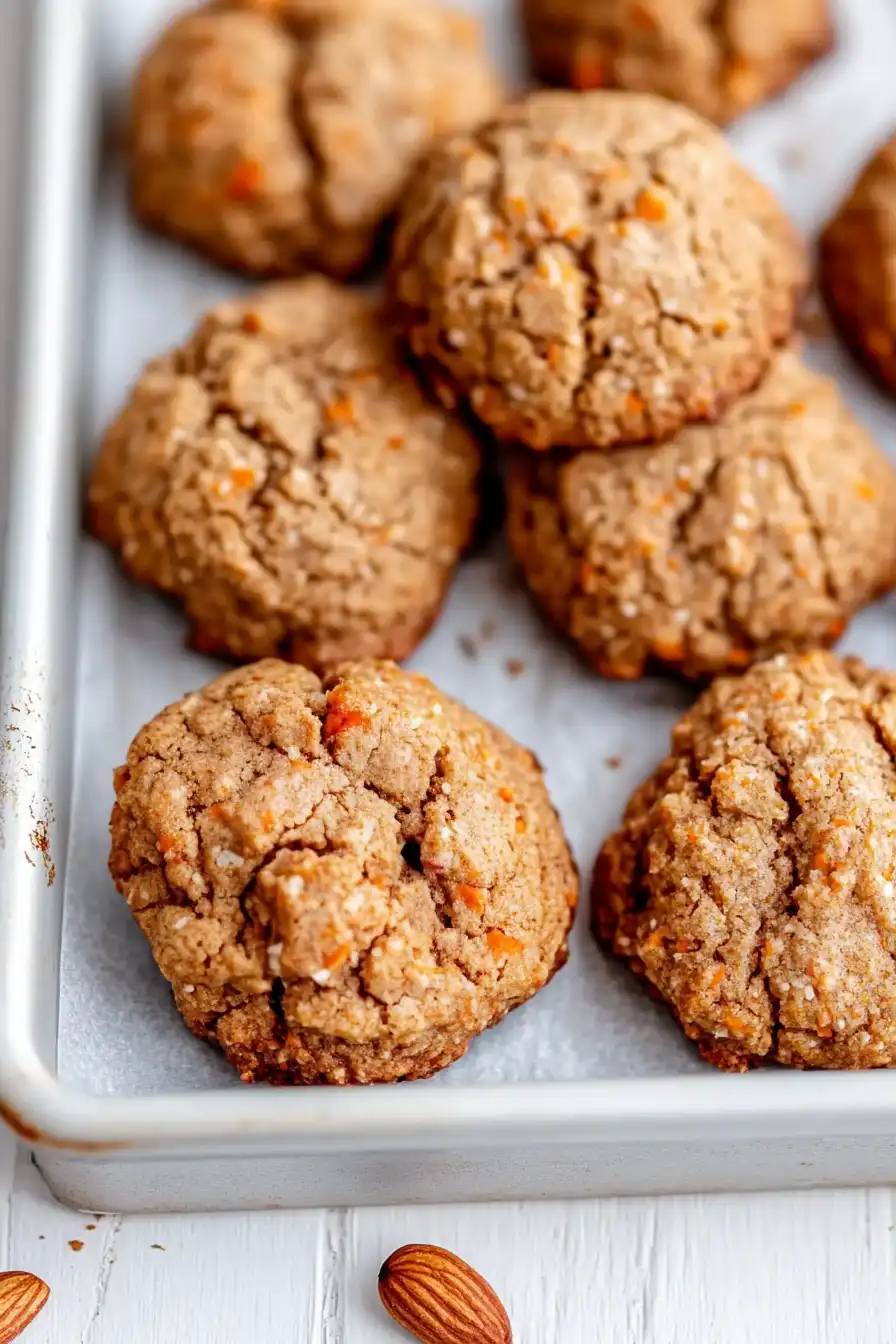
Regular orange carrots from your grocery store work perfectly for these cookies – no need to hunt down fancy varieties. Fresh carrots are key here since pre-shredded ones tend to be too dry and won’t give you the right moisture content. When picking your carrots, look for ones that are firm and bright, avoiding any that feel rubbery or have soft spots. For the best results, use the medium holes on your box grater rather than the fine ones, and don’t forget to pat the shredded carrots dry with paper towels to remove extra moisture that could make your cookies too wet. If you’re in a pinch, organic baby carrots can work too – just know you’ll need to grate a few more to get your full cup since they’re smaller.
Options for Substitutions
Since this is a paleo recipe, let’s look at some substitutions that keep things grain-free and naturally sweetened:
- Almond flour: You can swap almond flour with cashew flour in equal amounts. However, coconut flour won’t work here as it absorbs too much moisture and would completely change the texture.
- Tapioca starch: Arrowroot powder works perfectly as a 1:1 replacement for tapioca starch. Cassava flour can also work, though the texture might be slightly different.
- Almond/cashew butter: These nut butters are interchangeable in the recipe. For a nut-free version, sunflower seed butter works too, though it might give the cookies a slightly green tint (don’t worry – it’s safe to eat!).
- Coconut oil: You can use ghee or palm shortening instead. Just make sure whatever you use is soft but not melted.
- Maple/coconut sugar: These sugars can be used interchangeably. Date sugar is another good option that keeps things paleo-friendly.
- Raisins and pecans: Feel free to swap raisins with dried cranberries or chopped dates. Pecans can be replaced with walnuts or macadamia nuts – or skip them if you prefer nut-free cookies.
Watch Out for These Mistakes While Baking
The biggest challenge when making paleo carrot cake cookies is dealing with excess moisture from the carrots – failing to pat them dry with paper towels can lead to spread-out, cake-like cookies instead of the perfect chewy texture we’re after. Another common mistake is using melted or too-soft coconut oil, which causes the cookies to spread too thin during baking – make sure it’s softened but still holds its shape at room temperature. Using hot ingredients can also be problematic, so let your egg come to room temperature and avoid overheating your almond butter, as this will help the dough maintain the right consistency for scooping. For the best texture, don’t skip the tapioca starch – it’s essential for achieving that classic cookie chewiness that can be tricky to get in paleo baking.
What to Serve With Carrot Cake Cookies?
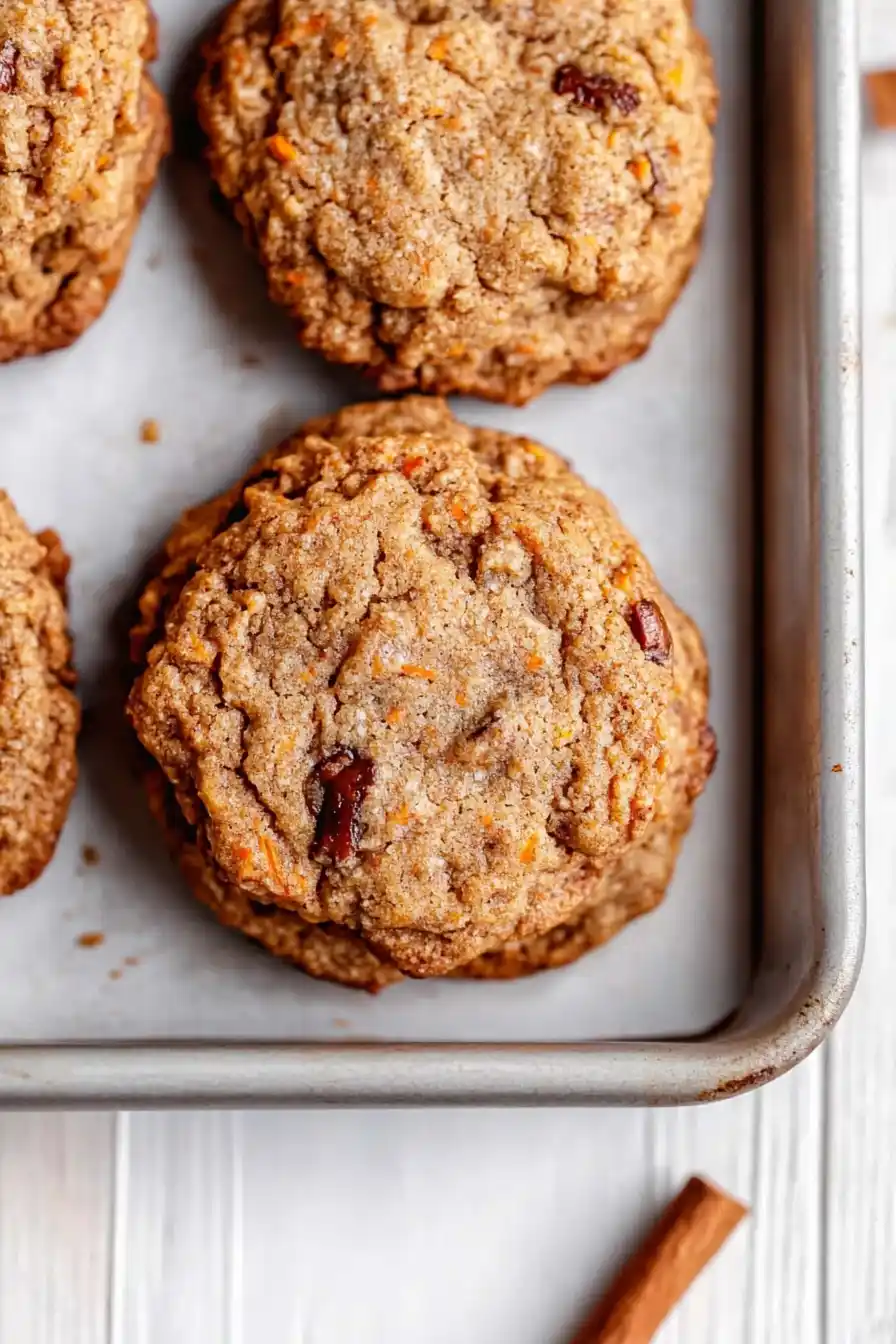
These paleo carrot cake cookies are perfect for pairing with your favorite hot drinks and some simple sides. A warm cup of cinnamon tea or coffee brings out the spices in these treats, while a glass of cold almond milk makes for a classic cookies-and-milk combo. Since these cookies are on the sweeter side, they’re great with a cheese board that includes some nuts and dried fruits – the savory elements create a nice balance. For a cozy afternoon treat, I like serving them alongside some fresh fruit like sliced apples or pears to keep things light and naturally sweet.
Storage Instructions
Counter Storage: These paleo carrot cake cookies stay fresh at room temperature for about 2-3 days when kept in an airtight container. I like to place a piece of parchment paper between layers to prevent them from sticking together.
Refrigerate: For longer storage, pop these cookies in the fridge in a sealed container – they’ll stay good for up to a week. The cool temperature actually helps maintain their soft, cake-like texture. Plus, they taste amazing straight from the fridge!
Freeze: These cookies are perfect for freezing! Place them in a freezer-safe container with parchment paper between layers and they’ll keep for up to 3 months. When you’re craving one, just take it out and let it thaw at room temperature for about 30 minutes.
| Preparation Time | 15-20 minutes |
| Cooking Time | 10-12 minutes |
| Total Time | 25-32 minutes |
| Level of Difficulty | Easy |
Estimated Nutrition
Estimated nutrition for the whole recipe (without optional ingredients):
- Calories: 1200-1400
- Protein: 20-25 g
- Fat: 80-90 g
- Carbohydrates: 130-140 g
Ingredients
For the cookie dough:
- 3/4 tsp baking soda
- 1/4 tsp ground ginger
- 1/4 tsp ground nutmeg
- 1/4 cup coconut oil (melted and cooled to room temperature)
- 1/2 cup maple sugar
- 1/4 tsp fine sea salt
- 1/4 cup creamy almond butter (I prefer Trader Joe’s almond butter for consistency)
- 2 tsp cinnamon powder (for best flavor and aroma)
- 1 large egg
- 1/4 cup tapioca starch
- 1 tsp vanilla extract (pure vanilla extract recommended)
- 1 1/3 cups almond flour
For the add-ins:
- 1 cup grated carrots (finely grated, about 1-2 medium carrots)
- 1/3 cup chopped pecans
- 1/2 cup raisins
Step 1: Preheat and Prepare
Start by preheating your oven to 350°F.
Line two large cookie sheets with parchment paper.
Prepare your ingredients by shredding the carrots and measuring out everything else to ensure everything is ready to go.
Step 2: Mix Dry Ingredients
In a large bowl, combine the almond flour, tapioca flour, baking soda, salt, and any spices you’re using.
Mix well to ensure even distribution of the dry ingredients, then set the bowl aside.
Step 3: Prepare Wet Ingredients
In a separate large bowl, use an electric hand mixer to beat together the nut butter and coconut oil until smooth.
Once combined, add the maple sugar, vanilla extract, and egg, mixing until the mixture is well combined and smooth.
Step 4: Combine Mixtures and Add Extras
Stir the shredded carrots into the wet mixture.
Gradually fold in the dry ingredients until a cookie dough forms.
If desired, stir in optional ingredients like raisins and chopped pecans.
If the dough is too sticky to handle, refrigerate for 10 minutes to firm it up.
Step 5: Shape and Bake the Cookies
Scoop the dough onto the prepared cookie sheets, spacing them about 2 inches apart.
Aim to make about 14-15 cookies total.
Bake one sheet at a time in the preheated oven for 10-12 minutes, or until the cookies are set and begin to turn light golden brown.
Step 6: Cool and Store
Allow the cookies to cool on the cookie sheets for 5 minutes.
Then, carefully transfer them to wire racks to cool completely.
Store the cookies in a lidded container at room temperature for up to 2 days, or refrigerate them for a longer shelf life.
Keeping them in a covered container will ensure they stay soft and chewy.
For a crispier texture, store them loosely covered at room temperature.