If you ask me, a steaming bowl of Pho Bo is comfort food at its best.
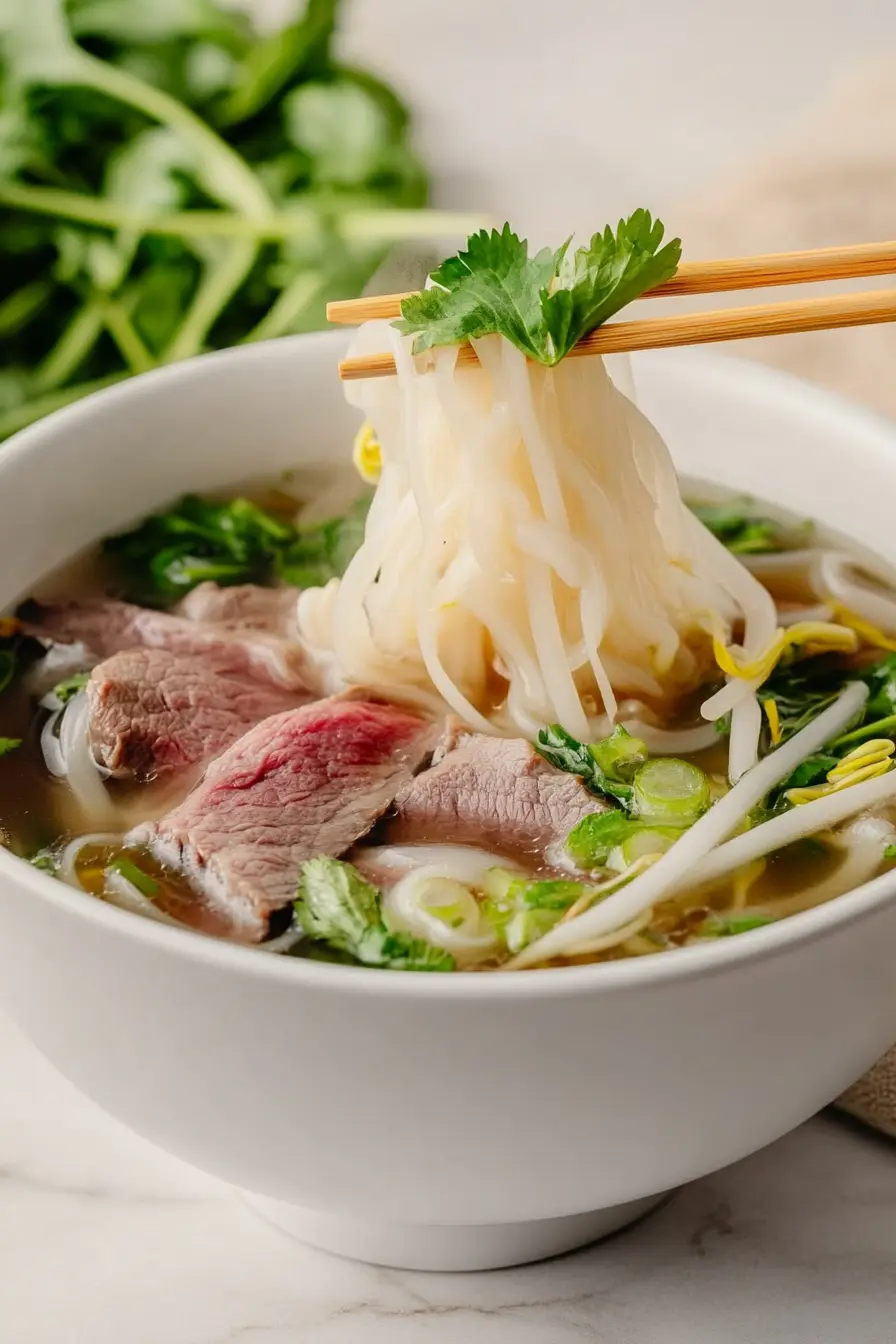
This classic Vietnamese noodle soup brings together tender rice noodles and thinly sliced beef in a clear, aromatic broth that’s been simmered for hours with spices and herbs. The combination of star anise, cinnamon, and ginger creates a warm, soothing base that feels like a hug in a bowl.
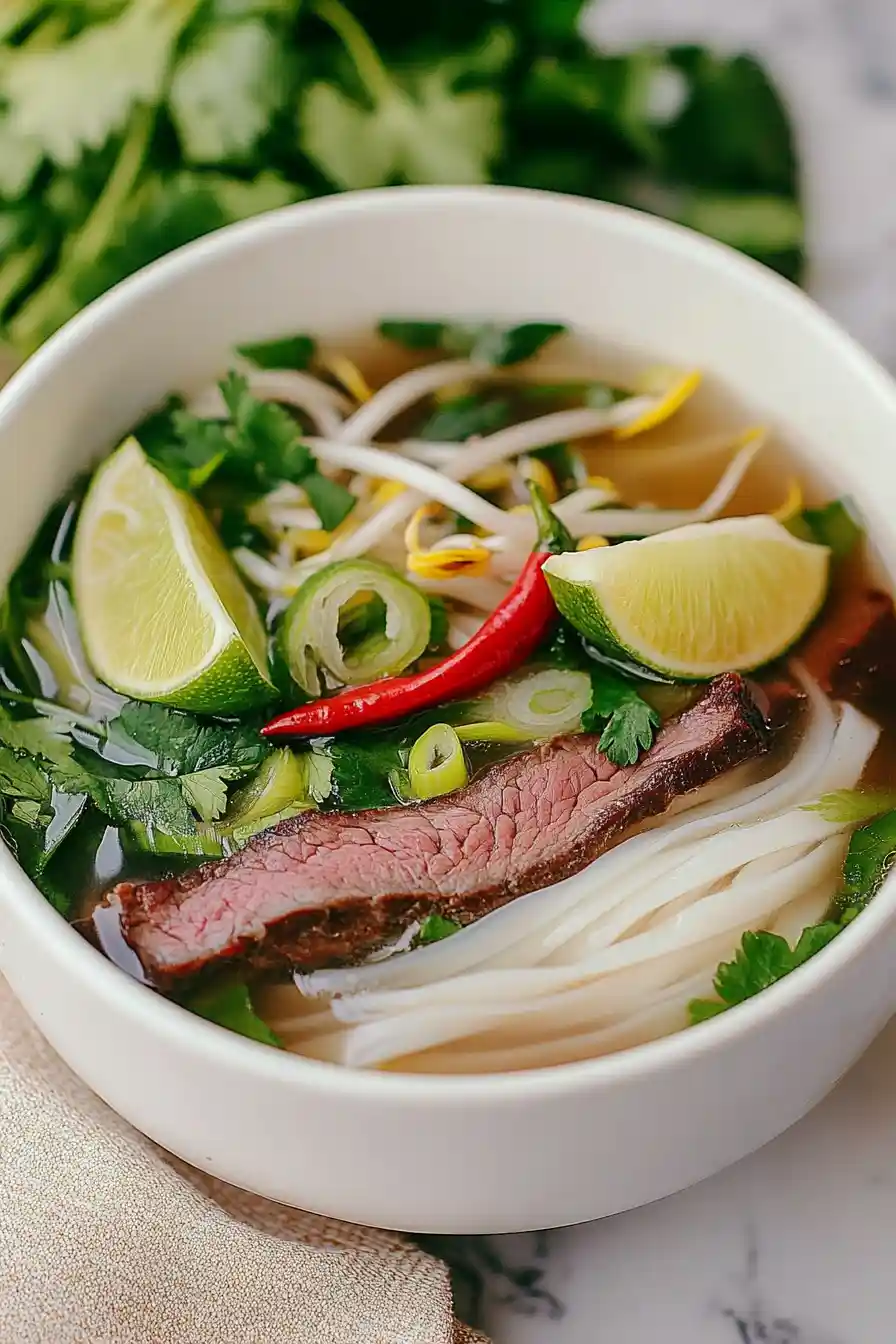
Fresh herbs, bean sprouts, and lime wedges are served alongside, letting everyone customize their bowl just the way they like it. A splash of hoisin sauce and sriracha adds that perfect finishing touch.
It’s a filling dish that works year-round, but there’s something special about slurping up those noodles on a chilly evening.
Why You’ll Love This Pho
- Rich, complex broth – The combination of beef bones, aromatic spices, and slow simmering creates a deeply flavorful soup that’s both comforting and satisfying. Each spoonful delivers layers of flavor that you just can’t get from store-bought versions.
- Customizable toppings – Everyone can make their bowl their own way with fresh herbs, bean sprouts, lime, and sauces. It’s like having a Vietnamese soup bar right at your dinner table!
- Make-ahead friendly – While the initial broth takes time to prepare, you can make a big batch and freeze portions for quick meals later. The broth actually gets better after a day or two in the fridge.
- Naturally nutritious – Made with bone broth, lean protein, and fresh herbs, this soup is packed with nutrients and can help boost your immune system. It’s basically a hug in a bowl!
What Kind of Beef Should I Use?
For authentic pho, you’ll want to use a combination of different beef cuts to create layers of flavor. The bones (marrow or knuckle) form the foundation of your broth, while chuck adds richness during the cooking process. For serving, sirloin is ideal for those paper-thin slices that cook right in the hot broth – just pop it in the freezer for about 15-20 minutes before slicing to make it easier to cut super thin. If you can’t find sirloin, flank steak or eye of round are good alternatives that also slice nicely and stay tender. Just make sure whichever cut you choose for serving is fresh and has good marbling for the best flavor in your bowl.
Options for Substitutions
While some ingredients are essential for authentic pho, there are several substitutions you can make if needed:
- Bones and meat: The bones are crucial for a proper pho broth – they’re non-negotiable. For the meat cuts, you can swap chuck for brisket, and sirloin can be replaced with eye of round or flank steak. Just make sure to slice any replacement meat very thinly.
- Rock sugar: Regular granulated sugar works fine as a substitute – just use 2 1/2 tablespoons instead of the rock sugar amount.
- Black cardamom: Since this is marked optional, you can skip it entirely. Don’t substitute with green cardamom as it has a completely different flavor profile.
- Fish sauce: While it’s better to use fish sauce, you can substitute with soy sauce plus a pinch of salt, though the flavor won’t be quite the same.
- Pho noodles: If you can’t find pho noodles, use other flat rice noodles – pad thai noodles can work in a pinch, though they’re typically wider.
- Garnishes: The garnishes are flexible – if you can’t find Thai basil, regular basil will do. Bean sprouts can be skipped, and any type of fresh chili peppers will work for heat.
- Spices: Star anise, cinnamon, and cloves are essential for the signature pho flavor – try not to substitute these. However, if you’re missing fennel or coriander seeds, you can leave them out and still get a good result.
Watch Out for These Mistakes While Cooking
The biggest mistake when making pho is rushing the broth – skipping the crucial step of parboiling and cleaning the bones can result in a cloudy, greasy soup instead of the clear, aromatic broth you’re aiming for. Another common error is adding all the spices directly to the broth without toasting them first – take a few extra minutes to dry-toast your star anise, cloves, cinnamon, and other spices in a pan until fragrant, which will release their essential oils and create a deeper flavor profile. When it comes to the noodles, don’t make the mistake of cooking them in the broth or preparing them too far in advance – instead, cook them separately in plain water just before serving, as this prevents the noodles from becoming mushy and keeps the broth clear. For the best results, keep your serving broth at a rolling boil and your noodles slightly undercooked, as they’ll continue to soften in the hot broth when served.
What to Serve With Pho?
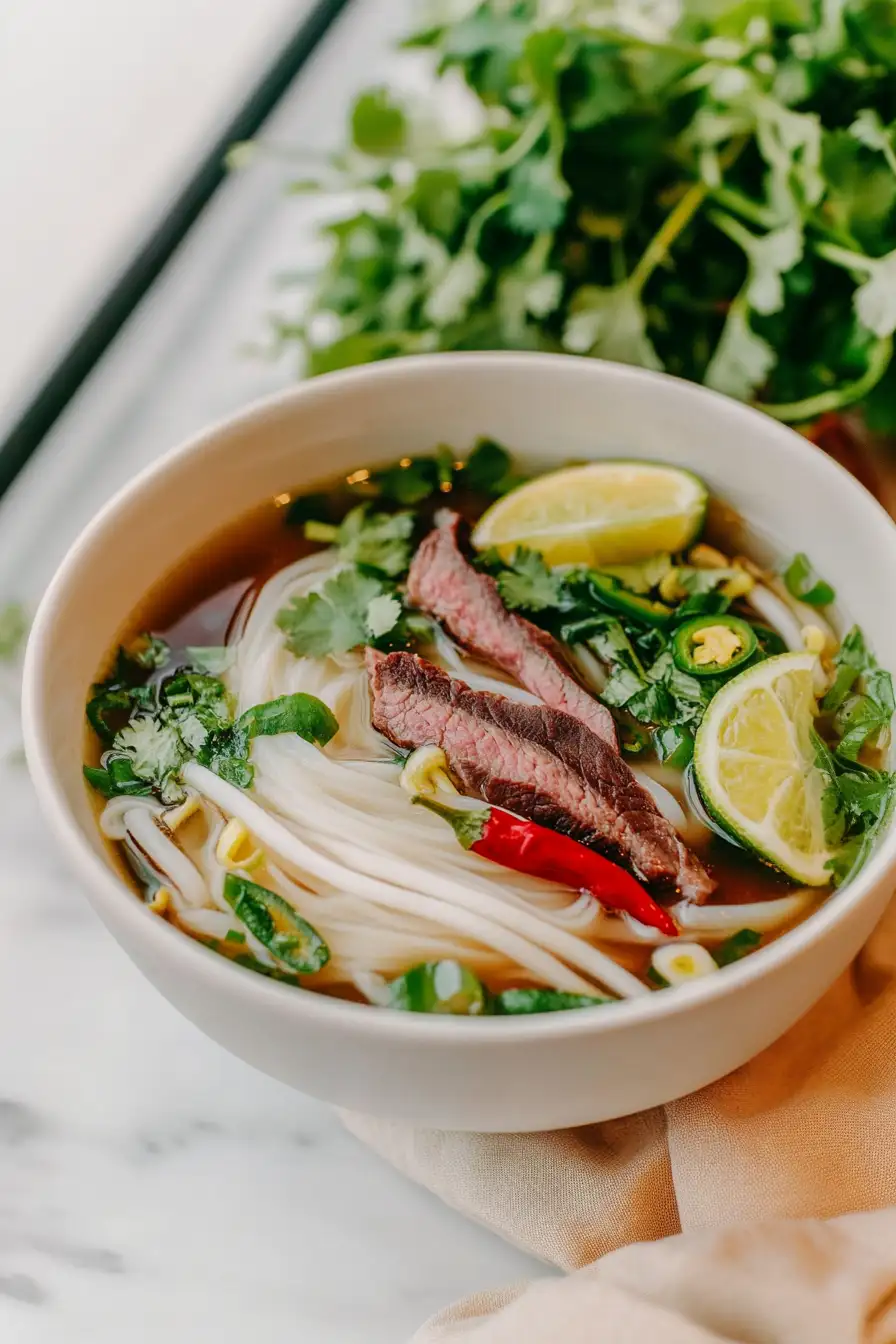
While pho is definitely a complete meal on its own, there are some great side dishes that can make your Vietnamese soup experience even better! Spring rolls (either fresh or fried) make perfect companions to pho – they’re light enough not to overshadow the main dish but add a nice contrast in texture. For a simple starter, try serving some Vietnamese pickled vegetables (do chua) made with daikon radish and carrots, which help cleanse the palate between spoonfuls of the rich broth. If you’re hosting a casual pho party, consider setting up a Vietnamese iced coffee (ca phe sua da) station – the sweet, strong coffee is a traditional way to end the meal and helps balance out all those savory flavors.
Storage Instructions
Keep: The pho broth is the star here – you can keep it in the fridge for up to 5 days in an airtight container. Just remember to store the broth separately from the noodles and toppings to keep everything fresh. The cooked beef can be stored in a separate container in the fridge for 3-4 days.
Freeze: The broth freezes really well! Pour it into freezer-safe containers or bags, leaving some room for expansion, and it’ll keep for up to 3 months. I like to freeze it in portions – it makes it super easy to pull out just what I need for a quick meal.
Prepare: When you’re ready to serve, cook fresh noodles and prepare fresh toppings – they’re best when just made. Heat up your broth until it’s steaming hot, then pour it over the assembled bowls. This way, you’ll get that authentic pho experience every time!
| Preparation Time | 20-30 minutes |
| Cooking Time | 240-260 minutes |
| Total Time | 260-290 minutes |
| Level of Difficulty | Medium |
Estimated Nutrition
Estimated nutrition for the whole recipe (without optional ingredients):
- Calories: 2500-2800
- Protein: 200-220 g
- Fat: 150-170 g
- Carbohydrates: 150-180 g
Ingredients
For the broth base:
- 2 (3-inch) pieces ginger (freshly sliced)
- 2 scallions (chopped into 4-inch sections)
- 5 quarts water
- 5 lb beef marrow or knuckle bones (for a rich, gelatinous broth)
- 2 peeled onions
For the broth seasoning:
- 2.5 oz rock sugar
- 8 star anise pods
- 2 tsp coriander seeds
- 1 black cardamom pod
- 2 tsp fennel seeds
- 1 cinnamon stick
- 1 tbsp salt
- 1/3 cup fish sauce (I use Red Boat fish sauce)
- 6 cloves
For the beef:
- 2 lb beef chuck (cut into 2-inch chunks)
- 1/3 lb beef sirloin (thinly sliced, against the grain)
For assembly and garnishes:
- hoisin sauce
- Thai basil leaves
- chopped scallions
- 1 lb dried pho noodles (cooked according to package directions)
- lime wedges
- sliced chili peppers
- thinly sliced onions
- mung bean sprouts
- sriracha
- cilantro leaves
Step 1: Prepare and Clean the Bones and Meat
Place the bones and beef chuck in a large stockpot and add enough water to cover them.
Bring to a boil and cook for 5 minutes.
This initial boil helps to remove impurities.
Drain the contents in a colander and thoroughly clean the stockpot to ensure a clear broth.
Step 2: Char and Clean the Aromatics
While the bones and meat are blanching, use tongs to hold the ginger and onions over an open flame, or place them directly on a gas burner.
Turn continuously until they’re lightly blackened and fragrant, about 5 minutes.
Rinse away the blackened skins under running water to prepare them for the broth.
Step 3: Simmer the Beef Broth
Refill the stockpot with 5 quarts (4.75 L) of water, adjusting if needed based on your recipe scale.
Bring the water to a boil and return the bones, beef chuck, charred ginger, and onions to the pot.
Add the scallions, fish sauce, and sugar.
Reduce the heat to low and simmer for about 40 minutes, skimming the surface frequently to remove foam and fat.
Step 4: Cool and Store the Beef Chuck
Remove one piece of the beef chuck from the pot and transfer it to a bowl of ice water to stop the cooking process.
Once cooled, move this piece to a container and refrigerate it for later slicing and serving with the pho.
Leave the other piece in the pot to continue infusing the broth with flavor.
Step 5: Toast and Add the Spices
In a dry pan over medium-low heat, toast the star anise, cloves, cinnamon stick, cardamom, fennel seeds, and coriander seeds until fragrant, about 3 minutes.
Place the toasted spices in a piece of cheesecloth and tie it with kitchen string, then add it to the pot.
Cover and continue to simmer the broth for another 4 hours, skimming as necessary.
Step 6: Final Adjustments and Serving
Add salt to the broth and continue simmering until flavors are well-developed.
Taste the broth, adjusting seasoning with more salt, sugar, and/or fish sauce as needed.
To serve, boil the noodles according to package directions and add them to serving bowls.
Place a few slices of the refrigerated beef chuck and raw sirloin on top of the noodles.
Bring the broth to a rolling boil and ladle it over the noodles and beef.
The hot broth will cook the raw beef slices.
Finish by garnishing with your preferred toppings and a generous squeeze of fresh lime juice.