Maintaining a weed-free garden typically requires significant time and effort, but selecting the right perennial flowers can dramatically reduce this burden. Weeds compete with your desired plants for water, nutrients, and sunlight, often requiring constant removal to keep your garden looking its best.
This guide presents 27 perennial varieties that excel at outcompeting weeds through various mechanisms, from ground-hugging mats to bold clumps. You will discover options ranging from sun-loving blooms to shade-tolerant groundcovers, each offering both functional weed control and ornamental value for your garden.
1) Black-Eyed Susan
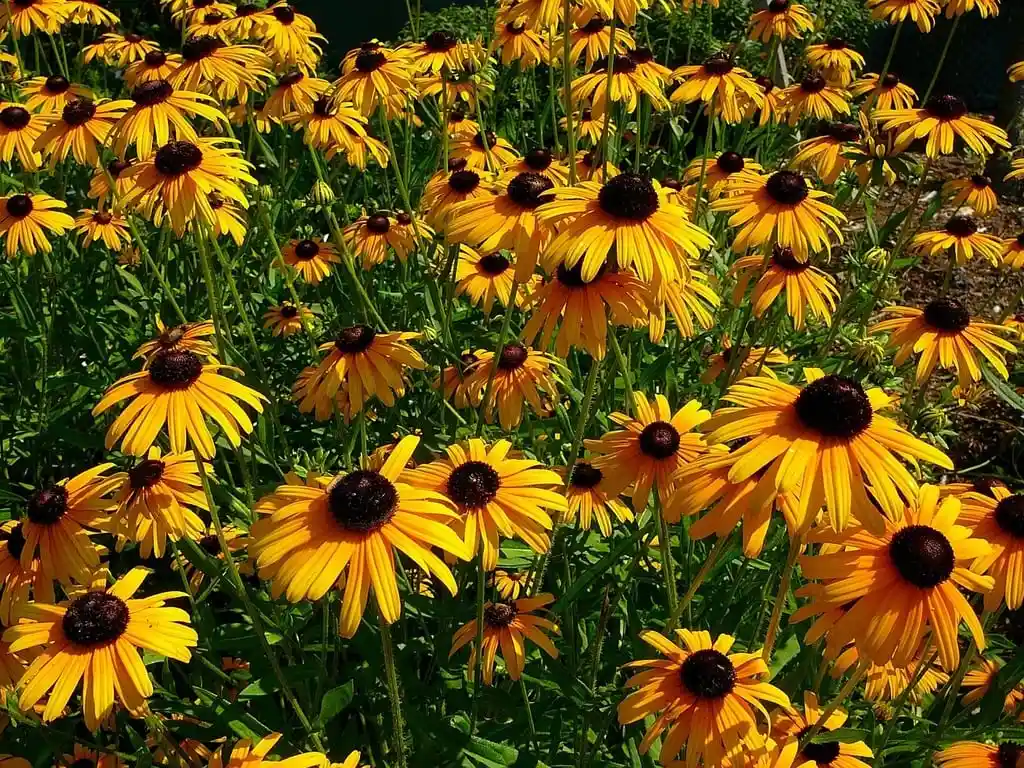
Black-eyed Susan forms dense clumps that effectively crowd out weeds through vigorous root systems and spreading growth. These golden-flowered perennials establish themselves quickly and self-seed readily, filling gaps before unwanted plants can take hold.
You’ll appreciate their low-maintenance nature once established. They grow in various soil conditions and tolerate drought well. The plants produce abundant foliage that shades the ground beneath them, preventing weed seeds from germinating.
Black-eyed Susans bloom from summer through fall, providing continuous coverage. Their ability to naturalize makes them ideal for creating weed-resistant garden beds.
2) Coneflower (Echinacea)
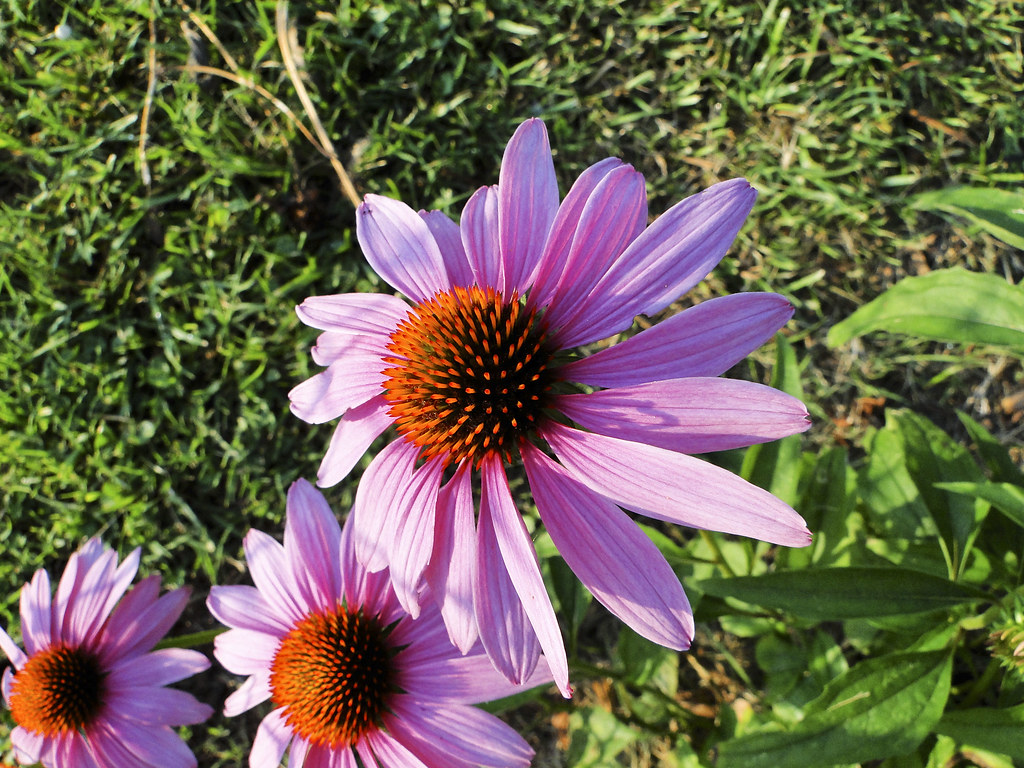
Coneflowers create dense root systems and sturdy clumps that naturally suppress weed growth beneath their foliage. These North American native perennials grow 2-4 feet tall and spread reliably without becoming invasive.
You can plant coneflowers in full sun to partial shade across growing zones 3-8. They tolerate drought and poor soil conditions where many weeds struggle to compete.
Their clumping growth habit fills garden space efficiently, leaving little room for unwanted plants to establish. Coneflowers bloom from spring through fall, maintaining their weed-suppressing canopy throughout the growing season.
3) Creeping Thyme
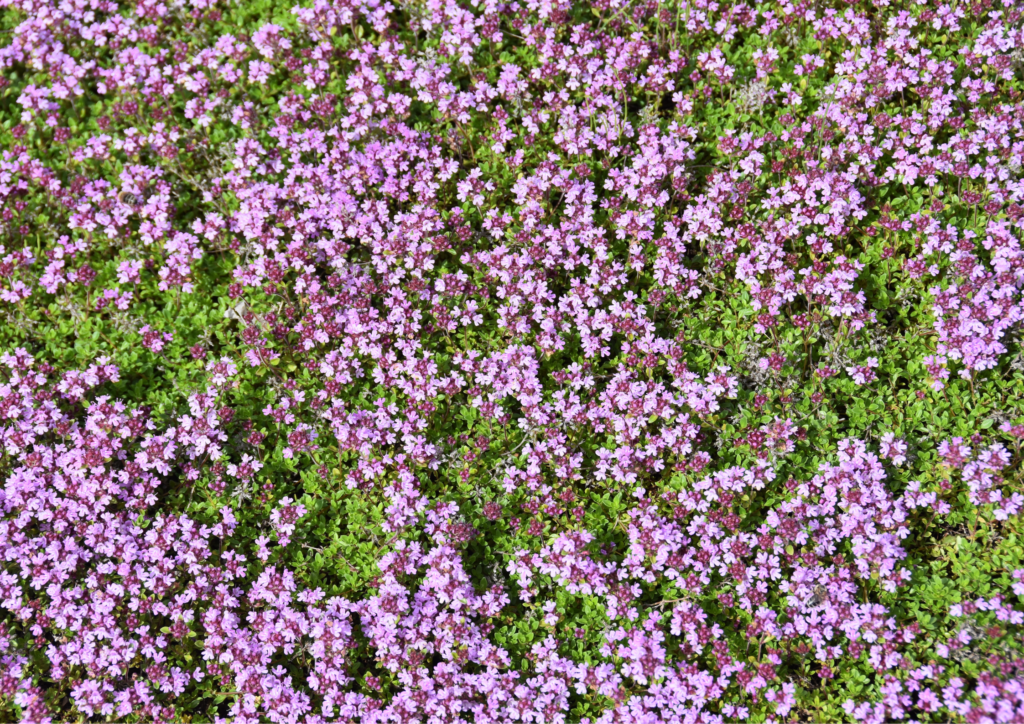
Creeping thyme forms a dense, low-growing mat that effectively crowds out weeds while adding fragrance to your garden. This hardy perennial thrives in full sun and well-draining soil, spreading 8-12 inches wide per plant.
The small, pointed leaves release a pleasant scent when brushed against, and the plant produces pink or purple flowers that attract pollinators. You can plant it between pavers, in rock gardens, or as ground cover in sunny spots.
Creeping thyme tolerates foot traffic and requires minimal maintenance once established.
4) Bee Balm (Monarda)
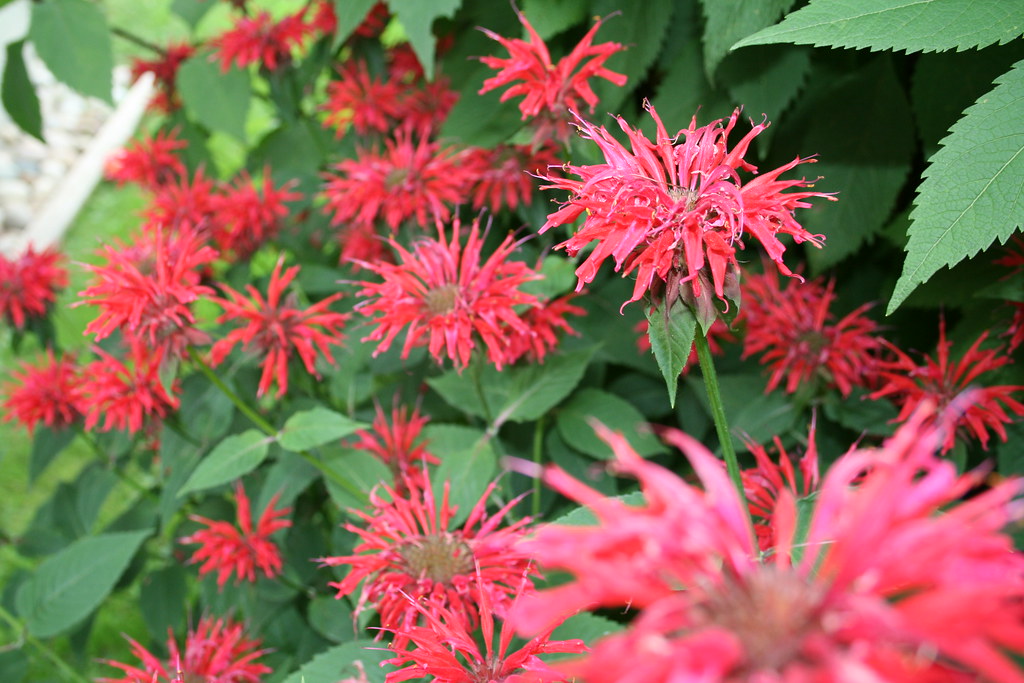
Bee balm spreads through underground rhizomes, creating dense colonies that leave little room for weeds to establish. This North American native grows 2-4 feet tall with vibrant tubular flowers in red, pink, purple, or white.
The plant’s vigorous growth habit allows it to fill garden spaces quickly. Its fragrant foliage and sturdy stems form thick clumps that shade out competing weeds naturally.
You’ll appreciate that bee balm thrives in both full sun and partial shade while attracting pollinators to your garden. The plant returns reliably each year, expanding its footprint and maintaining weed-free zones.
5) Ajuga (Bugleweed)

Ajuga reptans forms dense mats of colorful foliage that effectively suppress weeds in shaded areas. This low-growing perennial spreads quickly through stolons, reaching 4-8 inches tall while creating thick ground coverage.
You’ll appreciate its dual-season interest with vibrant blue to purple flower spikes in spring and attractive leaves year-round. The plant thrives in shade where many weeds struggle, making it particularly effective for problem areas under trees.
Note that ajuga spreads aggressively and doesn’t tolerate foot traffic well. Position it in garden beds rather than walkways for best results.
6) Sedum (Stonecrop)
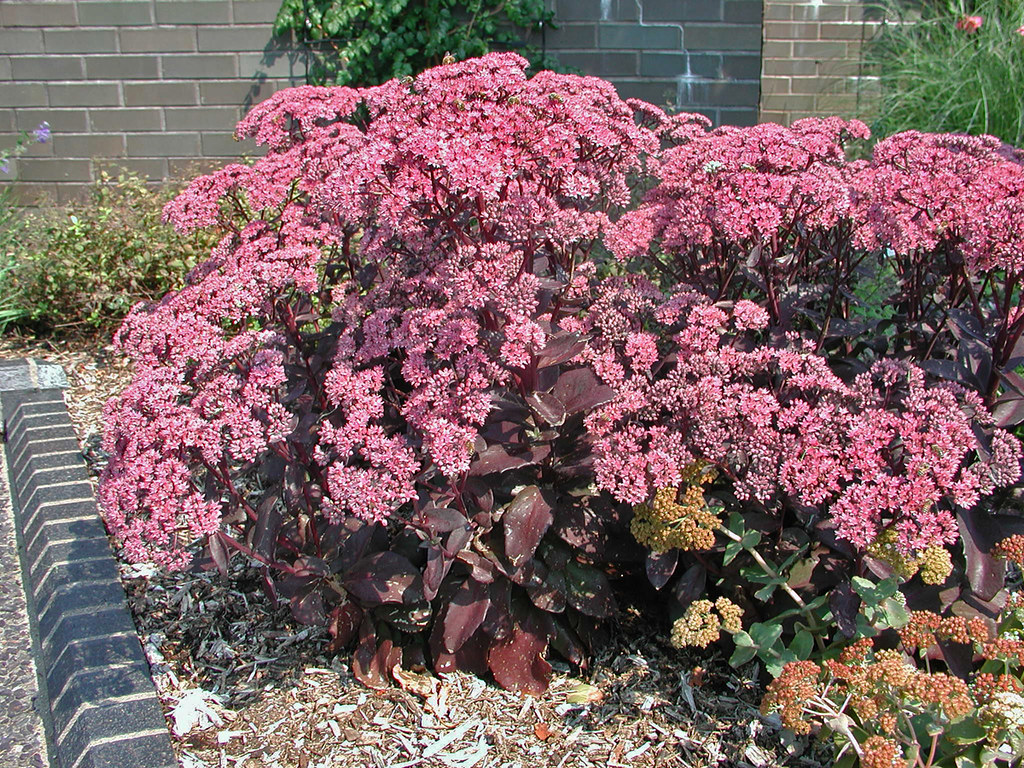
Sedum, commonly called stonecrop, excels at suppressing weeds through its spreading growth habit and dense foliage coverage. These drought-tolerant succulents form tight mats that shade the soil, preventing weed seeds from germinating and establishing themselves.
Low-growing varieties spread quickly, reaching widths of up to two feet while staying just two to six inches tall. This ground-hugging nature fills gaps efficiently between stepping stones and along borders.
You’ll find sedum thrives in sunny, dry locations where many weeds struggle, making it ideal for rock gardens and slopes. Most varieties grow successfully across USDA zones 3-9 with minimal maintenance required.
7) Lamb’s Ear (Stachys byzantina)
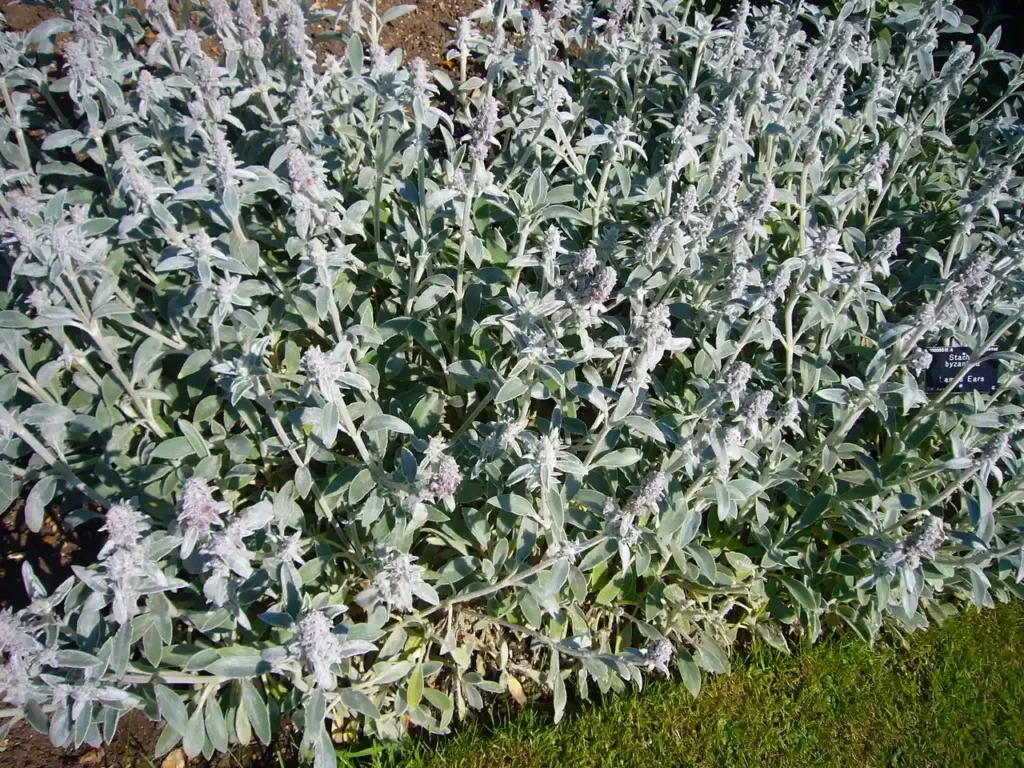
Lamb’s ear forms dense mats of silvery-gray foliage that effectively block weed growth beneath its thick leaves. The velvety leaves overlap as the plant spreads, creating a living mulch that prevents light from reaching weed seeds.
This drought-tolerant perennial thrives in full sun and well-drained soil. It grows quickly to cover bare ground, establishing its territory before weeds can take hold.
The plant reaches about 6-12 inches tall with a spreading habit that fills garden spaces efficiently. You’ll find it particularly useful as edging or groundcover in sunny borders and rock gardens.
8) Daylilies
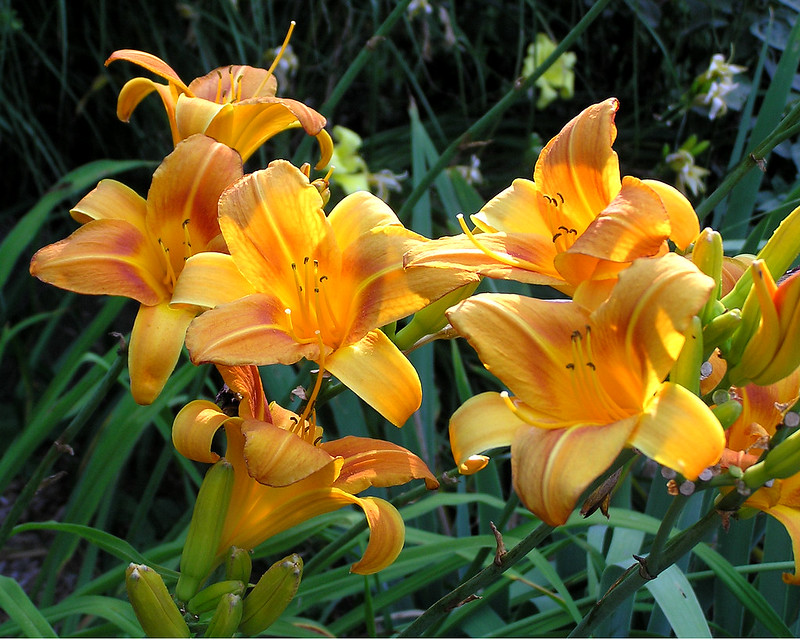
Daylilies form dense clumps of grass-like foliage that effectively shade out weeds before they can establish. Their extensive root systems spread quickly to claim garden space.
Each plant produces multiple flower stalks with numerous buds that bloom over several weeks. While individual flowers last only one day, the continuous blooming cycle provides extended color from late spring through fall.
These low-maintenance perennials adapt to various soil types and conditions. They require minimal care once established, making them practical workhorses for your weed-suppressing garden strategy.
9) Yarrow
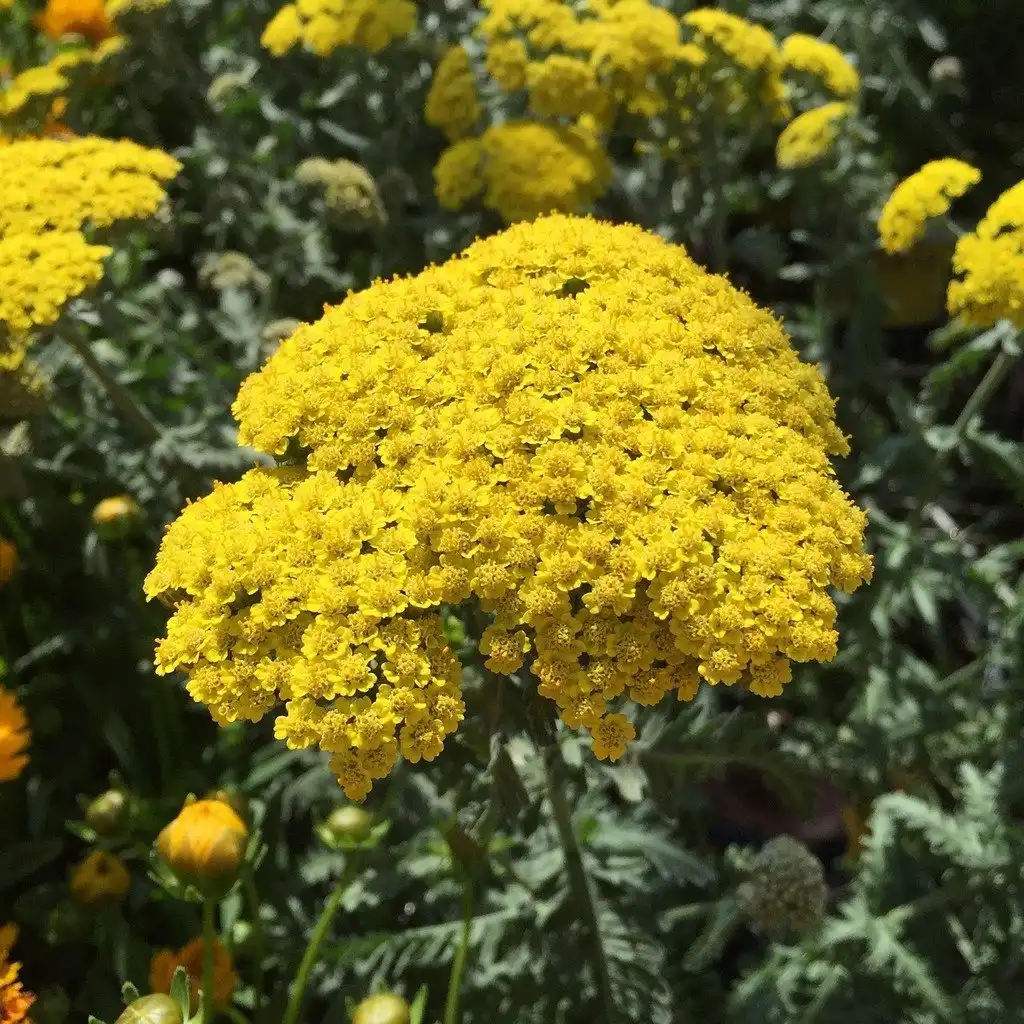
Yarrow forms dense mats of feathery foliage that effectively crowd out weeds. This hardy perennial thrives in zones 3 through 9 and tolerates neglect well.
The plant produces flat-topped flower clusters in white, yellow, pink, or red. Its strong root system spreads quickly to fill bare spots before weeds can establish.
Yarrow requires minimal maintenance once established. It performs well in poor soil and drought conditions, making it a practical choice for weed suppression.
10) Blanket Flower (Gaillardia)

Blanket flower forms dense clumps that naturally suppress weed growth through their spreading habit and continuous flowering from early summer through fall. These North American natives thrive in poor soils where many weeds struggle, giving them a competitive advantage in your garden beds.
Their drought tolerance means they’ll keep growing vigorously even during dry spells when weeds might slow down. The plants spread to fill available space quickly, blocking sunlight from reaching weed seeds below.
You’ll appreciate that blanket flowers require minimal maintenance while providing months of vibrant blooms in fiery reds, oranges, and yellows.
11) Liriope
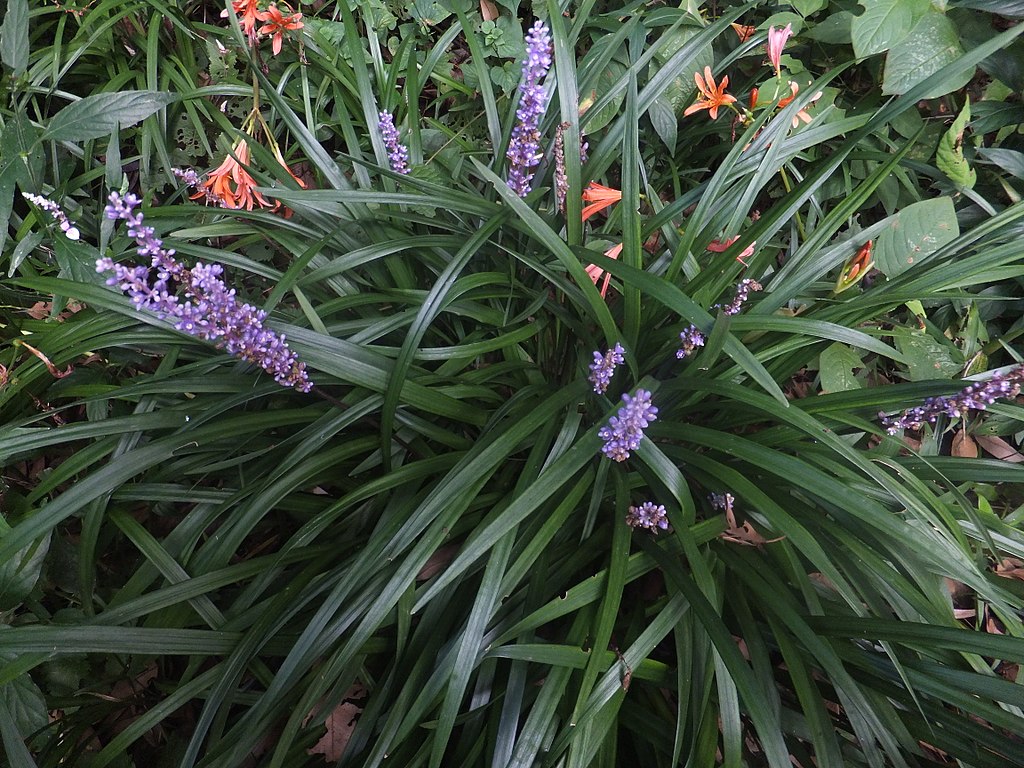
Liriope forms dense, grass-like clumps that effectively crowd out weeds in your garden. This evergreen perennial develops thick root systems and spreading foliage that leave little room for unwanted plants to establish themselves.
You can grow liriope in both sun and shade, making it versatile for various garden spots. The plants require minimal maintenance once established and tolerate drought well.
Liriope produces spikes of purple or white flowers in late summer while maintaining its attractive foliage year-round. This ground cover works particularly well as border edging or mass plantings where weed suppression is needed.
12) Russian Sage
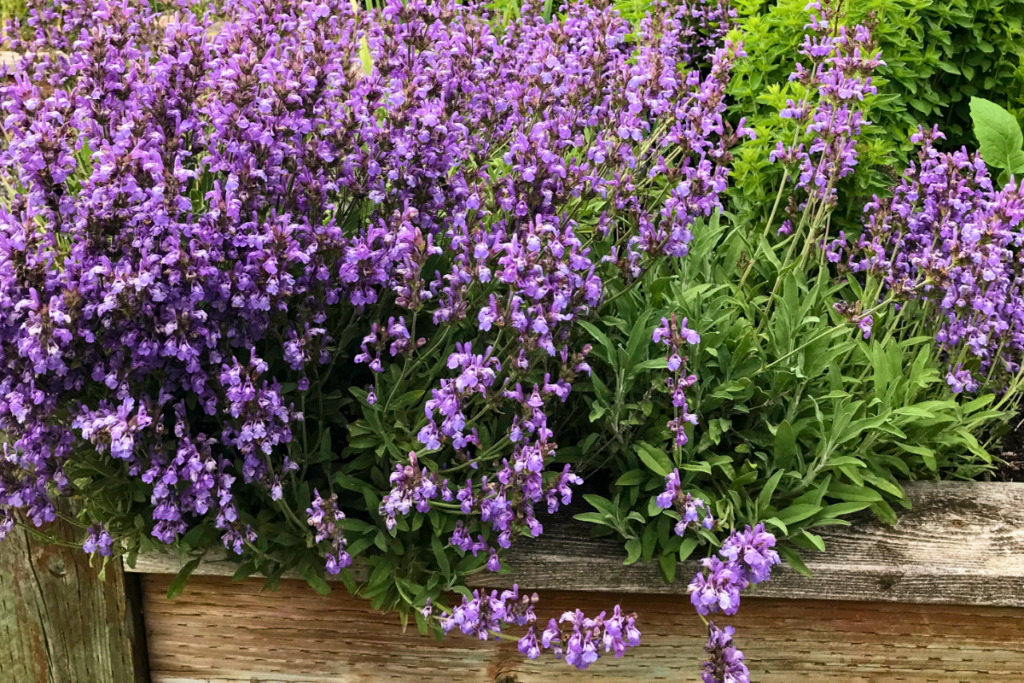
Russian sage forms dense, bushy clumps that effectively shade out weeds beneath its silvery-gray foliage. This drought-tolerant perennial thrives in full sun and well-drained soil, requiring minimal maintenance once established.
The plant’s vigorous growth habit allows it to occupy space quickly, preventing weed seeds from germinating below. Its lavender-blue flowers bloom from mid-summer to fall, adding ornamental value while suppressing unwanted growth.
You’ll find Russian sage particularly effective in dry borders and gravel gardens where many weeds struggle to compete.
13) Coral Bells (Heuchera)
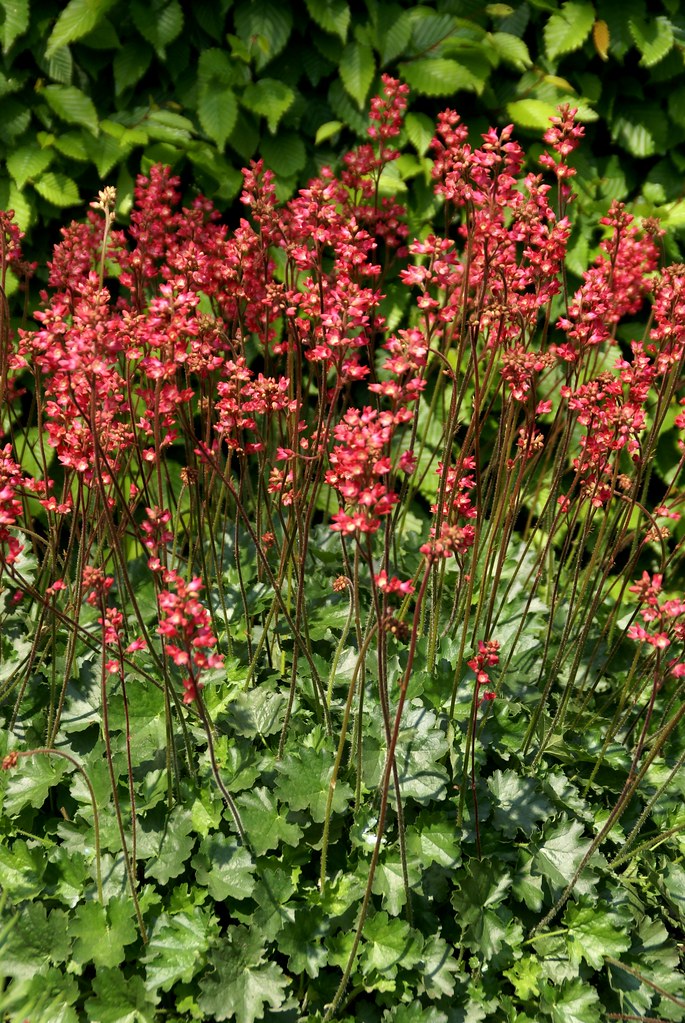
Coral bells form dense mounds of foliage that effectively suppress weed growth beneath their canopy. Their woody crowns and thick root systems establish quickly, leaving little room for unwanted plants to take hold.
These North American natives thrive in USDA zones 4-9 and adapt to various light conditions from bright shade to partial sun. The colorful foliage provides year-round visual interest while blocking light from reaching weed seeds below.
You’ll appreciate their low-maintenance nature and ability to spread gradually without becoming invasive. Their compact growth habit makes them particularly effective along pathway edges and in shade gardens where weeds often flourish.
14) Phlox

Phlox creates dense mats of foliage that effectively suppress weed growth in your garden. This perennial spreads quickly through both its roots and reseeding habits, filling bare spots before weeds can establish themselves.
You’ll find phlox particularly useful for groundcover applications. Its thick growth pattern blocks sunlight from reaching the soil surface, preventing weed seeds from germinating.
Moss phlox and creeping phlox varieties work especially well for weed control. These low-growing types form thick carpets of colorful blooms in spring while maintaining their dense foliage throughout the growing season.
15) Goldenrod

Goldenrod forms dense clumps that crowd out weeds while adding late-season color to your garden. This native perennial grows up to 6 feet tall with an upright habit that fills vertical space efficiently.
The plant establishes aggressive root systems that prevent weeds from gaining a foothold. Goldenrod blooms from late summer through fall with bright yellow flowers that attract pollinators.
You’ll find this low-maintenance perennial thrives in various conditions, making it practical for beds, borders, and wildflower gardens. Its thick foliage and fast growth naturally suppress unwanted plants throughout the growing season.
16) Coreopsis

Coreopsis forms dense patches that effectively crowd out weeds through both rhizome spread and self-seeding. This North American native produces cheerful, daisy-like flowers from early summer through fall.
Its fibrous root system holds soil tightly while the fine foliage creates ground coverage that blocks weed germination. You’ll find Coreopsis thrives in full sun and tolerates poor soil conditions.
The plant requires minimal maintenance once established and spreads readily to fill gaps where weeds might otherwise grow.
17) Nepeta (Catmint)
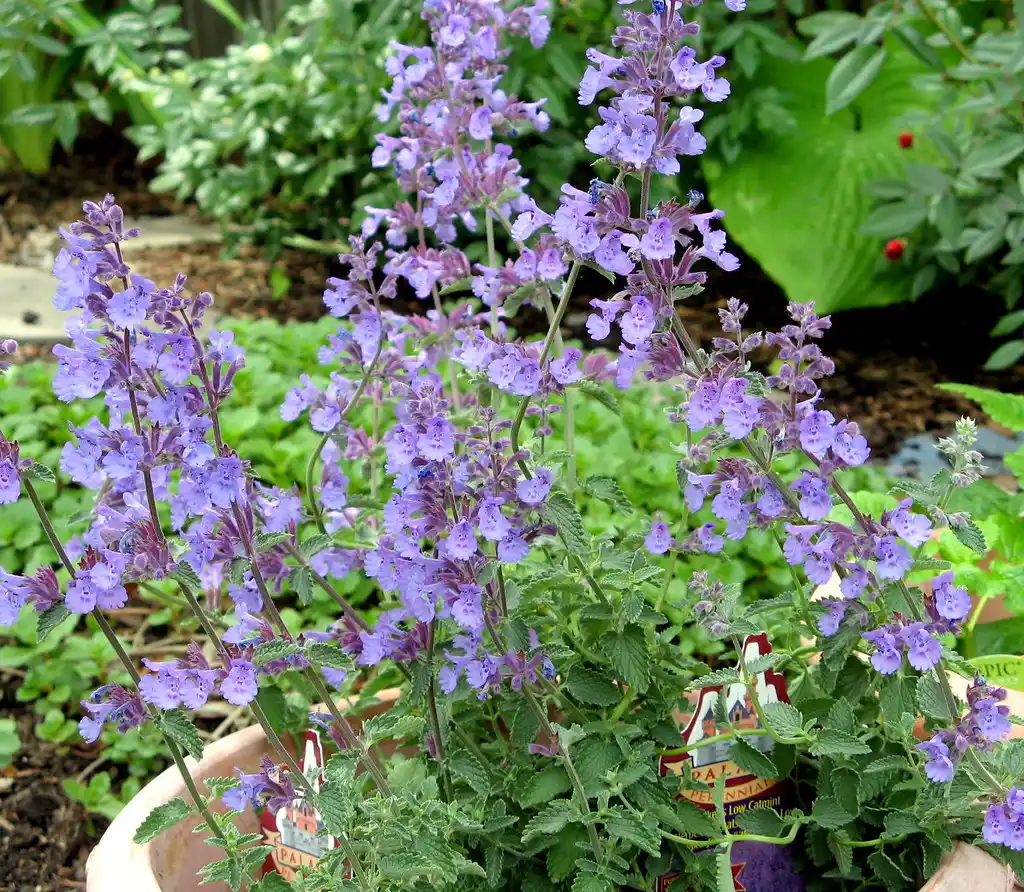
Catmint forms dense mats of aromatic gray-green foliage that naturally suppresses weed growth beneath its canopy. The plant spreads steadily through shallow rhizomes, filling garden spaces before weeds can establish themselves.
This perennial blooms for months with lavender-blue, pink, or white flower spikes that attract pollinators while its mint-scented leaves deter many pests. You can grow catmint in various climates across zones 4-8 with minimal maintenance.
The foliage provides consistent ground coverage even when not flowering. Varieties like ‘Walker’s Low’ are particularly effective at creating thick barriers that crowd out unwanted plants while requiring little water once established.
18) Hosta
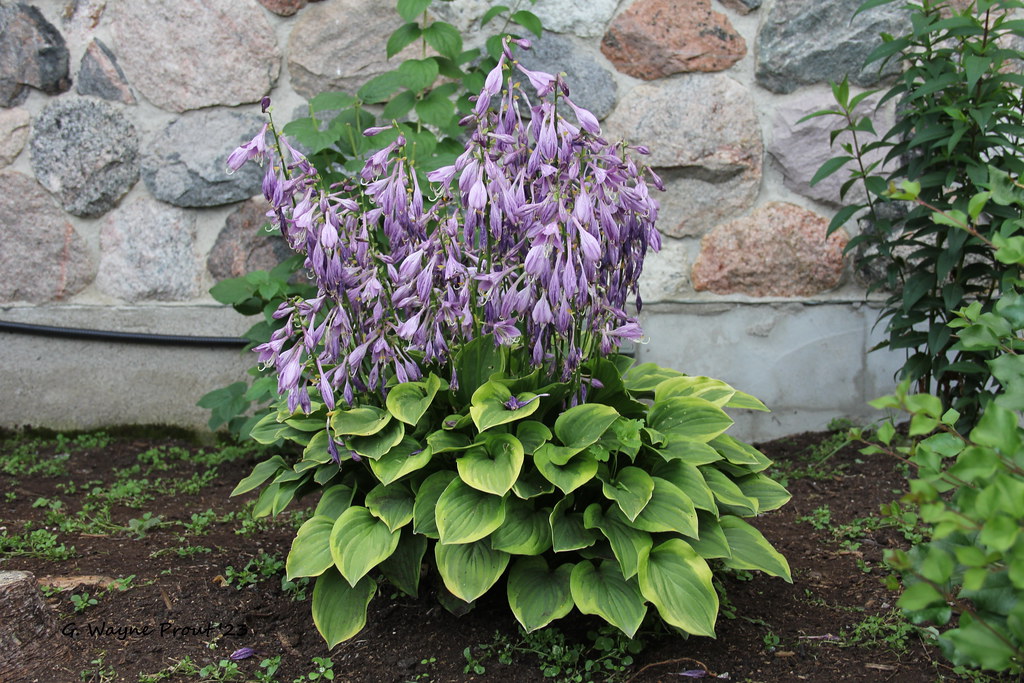
Hostas form thick mounds of broad foliage that effectively block sunlight from reaching the soil beneath. Their dense leaf canopy prevents weed seeds from germinating and establishing roots in your garden beds.
These shade-loving perennials spread gradually through their root systems, filling in bare spots where weeds typically take hold. Hostas work particularly well under trees and in shaded borders where other plants struggle to compete.
Their low maintenance requirements and weed-suppressing growth habit make them practical choices for busy gardeners.
19) Siberian Iris
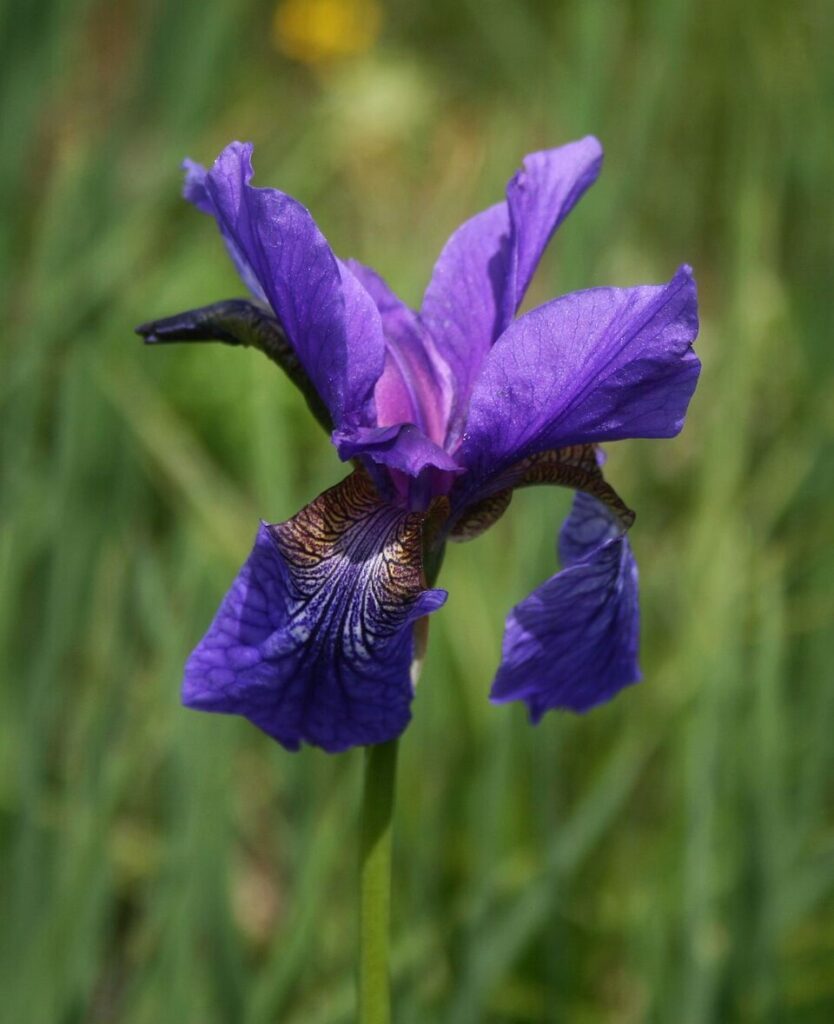
Siberian iris forms dense clumps of grass-like foliage that effectively crowds out weeds. The plants spread 2-3 feet wide with upright growth reaching 2-4 feet tall, creating thick coverage that limits weed establishment.
This perennial requires minimal maintenance once established. It tolerates drought better than other iris types and resists most pests and diseases naturally.
You’ll enjoy blooms from spring through early summer in colors ranging from blue and violet to white, yellow, pink, and red. The attractive foliage remains appealing throughout the growing season even after flowering ends.
20) Jacob’s Ladder (Polemonium caeruleum)
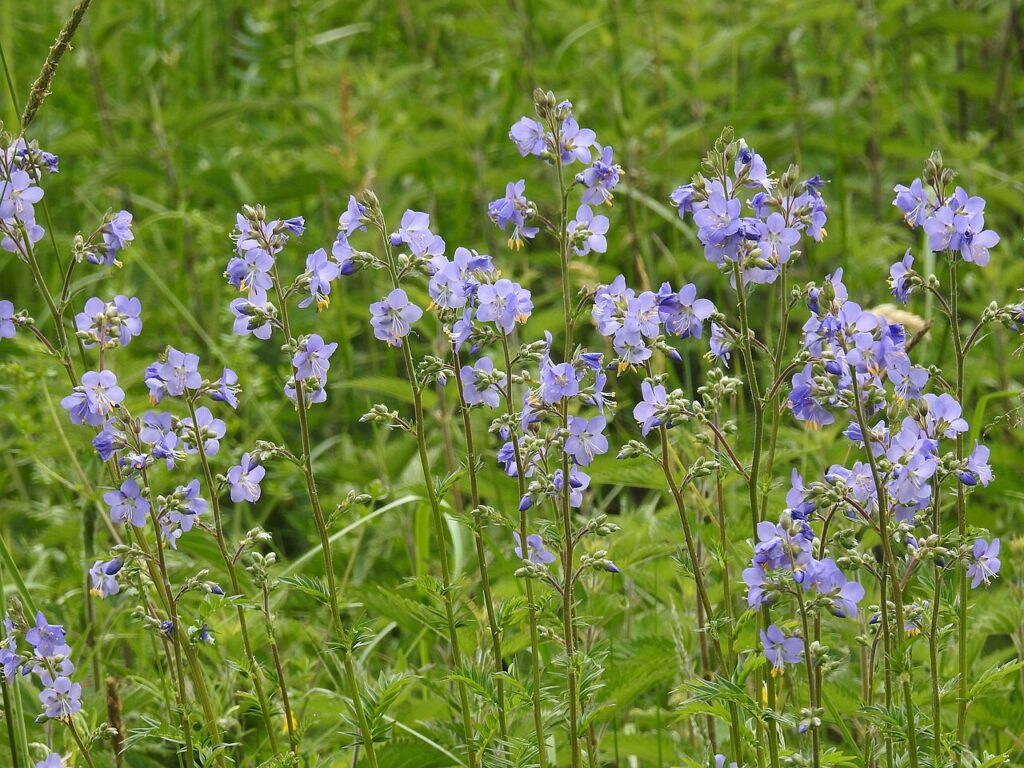
Jacob’s ladder forms dense clumps of ladder-like foliage that effectively suppress weeds. The plant reaches 18-24 inches tall and wide, creating substantial ground coverage.
Its distinctive compound leaves feature up to 27 leaflets packed closely together, leaving little room for weeds to establish. You’ll appreciate the cup-shaped blue flowers with yellow stamens that appear in late spring.
This shade-loving perennial thrives in woodland conditions where many other plants struggle. The thick foliage mound remains attractive throughout the growing season, maintaining continuous weed control in your garden beds.
21) False Indigo (Baptisia)

False indigo forms dense, sturdy clumps that crowd out weeds naturally. Its deep root system allows it to outcompete shallow-rooted weeds for water and nutrients. Once established, this native perennial spreads into a substantial presence in your garden.
The plant’s thick foliage creates shade at ground level, preventing weed seeds from germinating beneath it. You’ll appreciate its drought tolerance and resistance to pests, which means it thrives without constant intervention.
False indigo produces spikes of blue, yellow, white, or purple flowers in spring. The robust growth habit makes it particularly effective at suppressing unwanted plants.
22) Shasta Daisy
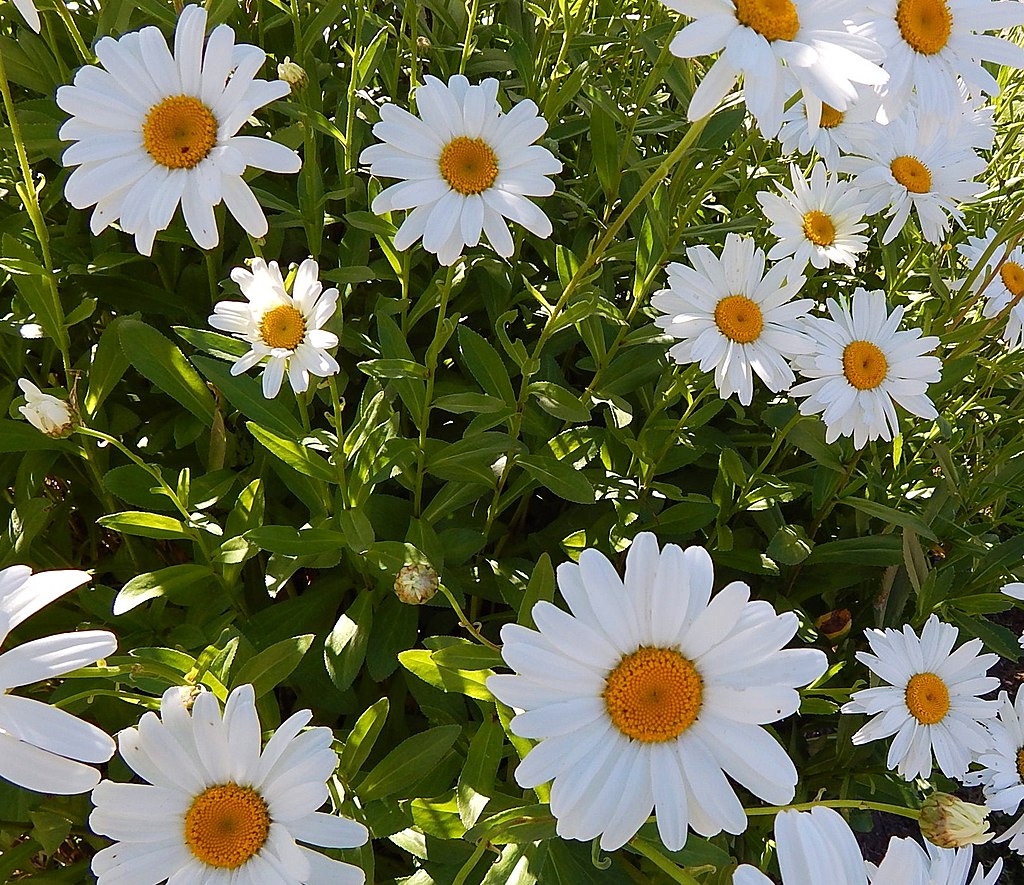
Shasta daisy (Leucanthemum x superbum) fills garden beds with dense foliage that naturally suppresses weed growth. This perennial spreads through rhizomes and self-seeding, creating thick coverage that blocks sunlight from reaching weed seeds below.
You’ll need to plant it in full sun with well-draining soil for best results. The vigorous growth habit allows Shasta daisy to establish quickly and compete effectively with unwanted plants.
These white-petaled flowers reach various heights depending on the variety you choose. They require minimal maintenance beyond annual mulching and spring fertilizing to maintain their weed-suppressing density.
23) Mountain Mint
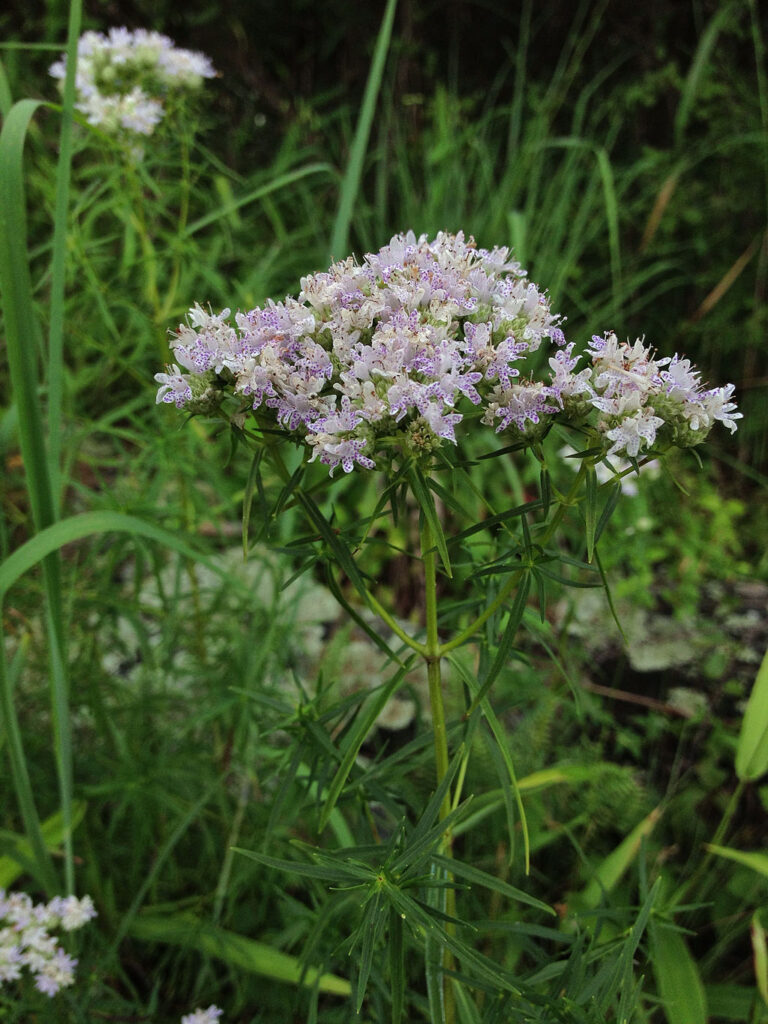
Mountain mint forms dense clumps that effectively crowd out weeds while attracting beneficial pollinators to your garden. This native perennial thrives in full sun to partial shade and tolerates various soil conditions.
The plant’s aromatic foliage releases a spicy-minty scent that deer typically avoid. Its fine-textured leaves create thick growth that shades the soil and prevents weed establishment.
Mountain mint produces white flowers that rise above neighboring plants, adding visual interest throughout the growing season. You can plant it in borders or naturalized areas where its spreading habit helps suppress unwanted growth.
24) Meadow Rue

Meadow rue (Thalictrum spp.) creates dense foliage that naturally suppresses weed growth in shaded areas. This herbaceous perennial grows 1 to 8 feet tall depending on the species, with delicate foliage that belies its competitive nature.
You can grow meadow rue in zones 4-8, with some species tolerating zone 3. It thrives in part sun to full shade, making it useful for difficult garden spots where weeds often take hold.
The plant’s upright habit and spreading growth pattern fill empty spaces quickly, preventing weeds from establishing.
25) Virginia Bluebells
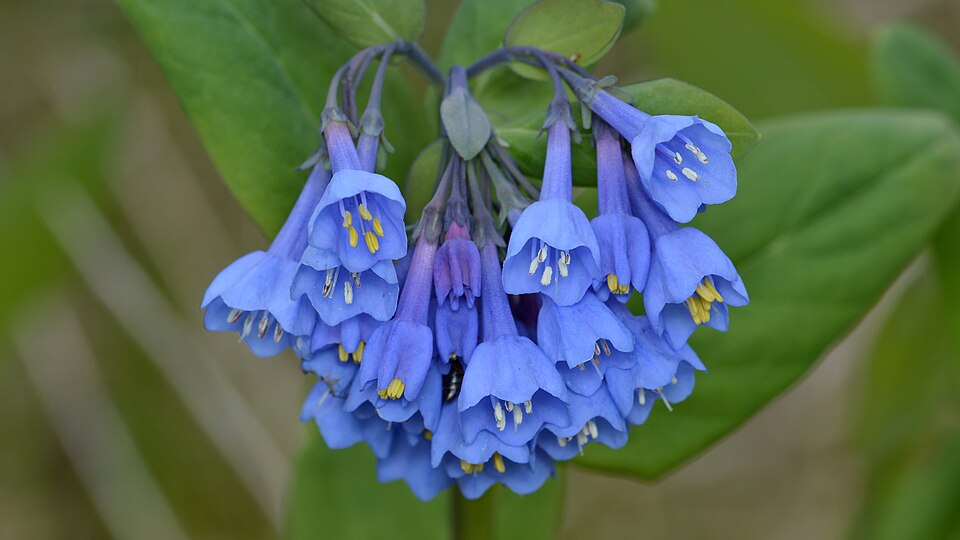
Virginia bluebells (Mertensia virginica) are spring ephemerals that grow from underground rhizomes, forming dense colonies that naturally suppress weeds. These native perennials emerge early in spring, creating thick patches of blue-green foliage that shade out competing plants before going dormant in mid-summer.
The plants spread gradually through their rhizome system, filling bare spots in shaded areas where weeds often take hold. Their early growth cycle gives them a competitive advantage, establishing themselves before most weeds become active.
Virginia bluebells thrive in moist, rich woodland conditions and require minimal maintenance once established.
26) Anise Hyssop

Anise hyssop (Agastache foeniculum) forms dense clumps that naturally suppress weeds through its vigorous growth habit. This perennial spreads via rhizomes and readily self-seeds in optimal conditions, helping it fill spaces before weeds can establish.
The plant grows two to four feet tall in USDA zones 4-8. It thrives in well-drained soil with full sun to partial shade.
Beyond weed suppression, anise hyssop attracts pollinators with its purple flower spikes. The aromatic foliage releases a sweet anise scent and works well in herb gardens, prairie plantings, or mixed borders where its spreading nature becomes an advantage.

