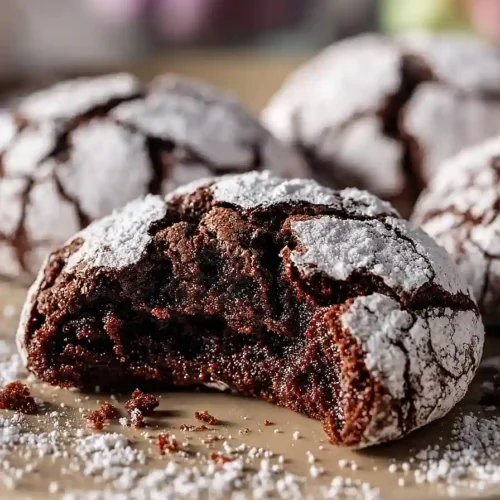
30-Minute No Chill Chocolate Crinkle Cookies
Delicious 30-Minute No Chill Chocolate Crinkle Cookies recipe with step-by-step instructions.
Ingredients
For the dough:
- 1/4 tsp salt
- 1 tsp baking powder
- 3/4 cup sugar
- 1 cup flour (all-purpose, spooned and leveled)
- 2 eggs (room temperature)
- 1 tsp vanilla extract
- 1/4 cup light olive oil (or neutral oil like canola)
- 1/2 cup unsweetened cocoa powder (natural or Dutch-processed, for deeper chocolate flavor)
For the coating:
- 1/3 cup powdered sugar (sifted to prevent lumps)
- 2 tbsp sugar
Instructions
- Preheat your oven to 350°F and line a baking sheet with parchment paper or a silicone mat. While the oven heats, set out two small bowls for your coating ingredients—this is your mise en place for the final coating step, which makes the process smooth and efficient.
- In one small bowl, combine the 2 tablespoons of sugar. In a second small bowl, sift the powdered sugar to remove any lumps (sifting is essential here because lumps won't adhere evenly to the dough). Having these prepped and waiting makes the rolling process quick and keeps your hands from getting too messy.
- In a medium mixing bowl, whisk together the cocoa powder, 3/4 cup sugar, and olive oil until well combined and the mixture resembles wet sand. This initial step coats the cocoa particles in oil, which helps distribute the chocolate flavor evenly throughout the dough and prevents dry pockets in the finished cookies.
- Add the room-temperature eggs one at a time to the chocolate mixture from Step 3, mixing well after each addition, then mix in the vanilla extract. Room-temperature eggs emulsify better and create a smoother dough—I always let my eggs sit out for 15-20 minutes before baking because the difference in texture is noticeable.
- Sift the flour, baking powder, and salt together, then fold this dry mixture into the wet mixture from Step 4 until just combined—don't overmix, as this keeps the cookies tender. The dough should come together easily and be slightly sticky; if it seems too wet, let it rest for 2-3 minutes and the flour will continue to hydrate.
- Scoop the dough into 1 1/2-inch balls (a cookie scoop works perfectly for uniform size). Working with one ball at a time, first roll it in the granulated sugar from the first bowl, then roll it in the sifted powdered sugar from the second bowl—the granulated sugar helps the powdered sugar adhere better and creates that signature crinkled appearance when the cookies bake. Place each coated ball on your prepared baking sheet about 2 inches apart.
- Bake for 10 minutes at 350°F—the cookies should look slightly underdone on top, which is exactly what you want. Let them cool on the baking sheet for 5-10 minutes (they'll continue to cook slightly from residual heat), then transfer to a wire rack. I find that leaving them on the sheet for that short rest prevents them from spreading too much and helps them set properly before moving them.