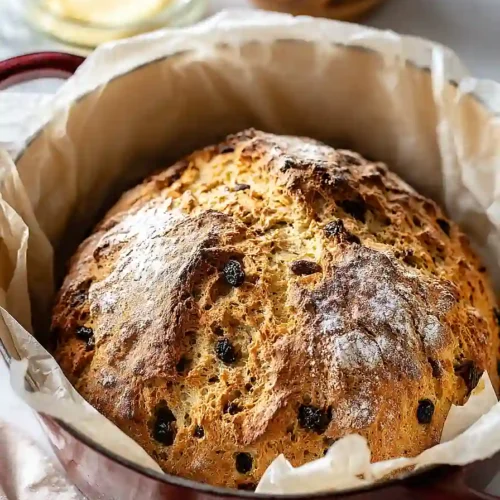
Classic Irish Soda Bread in a Dutch Oven
Delicious Classic Irish Soda Bread in a Dutch Oven recipe with step-by-step instructions.
Ingredients
For the dry mix::
- 5 1/4 cups flour (I always use King Arthur all-purpose flour)
- 3 tablespoons sugar
- 1 teaspoon baking soda
- 1 teaspoon salt
- 7 tablespoons butter (cold and cut into 1/2-inch cubes)
- 2 cups raisins
- 1 tablespoon orange zest
For the wet mix and assembly::
- 2 cups buttermilk (I prefer Marburger for its thick consistency)
- 2 large eggs (room temperature, about 70°F)
- 1/4 cup flour
Instructions
- Preheat your oven to 450°F if using a Dutch oven, or 400°F if using a baking sheet. While the oven heats, whisk together the flour, sugar, baking soda, and salt in a large mixing bowl. This combines all your dry ingredients evenly so the leavening is distributed throughout the dough.
- Add the cold butter cubes to the dry ingredient mixture and use your fingertips or a pastry cutter to work the butter into the flour until the mixture resembles coarse breadcrumbs with some pea-sized pieces of butter remaining. This creates a tender crumb structure. Stir in the raisins and orange zest, distributing them evenly throughout the mixture. I like using fresh orange zest here because it adds a bright, subtle citrus note that complements the richness of the bread beautifully.
- In a small bowl, whisk together the room-temperature eggs and buttermilk until well combined. The room-temperature eggs will incorporate more smoothly into the dough and ensure even mixing throughout.
- Pour the wet ingredient mixture into the flour mixture and stir gently with a wooden spoon until a shaggy dough just comes together—do not overmix, as this will make the bread tough. Turn the dough out onto a surface lightly dusted with flour and gently shape it into a round loaf about 2 inches tall. Using a sharp knife, cut a shallow X across the top of the loaf, which allows steam to escape and helps the bread rise evenly.
- For Dutch oven baking (recommended): Place the shaped dough into a preheated Dutch oven, cover with the lid, and bake at 450°F for 25 minutes. Then remove the lid and bake uncovered for 20-25 minutes until the top is golden brown and the bread sounds hollow when tapped on the bottom. For baking sheet: Place the shaped dough on a parchment-lined baking sheet and bake at 400°F for 40-50 minutes until golden brown. I prefer the Dutch oven method because it traps steam, creating a more tender crumb and a beautiful crust—but both methods work well.
- Remove the bread from the oven and let it cool on a wire rack for at least 15-20 minutes before slicing. This resting period allows the crumb to set properly, making it easier to slice cleanly.