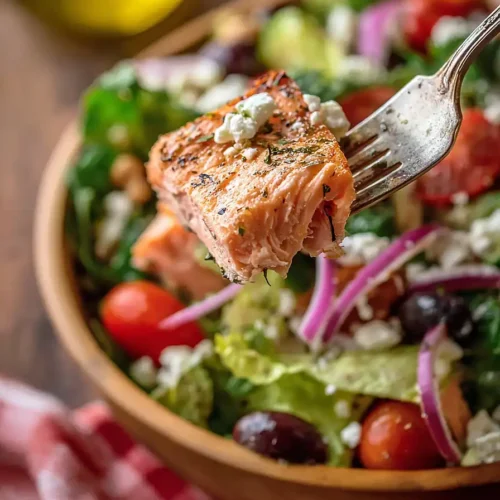
Healthy Mediterranean Salmon Salad
Delicious Healthy Mediterranean Salmon Salad recipe with step-by-step instructions.
Ingredients
For the salmon:
- 2 salmon filets (4 to 6 oz each, skin-on preferred)
- 1 tsp olive oil (for cooking)
- kosher salt
- 1 tsp lemon juice (freshly squeezed)
- fresh ground pepper
For the salad:
- 1/2 cup cooked quinoa (cooled to room temperature)
- 1/2 cup grape tomatoes (halved)
- 1 head romaine lettuce (chopped into bite-sized pieces)
- 1/2 cup red onion (thinly sliced, about 1/4-inch)
- 1/4 cup crumbled feta cheese (I use authentic Greek feta)
- 2 tbsp sliced almonds (toasted for better flavor)
- 2 tbsp kalamata olives (pitted)
For the dressing:
- 1 tsp maple syrup (optional but adds subtle sweetness)
- 2 tbsp extra virgin olive oil (I use California Olive Ranch)
- 1 tsp Dijon mustard
- 2 tbsp fresh lemon juice (freshly squeezed preferred)
- cracked pepper to taste
- salt to taste
Instructions
- Start by toasting the sliced almonds in a dry skillet over medium heat for 2-3 minutes, stirring frequently until fragrant and lightly golden, then set aside to cool. While the almonds toast, chop the romaine lettuce into bite-sized pieces, halve the grape tomatoes, thinly slice the red onion, and pit the kalamata olives if needed. Having all your ingredients prepped and ready will make assembly seamless once the salmon finishes cooking.
- Whisk together the extra virgin olive oil, fresh lemon juice, Dijon mustard, and maple syrup in a small bowl until emulsified. Season with salt and cracked pepper to taste. The Dijon mustard acts as an emulsifier, helping the oil and lemon juice combine into a cohesive dressing. Set aside until ready to dress the salad.
- Preheat your oven to 400°F. Pat the salmon filets dry with paper towels, then rub the skin side and flesh with the 1 tsp olive oil, kosher salt, and fresh ground pepper. Place the filets skin-side down on a baking sheet or in a baking dish, drizzle with 1 tsp fresh lemon juice, and bake for 10-12 minutes until the flesh is opaque and flakes easily with a fork. I find that baking skin-side down keeps the skin crispy while the flesh stays moist and tender.
- While the salmon bakes, add the chopped romaine lettuce, cooled quinoa, thinly sliced red onion, halved tomatoes, crumbled feta cheese, pitted kalamata olives, and toasted almonds from Step 1 to a large bowl. Gently toss to combine, keeping the ingredients evenly distributed. Don't dress the salad yet—this prevents the lettuce from wilting while you finish the salmon.
- Remove the salmon from the oven and let it rest for 1-2 minutes—this allows the juices to redistribute, keeping the fish moist when you break it apart over the salad. Pour the vinaigrette from Step 2 over the salad base and toss gently to coat. Divide the dressed salad between two plates or bowls, then top each with a warm salmon filet, positioning it skin-side up for visual appeal. Serve immediately while the salmon is still warm.