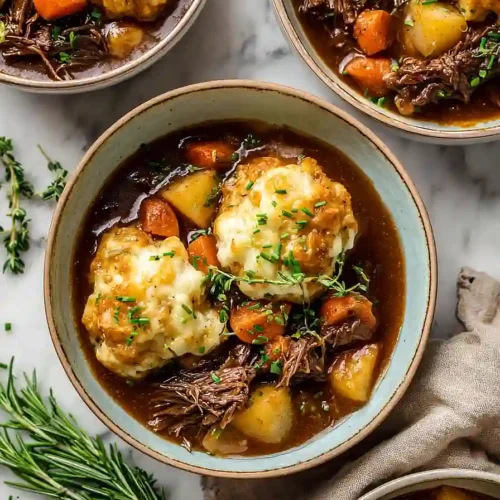
Homemade Irish Stew with Cheddar Dumplings
Delicious Homemade Irish Stew with Cheddar Dumplings recipe with step-by-step instructions.
Ingredients
For the stew::
- 3 lb chuck roast (cut into 1 1/2-inch cubes for even cooking)
- 1/3 cup olive oil
- 2 onions (diced into 1/2-inch pieces)
- 1 tbsp thyme
- 1 tbsp rosemary
- 6 garlic cloves
- 3 tbsp tomato paste (I prefer Hunt's for its deep color)
- 2 cups Guinness (extra stout adds the best depth)
- 6 cups beef stock
- 2 bay leaves
- 6 carrots (sliced into 1-inch thick rounds)
- 3 potatoes
- 3 celery stalks
- 2 cups mushrooms
- 1/2 tsp black pepper
For the dumplings::
- 2 cups Bisquick (I always use the Original variety for better lift)
- 1 tsp garlic powder
- 2 cups cheddar cheese (freshly shredded melts much smoother than bagged)
- 1/4 cup chives
- 3/4 cup milk
Instructions
- Pat the chuck roast cubes dry with paper towels and season generously with salt and pepper—this helps them brown properly rather than steam. Heat the olive oil in a large Dutch oven over medium-high heat until shimmering. Working in batches to avoid crowding, brown the meat on all sides until deeply caramelized (about 3-4 minutes per batch), then transfer to a plate. I like to let the meat rest on the plate while I build the flavor base, which keeps it from getting overcooked when added back.
- In the same pot with the browned bits remaining, sauté the diced onions over medium heat until softened, about 3-4 minutes. Add the garlic cloves, thyme, rosemary, and tomato paste, stirring constantly for about 2 minutes until the tomato paste darkens slightly and the aromatics bloom. This short cooking time develops deep flavor without burning the herbs. Deglaze the pot by pouring in 1 cup of Guinness, scraping up all the browned bits from the bottom—these concentrated flavors are essential to the stew's richness.
- Return the browned meat from Step 1 to the pot along with the beef stock and bay leaves, stirring gently to combine. Bring to a simmer on the stovetop, then cover and transfer to a 325°F oven for 1.5 hours. The low, steady heat breaks down the collagen in the chuck roast into gelatin, making the meat incredibly tender while the braising liquid becomes rich and flavorful.
- Remove the pot from the oven and stir in the sliced carrots, diced potatoes, chopped celery stalks, and mushrooms. Pour in the remaining 1 cup of Guinness and 1 cup of beef stock. Return the covered pot to the oven for another 1.5 hours until the vegetables are tender and the meat is fall-apart soft. The vegetables cook in the flavorful braising liquid, absorbing all the deep, savory notes developed in earlier steps.
- Remove the stew from the oven and place it on the stovetop over medium-high heat. Bring it to a gentle boil, then reduce to a simmer. While the stew heats, whisk together the Bisquick, garlic powder, freshly shredded cheddar cheese, and chives in a bowl, then stir in the milk until a thick, biscuit-like dough forms. I always use freshly shredded cheddar rather than bagged—it melts into the dumplings much more smoothly and creates better texture. Drop spoonfuls of dough directly onto the simmering stew (about 8-10 dumplings), spacing them so they have room to puff up without touching.
- Cover the pot and simmer for 10 minutes without lifting the lid—this allows the dumplings to cook through and absorb steam, making them light and fluffy. Uncover and simmer for another 10 minutes to allow the tops to set and develop a slight firmness. Remove from heat and let the stew rest for 15-30 minutes before serving; this allows the dumplings to firm up slightly and the flavors to meld together beautifully. The stew will continue to thicken slightly during resting, creating a more cohesive dish.