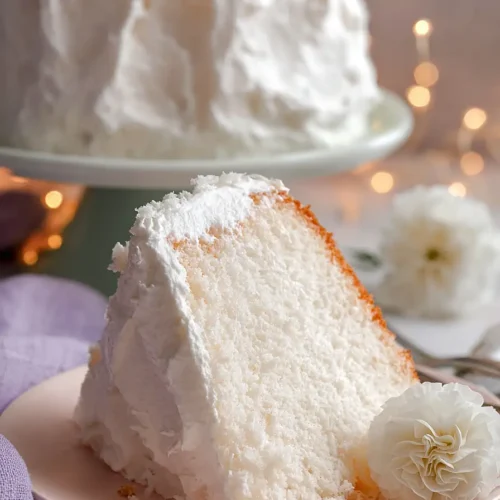
Light Angel Food Cake with Frosting
Delicious Light Angel Food Cake with Frosting recipe with step-by-step instructions.
Ingredients
For the cake::
- 1.25 cups cake flour (I always use King Arthur for a tender crumb)
- 1.75 cups powdered sugar (sifted to remove lumps)
- 12 egg whites (room temperature, about 70°F)
- 1.75 tsp cream of tartar
- 1/4 tsp salt
- 2 tsp flavoring emulsion (I prefer LorAnn emulsions for better heat stability)
- 1 cup sugar
For the frosting::
- 2 egg whites
- 1/2 tsp cream of tartar
- 1/4 cup sugar
- 2/3 cup corn syrup (I use Karo for the best shine and texture)
- 1.25 tsp vanilla essence
Instructions
- Preheat your oven to 375°F. Sift together the cake flour and powdered sugar three times into a large bowl—this triple sifting is crucial for removing lumps and incorporating air, which creates the tender, delicate crumb that defines angel food cake. Set this dry mixture aside. Ensure your egg whites are at room temperature (around 70°F), as warmer eggs whip to greater volume and create a more stable foam. Have all remaining ingredients measured and ready before you begin beating the eggs.
- In a very clean, grease-free mixing bowl, begin beating the 12 room-temperature egg whites with the cream of tartar and salt on medium speed until foamy and light. This takes about 1-2 minutes. Gradually add the 1 cup of sugar while continuing to beat, increasing speed to medium-high. Beat until stiff peaks form—the whites should be glossy, voluminous, and hold their shape completely when the beaters are lifted. This stage is the foundation of your cake's structure, so don't rush it; it typically takes 8-10 minutes total.
- Add the flavoring emulsion to the whipped egg whites and gently fold to combine. Now carefully fold in the dry flour and sugar mixture from Step 1 in two additions, using a rubber spatula and working gently to preserve the airiness you've built. Make folding motions from bottom to top, rotating the bowl as you work—this takes about 1-2 minutes per addition. Pour the batter into an ungreased 10-inch tube cake pan (the ungreased surface helps the cake climb and set properly) and smooth the top lightly.
- Place the filled pan in your preheated 375°F oven and bake for 45-50 minutes, until the top is golden brown and a toothpick inserted near the center comes out clean. The cake should spring back when lightly touched. Remove from the oven and immediately invert the pan onto a cooling rack or onto the neck of a bottle (if your pan has feet)—this upside-down cooling is essential for angel food cake, as it helps the structure set properly and prevents the delicate cake from collapsing.
- While the cake cools, prepare the frosting. In a clean mixing bowl, combine the 2 egg whites with the 1/2 tsp cream of tartar and beat on medium speed until frothy, about 1 minute. Add the 1/4 cup sugar and beat for 2-3 minutes more until soft peaks form (the mixture should be light and foamy but not yet stiff). This frosting base will be transformed by the hot syrup in the next step.
- Bring the corn syrup to a boil in a small saucepan over medium-high heat and let it boil for exactly 1 minute—this stabilizes the syrup and helps create a glossy, stable frosting. With the mixer running on medium-high speed, carefully pour the hot syrup into the egg white mixture in a thin, steady stream. I like to pour the syrup down the side of the bowl rather than directly into the beaters to avoid splattering. Once all syrup is incorporated, add the vanilla essence and beat for 4-5 minutes until the frosting becomes thick, fluffy, and cooled to room temperature (it will go from glossy to matte as it cools and thickens).
- Once the cake has cooled completely (about 1-2 hours in its inverted position), run a thin knife around the edges and the center tube to loosen it from the pan, then gently turn it right-side up and remove from the pan. Spread or swirl the seven-minute frosting generously over the top and sides of the cake while it's still slightly cool. The frosting sets as it cools, so work at a moderate pace but don't worry about perfection—the rustic, billowy texture of this frosting is part of its charm.