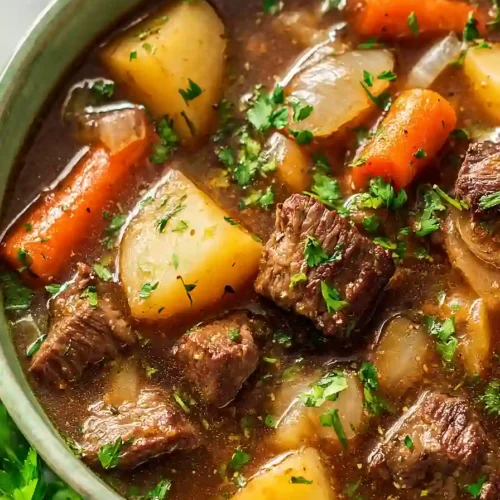
Perfect Irish Stew
Delicious Perfect Irish Stew recipe with step-by-step instructions.
Ingredients
For the beef and liquid base::
- 1.5 lb beef stew meat (cut into 1-inch chunks for even cooking)
- 1.25 tsp salt
- 1/4 cup olive oil
- 7 garlic cloves
- 4 cups beef stock
- 2 cups water
- 1 cup stout (I always use Guinness for authentic flavor)
- 1 cup red wine
- 2 tbsp tomato paste (I use Mutti for a richer color)
- 1 tbsp sugar
- 1.5 tbsp thyme
- 1.5 tbsp Worcestershire sauce
- 2 bay leaves
- 1/4 tsp smoked paprika
For the vegetable mixture::
- 2 tbsp butter (I prefer Kerrygold for this recipe)
- 1 large onion (chopped into 1/2-inch pieces)
- 2.25 cups carrots
- 3 lb potatoes (peeled and cut into 1-inch cubes)
- 2 tsp salt
- 3/4 tsp black pepper
- 3 tbsp parsley
Instructions
- Peel and cut potatoes into 1-inch cubes, peel and chop the large onion into 1/2-inch pieces, and cut carrots into 1-inch pieces. Mince the 7 garlic cloves and set aside. Pat the beef dry with paper towels—this helps it brown better and develop a deeper flavor. Heat the olive oil in a large heavy-bottomed pot over medium-high heat until it shimmers. Season the beef chunks with 1.25 tsp salt, then add to the hot oil in a single layer. Let them sit undisturbed for 3-4 minutes per side to develop a golden-brown crust. Work in batches if needed to avoid overcrowding.
- Once the beef is browned, reduce heat to medium and add the minced garlic, cooking for just 30 seconds until fragrant—avoid burning it. Stir in the tomato paste and cook for 1 minute to deepen its flavor. Pour in the beef stock, water, stout, and red wine, scraping up any browned bits from the bottom of the pot with a wooden spoon. Add the sugar, thyme, Worcestershire sauce, bay leaves, and smoked paprika, stirring well to combine. I like to taste the braising liquid at this point—a pinch more Worcestershire can really round out the savory depth.
- Bring the braising liquid to a gentle simmer, then reduce heat to low. Cover the pot partially and let it simmer for 1 hour to tenderize the beef. While the beef cooks, melt the butter in a separate pot or large skillet over medium heat. Add the chopped onions and carrots, cooking for about 15 minutes, stirring occasionally, until they begin to soften and develop some color at the edges. I prefer Kerrygold butter here because its rich flavor complements the earthiness of the root vegetables beautifully.
- After the beef has simmered for 1 hour, add the softened onions and carrots from Step 3 to the pot along with the cubed potatoes from Step 1. Season everything with 2 tsp salt and 3/4 tsp black pepper, stirring gently to distribute the seasoning evenly. Return to a simmer, leave the pot uncovered, and cook for another 35-40 minutes until the potatoes are tender when pierced with a fork and the beef is melt-in-your-mouth tender. Skim off any excess fat that rises to the surface during cooking using a spoon or skimming ladle—this keeps the stew from being greasy.
- Remove the pot from heat and carefully fish out and discard the bay leaves. Taste the stew and adjust seasoning if needed—it should be rich, savory, and deeply flavorful. Ladle into bowls and garnish generously with fresh parsley. This stew is even better the next day once the flavors have had time to meld, so don't hesitate to make it ahead.