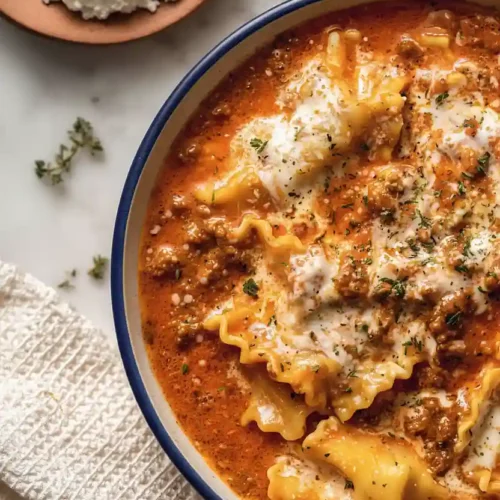
Rich Lasagna Soup with Ricotta
Delicious Rich Lasagna Soup with Ricotta recipe with step-by-step instructions.
Ingredients
- 1 lb ground beef
- 1 onion (diced into 1/2-inch pieces for even cooking)
- 6 garlic cloves
- 3/4 tsp red pepper flakes
- 24 oz Italian sauce (I use Rao's Homemade Marinara for the best flavor)
- 10 cups chicken broth
- 14 oz crushed tomatoes (I prefer Muir Glen for a sweeter, less acidic base)
- 2 tbsp tomato paste
- 2 tsp balsamic vinegar
- 2 tsp sugar
- 1 tbsp dried basil
- 1 tsp dried parsley
- 1 tsp dried oregano
- 1/2 tsp fennel seeds
- 1 tsp salt
- 1/2 tsp pepper
- 1 bay leaf
- 10 lasagna noodles (broken into 1-inch to 2-inch pieces)
- 1/2 cup cream
- 1/4 cup fresh basil, chopped
- For the garnish::
- mozzarella
- parmesan
- ricotta (I always use Galbani for a creamier finish)
Instructions
- Heat a large pot or Dutch oven over medium-high heat and add the ground beef, breaking it apart as it cooks. Once the beef is mostly browned, add the diced onion and continue cooking until the onion softens and the beef is fully cooked, about 5-7 minutes total. The beef and onion should develop some color and caramelization, which adds depth to the soup. Drain excess fat from the pot, leaving about 1 tablespoon to keep things flavorful.
- Add the minced garlic and red pepper flakes to the pot with the cooked beef and onion, stirring constantly for about 30 seconds. This brief cooking time releases the aromatic oils from the garlic and pepper flakes, intensifying their flavor without burning them. I find this blooming technique crucial—it prevents the garlic from tasting raw or bitter in the finished soup.
- Add the Italian sauce, crushed tomatoes, tomato paste, balsamic vinegar, sugar, dried basil, dried parsley, dried oregano, fennel seeds, salt, pepper, and bay leaf to the pot. Stir everything together until well combined, then pour in 6 cups of the chicken broth. Bring the mixture to a boil over medium-high heat, stirring occasionally to prevent sticking. The combination of tomato products, vinegar, and sugar creates a balanced, rich flavor base—the vinegar cuts through the sweetness while the sugar mellows the acidity of the tomatoes.
- Break the lasagna noodles into 1-inch to 2-inch pieces and add them directly to the boiling soup. Reduce the heat to medium or medium-low and let the soup simmer for 20-30 minutes, stirring occasionally to prevent the noodles from sticking together. The noodles will soften and absorb the flavorful broth, creating the signature lasagna soup texture. I always taste the noodles around the 20-minute mark—you want them tender but not mushy, which usually takes about 25 minutes.
- Remove the bay leaf from the pot and discard it. Stir in the cream and add 2-4 cups of the remaining chicken broth, depending on how thick you prefer your soup—start with 2 cups for a thicker consistency and add more for a brothier result. Heat through gently without bringing it to a boil. Taste the soup and adjust seasoning with additional salt and pepper if needed. The cream adds richness and balances the acidity of the tomatoes while the extra broth creates the proper consistency.
- Ladle the hot soup into bowls and top each serving generously with shredded or crumbled ricotta, mozzarella, and parmesan cheese. I always use Galbani ricotta because it has a creamier consistency that melts beautifully into the hot soup. Add a sprinkle of fresh chopped basil to each bowl for brightness and a finishing touch that complements the Italian flavors throughout the soup.