What if you only had to plant something once and it just kept feeding you for decades? That’s the idea behind perennial edibles — plants that come back year after year without much fuss from you.
Some of these might already be growing in your neighborhood without you even realizing they’re edible. Others are worth making space for right now. Let’s get into the list!
1.) Asparagus

Asparagus is one of the best long-term investments you can make in a food garden. Plant the crowns once, and you’ll be harvesting spears every spring for 20 to 30 years. It grows well in zones 3–8 and actually gets more productive as it matures.
The catch is patience — you’ll need to skip harvesting for the first year or two to let the roots establish. After that, it basically takes care of itself with very little attention needed.
2.) Rhubarb

Rhubarb is one of those plants you put in the ground once and basically forget about. It comes back every spring without much help from you, and a single crown can keep producing for 20 years or more. It grows well in zones 3–8 and actually prefers a cold winter to go dormant.
Give it full sun and decent drainage, and it’ll thrive. Just hold off on harvesting the first year so the roots can get established. After that, it’s practically on autopilot.
3.) Jerusalem Artichoke

Jerusalem artichoke is basically a sunflower that grows edible tubers underground. Once you plant it, it comes back every year without much help from you. It grows well in zones 3–9, handles poor soil, and can reach up to 10 feet tall.
The tubers are ready to harvest in fall, and whatever you leave in the ground just keeps growing next season. Fair warning though — it spreads aggressively, so plant it somewhere you don’t mind it taking over.
4.) Horseradish

Horseradish is one of those plants you put in the ground once and basically never think about again. It grows in zones 3–7, handles cold winters like a champ, and comes back every spring without any help from you.
The roots are ready to harvest in fall, usually after the first frost. Just dig up what you need and leave the rest. Fair warning though — give it a dedicated spot, because it spreads and doesn’t like to share space with other plants.
5.) Globe Artichoke
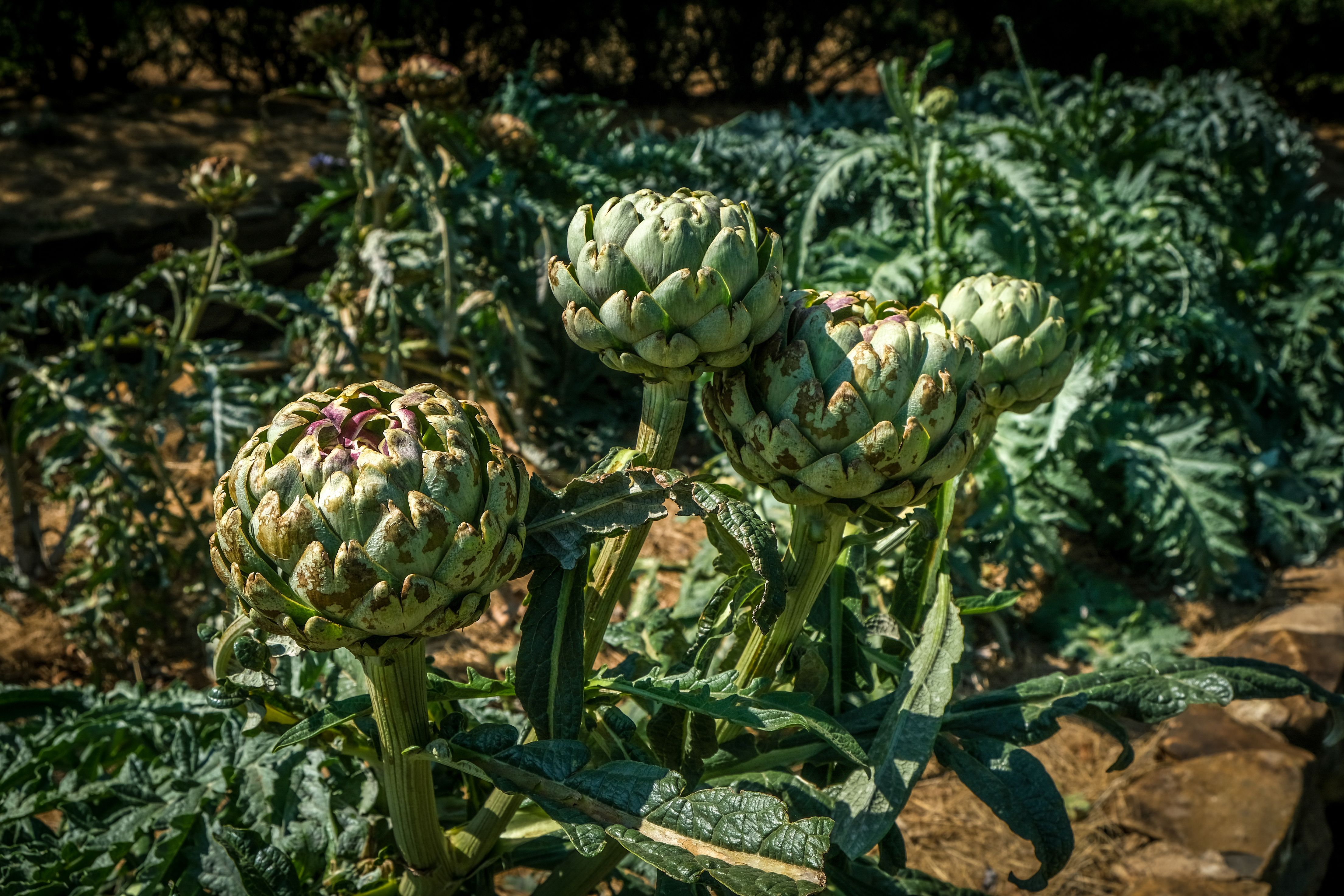
Globe artichokes are a great long-term investment for your garden. Once established, a single plant can keep producing for 20 years or more with very little fuss. They do best in zones 7–11 but can survive in colder areas with some mulching in winter.
Plant them in full sun with well-draining soil, and they’ll reward you every spring. Each plant can put out multiple edible buds per season. Just cut the center bud first to encourage more growth on the side shoots.
6.) Walking Onions

Walking onions are a bit of a garden oddity — instead of flowering, they grow small bulblets at the top of their stalks. Those bulblets get heavy, tip over, and “walk” to a new spot, planting themselves. It’s a pretty cool system.
They grow well in zones 3–9, need almost no attention, and come back every year without replanting. You can eat the greens, bulbs, and bulblets. Once they’re established, they basically just do their thing.
7.) Lovage

Lovage is basically a giant celery-like herb that comes back every spring without you lifting a finger. It grows best in zones 3–8, handles partial shade just fine, and can reach up to six feet tall once it’s established. Plant it once and it’ll quietly thrive for decades.
Every part of it is edible — leaves, stems, seeds, and even the roots. The flavor is bold and savory, great for soups and stews. Just give it decent soil and some water while it gets settled in.
8.) Sorrel

Sorrel is a leafy herb with a sharp, lemony flavor that keeps coming back year after year with almost no effort on your part. Once it’s established, it basically takes care of itself.
It grows well in zones 3–9 and can handle partial shade, which makes it easy to tuck into spots where other plants struggle. Just cut it back after it flowers to keep the leaves tender and tasty for cooking.
9.) Sea Kale

Sea kale is a coastal perennial that’s been feeding people for centuries, and once it gets going, it basically takes care of itself. It grows best in sandy, well-drained soil and handles salty air better than most edible plants. Hardy in zones 4–9.
You can eat the young shoots like asparagus in spring, and the leaves work well sautéed or raw. Give it full sun and decent drainage, and it’ll come back reliably for decades without much fuss.
10.) Good King Henry

Good King Henry is an old-school leafy green that was popular in Europe for centuries before spinach took over. It grows in zones 3–9 and does well in partial shade, which makes it handy for spots where other edibles struggle.
Once it’s established, it comes back every spring without much help from you. The leaves taste a lot like spinach and can be cooked the same way. Just let it go to seed and it’ll spread slowly on its own.
11.) Watercress

Watercress is one of those plants that basically takes care of itself once it’s settled in. It loves running water or consistently wet soil, so planting it near a stream, pond edge, or keeping it in a container with a water tray works really well.
It grows back year after year in zones 3–11, handling both cool springs and warm summers. Just trim it regularly to keep it from getting leggy, and it’ll keep pushing out fresh leaves for decades.
12.) Chives

Chives are one of the easiest perennials you can grow. Plant them once in a sunny spot with decent drainage, and they’ll keep coming back every spring for decades. They handle cold winters well and are hardy in zones 3–9, so most gardeners are covered.
Just cut them back when they start to look scraggly, and they’ll bounce right back. They even produce pretty little purple flowers that you can eat too. Minimal effort, maximum payoff.