Hey, so you’ve spent time and money making your yard look nice, but what if some of those choices are actually making landscapers cringe? It turns out a few really common gardening habits and plant picks are pretty much a joke in the professional world.
Don’t worry, most of us are guilty of at least one of these! Keep reading to find out which yard features and plants made the list — you might be surprised.
1.) Perfectly Manicured Fake Grass

Fake grass might seem like a smart, low-maintenance swap for the real thing, but landscapers can spot it from the street — and they’re not impressed. It sits too flat, stays too green, and has that unmistakable plastic sheen that no amount of brushing can fix.
Beyond the looks, it traps heat, doesn’t absorb rainwater, and can actually make your yard hotter in summer. Real turf, even if it needs mowing, just works better with your yard’s natural ecosystem.
2.) Matching Mailbox Garden Gnomes

Matching mailbox gnomes might seem like a fun idea at the time, but landscapers cringe every time they see a coordinated set flanking a driveway. The “more is more” approach rarely works outdoors, and gnomes tend to make a yard look more like a theme park than a home.
If you love garden décor, try sticking to one or two pieces max. Less clutter gives your actual plants room to shine and keeps the overall look clean and intentional.
3.) Excessive Decorative Rock Coverage

Covering every square inch of your yard with decorative rock might feel like a low-maintenance win, but landscapers cringe every time they see it. It traps heat, kills soil health, and makes it nearly impossible for beneficial insects and plants to thrive.
A little rock goes a long way. Use it sparingly around pathways or dry garden beds, and leave room for actual plants. Your yard needs living things to stay balanced, and so does the ecosystem around it.
4.) Improperly Placed Foundation Plants

Foundation plants seem like a good idea until they start swallowing your windows and blocking your front door. Junipers, arborvitae, and hollies are classic offenders — they look tiny at the nursery but can easily hit 10 to 15 feet wide at maturity.
Before you plant anything along your house, check the mature spread on the tag. Zone hardiness matters too, but so does giving each shrub enough room to grow without constant hacking.
Landscapers wince every time they see a perfectly healthy shrub butchered into a lollipop shape just to keep it from eating the house.
5.) Overgrown Invasive Bamboo Borders

Bamboo borders might seem like a clever privacy screen idea, but landscapers cringe every time they see them. Running bamboo spreads underground through aggressive rhizomes and will happily invade your neighbor’s yard, crack your foundation, and take over your garden beds before you know what hit you.
If you’re set on bamboo, clumping varieties are a much safer choice. They stay put and grow in zones 5–10. Regular root barrier installation and seasonal pruning can help keep things under control.
6.) Dyed Mulch in Bright Colors

Bright red, blue, or orange mulch might seem like a fun way to add some color to your garden beds, but landscapers tend to cringe when they see it. The dye can fade unevenly over time, leaving your yard looking patchy and worn out after just one season.
Beyond the looks, some dyed mulches are made from recycled wood that may contain chemicals. Natural wood mulch does the same job — retaining moisture and regulating soil temperature — without the circus vibe.
7.) Randomly Placed Landscape Boulders

A few well-placed boulders can look natural and intentional. The problem is when homeowners just drop a giant rock in the middle of the lawn with nothing around it. It ends up looking like the delivery truck ran out of time.
If you want rocks to work, group them in odd numbers and nestle them into the ground slightly. Add low-growing plants around the base. A boulder sitting flat on top of the grass just looks lost, not purposeful.
8.) Spiral Topiary Tree Obsession
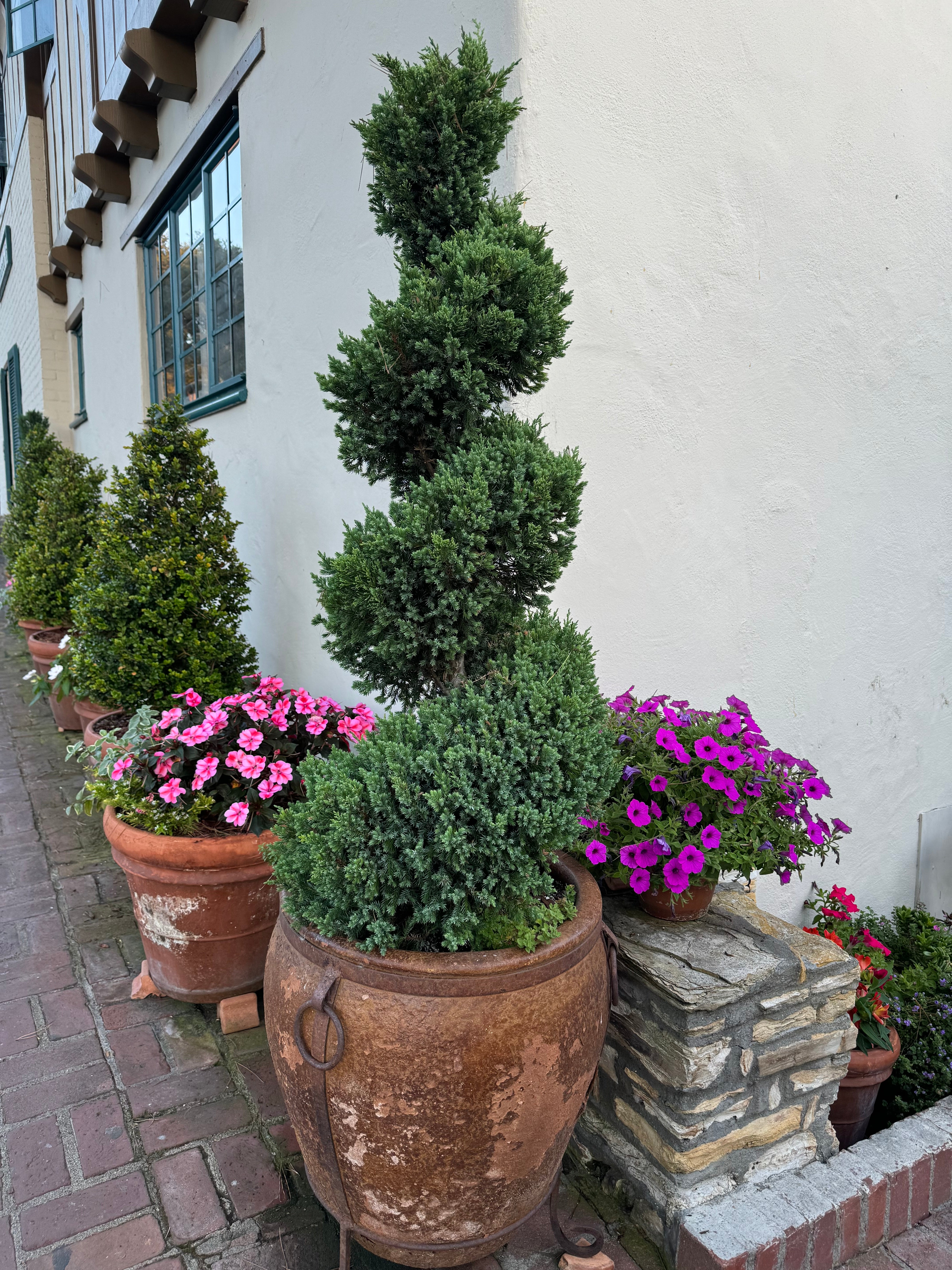
Perfectly sculpted spiral topiaries might look impressive in a magazine, but keeping them that way is a full-time job. Most homeowners trim them once, watch them grow out unevenly, and end up with a lopsided green corkscrew that confuses the neighbors.
Boxwood and arborvitae are the usual suspects here. They grow in zones 4–9, need full to partial sun, and require precise trimming every few weeks during the growing season just to hold their shape.
Save yourself the stress and plant something that looks good without the constant upkeep.
9.) Non-Functional Decorative Bridges
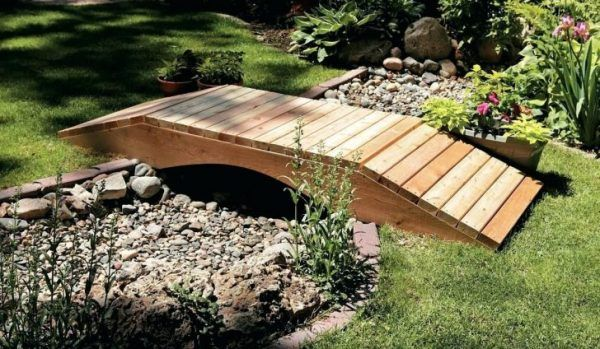
A tiny bridge that crosses a patch of dry mulch or flat ground is one of those yard features that makes landscapers do a double-take. If there’s no water, no change in elevation, and nothing to actually cross, the bridge isn’t really doing a job — it’s just sitting there looking a little lost.
If you love the look, at least pair it with a dry creek bed made from river rocks. It gives the bridge some purpose and actually helps with yard drainage too.
10.) Overcrowded Plant Spacing Disasters

Cramming plants together because they look small at the nursery is one of the most common mistakes homeowners make. That cute little shrub needs room to grow, and so does everything else around it.
Check the spacing recommendations on the plant tag before you dig. Most perennials and shrubs need anywhere from 2 to 6 feet between them. Crowded plants compete for water, nutrients, and light, which leads to poor growth and disease problems that are tough to fix later.
11.) Plastic Flower Bed Edging

Plastic flower bed edging seems like a smart, affordable way to keep your garden tidy, but landscapers cringe every time they see it. It warps in the heat, pops out of the ground after a hard freeze, and fades to a chalky gray after one season in the sun.
Instead, try steel, aluminum, or natural stone edging. These options hold their shape through freeze-thaw cycles and hot summers, work well in any hardiness zone, and actually look better as they age.
12.) Mismatched Hardscape Material Combinations

Mixing red brick edging with gray concrete pavers and then throwing in some tan flagstone nearby is a look that makes landscapers quietly cringe. Each material pulls the eye in a different direction, and the yard ends up feeling cluttered rather than put-together.
The fix is simple — pick one or two materials that share a similar color tone and stick with them throughout the space. Consistency ties everything together and makes even a small yard feel more intentional and well-planned.
13.) Impractical Grass Strips Everywhere
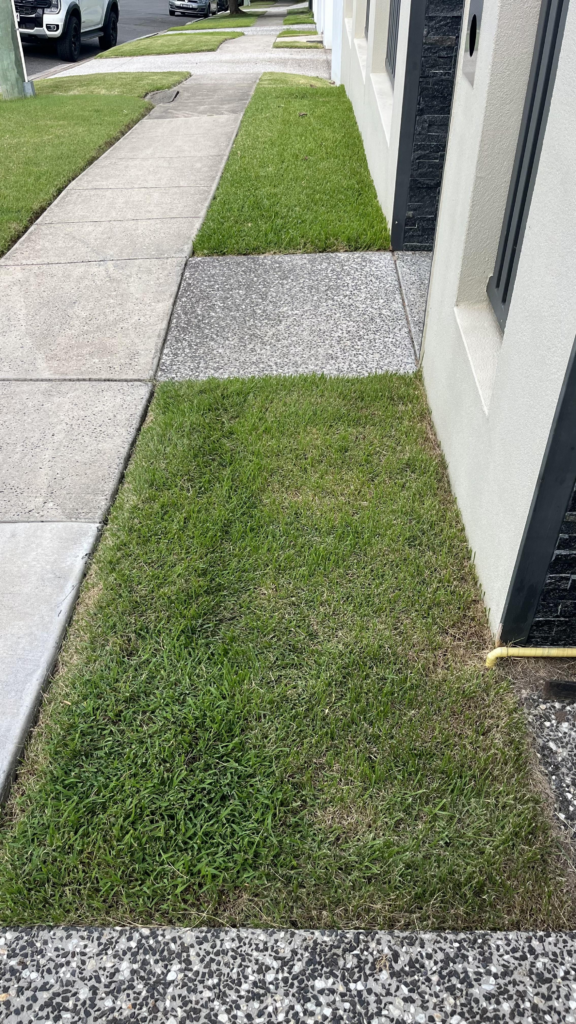
Narrow strips of grass wedged between a sidewalk and a driveway might seem like a good idea at the time, but landscapers cringe every time they see them. They’re nearly impossible to mow, require edging every week, and tend to die off in summer heat or freeze out in winter.
If you’re in hardiness zones 5–9, consider swapping these strips for low-growing ground covers like creeping thyme or sedge. They need far less water, zero mowing, and actually hold up to foot traffic better.
14.) Excessive Solar Light Overload

Solar lights are great in theory, but lining every single pathway, garden bed, and tree with them? That’s where things go sideways. Landscapers call it “runway syndrome,” and it’s more common than you’d think.
A few well-placed lights near entrances or focal points do the job just fine. Flooding your entire yard with dozens of cheap plastic stakes just looks cluttered and busy.
Less really is more here. Aim for three to five lights max in any given area.
15.) Tree Volcano Mulching Mistakes

Piling mulch into a thick cone shape against a tree trunk — aka the “mulch volcano” — is one of those things that looks tidy but slowly damages your tree. That mountain of wood chips traps moisture against the bark, invites rot, and creates a cozy home for pests and disease.
Keep mulch about 2–3 inches deep and pull it a few inches away from the trunk. A wide, flat ring is all you need. Your trees will genuinely thank you for it.