I’ve been making hummus bowls for years, and this one’s become my go-to for busy weeknights. There’s something about having all your favorite Mediterranean flavors in one bowl that just works. Plus, you can prep most of it ahead of time and throw it together in minutes when you’re ready to eat.
The secret to really good hummus is adding ice cubes while you blend. I know it sounds weird, but trust me on this one. It makes the hummus so much lighter and creamier than the store-bought stuff. And once you’ve got your homemade hummus ready, you can pile on whatever toppings you have in your fridge.
This bowl has quinoa for the base, tons of fresh vegetables, and extra chickpeas for protein. It’s filling without being heavy, and everyone in my house will actually eat it. Even better? You can make the hummus and quinoa on Sunday and have lunch sorted for the week.
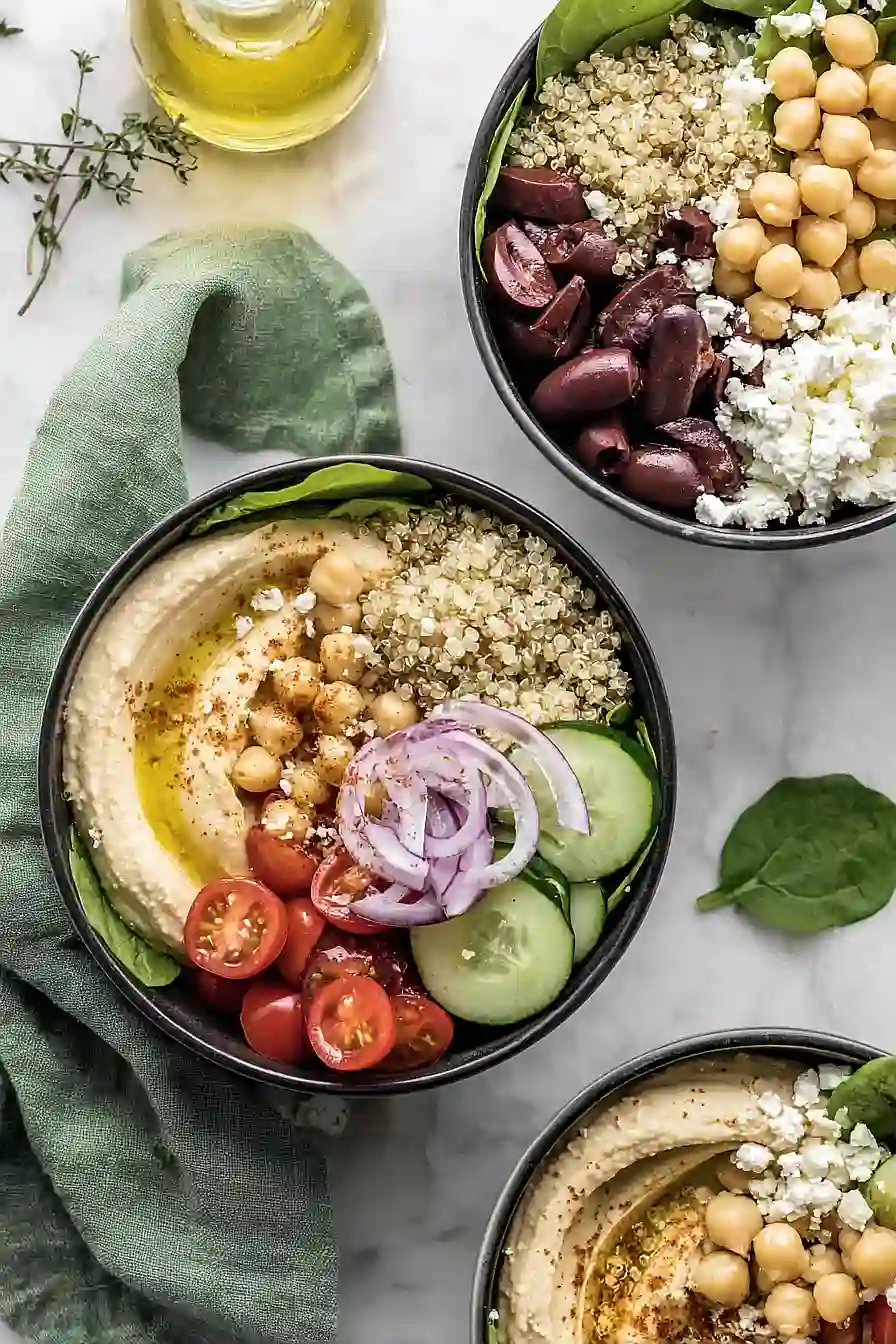
Why You’ll Love This Mediterranean Hummus Bowl
- Ready in 15 minutes – This bowl comes together super fast, making it perfect for busy weeknights when you need dinner on the table quickly.
- Packed with plant-based protein – Between the chickpeas, quinoa, and tahini, you’re getting plenty of protein to keep you satisfied without any meat.
- Fresh, wholesome ingredients – Crisp vegetables, homemade hummus, and Mediterranean staples make this a light yet filling meal that doesn’t weigh you down.
- Meal prep friendly – You can make the components ahead of time and assemble your bowl whenever hunger strikes throughout the week.
- Naturally vegan and gluten-free – This bowl works for various dietary needs without requiring any special substitutions or modifications.
What Kind of Chickpeas Should I Use?
For this Mediterranean hummus bowl, you’ll want to grab canned chickpeas since they’re convenient and work perfectly for both the hummus and the bowl topping. If you’re making the hummus from scratch, look for chickpeas that are packed in water rather than salt brine, as they tend to blend smoother and taste fresher. You can also use dried chickpeas if you have the time to soak and cook them, which some people prefer for a creamier hummus texture. Just remember to save some of that cooking liquid (aquafaba) to help thin out your hummus if needed. Whether you’re using them for the creamy base or as a protein-packed topping, chickpeas are pretty forgiving and will taste great either way.
Options for Substitutions
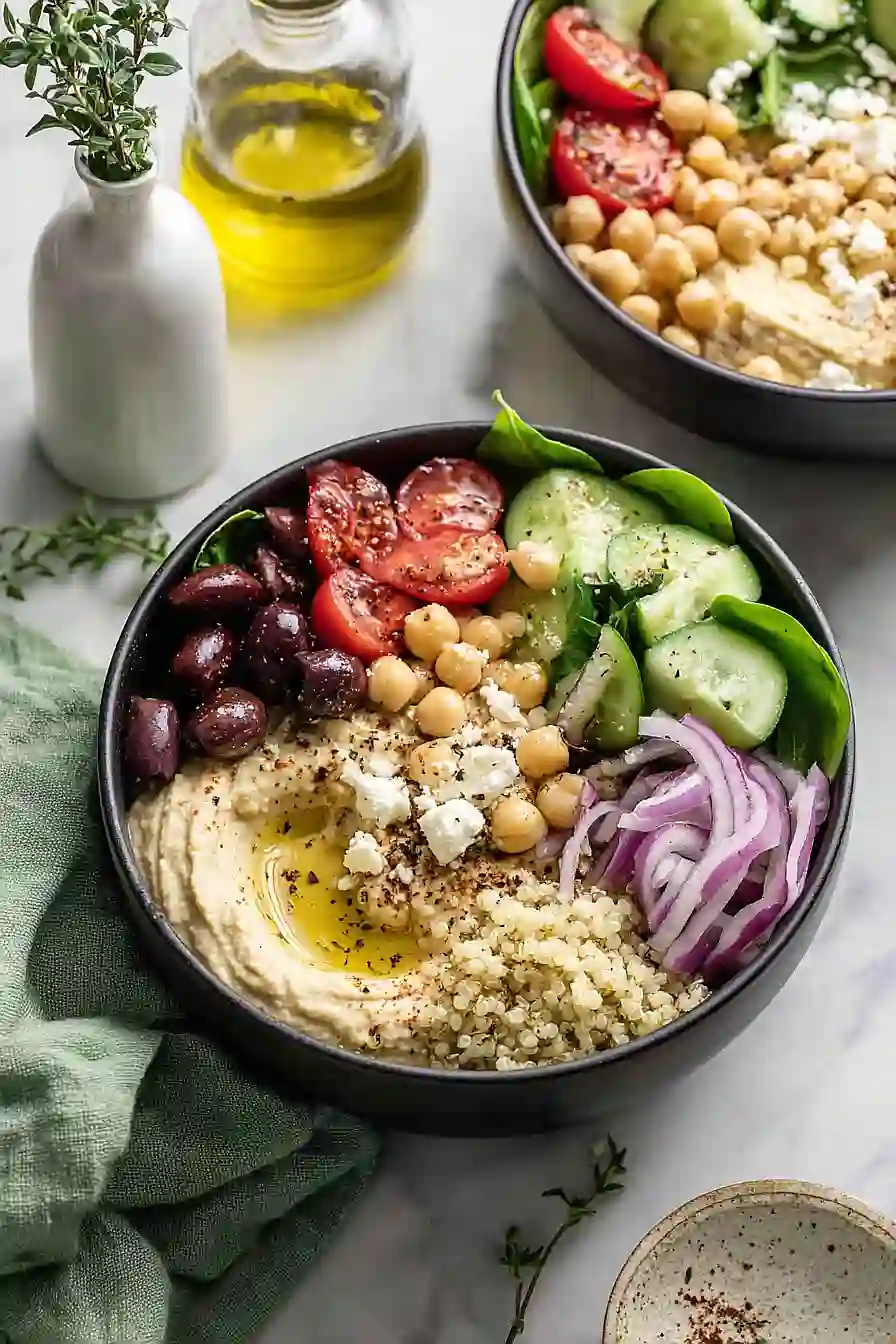
This Mediterranean bowl is super adaptable, so feel free to work with what you have:
- Tahini: If you don’t have tahini, you can use natural peanut butter or almond butter for a different flavor profile. The hummus won’t be traditional, but it’ll still be creamy and tasty.
- Quinoa: Brown rice, couscous, or farro all work great as a base. Just cook according to package directions – couscous is especially quick if you’re short on time.
- Spinach: Swap in arugula, mixed greens, or chopped romaine lettuce. Really any leafy green you prefer will work here.
- Cherry tomatoes: Regular tomatoes diced up work just fine. You can also use sun-dried tomatoes for a more intense flavor.
- Olives: Use whatever olives you like – kalamata, green, or black. If you’re not an olive fan, you can skip them or add some feta cheese instead for that salty, briny element.
- Ice cubes: The ice cubes help make the hummus extra creamy, but if you forget them, just add a bit more cold water (about 2-3 tablespoons) while blending.
Watch Out for These Mistakes While Cooking
The biggest mistake people make with hummus is skipping the step of peeling the chickpea skins, which might seem tedious but makes the difference between grainy hummus and silky-smooth restaurant-quality dip – just soak them in water and the skins slip right off with gentle rubbing.
Another common error is not blending long enough, so let that food processor run for the full 5 minutes even if it seems done earlier, as this extra time creates that creamy texture you’re after.
Adding ice cubes instead of cold water helps keep the hummus cool during blending and creates a lighter, fluffier consistency, so don’t skip this trick.
Finally, make sure your quinoa is completely cooled before assembling the bowl, otherwise it will wilt your spinach and make everything warm and limp instead of fresh and crisp.
What to Serve With Mediterranean Hummus Bowl?
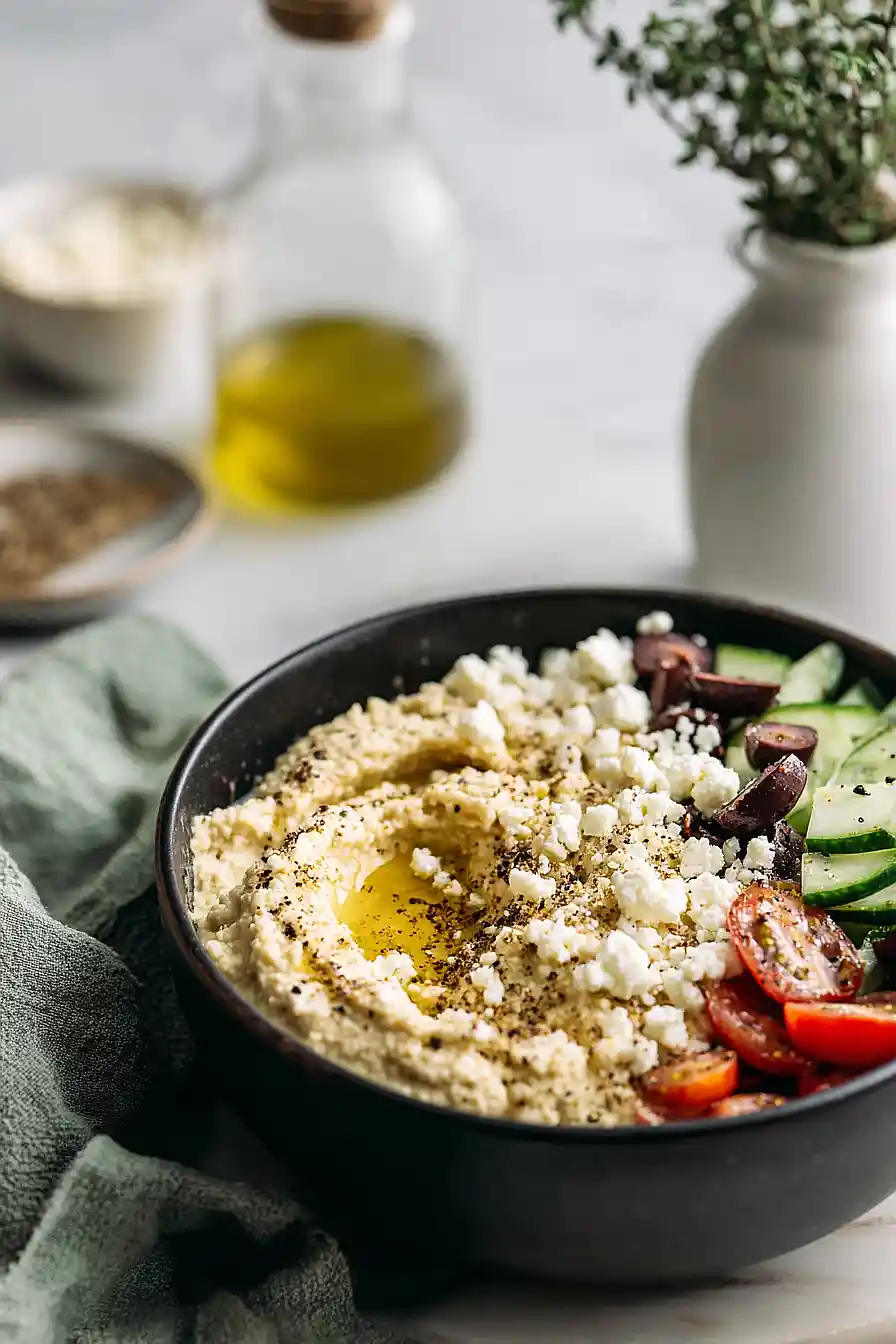
This hummus bowl is pretty filling on its own, but I love serving it with warm pita bread or pita chips on the side for scooping up all that creamy hummus. If you want to make it more of a complete meal, grilled chicken, falafel, or lamb kebabs are all great protein options that fit right in with the Mediterranean vibe. A simple side of tzatziki sauce or a lemony yogurt dressing adds extra creaminess and tanginess that pairs perfectly with the fresh veggies. For a lighter option, some crispy romaine lettuce leaves make great wraps if you want to scoop everything up and eat it like a taco.
Storage Instructions
Store: Keep your hummus bowl components separate in airtight containers in the fridge for best results. The hummus will stay fresh for about 5 days, while the quinoa and chopped veggies are good for 3-4 days. I like to prep everything on Sunday and assemble my bowls throughout the week for easy lunches.
Freeze: The hummus freezes really well for up to 3 months in a freezer-safe container. Just thaw it overnight in the fridge and give it a good stir before using. I don’t recommend freezing the fresh veggies or assembled bowls though, since the cucumbers and tomatoes get watery.
Assemble: When you’re ready to eat, just build your bowl with the stored components and drizzle with fresh olive oil. If the hummus seems a bit thick after storing, stir in a tablespoon of water or lemon juice to loosen it up.
| Preparation Time | 10-15 minutes |
| Cooking Time | 0 minutes |
| Total Time | 10-15 minutes |
| Level of Difficulty | Easy |
| Servings | 4 servings |
Estimated Nutrition
Estimated nutrition for the whole recipe (without optional ingredients):
- Calories: 1250-1400
- Protein: 38-45 g
- Fat: 44-54 g
- Carbohydrates: 170-190 g
Ingredients
For the hummus:
- 15 oz chickpeas (I prefer Goya for their firm texture)
- 4 tbsp lemon juice (freshly squeezed for best acidity)
- 3 tbsp tahini (I use Soom Foods for a smoother consistency)
- 2 garlic cloves
- 1/2 tsp salt
- 3 ice cubes (blending with ice makes the hummus extra light and airy)
- 1/4 tsp ground cumin
For the bowl:
- 1 cup quinoa
- 2 cups spinach
- 3/4 red onion (thinly sliced into half-moons)
- 0.5 pint cherry tomatoes (halved lengthwise)
- 1/2 english cucumber (diced into 1/2-inch pieces)
- 1 cup chickpeas
- 1/2 cup olives
- fresh parsley
- olive oil
Step 1: Prepare the Base Ingredients and Cook Grains
- 1 cup quinoa
- 3/4 red onion
- 0.5 pint cherry tomatoes
- 1/2 english cucumber
- 2 garlic cloves
- fresh parsley
Start by cooking the quinoa according to package directions (typically 15-20 minutes).
While the quinoa cooks, prepare your mise en place: thinly slice the red onion into half-moons, halve the cherry tomatoes lengthwise, dice the cucumber into 1/2-inch pieces, mince the garlic cloves, and roughly chop the fresh parsley.
Having everything prepped before you blend the hummus ensures the bowl comes together quickly and your components stay fresh.
Step 2: Prepare and Blend the Hummus Base
- 15 oz chickpeas
Drain the 15 oz can of chickpeas in a colander and rinse them under cold water.
Using your fingertips or a soft cloth, gently rub the chickpeas to remove the thin outer skins—this step creates an incredibly smooth hummus since the skins can create a grainy texture.
Add the peeled chickpeas to a food processor and pulse until they reach a powdery, sand-like consistency before adding any wet ingredients.
Step 3: Blend the Hummus to Silky Perfection
- 4 tbsp lemon juice
- 3 tbsp tahini
- 1/2 tsp salt
- 1/4 tsp ground cumin
- 3 ice cubes
To the chickpea powder in the food processor, add the fresh lemon juice, tahini, minced garlic, salt, ground cumin, and ice cubes.
I like to add the ice cubes because they create tiny air pockets as they melt, giving the hummus an incredibly light and airy texture that store-bought versions can’t match.
Blend on high for about 5 minutes, stopping to scrape down the sides halfway through.
The mixture should transform from a thick paste into a smooth, creamy dip with a slight sheen.
Step 4: Assemble the Mediterranean Bowl
- hummus from Step 3
- cooked quinoa from Step 1
- 2 cups spinach
- prepared red onion, tomatoes, and cucumber from Step 1
- 1 cup chickpeas
- 1/2 cup olives
Spoon the hummus from Step 3 into a serving bowl or individual bowls, creating a shallow well in the center.
Fluff the cooked quinoa from Step 1 with a fork and arrange it in the bowl alongside the fresh spinach.
Create sections around the hummus with the prepared red onion, cherry tomatoes, and cucumber from Step 1, then scatter the 1 cup of whole chickpeas and olives throughout for texture and protein.
Step 5: Finish and Serve
- olive oil
- fresh parsley from Step 1
Drizzle olive oil generously over the entire bowl, allowing it to coat the hummus and vegetables.
Scatter the chopped fresh parsley from Step 1 over the top for brightness and freshness.
I like to give the bowl a final pinch of salt and a squeeze of lemon juice if I want extra tang, but taste and adjust to your preference before serving.
15-Minute Mediterranean Hummus Bowl
Ingredients
For the hummus::
- 15 oz chickpeas (I prefer Goya for their firm texture)
- 4 tbsp lemon juice (freshly squeezed for best acidity)
- 3 tbsp tahini (I use Soom Foods for a smoother consistency)
- 2 garlic cloves
- 1/2 tsp salt
- 3 ice cubes (blending with ice makes the hummus extra light and airy)
- 1/4 tsp ground cumin
For the bowl::
- 1 cup quinoa
- 2 cups spinach
- 3/4 red onion (thinly sliced into half-moons)
- 0.5 pint cherry tomatoes (halved lengthwise)
- 1/2 english cucumber (diced into 1/2-inch pieces)
- 1 cup chickpeas
- 1/2 cup olives
- fresh parsley
- olive oil
Instructions
- Start by cooking the quinoa according to package directions (typically 15-20 minutes). While the quinoa cooks, prepare your mise en place: thinly slice the red onion into half-moons, halve the cherry tomatoes lengthwise, dice the cucumber into 1/2-inch pieces, mince the garlic cloves, and roughly chop the fresh parsley. Having everything prepped before you blend the hummus ensures the bowl comes together quickly and your components stay fresh.
- Drain the 15 oz can of chickpeas in a colander and rinse them under cold water. Using your fingertips or a soft cloth, gently rub the chickpeas to remove the thin outer skins—this step creates an incredibly smooth hummus since the skins can create a grainy texture. Add the peeled chickpeas to a food processor and pulse until they reach a powdery, sand-like consistency before adding any wet ingredients.
- To the chickpea powder in the food processor, add the fresh lemon juice, tahini, minced garlic, salt, ground cumin, and ice cubes. I like to add the ice cubes because they create tiny air pockets as they melt, giving the hummus an incredibly light and airy texture that store-bought versions can't match. Blend on high for about 5 minutes, stopping to scrape down the sides halfway through. The mixture should transform from a thick paste into a smooth, creamy dip with a slight sheen.
- Spoon the hummus from Step 3 into a serving bowl or individual bowls, creating a shallow well in the center. Fluff the cooked quinoa from Step 1 with a fork and arrange it in the bowl alongside the fresh spinach. Create sections around the hummus with the prepared red onion, cherry tomatoes, and cucumber from Step 1, then scatter the 1 cup of whole chickpeas and olives throughout for texture and protein.
- Drizzle olive oil generously over the entire bowl, allowing it to coat the hummus and vegetables. Scatter the chopped fresh parsley from Step 1 over the top for brightness and freshness. I like to give the bowl a final pinch of salt and a squeeze of lemon juice if I want extra tang, but taste and adjust to your preference before serving.