Your dining room should feel like a place you actually want to eat in, right? But sometimes, certain design choices stick around way longer than they should — and even the pros are starting to cringe a little.
Designers have some thoughts, and honestly, a few of these trends might be sitting in your dining room right now. Let’s take a look at what they’re ready to leave in the past!
1.) Formal Matching Dining Sets
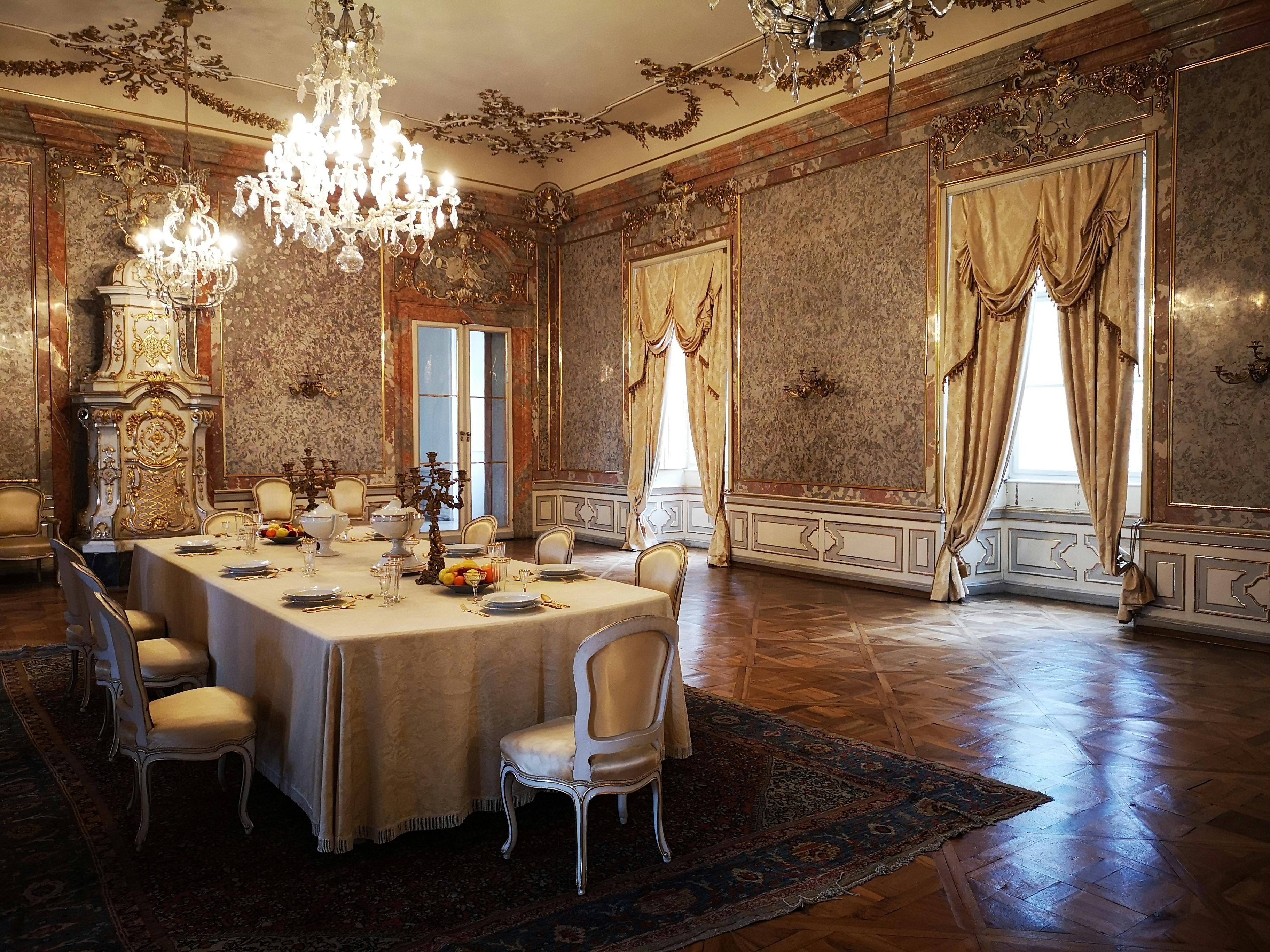
Matching dining sets — where every chair, table, and buffet comes from the same collection — used to feel like the “done” thing. But designers are moving away from that perfectly coordinated look because it can make a space feel stiff and a little soulless.
Try mixing a solid wood table with chairs in a different finish or material. Layering textures and styles actually makes a dining room feel more lived-in and personal, which is exactly what good design should do.
2.) Oversized Chandeliers

Oversized chandeliers had a moment, but designers are ready to move on. When a fixture is too large for the space, it ends up feeling heavy and out of place rather than impressive. A good rule of thumb is to keep the chandelier’s diameter (in inches) equal to the room’s length and width added together (in feet).
Swapping out a bulky chandelier for something more proportional can actually make your dining room feel bigger and more put-together without much effort.
3.) All-White Everything
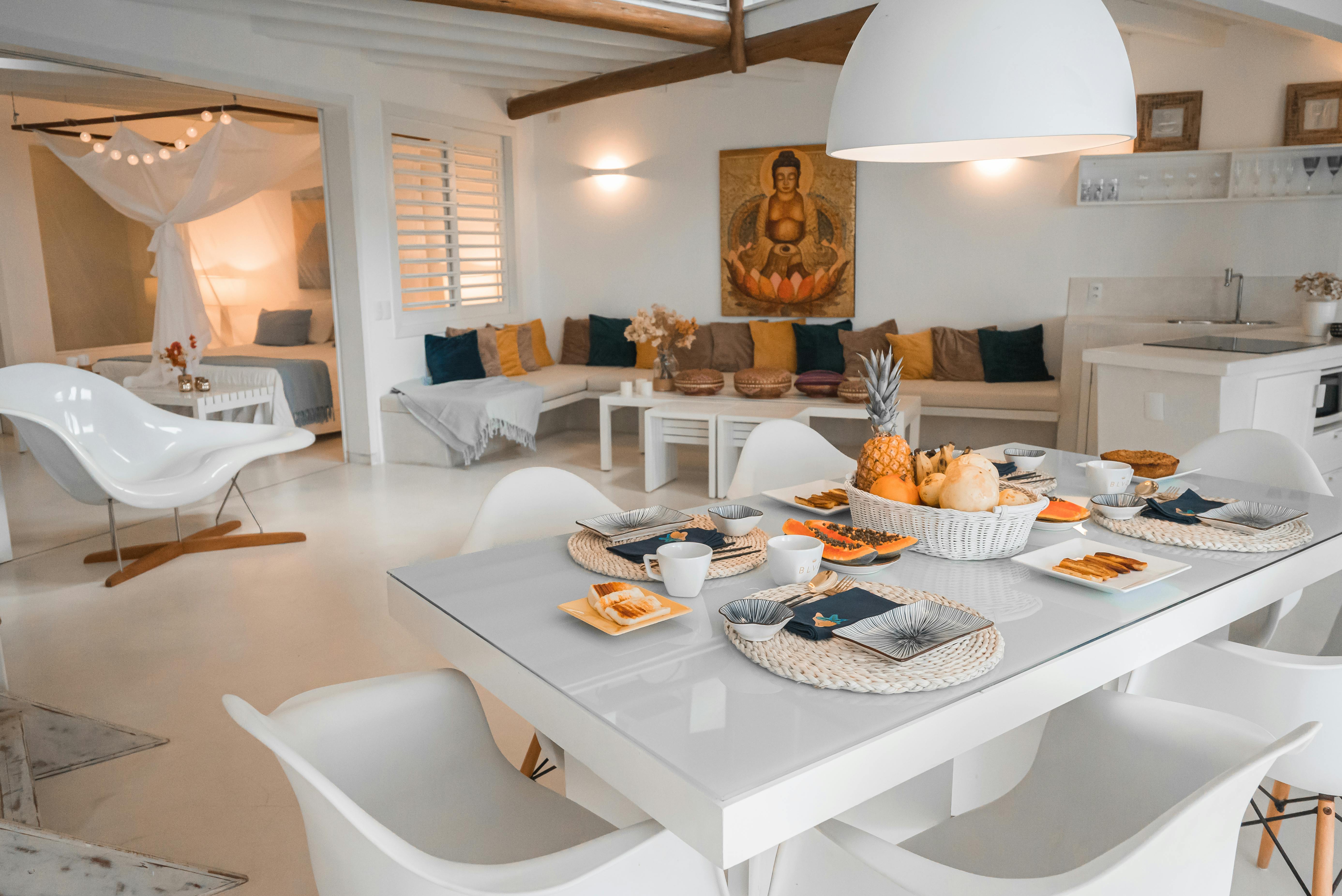
All-white dining rooms had a big moment, but designers are pretty much done with them. White walls, white table, white chairs — it sounds sleek in theory, but in a space where food and drinks are constantly in the picture, it’s just a recipe for stress.
The biggest issue? Everything shows. Every scuff, every splash, every fingerprint. Designers now lean toward warm neutrals or mixed tones that still feel clean but actually hold up to real life.
4.) Farmhouse Shiplap Walls
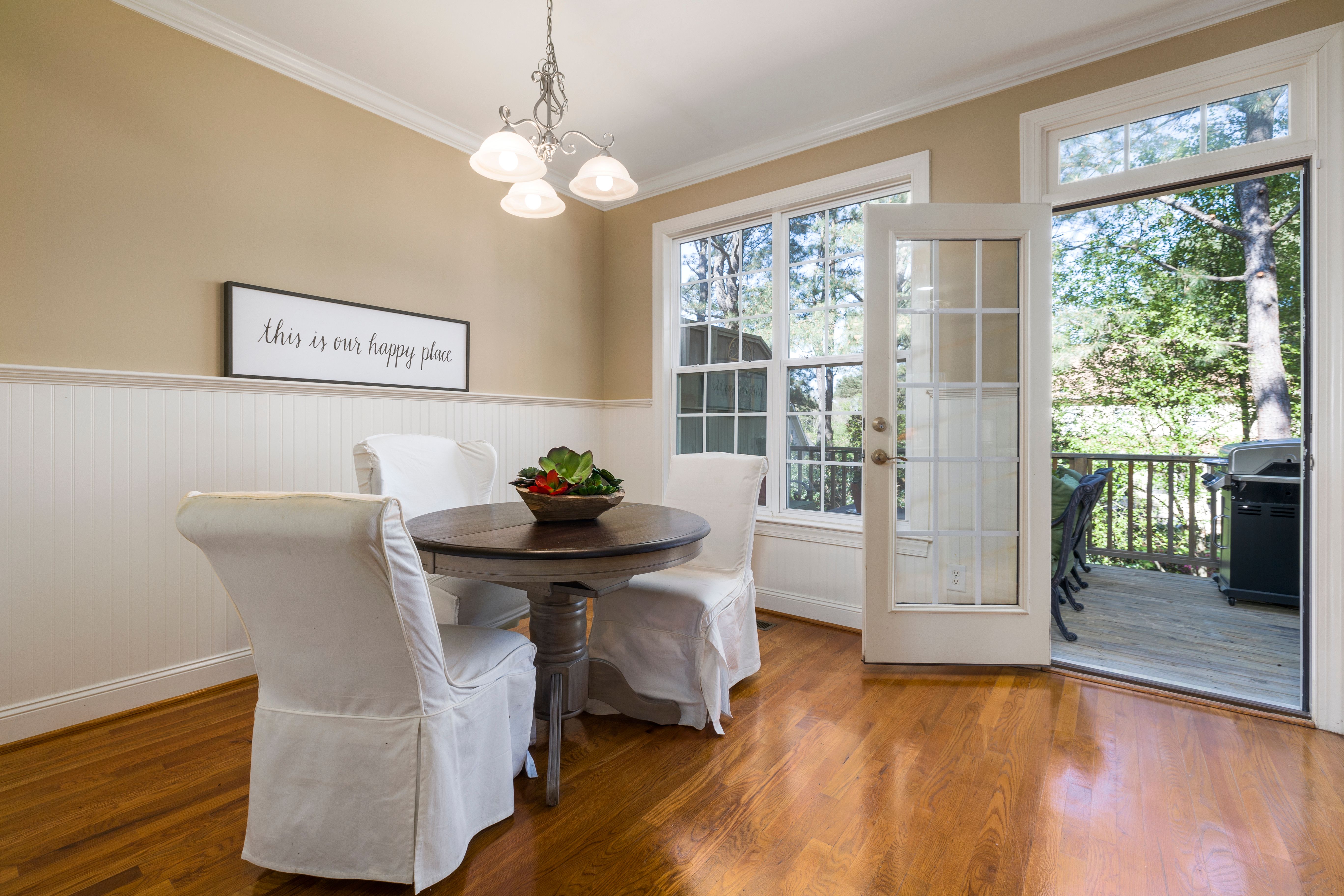
Farmhouse shiplap walls had their moment, but designers are ready to move on. That horizontal wood paneling became a staple in dining rooms everywhere, and honestly, it started feeling more like a copy-paste trend than a personal design choice.
The problem is that shiplap can make a dining room feel like a set from a home renovation show rather than an actual living space. If you still love it, try limiting it to one small accent area instead of covering every wall.
5.) Too-Small Area Rugs

A rug that’s too small for your dining room is one of those things designers notice right away. If the chairs are sliding off the edges every time someone pulls back from the table, your rug is too small.
The general rule is simple: all four chair legs should stay on the rug, even when pulled out. For most standard dining tables, that means going at least 8×10 feet, if not bigger.
6.) Heavy Dark Wood Furniture
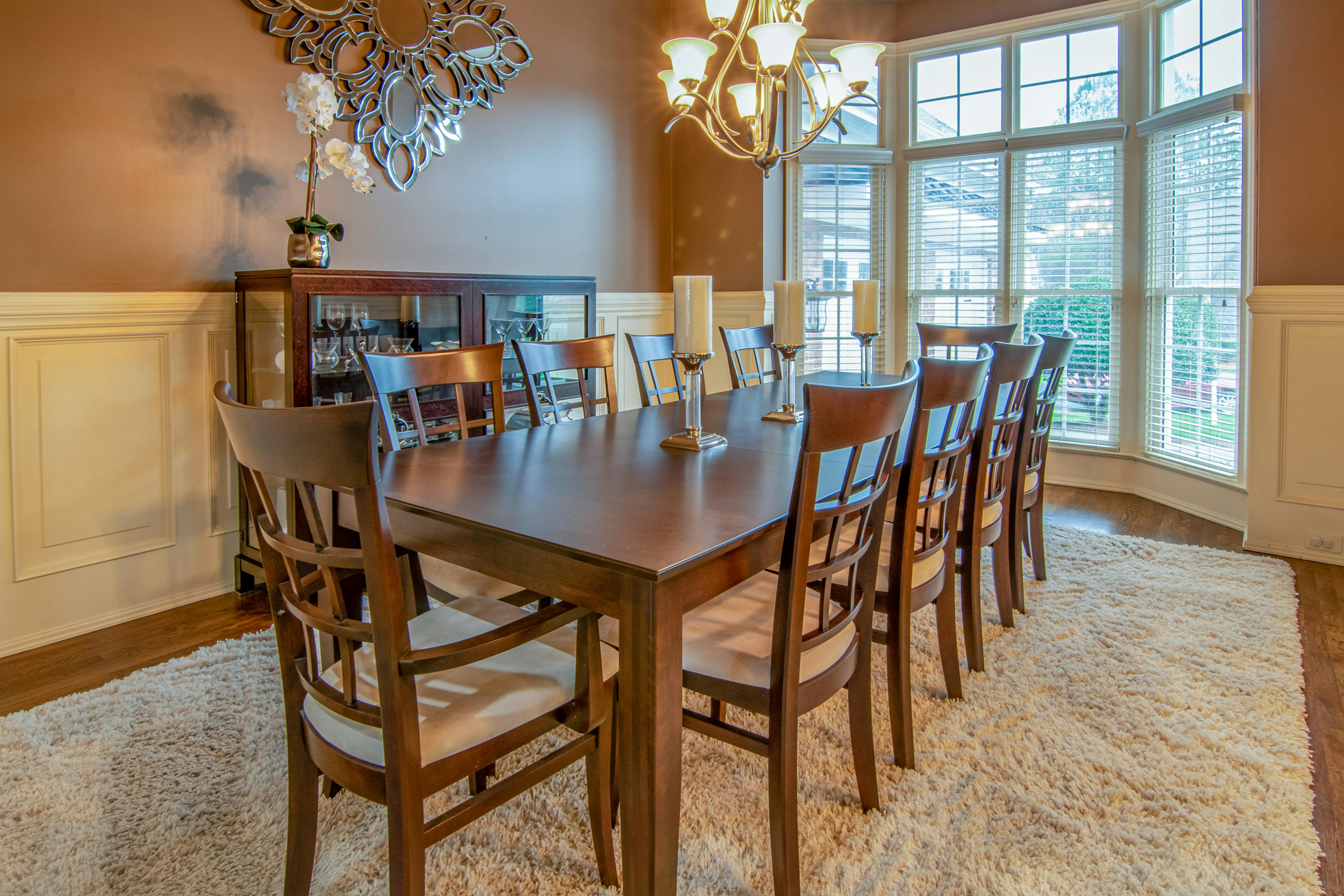
Heavy dark wood furniture had its moment, but designers say it’s one of the hardest things to work around in a dining room. It tends to soak up light and make a space feel smaller than it actually is.
If you’ve got a big dark table and a matching hutch, the room can start to feel more like a cave than a place to enjoy a meal. Lighter wood tones or mixed materials are much easier to style around these days.
7.) Chair Covers and Slipcovers

Chair covers and slipcovers had their moment, but designers are ready to move on. They tend to make a dining room look a little sad and dated, like you’re trying to hide furniture you don’t actually like.
If your chairs need a refresh, it’s worth reupholstering them or simply replacing them. A clean, well-made chair does more for your dining space than any cover ever could. Invest in pieces you actually want to show off.
8.) Themed Decor Collections

Matching every single thing in your dining room to one theme — think full-on “farmhouse,” “coastal,” or “French bistro” — can make the space feel more like a movie set than a real home. When everything matches too perfectly, it actually looks less thoughtful, not more.
Designers suggest mixing pieces from different styles instead. Pair a rustic table with modern chairs, or hang artwork that doesn’t scream one specific theme. A little variety makes the room feel collected over time, which is way more interesting.
9.) China Cabinets and Hutches
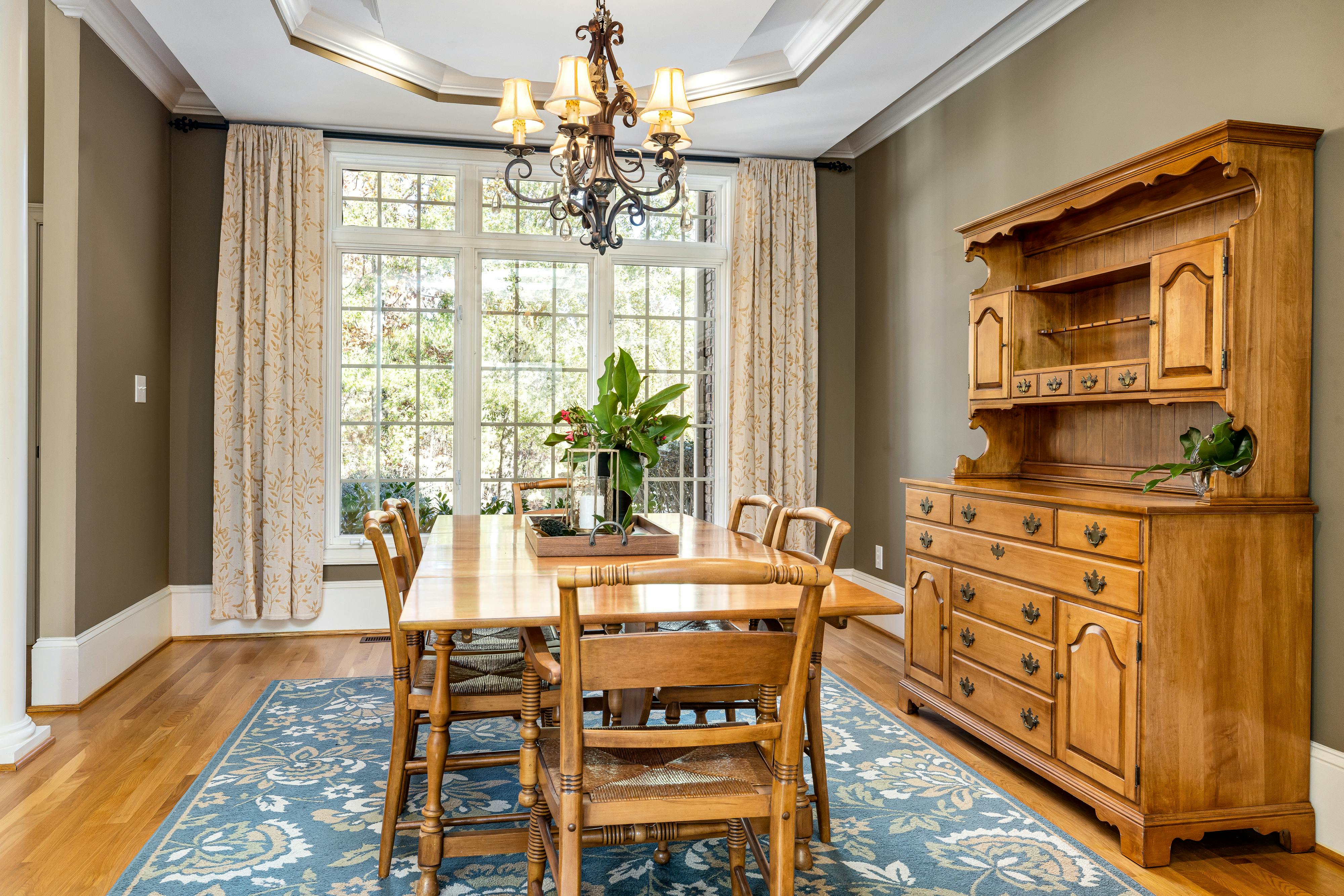
China cabinets and hutches had their moment, but designers say they’re one of the biggest space-eaters in the modern dining room. They tend to make smaller spaces feel cramped and outdated, and most people aren’t even using the dishes stored inside them.
If you love displaying your favorite pieces, try open floating shelves instead. They give you the same storage and display options without the heavy, bulky look that a traditional china cabinet brings to the room.
10.) Matching Table and Chair Sets
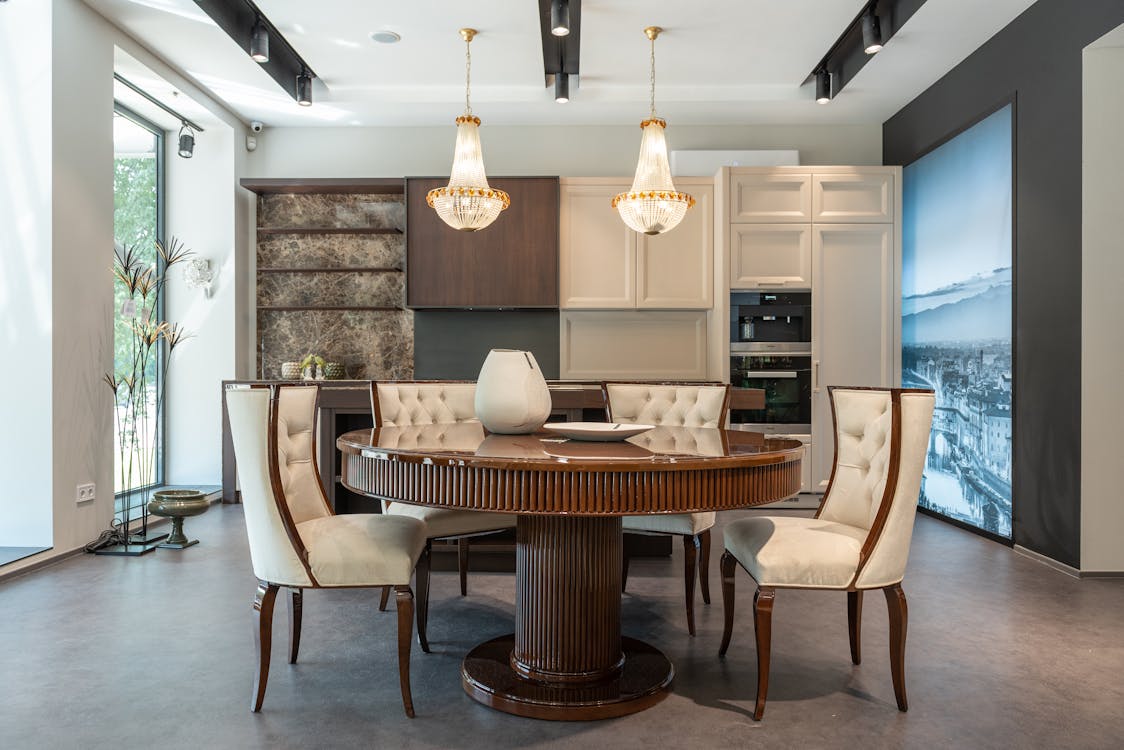
Buying a matching table and chair set might seem like the safe, easy choice, but designers say it’s one of the quickest ways to make a dining room feel flat and uninspired. When everything matches perfectly, the space ends up looking more like a furniture showroom than an actual home.
Try mixing a solid wood table with upholstered or metal chairs instead. Playing with different textures and materials adds depth and makes the room feel more personal and lived-in.
11.) Wall-to-Wall Carpeting

Wall-to-wall carpeting in a dining room might feel cozy, but it’s one of those choices that creates way more work than it’s worth. Food and drink spills are basically guaranteed in a dining space, and carpet holds onto every single one of them.
Designers almost always recommend hard flooring like wood, tile, or vinyl in this room instead. If you want some softness underfoot, a flat-weave rug that’s easy to clean is a much better option.
12.) Vertical Striped Accent Walls

Vertical stripes on dining room walls were once a go-to trick for making ceilings look taller. Designers leaned on them hard for a while, and honestly, it made sense at the time.
But now they tend to make a space feel a little busy and dated, especially in a room where you already have a lot going on with furniture and lighting. A solid color or simple texture usually does a better job without all the visual noise.
13.) Overly Ornate Crown Molding

Heavy, over-the-top crown molding might have felt fancy back in the day, but in a dining room, it can make the whole space feel a little stuffy and dated. If your ceiling isn’t at least nine feet tall, thick ornate molding just eats up visual space and makes the room feel cramped.
Designers are leaning toward cleaner, simpler profiles these days. A slim, minimal molding — or none at all — lets the rest of your dining room do the talking.
14.) Faux Tuscan Villa Style

The faux Tuscan villa look — think heavy wrought iron chandeliers, terracotta everything, and walls painted in shades of burnt sienna — had its moment in the early 2000s and just hasn’t let go.
The problem is it can make a dining room feel more like an Olive Garden than an actual home. Designers say it reads as dated and a little costume-y now.
Swapping out those heavy elements for warmer, simpler natural textures goes a long way toward updating the space.
15.) Clear Acrylic Ghost Chairs

Clear acrylic ghost chairs had a big moment, and honestly, it’s easy to see why. They look sleek, they seem to “disappear” visually, and they work in small spaces without making the room feel crowded.
But designers are over them. They show every fingerprint, they scratch easily, and after a few years they tend to turn yellow. They also have a cold, almost clinical feel that can make a dining room look more like a waiting room than a warm, welcoming space.
16.) Open Shelving for Dishes

Open shelving for dishes had a big moment, and honestly, it made sense on paper — easy access, a lived-in look, a chance to show off your nice plates. But designers are pretty tired of it, and here’s why: it’s a dust magnet, and everything needs to look good *all the time*, which is a lot of pressure.
Most people end up with cluttered, mismatched stacks that make the room feel messy rather than curated. Cabinets with doors exist for a reason.
17.) Fake Fruit Centerpieces

A bowl of fake apples or plastic lemons sitting in the middle of your dining table might seem like a low-maintenance styling trick, but designers are pretty tired of seeing it. It can make a space feel more like a furniture showroom than an actual home.
If you want a similar look, try a bowl of real seasonal fruit instead — it adds color without feeling staged. Even a simple arrangement of candles or a small plant can do the job better.
18.) Word Art Wall Decor

Word art wall decor — think signs that say “Gather,” “Eat,” or “Family” — had a huge moment, but designers are pretty much over it at this point. It ends up feeling generic and a little forced, like the wall is trying too hard to remind you where you are.
If you want words in your dining room, try a single framed print with a quote that actually means something to you. Personal and intentional always beats mass-produced and predictable.
19.) Industrial Edison Bulb Fixtures
Industrial Edison bulb fixtures had their moment, but designers are pretty much over them at this point. That exposed filament, factory-style look got copied so many times that it stopped feeling cool and just started feeling predictable.
The problem is they also tend to cast a warm, dim glow that isn’t great for actually seeing your food. If you want to update your dining room, look into fixtures with cleaner lines and better light output. Your space will feel a lot more current.
20.) Chevron Pattern Everything
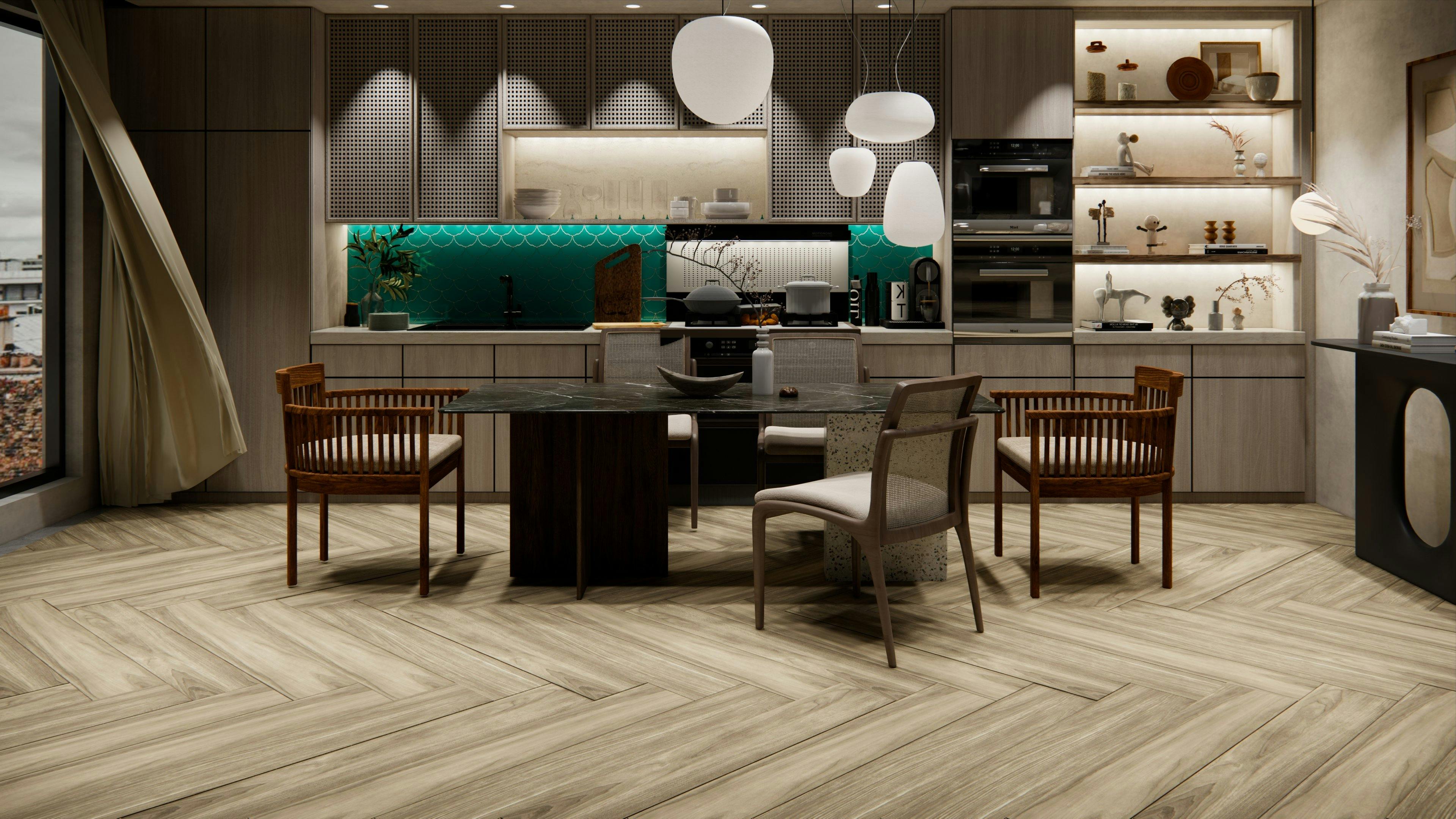
Chevron patterns had their moment — we get it. But somewhere along the way, the zigzag print ended up on everything from rugs and curtains to wallpaper and chair cushions, all in the same room.
The problem is that mixing too many chevron pieces makes a dining room feel busy and dated rather than pulled together. Designers suggest keeping bold geometric patterns to one focal point, like a single rug or a set of throw pillows, instead of going all in.