Getting a balanced, homemade dinner on the table during busy weeknights can feel like mission impossible. Between after-school activities, work deadlines, and the general chaos of everyday life, it’s tempting to just order takeout or heat up a frozen meal instead of cooking from scratch.
That’s where this alfredo pasta primavera comes to the rescue: it’s quick and satisfying, loaded with fresh vegetables, and comes together in just one pan. Plus, it’s the kind of meal that makes everyone at the table happy – even the pickiest eaters won’t mind getting their veggies when they’re tossed in a creamy alfredo sauce.

Why You’ll Love This Pasta Primavera
- Loaded with vegetables – This pasta dish packs in 8 different colorful vegetables, making it an easy way to get your daily servings while enjoying a comforting pasta meal.
- Quick weeknight dinner – Ready in under an hour, this recipe fits perfectly into your busy schedule while still delivering a fresh, home-cooked meal.
- Creamy and satisfying – The homemade alfredo sauce, made with real butter and Parmesan cheese, creates a rich and creamy coating that makes every bite delicious.
- Customizable – You can easily swap in your favorite vegetables or use whatever’s in season – the recipe is flexible and works with many different combinations.
- Family-friendly – The combination of pasta and cheese sauce makes this dish appealing to kids, while the vegetables keep it nutritious enough for parents to feel good about serving it.
What Kind of Pasta Should I Use?
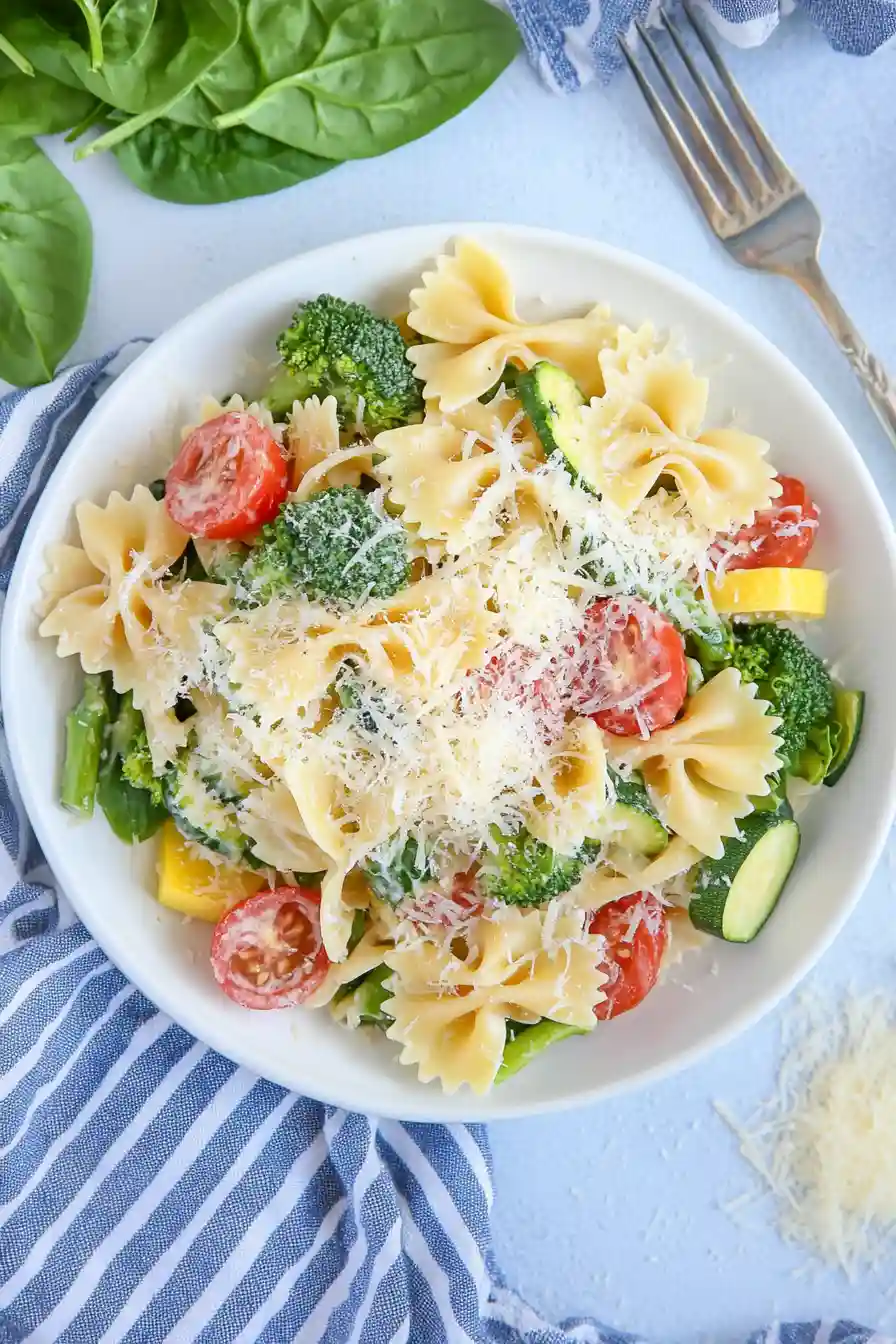
While this recipe calls for bowtie pasta (also known as farfalle), you’ve got plenty of options that’ll work great with this creamy primavera sauce. Medium-sized pasta shapes like penne, rotini, or fusilli are excellent choices because their ridges and curves help catch and hold onto the rich alfredo sauce. If you’re looking to keep things traditional, fettuccine is a classic choice that pairs beautifully with alfredo. Just remember that whatever pasta you choose, cooking it al dente (still slightly firm when bitten) will give you the best texture and help the sauce cling better to each piece.
Options for Substitutions
This pasta primavera recipe is super flexible and perfect for customizing based on what you have on hand:
- Bowtie pasta: Any medium-sized pasta shape works great here – try penne, rotini, or fusilli. Just cook according to the package directions for al dente texture.
- Heavy cream: For a lighter version, you can use half-and-half, though your sauce won’t be as thick. If using half-and-half, you might need extra Parmesan to help thicken the sauce.
- Vegetables: The beauty of primavera is that you can swap in any seasonal veggies you like! Try mushrooms, snow peas, cauliflower, or green beans. Just keep the pieces similar in size so they cook evenly.
- Parmesan cheese: Fresh Parmesan is key for the sauce, but you can use Romano or Pecorino Romano as alternatives. Avoid pre-grated cheese as it won’t melt as smoothly.
- Fresh basil: Out of fresh basil? Try fresh parsley, or a smaller amount of dried basil (about 1 teaspoon). You can also skip the herbs if needed.
- Butter: While butter adds richness, you can replace half of it with additional olive oil for a lighter sauce.
Watch Out for These Mistakes While Cooking
The biggest challenge when making pasta primavera is overcooking the vegetables, which can turn them mushy and dull – instead, aim to cook them just until crisp-tender, maintaining their natural crunch and color. A common mistake is adding all vegetables at once; start with harder vegetables like carrots and broccoli, then add softer ones like zucchini and tomatoes in the last few minutes. The sauce can quickly become too thick if you let it simmer too long, so keep stirring and remove it from heat once it coats the back of a spoon – you can always thin it out with a splash of pasta water if needed. For the best texture, don’t rinse your pasta after cooking; the starch helps the sauce stick better, and make sure to toss everything together while both pasta and sauce are still hot.
What to Serve With Pasta Primavera?
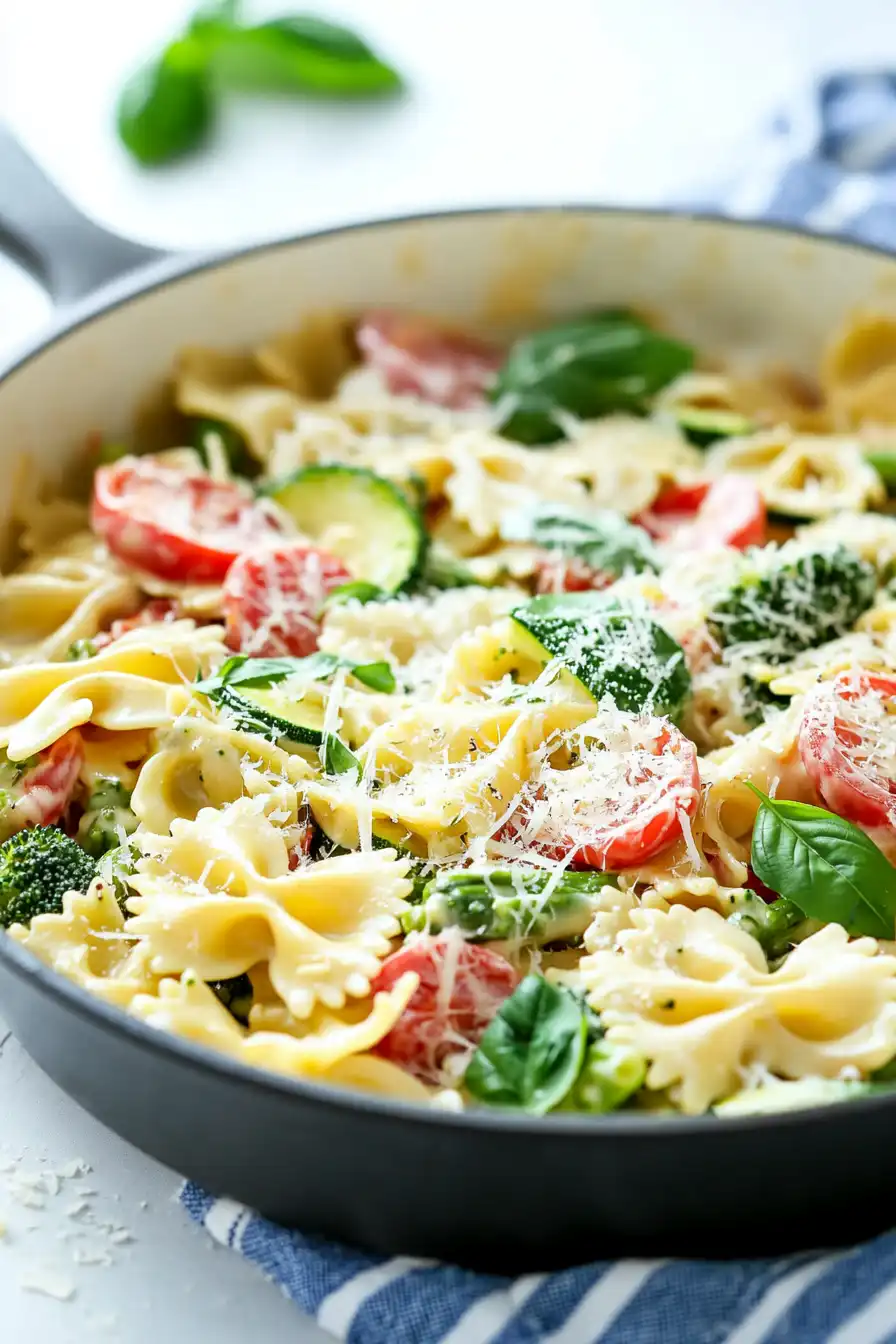
Since pasta primavera is already packed with veggies and rich Alfredo sauce, you’ll want to keep your sides simple and complementary. A warm piece of crusty garlic bread or breadsticks are perfect for soaking up any extra sauce left on your plate. If you’re craving more greens, a light Caesar salad or simple mixed greens with lemon vinaigrette works really well on the side. For a protein boost, you could add some grilled chicken breast or sautéed shrimp to round out the meal – just place it right on top of the pasta or serve it alongside.
Storage Instructions
Keep Fresh: Your Alfredo pasta primavera will stay good in an airtight container in the fridge for up to 3-4 days. The sauce might thicken up a bit, but don’t worry – that’s totally normal! I like to store the fresh basil separately to keep it from wilting.
Make Ahead: If you want to prep ahead, you can chop all your veggies and store them in the fridge up to 2 days before cooking. You can also make the Alfredo sauce separately and keep it in the fridge for up to 3 days. When you’re ready to serve, just combine everything with freshly cooked pasta.
Warm Up: To bring your pasta back to life, warm it up in a pan over medium-low heat with a splash of cream or milk to loosen up the sauce. Stir occasionally to help everything heat evenly. You can also pop it in the microwave, but the stovetop method gives better results. Add a sprinkle of fresh Parmesan cheese on top before serving!
| Preparation Time | 15-20 minutes |
| Cooking Time | 20-30 minutes |
| Total Time | 35-50 minutes |
| Level of Difficulty | Medium |
Estimated Nutrition
Estimated nutrition for the whole recipe (without optional ingredients):
- Calories: 2800-3200
- Protein: 75-85 g
- Fat: 230-250 g
- Carbohydrates: 220-240 g
Ingredients
For the pasta and vegetables:
- 1/2 cup diced yellow squash
- 1 cup broccoli florets
- 1/2 cup diced red bell pepper
- fresh basil (for garnish, chiffonade optional)
- 1/2 tsp salt
- 1/2 cup shredded carrots
- 1/2 cup halved grape tomatoes
- 1/2 cup thinly sliced red onion
- 1/4 tsp black pepper
- 1/2 cup grated Parmesan cheese
- 1/2 cup diced zucchini
- 8 oz bowtie pasta
- 1 cup chopped asparagus (tough ends snapped off)
- 2 tbsp olive oil (I use Colavita extra virgin olive oil)
For the Alfredo sauce:
- 1 cup heavy cream
- 1/2 cup salted butter (I like Kerrygold salted butter)
- 1 tsp salt
- 2 cups grated Parmesan cheese (freshly grated preferred for best texture)
- 1/2 tsp black pepper
Step 1: Prepare the Vegetables
Begin by washing all your vegetables thoroughly.
Once clean, chop them into bite-sized pieces.
Keep them aside as you will need them shortly for sautéing.
Step 2: Cook the Noodles
Follow the package instructions to cook the noodles.
Aim to cook them al dente, which means they should be firm to the bite.
This will help them hold up well against the veggies and sauce.
Once cooked, drain the noodles and rinse them in warm water.
Set aside for later use.
Step 3: Make the Alfredo Sauce
In a large skillet, combine butter, heavy cream, a pinch of salt, and a dash of pepper.
Cook the mixture over medium heat, stirring continuously until the butter has melted.
Gradually stir in grated Parmesan cheese, continuing to cook and stir until the cheese is completely melted and the sauce is creamy.
Keep the sauce warm over low heat as you prepare the other elements.
Step 4: Sauté the Vegetables
Heat olive oil in a large skillet over medium heat.
Add the chopped vegetables, except for the zucchini, squash, and tomatoes, and sauté them until they are tender-crisp.
In the last few minutes of cooking, add in the reserved zucchini, squash, and tomatoes.
Sauté until everything is cooked to your desired tenderness.
Step 5: Combine and Garnish
In a large bowl, combine the cooked pasta, warm Alfredo sauce, and sautéed vegetables.
Mix everything together until well combined.
Serve the dish with a garnish of freshly grated Parmesan cheese and a sprinkling of fresh basil to enhance the flavors.