There’s something so comforting about baking a bundt cake from scratch. The familiar scent of vanilla and butter wafting through the kitchen takes me back to Sunday afternoons at my grandmother’s house. I’ve learned that making a bundt cake doesn’t need to be complicated – in fact, it’s one of those recipes that’s perfect for both beginners and experienced bakers. The best part? That classic ring shape always looks like you put in extra effort, even though the pan does all the work for you.
I love how forgiving bundt cakes are. Sometimes I’ll bake one in the evening while helping the kids with homework, and it’s ready to share with neighbors the next day. The leftovers (if there are any!) make the perfect lunch box treat or afternoon pick-me-up with coffee. Trust me, once you’ve made this basic recipe, you’ll find yourself coming back to it again and again.
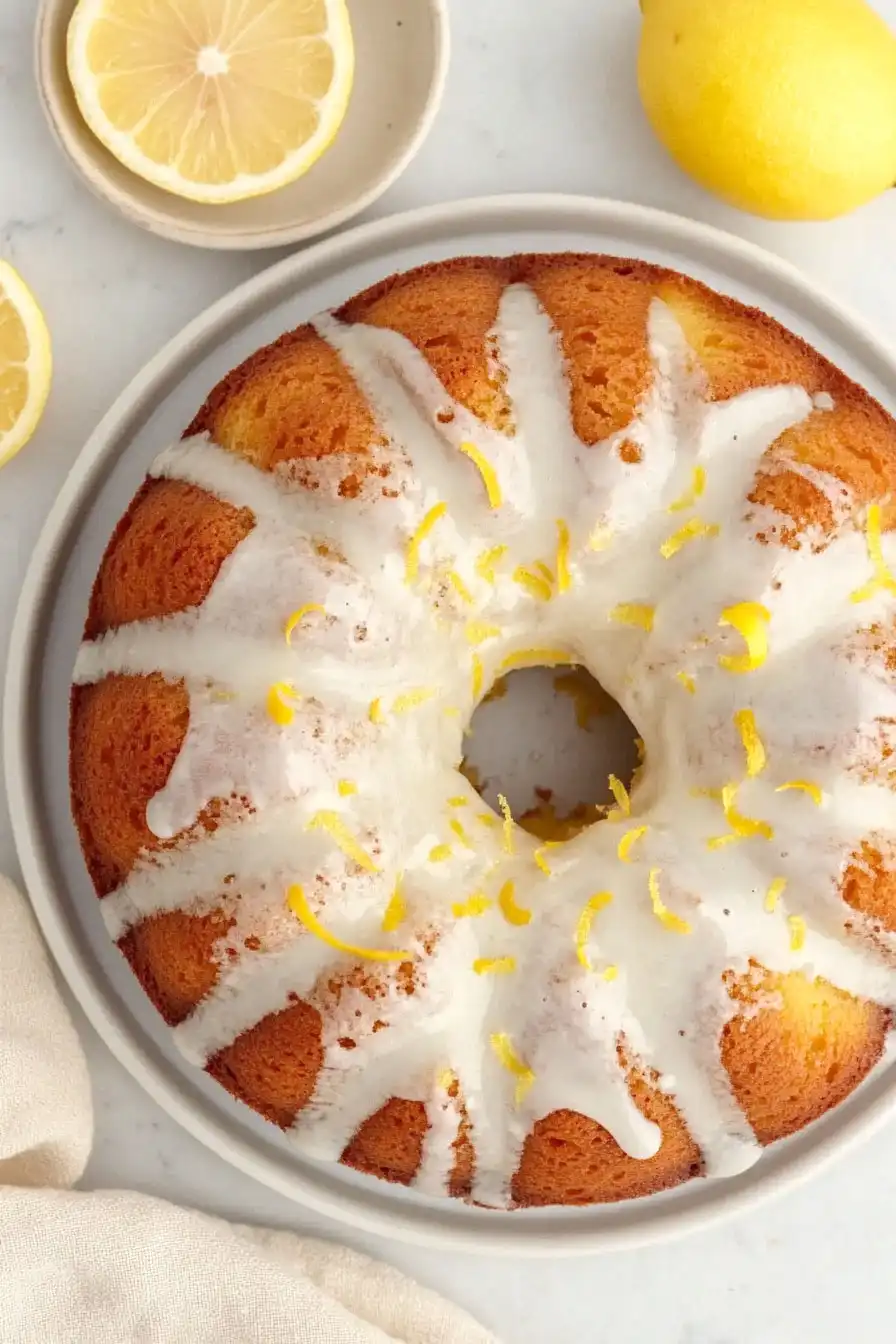
Why You’ll Love This Bundt Cake
- Made from scratch – No box mixes here – this homemade bundt cake tastes so much better than store-bought and lets you control exactly what goes into your dessert.
- Perfect balance of flavors – The combination of fresh lemon zest, cream cheese, and butter creates a cake that’s rich but not too sweet, with just the right amount of citrus brightness.
- Impressive presentation – The classic bundt shape makes this cake look fancy with zero decorating skills needed – perfect for special occasions or when you want to wow your guests.
- Basic pantry ingredients – Most of these ingredients are probably already in your kitchen, making this an easy cake to whip up whenever the craving strikes.
What Kind of Butter Should I Use?
For a bundt cake, unsalted butter is the way to go since it gives you complete control over the salt content in your recipe. Make sure your butter is truly softened to room temperature – this usually takes about an hour on the counter and is ready when you can easily press your finger into it. While premium European-style butter (like Plugrá or Kerrygold) has a higher fat content that can make your cake extra rich, regular supermarket butter will still give you great results. Just avoid using margarine or butter substitutes, as they contain different amounts of water and fat that can affect how your cake turns out.
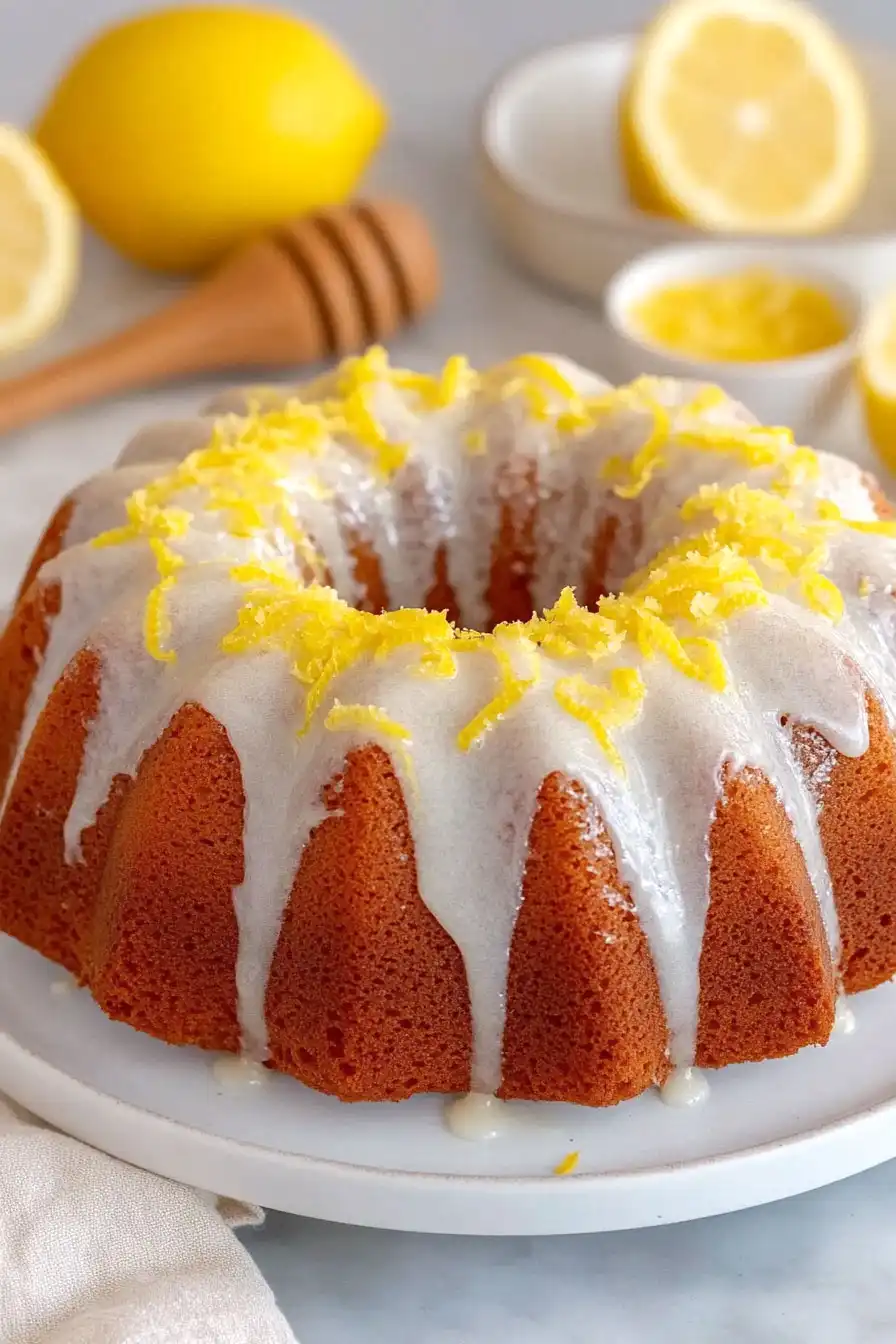
Options for Substitutions
This lemon bundt cake recipe can be adapted with several ingredient swaps if needed:
- Sour cream: You can replace sour cream with plain Greek yogurt in the same amount, or use buttermilk (increase to 1/2 cup since it’s thinner).
- Lemons: If fresh lemons aren’t available, you can use bottled lemon juice (about 2 tablespoons equals one lemon) and dried lemon zest (1 teaspoon equals one lemon’s zest). Meyer lemons or a mix of orange and lemon also work well.
- All-purpose flour: Cake flour can be used for a lighter texture – replace each cup of all-purpose flour with 1 cup plus 2 tablespoons of cake flour. Don’t use whole wheat flour as it will make the cake too dense.
- Cream cheese: For the frosting, mascarpone cheese makes a good substitute, or use all butter if you’re out of cream cheese completely.
- Unsalted butter: If using salted butter, simply omit any additional salt in the recipe. Plant-based butter can work too, but the texture might be slightly different.
- Icing sugar: If you’re out of icing sugar, blend regular granulated sugar in a food processor until very fine. Use the same amount as called for in the recipe.
Watch Out for These Mistakes While Baking
The biggest challenge when making a bundt cake is ensuring it comes out of the pan cleanly – always grease every nook and cranny of your bundt pan thoroughly with butter or baking spray, then dust with flour, tapping out any excess. Another common mistake is opening the oven door too early during baking, which can cause your cake to sink in the middle – resist the urge to peek until at least 45 minutes into baking time. Your ingredients’ temperature matters more than you might think – cold eggs, butter, or sour cream can lead to a lumpy batter and uneven texture, so make sure everything is at room temperature before you start mixing. For the perfect texture, don’t overmix the batter once you’ve added the flour – mix just until the ingredients are combined, as overmixing can lead to a tough, dense cake that won’t rise properly.
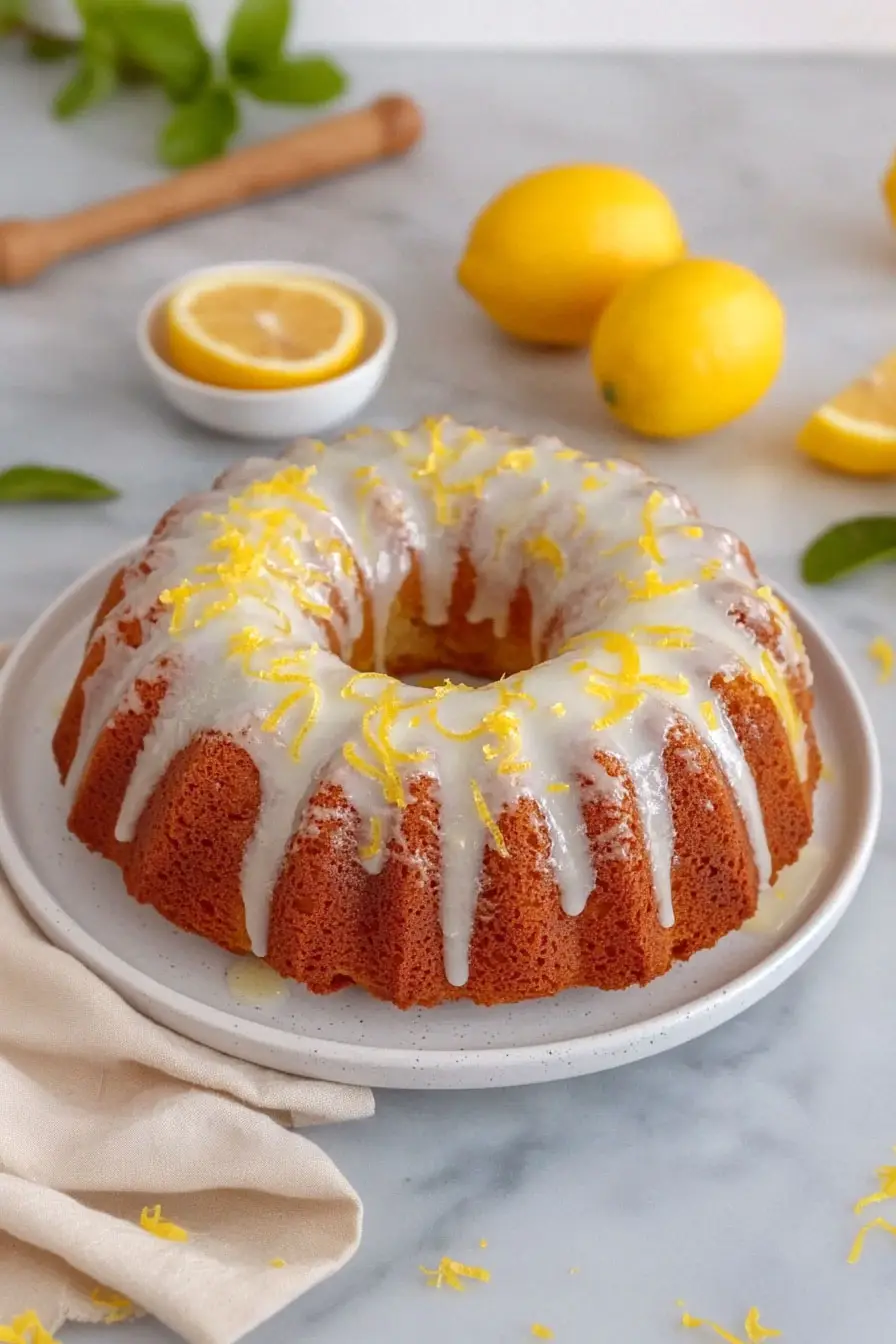
What to Serve With Bundt Cake?
This lemon bundt cake is perfect for afternoon tea or dessert, and there are so many great ways to serve it! A scoop of vanilla ice cream on the side lets you play with the contrast between warm and cold, while a dollop of fresh whipped cream keeps things simple and classic. For a morning treat, pair it with a hot cup of coffee or tea – I especially love it with Earl Grey or chamomile. If you’re feeling fancy, add some fresh berries on the side – strawberries, raspberries, or blueberries all work great with the lemony flavors in this cake.
Storage Instructions
Counter Storage: Your lemon bundt cake will stay fresh at room temperature for up to 3 days when kept in an airtight container or wrapped well in plastic wrap. The cream cheese frosting is stable enough to hold up just fine on the counter, making it perfect for your weekend baking plans!
Refrigerate: If you want your cake to last longer, pop it in the fridge in an airtight container. It’ll stay good for up to a week, though the texture might become slightly more dense. Just remember to bring slices to room temperature before serving for the best taste and texture.
Freeze: This bundt cake freezes really well for up to 3 months! You can freeze it whole or in individual slices – just wrap it tightly in plastic wrap and then aluminum foil. If you’re planning to freeze it, it’s best to wait and add the frosting fresh after thawing.
| Preparation Time | 20-30 minutes |
| Cooking Time | 50-55 minutes |
| Total Time | 70-85 minutes |
| Level of Difficulty | Medium |
Estimated Nutrition
Estimated nutrition for the whole recipe (without optional ingredients):
- Calories: 3500-3700
- Protein: 30-35 g
- Fat: 180-200 g
- Carbohydrates: 450-480 g
Ingredients
For the cake:
- 2 sticks unsalted butter (softened to room temperature, about 70°F)
- 3 cups all-purpose flour (I always use King Arthur all-purpose flour)
- 5 lemons (zested and juiced for fresh flavor)
- 1/2 tsp baking soda
- 2 tsp baking powder
- 2 cups sugar
- 4 large eggs
- 1/3 cup sour cream
For the lemon syrup:
- 2 tbsp sugar
- 1 lemon, juiced
For the frosting:
- 1/2 tsp lemon juice
- 2 oz cream cheese (softened to mix easily)
- 1 cup powdered sugar
- 1/2 tsp lemon zest
- 1 oz butter, softened
Step 1: Prepare the Bundt Tin and Preheat the Oven
Start by preheating your oven to 320°F (160°C).
Prepare your bundt tin by spraying it with cooking spray or greasing it generously with butter.
After greasing, coat the tin with a thick dusting of powdered sugar to prevent the cake from sticking and to add a touch of sweetness to the crust.
Step 2: Make the Cake Batter
In a stand mixer, beat together the butter and 2 cups of sugar until the mixture becomes pale and creamy.
Add the eggs, one at a time, making sure each egg is fully incorporated before adding the next.
Follow this by adding the sour cream, lemon zest, and the juice of 5 lemons to the mixture.
Don’t worry if the mixture looks curdled at this point.
Step 3: Incorporate Dry Ingredients and Pour into Tin
Gradually mix in the flour, baking powder, and baking soda.
Make sure to scrape down the sides of the bowl as needed to achieve a smooth batter.
Spoon the batter into your prepared bundt tin, and gently drop the cake onto the countertop a few times to remove any air bubbles, ensuring that the batter fills all the intricate designs of the tin.
Step 4: Bake the Cake
Bake the cake in the preheated oven for 50-55 minutes, or until the top is golden brown and a cake tester or skewer inserted into the center of the cake comes out clean.
Step 5: Prepare the Lemon Syrup
While the cake is baking, combine the remaining lemon juice with 2 tablespoons of sugar in a small saucepan.
Heat over medium heat until the sugar is completely dissolved, then set aside.
Step 6: Cool, Apply Syrup, and Prepare Frosting
Allow the bundt cake to cool in the tin for about 10 minutes before turning it out onto a wire rack.
Once inverted, brush the entire cake with the lemon syrup to infuse it with extra flavor and moisture.
While the cake is cooling, make the frosting by beating together the cream cheese, butter, lemon zest, and juice until smooth.
Gradually add powdered sugar to create a glaze.
Once the cake is completely cooled, pour the glaze over the top, letting it drizzle down the sides.
Serve and enjoy your delicious lemon bundt cake!