Making mooncakes at home might seem like a daunting task, especially if you’ve only ever seen them at Asian bakeries during the Mid-Autumn Festival. Between getting the pastry skin just right and creating that signature molded design, it’s easy to feel overwhelmed by the whole process.
But this egg yolk mooncake recipe breaks it down into manageable steps, and the results are worth every minute. With its rich filling and traditional appeal, it’s perfect for sharing with family during the festival or any time you’re craving a taste of this classic treat.
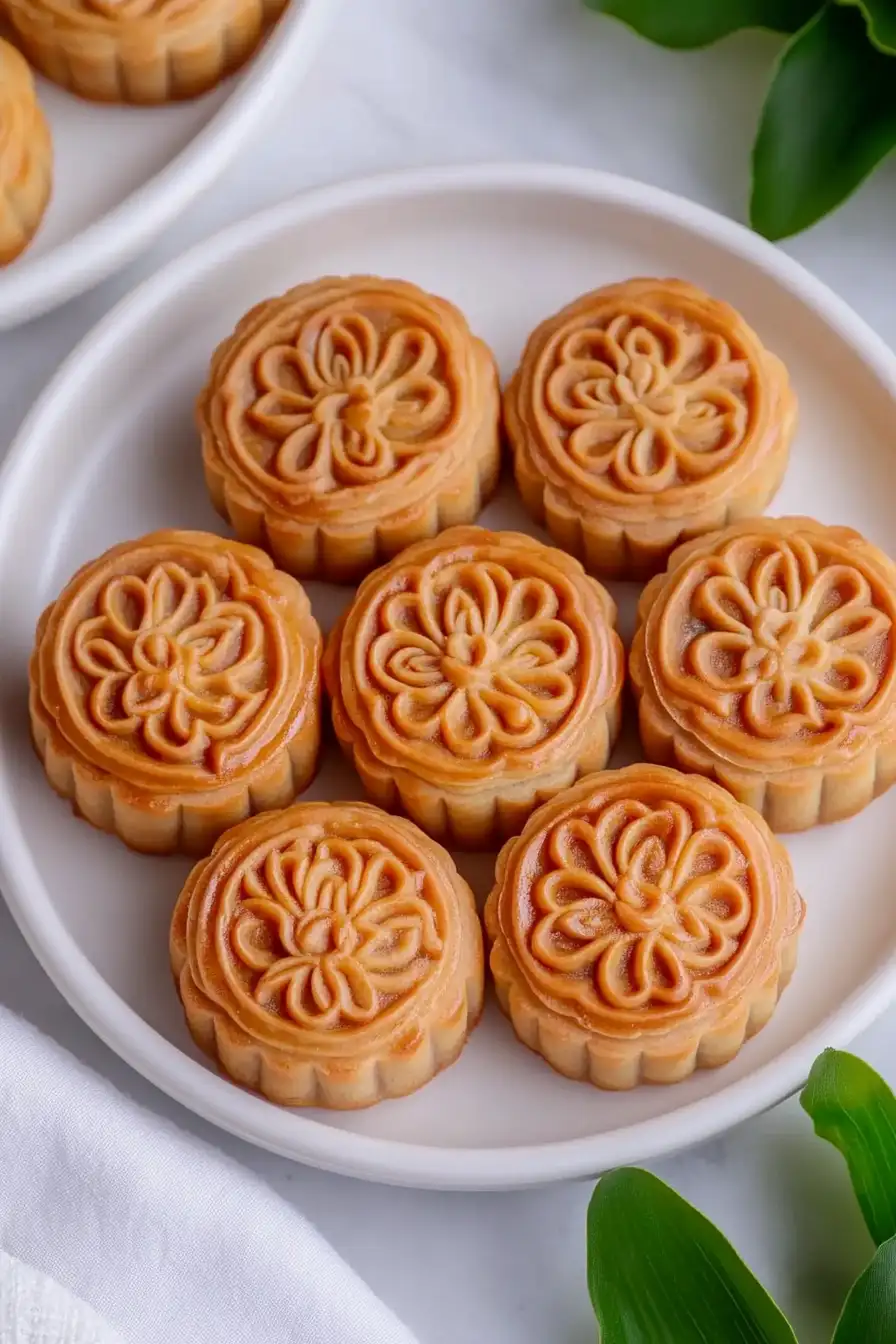
Why You’ll Love These Egg Yolk Mooncakes
- Traditional taste – These mooncakes deliver that classic combination of rich salted egg yolks and sweet lotus paste that’s essential for the Mid-Autumn Festival.
- Customizable filling – You can easily swap the lotus paste for red bean paste, or adjust the number of egg yolks based on your preference.
- Basic ingredients – Most ingredients are pantry staples, and specialty items like lye water can be found at Asian grocery stores or online.
- Make-ahead friendly – These mooncakes actually taste better after 1-2 days of rest, making them perfect for preparing in advance for celebrations or gifting.
What Kind of Egg Yolks Should I Use?
Salted egg yolks are a traditional filling for mooncakes, and they add a rich, savory contrast to the sweet lotus paste. Duck egg yolks are commonly used in Asia, but chicken egg yolks work just as well and are usually easier to find in most grocery stores. Look for salted egg yolks that are bright orange-red in color and feel firm to the touch – these are signs of proper curing. If you can’t find pre-made salted egg yolks at your Asian market, you can make your own by curing raw egg yolks in salt for about 30 days, though buying them ready-made is much more convenient for this recipe.
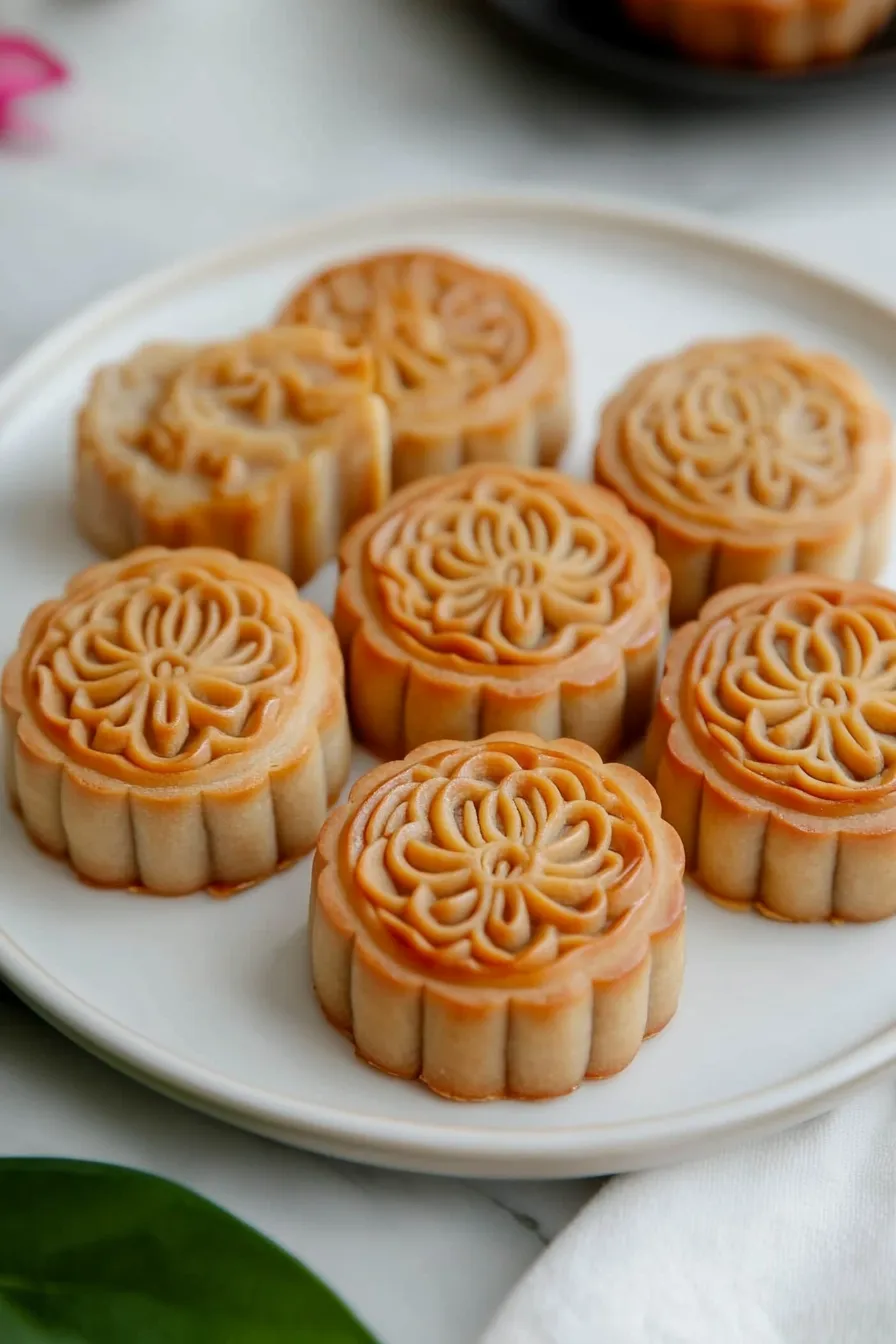
Options for Substitutions
Making mooncakes at home? Here are some helpful substitution tips to keep in mind:
- Cake flour: Plain all-purpose flour works just fine here. If using all-purpose flour, remove 2 tablespoons from each cup and replace with 2 tablespoons of cornstarch to mimic cake flour’s texture.
- Honey: While honey is common, you can use golden syrup or invert syrup instead. Just make sure to use the same amount to maintain the right consistency of the dough.
- Lye water: This is a crucial ingredient that can’t really be substituted – it gives mooncakes their characteristic brown color and chewy texture. You can find it in Asian grocery stores (sometimes labeled as kansui).
- Lotus seed paste: Red bean paste makes a great alternative and is often easier to find. You can also use other Asian paste fillings like mung bean or black sesame, just make sure they’re thick enough to hold shape.
- Salted egg yolks: While traditional and recommended for authentic taste, you can skip the salted egg yolks if you can’t find them. Just use additional lotus paste or red bean paste to fill the space.
- Peanut oil: Any neutral-flavored vegetable oil works well here – try canola, sunflower, or corn oil.
Watch Out for These Mistakes While Baking
The trickiest part of making mooncakes is achieving the right dough texture – adding too much lye water can make your crust bitter and too alkaline, so stick to the exact measurement and mix it thoroughly with other wet ingredients before combining with flour.
A common mistake is rushing the baking process – these beauties need multiple rounds of egg wash and baking at different temperatures to achieve that characteristic golden-brown shine, so don’t skip the 5-minute resting periods between brushings.
When working with salted egg yolks, make sure they’re properly cured and dried (pat them with paper towels if needed) before wrapping them in lotus paste, as excess moisture can make your filling soggy and affect the final texture.
For the best results, store your finished mooncakes in an airtight container for 1-2 days before eating – this “aging” process allows the oils to redistribute, making the skin soft and tender while developing that signature sheen.
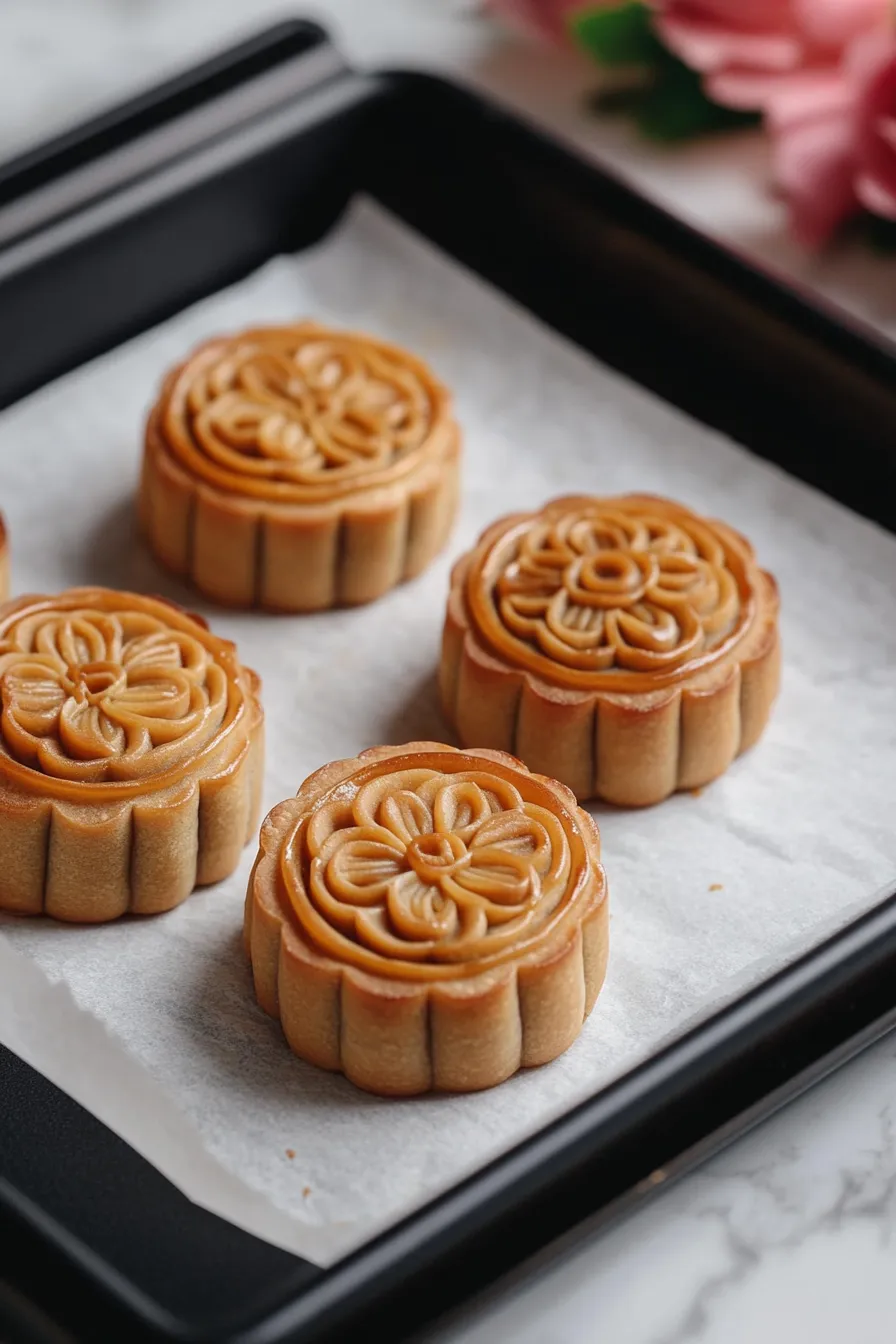
What to Serve With Mooncakes?
Chinese tea is the perfect companion to egg yolk mooncakes, as the warm tea helps balance the rich, sweet flavors of the pastry. Most people enjoy these traditional treats with either oolong tea or pu-erh tea, which both work great to cut through the richness of the salted egg yolks and lotus paste. Since mooncakes are quite filling, I like to serve them in small wedges (about an eighth of a cake per person) during tea time or as an after-dinner treat. You can also pair them with fresh fruit like Asian pears or oranges for a refreshing contrast to the dense, sweet pastry.
Storage Instructions
Keep Fresh: After your mooncakes have developed their signature sheen (about 2 days), place them in an airtight container. They’ll stay good at room temperature for up to 2 weeks. The texture actually gets better after a few days as the oil from the filling slowly seeps into the crust, making it softer and more flavorful.
Refrigerate: Since these mooncakes contain salted egg yolks, you can also keep them in the fridge for up to 3 weeks. Just pop them in an airtight container and make sure to separate layers with parchment paper to prevent sticking.
Serve: When you’re ready to enjoy refrigerated mooncakes, let them sit at room temperature for about 30 minutes before serving. This helps bring out their best flavor and texture. They taste great with a cup of Chinese tea!
| Preparation Time | 60-90 minutes |
| Cooking Time | 17-19 minutes |
| Total Time | 77-109 minutes |
| Level of Difficulty | Medium |
Estimated Nutrition
Estimated nutrition for the whole recipe (without optional ingredients):
- Calories: 2500-2700
- Protein: 75-85 g
- Fat: 150-160 g
- Carbohydrates: 300-320 g
Ingredients
For the dough:
- 120 grams cake flour (sifted for a tender dough)
- 1 tsp lye water (essential for traditional mooncake texture)
- 90 grams honey (good quality, for flavor and moisture)
- 35 grams peanut oil
For the filling:
- 18 salted egg yolks (preserved duck egg yolks, halved)
- 500 grams lotus seed paste (store-bought or homemade)
For brushing:
- 1 egg (beaten with 1 tbsp water for an egg wash)
Step 1: Prepare the Dough
In a large bowl, use a spatula to mix together honey, peanut or vegetable oil, and lye water until well incorporated.
Gradually add in the flour, starting with 120g, and fold until the dough becomes smooth and shiny.
Test the dough by pressing two fingers on it: it should be tacky but not sticky.
Depending on the honey’s water content, you may need up to 140g of flour.
Be cautious about adding too much flour to prevent dry or cracked mooncakes.
Cover the dough and let it rest for 1 hour.
Step 2: Prepare the Filling
While the dough is resting, clean and dry your salted egg yolks.
Weigh 1 salted egg yolk and add enough lotus seed paste to make a total of 35g per yolk.
(For example, if the yolk weighs 10g, add 25g of lotus seed paste.) Repeat this process for all 18 yolks, ensuring they are paired with the correct amount of paste.
Roll each lotus seed paste into a ball, create a pocket using your thumb, and insert the egg yolk.
Encase it gently and evenly, making sure the yolk is centered.
Repeat for all yolks.
Step 3: Shape the Dough
After the dough has rested, test its tackiness again.
If too sticky, add a bit more flour.
Using a scale, measure out 18 dough balls of 15g each.
On a floured surface, gently roll each dough ball to about 2.5 inches wide.
Place a ball of wrapped lotus paste in the center of a rolled dough piece.
Turn it over and encase evenly around the paste, ensuring no gaps.
Cover with a towel or plastic wrap to prevent drying.
Step 4: Mold the Mooncakes
Preheat your oven to 325°F.
Line a baking tray with parchment paper or a silicone mat.
Dust your mooncake mold with flour and shake out excess.
Lightly flour the surface of each wrapped lotus paste and place inside the mold.
Flip the mold over onto the sheet and press gently until you feel resistance, then “stamp” a few more times.
Carefully press out the mooncakes, ensuring enough flour to prevent sticking.
Space them 1-2 inches apart on the tray.
Step 5: Bake and Egg Wash
Lightly mist the mooncakes with water and bake for 5 minutes.
Meanwhile, beat 1 egg yolk with 2 teaspoons of water.
After 5 minutes, remove the mooncakes and lightly brush with the egg wash, avoiding pools of liquid in crevices.
Return them to the oven for another 12-14 minutes until evenly golden brown.
Check after 10 minutes and adjust the heat or use foil if browning too fast.
Once baked, let them cool.
Step 6: Cool and Store
After cooling, store the mooncakes in an airtight container in the fridge.
Allow them to rest for 2-3 days before enjoying, as this enhances the golden color and softens the crust for a delicious treat!