Japanese food has always felt special to me, but I never thought I’d be making roast beef with those familiar Asian flavors at home. When most people think of Japanese cooking, their minds go straight to sushi or ramen. But there’s this whole world of Japanese-style beef dishes that are just waiting to be discovered in your own kitchen.
I learned this version of roast beef after trying it at a friend’s dinner party. The marinade uses ingredients you might already have if you cook Asian food at home – soy sauce, mirin, and ginger. What I love most is how the meat stays juicy and gets this slightly sweet, savory crust that’s different from traditional Western-style roast beef.
Don’t worry if you’re new to Japanese cooking – this recipe is actually simpler than it sounds. The marinade does most of the work while you go about your day, and the cooking method is straightforward. Trust me, once you try this style of roast beef, regular roast beef might feel a bit boring in comparison.
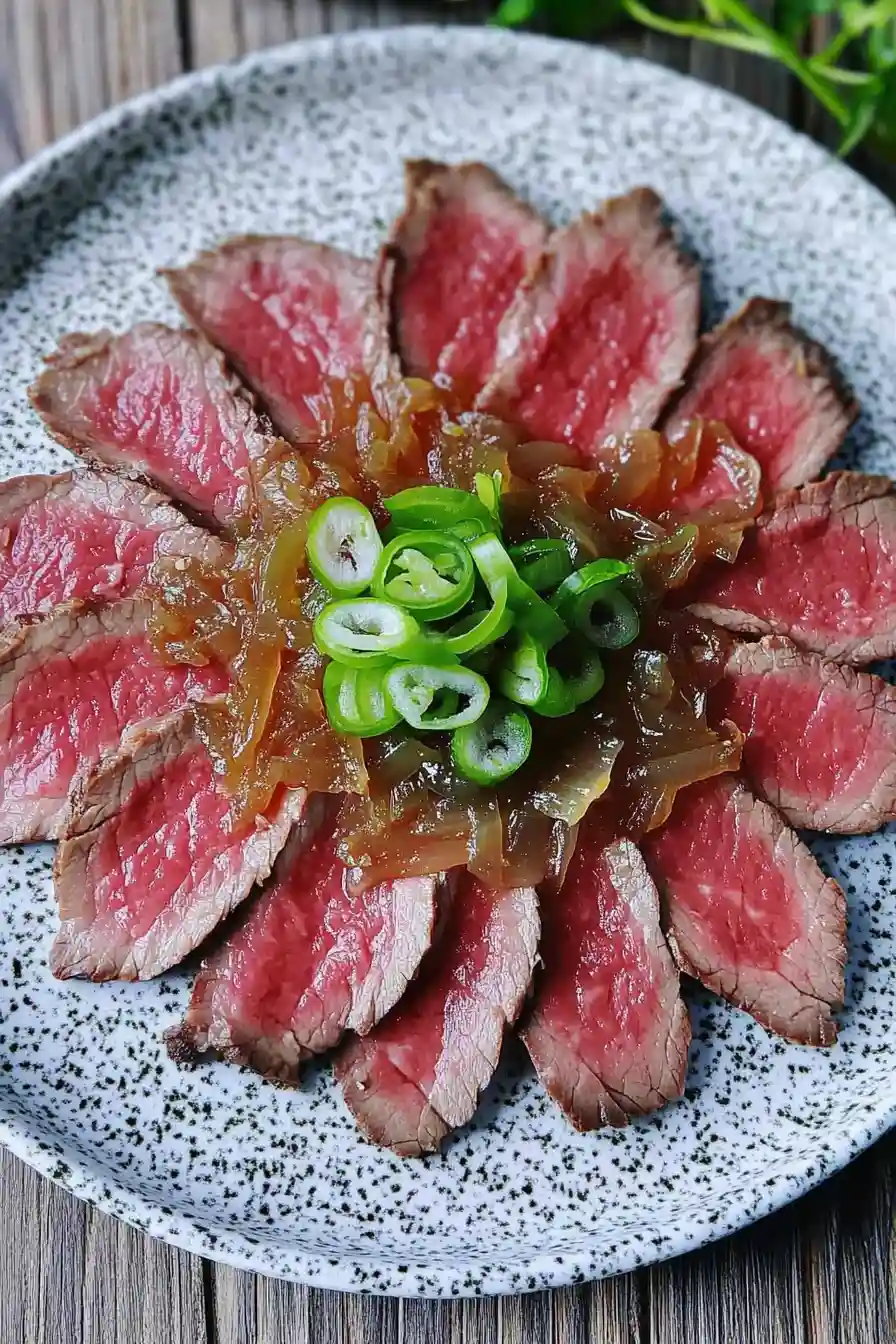
Why You’ll Love This Japanese Roast Beef
- Restaurant-quality results – This Japanese-style preparation creates tender, flavorful beef that rivals what you’d find in upscale restaurants, but at a fraction of the cost.
- Make-ahead friendly – The long marinating time means you can prep this dish well in advance, making it perfect for special occasions or dinner parties.
- Simple ingredients – While some ingredients might be new to you, they’re all easily found in Asian grocery stores or the international aisle of your supermarket.
- Unique flavor profile – The combination of dashi, sake, and mirin creates a distinctly Japanese taste that’s different from traditional Western-style roast beef.
- Low-maintenance cooking – Most of the time is hands-off marinating, with minimal active cooking time needed.
What Kind of Beef Should I Use?
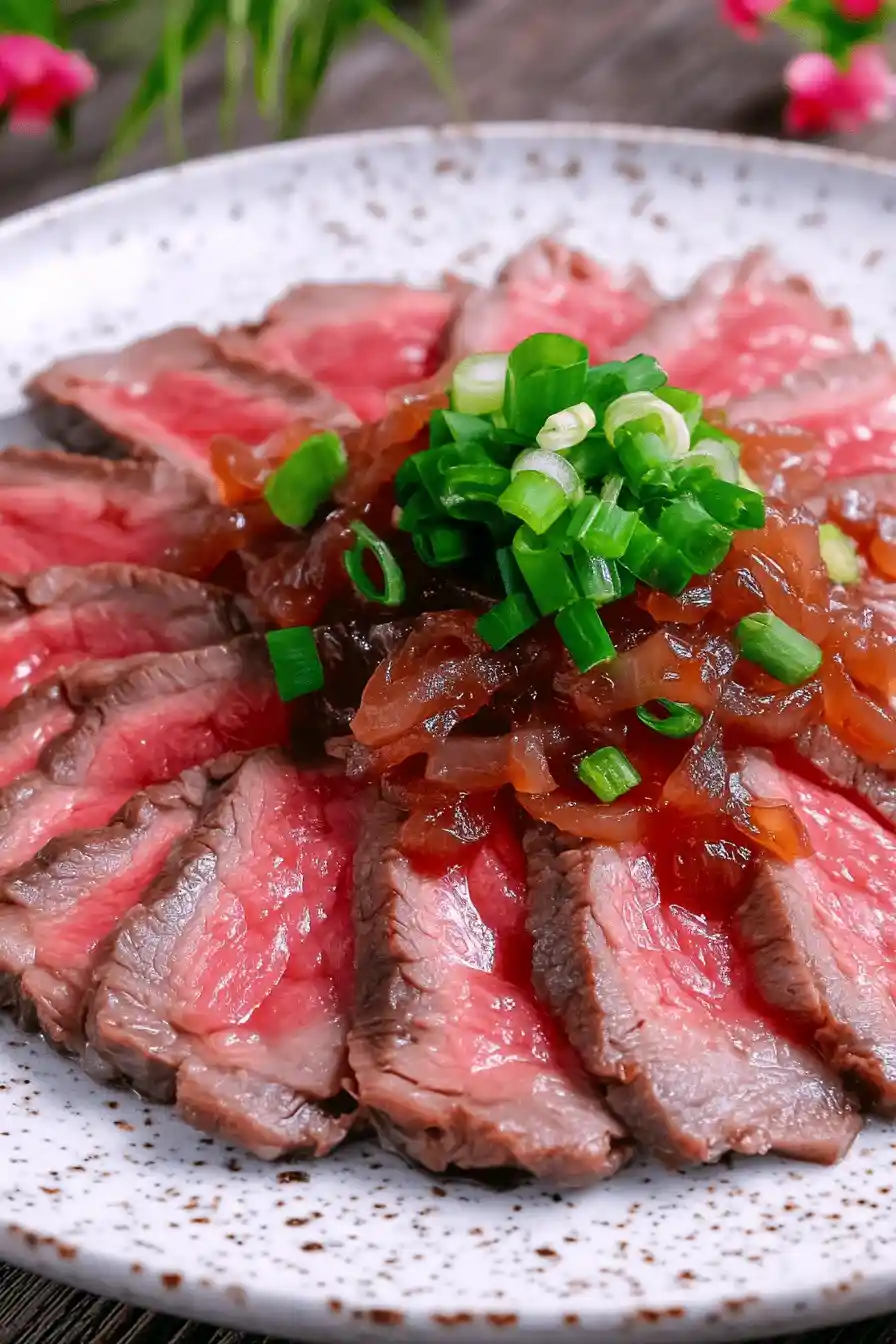
For Japanese-style roast beef, top round (also called London broil in some stores) is your best bet since it’s lean but still tender enough to slice thinly. If you can’t find top round, eye of round or sirloin tip are good alternatives that won’t break the bank. When shopping, look for meat with a bright red color and some marbling, but avoid cuts with thick layers of fat since this dish is meant to be lean and clean-tasting. For the best results, bring your beef to room temperature before cooking, and make sure to slice it against the grain as thinly as possible – this makes a big difference in how tender each bite will be.
Options for Substitutions
While this recipe has some specific Japanese ingredients, there are several substitutions you can try if needed:
- Top round beef: You can use sirloin, eye of round, or bottom round roast. Just keep in mind that cooking times might need slight adjustments depending on the cut’s thickness.
- Dashi broth: If you can’t find dashi, you can use low-sodium chicken broth mixed with a splash of fish sauce. In a pinch, mushroom broth can work too, though the flavor will be different.
- Japanese leek: Regular leeks work fine here, or you can use a combination of white onion and green onions to get a similar effect.
- Sake: Dry white wine or Chinese rice wine (Shaoxing) can replace sake. If you prefer non-alcoholic options, use rice vinegar mixed with water (3:1 ratio).
- Mirin: Mix 2 tablespoons rice vinegar with 1 tablespoon sugar as a substitute, or use sweet white wine with a pinch of sugar.
- Daikon radish: Regular red radishes can work, though they’re spicier. You could also use jicama for a milder option, or simply skip it if unavailable.
- Japanese soy sauce: Regular soy sauce will work, but use a bit less as it’s usually saltier than Japanese varieties. Light Chinese soy sauce is another good option.
Watch Out for These Mistakes While Cooking
The biggest challenge when making Japanese-style roast beef is getting the temperature right – using a meat thermometer is crucial, as you’ll want to remove the beef from heat when it reaches 130-135°F for medium-rare, since it will continue cooking while resting.
Many home cooks skip the essential step of bringing the meat to room temperature before cooking, but letting it sit out for 30-45 minutes ensures even cooking and a perfectly pink center.
The sauce can become overly salty if you reduce it too much, so keep an eye on it and taste as you go – and don’t forget to strain out the aromatics (garlic, ginger, and leek) before reducing the sauce to achieve that silky smooth texture Japanese cuisine is known for.
For the best flavor and texture, let the meat rest for at least 15-20 minutes before slicing, and remember to cut against the grain in thin slices using a sharp knife – thick or uneven slices can make even perfectly cooked beef tough to eat.
What to Serve With Japanese Style Roast Beef?
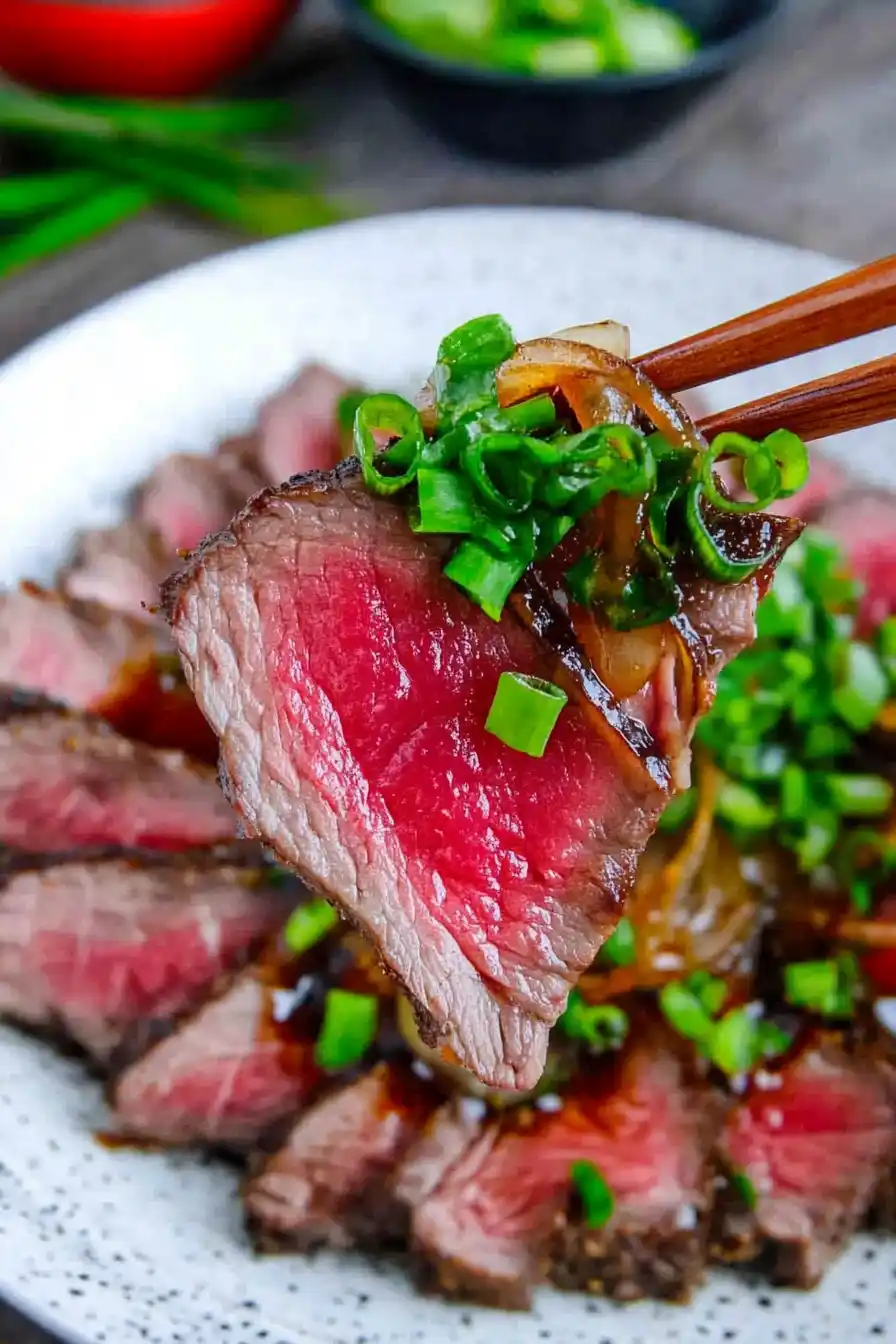
This Japanese-style roast beef pairs perfectly with steamed white rice, which helps soak up all that tasty sauce and provides a neutral base for the rich meat. I like to add some simple blanched vegetables on the side, like green beans or spinach dressed with a bit of sesame oil and soy sauce. You can also serve this with a small bowl of miso soup to complete the Japanese meal experience, or add a crisp cucumber salad dressed with rice vinegar for a refreshing contrast. For a heartier meal, consider adding some cold soba noodles on the side – they’re especially nice during warmer months.
Storage Instructions
Keep Fresh: Place your Japanese-style roast beef in an airtight container and keep it in the fridge for up to 3 days. I like to store the sauce separately from the meat to keep everything fresh. The grated daikon should be prepared fresh when you’re ready to serve, as it can become bitter if stored too long.
Freeze: If you want to make this ahead, you can freeze the cooked roast beef for up to 2 months. Wrap it tightly in plastic wrap, then place in a freezer bag with the air pressed out. The sauce can be frozen separately in a small container, but remember to make fresh daikon and garnishes when serving.
Serve Later: When you’re ready to enjoy your frozen roast beef, thaw it overnight in the refrigerator. Slice it while it’s still slightly frozen for the thinnest possible cuts. Warm the sauce gently on the stovetop if desired, but the beef is traditionally served cold or at room temperature with fresh garnishes.
| Preparation Time | 30-60 minutes |
| Cooking Time | 20-30 minutes |
| Total Time | 360-720 minutes |
| Level of Difficulty | Medium |
Estimated Nutrition
Estimated nutrition for the whole recipe (without optional ingredients):
- Calories: 1200-1400
- Protein: 90-100 g
- Fat: 60-70 g
- Carbohydrates: 40-50 g
Ingredients
For the roast beef:
- 1 lb beef top round joint (room temperature for even cooking)
- 1/2 tbsp cooking oil (high smoke point like grapeseed or avocado)
For the braising liquid:
- 4 tbsp sake
- 4 fl oz dashi broth
- 4 tbsp japanese soy sauce (I use Kikkoman)
- 4 tbsp mirin
- 3 fresh ginger slices
- 1 japanese leek (green section)
- 2 garlic cloves (roughly chopped)
For the sauce and garnish:
- 4 tbsp grated daikon radish (lightly squeezed to remove excess water)
- 1 japanese leek (white section, finely diced)
- finely chopped green onions
- wasabi (optional, for a spicy kick)
Step 1: Prepare and Season the Beef
Start by taking a 450 g beef roasting joint and stab it all over with a fork to help the seasoning penetrate.
Sprinkle it generously with salt and pepper.
Allow the beef to rest and come to room temperature, which takes about 30 minutes (less if it’s summer and warmer).
Step 2: Sear the Beef
Heat a frying pan on medium with ½ tablespoon of cooking oil.
Once the pan and oil are hot, sear the beef joint on each side until it becomes lightly browned and develops a thin crust.
This should take a few minutes per side.
Step 3: Create the Cooking Mixture
Add to the pan: 2 cloves of garlic, 3 slices of ginger root, the green part of 1 Japanese leek (naganegi), 120 ml of dashi stock, 4 tablespoons of Japanese soy sauce (koikuchi shoyu), 4 tablespoons of sake, and 4 tablespoons of mirin.
Bring to a boil, and then reduce the heat to a simmer, covering the pan with a lid.
Simmer for 10 minutes, turning the meat halfway through to ensure even cooking.
Step 4: Cool and Marinate
Once the beef is cooked, remove it from the pan and wrap it tightly with foil.
Allow it to cool to room temperature.
Remove and discard the garlic, ginger, and leek from the pan, but save the sauce.
When cooled, unwrap the beef and discard the foil.
Place the beef in a sealable bag and add the reserved sauce.
Marinate in the refrigerator for at least 6 hours, or preferably overnight, for maximum flavor.
Step 5: Prepare the Sauce
Remove the marinated meat from the bag and transfer the leftover marinade to a pan.
Finely dice the reserved white part of the leek, and add it to the sauce.
Bring to a boil and let it bubble for 2-3 minutes, or until the sauce is slightly reduced and thickened.
Turn off the heat, then stir in 4 tablespoons of grated daikon radish (daikon oroshi) and mix well.
Step 6: Serve the Beef
Slice the marinated beef into thin, even pieces.
Arrange the slices beautifully on serving plates.
Top with the prepared sauce, a sprinkle of finely chopped green onions, and a small blob of wasabi to taste.
Serve either hot or cold according to your preference and enjoy your flavorful dish!