Growing up, I never thought spam and rice could be comfort food until I tried kimchi fried rice. Now, it’s what I make when I need a quick dinner that feels like a warm hug. There’s something about the mix of salty spam and tangy kimchi that just works – kind of like how peanut butter and jelly are meant to be together.
I started making this dish on busy weeknights when I didn’t have the energy for anything fancy. The best part? You can use leftover rice from yesterday’s takeout, and that container of kimchi sitting in your fridge. Add some crispy spam, and you’ve got a meal that’s both simple and satisfying. My family asks for it at least once a week now, and I’m not complaining – it’s one of those dishes that tastes like it took way more effort than it actually did.

Why You’ll Love This Kimchi Fried Rice
- Quick preparation – This satisfying meal comes together in just 20-30 minutes, making it perfect for busy weeknights when you want something tasty without spending hours in the kitchen.
- Budget-friendly ingredients – Using pantry staples like spam and leftover rice, plus some kimchi from your fridge, this dish is easy on your wallet while delivering big on flavor.
- Customizable heat level – You can easily adjust the amount of gochujang and chili flakes to make it as mild or spicy as you prefer – it’s totally up to you!
- No waste recipe – This recipe is perfect for using up day-old rice and that jar of kimchi sitting in your fridge, helping you reduce food waste while creating something delicious.
What Kind of Kimchi Should I Use?
For kimchi fried rice, you’ll want to use well-fermented napa cabbage kimchi, which has a deeper, more complex flavor than fresh kimchi. The older and more sour your kimchi is, the better your fried rice will taste – I usually wait until my kimchi is at least 2-3 weeks old before using it in fried rice. Regular cabbage kimchi works fine too, but the traditional napa variety tends to have the best balance of flavors and texture for this dish. Just make sure to drain your kimchi well while saving the juice, as we’ll use both parts in the recipe. If your kimchi is too fresh, you can speed up the fermentation by leaving it at room temperature for a day or two before using it.
Options for Substitutions
This Korean comfort food classic can be adapted with several substitutions if needed:
- Kimchi: Kimchi is really the star here and can’t be substituted – you’ll need it for that authentic flavor. But you can use fresh kimchi if that’s all you have, though the taste won’t be as deep.
- Spam: Not a Spam fan? You can use diced ham, bacon, or even leftover cooked chicken. For a vegetarian version, try using firm tofu or mushrooms – just make sure to cook them until they’re nice and crispy.
- Rice: While day-old rice works best, you can use fresh rice – just spread it on a baking sheet and pop it in the fridge for 30 minutes to dry it out a bit. Any white rice works, but brown rice can be used too.
- Gochujang: If you can’t find gochujang, mix 1 tablespoon of miso paste with 1 teaspoon of chili sauce (like Sriracha). It won’t be exactly the same, but it’ll add similar savory heat.
- Avocado oil: Any neutral cooking oil like vegetable, canola, or grapeseed oil works just fine here.
- Korean red chili flakes: Regular red pepper flakes can work in a pinch, but use about half the amount as they’re usually spicier than Korean ones.
Watch Out for These Mistakes While Cooking
Using freshly cooked rice is a common mistake that can turn your kimchi fried rice into a mushy disappointment – day-old rice stored in the fridge will give you those perfect, separate grains that make great fried rice. If you’re working with kimchi that isn’t well-fermented, you might miss out on that deep, complex flavor that makes this dish special – look for kimchi that’s at least 2-3 weeks old and has a noticeably sour smell. Another crucial error is not draining the kimchi well enough before cooking, which can make your rice too wet – squeeze out the excess liquid (but save it!) and chop the kimchi into smaller pieces for better distribution throughout the dish. For the best results, cook your spam until it’s golden brown and slightly crispy before adding other ingredients, and make sure your pan is hot enough that you hear a sizzle when the ingredients hit it – this helps prevent sticking and creates those delicious crispy rice bits at the bottom.
What to Serve With Kimchi Fried Rice?
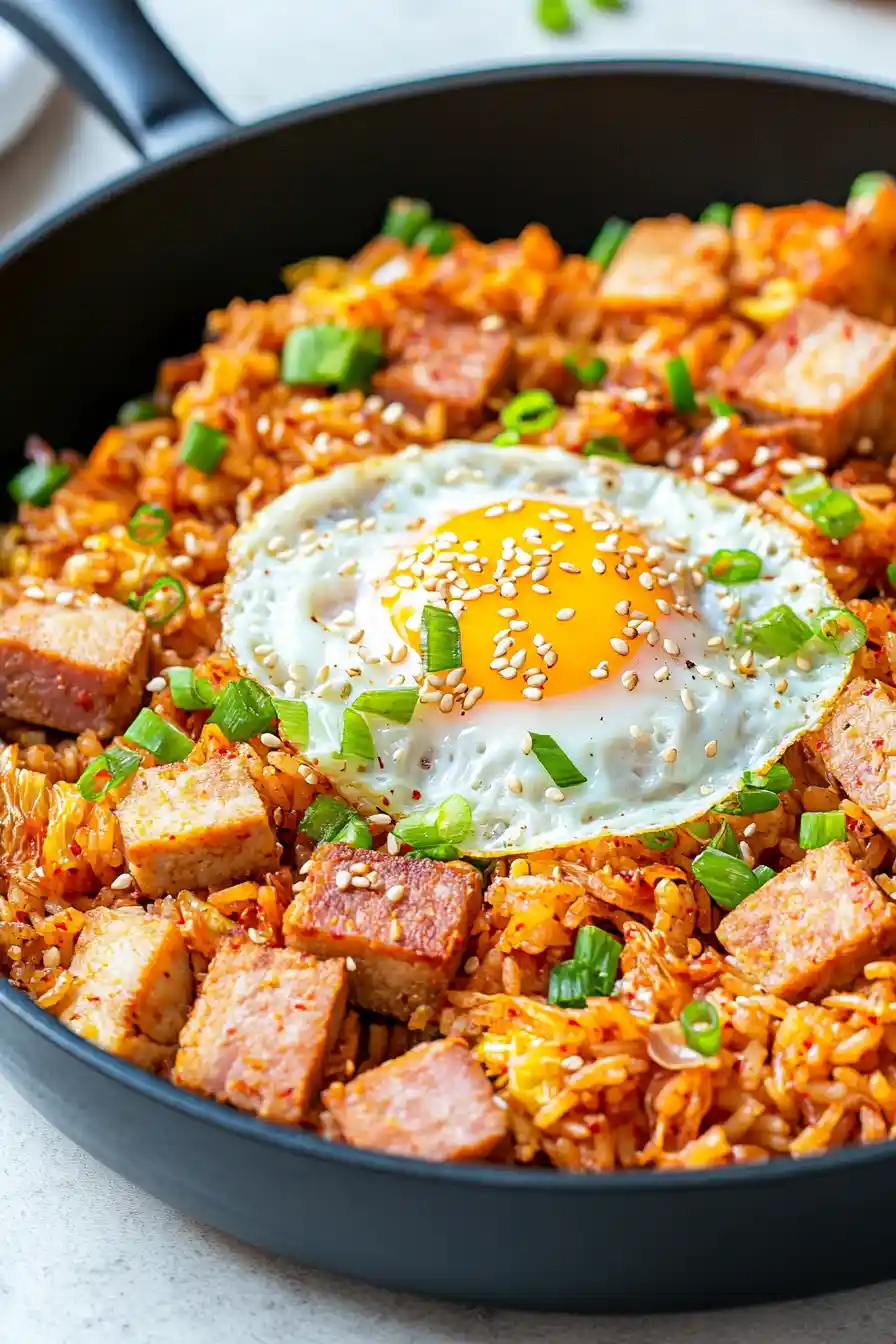
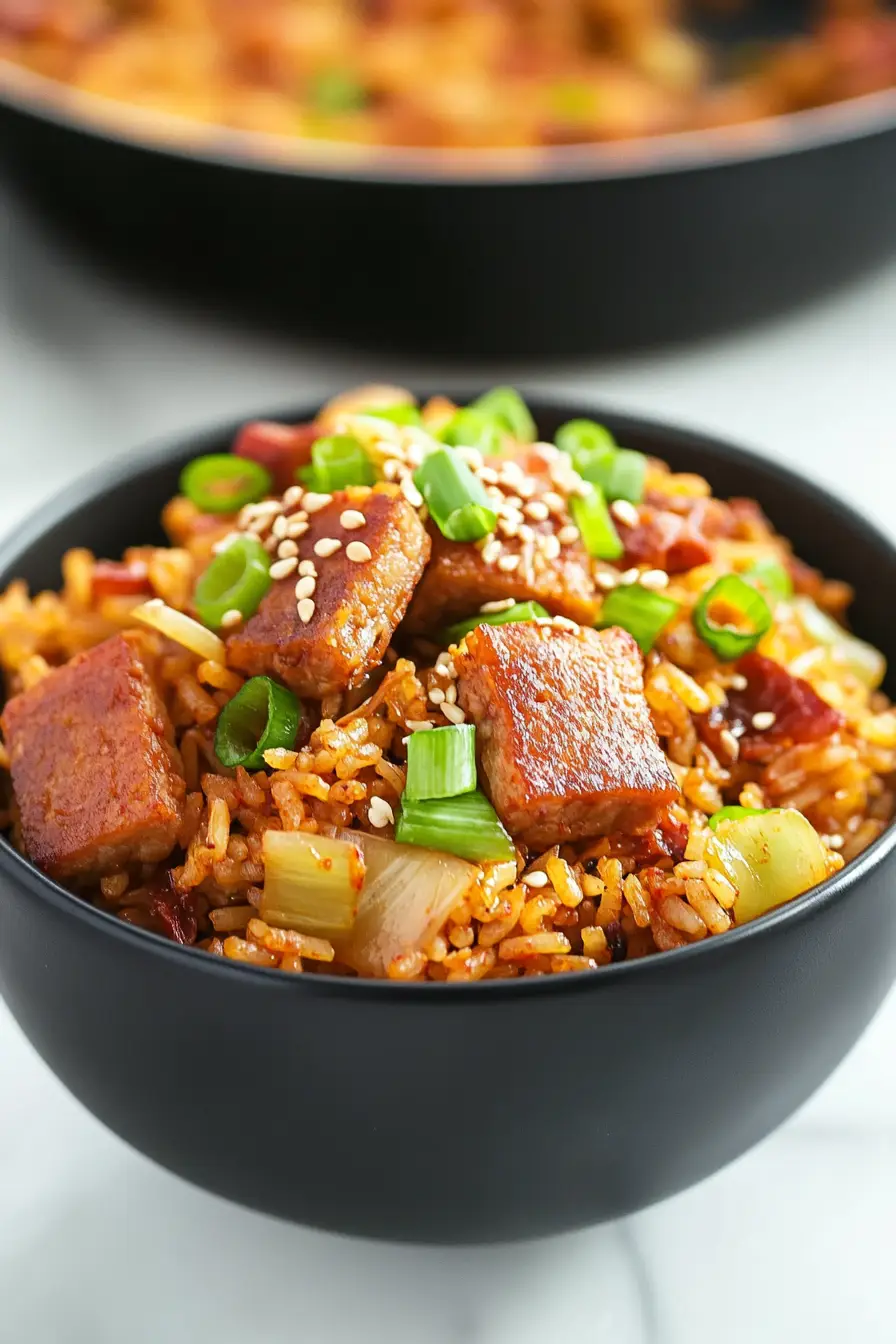
This hearty Korean comfort food is practically a complete meal on its own, especially when topped with a runny fried egg! If you’re looking to round out your meal, try serving it with some simple Korean side dishes (banchan) like cucumber salad or bean sprouts. A small bowl of miso soup makes a nice accompaniment, helping to balance out the rich, spicy flavors of the fried rice. For extra protein, you could add some Korean BBQ-style meat on the side, though honestly, with the spam and egg already in there, you probably won’t need it!
Storage Instructions
Keep: Let your kimchi fried rice cool down completely, then pop it in an airtight container. It’ll stay good in the fridge for up to 3 days. Just keep in mind that the rice might get a bit firmer in the fridge, but that’s totally normal!
Make Ahead: This dish actually works great for meal prep! You can cook the rice a day ahead – in fact, day-old rice works better for fried rice because it’s less sticky. Just store the cooked eggs separately and make them fresh when you’re ready to eat.
Warm Up: To bring your leftover kimchi fried rice back to life, just heat it in a pan over medium heat with a splash of oil. Stir it occasionally until it’s heated through – about 5 minutes. You can also use the microwave, but the pan method keeps the rice nice and crispy!
| Preparation Time | 10-15 minutes |
| Cooking Time | 10-15 minutes |
| Total Time | 20-30 minutes |
| Level of Difficulty | Easy |
Estimated Nutrition
Estimated nutrition for the whole recipe (without optional ingredients):
- Calories: 1000-1200
- Protein: 40-50 g
- Fat: 60-70 g
- Carbohydrates: 90-100 g
Ingredients
For the fried rice:
- 8 oz spam (diced into 1/2-inch pieces)
- 2 cups kimchi (drained and chopped for even distribution)
- 1 tbsp gochujang (Korean red chili paste, I use Sempio brand)
- 2 tbsp avocado oil
- 1 tsp Korean red chili flakes
- 1/2 to 1 tsp sugar (optional, to balance flavors)
- 1 tbsp sesame oil
- 3 cups cooked rice (day-old white rice works best)
- 4 large eggs (optional, for a fried egg on top)
- 3 tbsp kimchi liquid
For the topping:
- 1 tsp toasted sesame seeds
- 2 stalks green onions (thinly sliced)
Step 1: Cook the Spam
Begin by heating a pan over medium-high heat.
Add about a tablespoon of oil to the pan, followed by the cubed spam.
Fry the spam until it’s browned and crispy on one side, approximately 4 to 5 minutes, then flip and brown the other side.
Once done, remove the spam from the pan and set it aside.
Step 2: Stir Fry the Kimchi
Add the remaining oil to the same pan.
Introduce the kimchi, gochujang, and Korean red pepper flakes.
Stir fry these ingredients together for about 3 to 4 minutes until the kimchi releases its flavors and the mixture is well combined.
Step 3: Incorporate the Rice
Add the day-old rice to the pan, breaking up any large clumps with the flat side of your spatula or spoon.
Stir everything together constantly, ensuring each grain of rice gets well coated with the kimchi and oil mixture.
Step 4: Combine Ingredients and Adjust Flavors
Reintroduce the browned spam back into the pan along with the kimchi juice and sesame oil.
Stir fry all the ingredients together thoroughly.
Taste the mixture to ensure the flavors are balanced.
If the dish seems too sour due to ripe kimchi, add ½ teaspoon of sugar and taste again to adjust.
Skip the sugar if the flavor balance is already to your liking.
Step 5: Serve and Garnish
Remove the pan from heat and portion out the servings.
For an additional flavor boost, top each serving with a sunny side up egg and garnish with chopped scallions and sesame seeds.
Serve immediately to enjoy the dish at its best.