Here is my go-to pork belly kimchi stew recipe, combining tender pieces of pork belly with tangy kimchi, tofu, and vegetables in a rich, warming broth that simmers to perfection.
This cozy stew has become my family’s favorite comfort food during cold Portland winters. I always make a big pot because everyone asks for seconds, and the leftovers taste even better the next day. Nothing beats a hot bowl of stew when it’s raining outside, right?
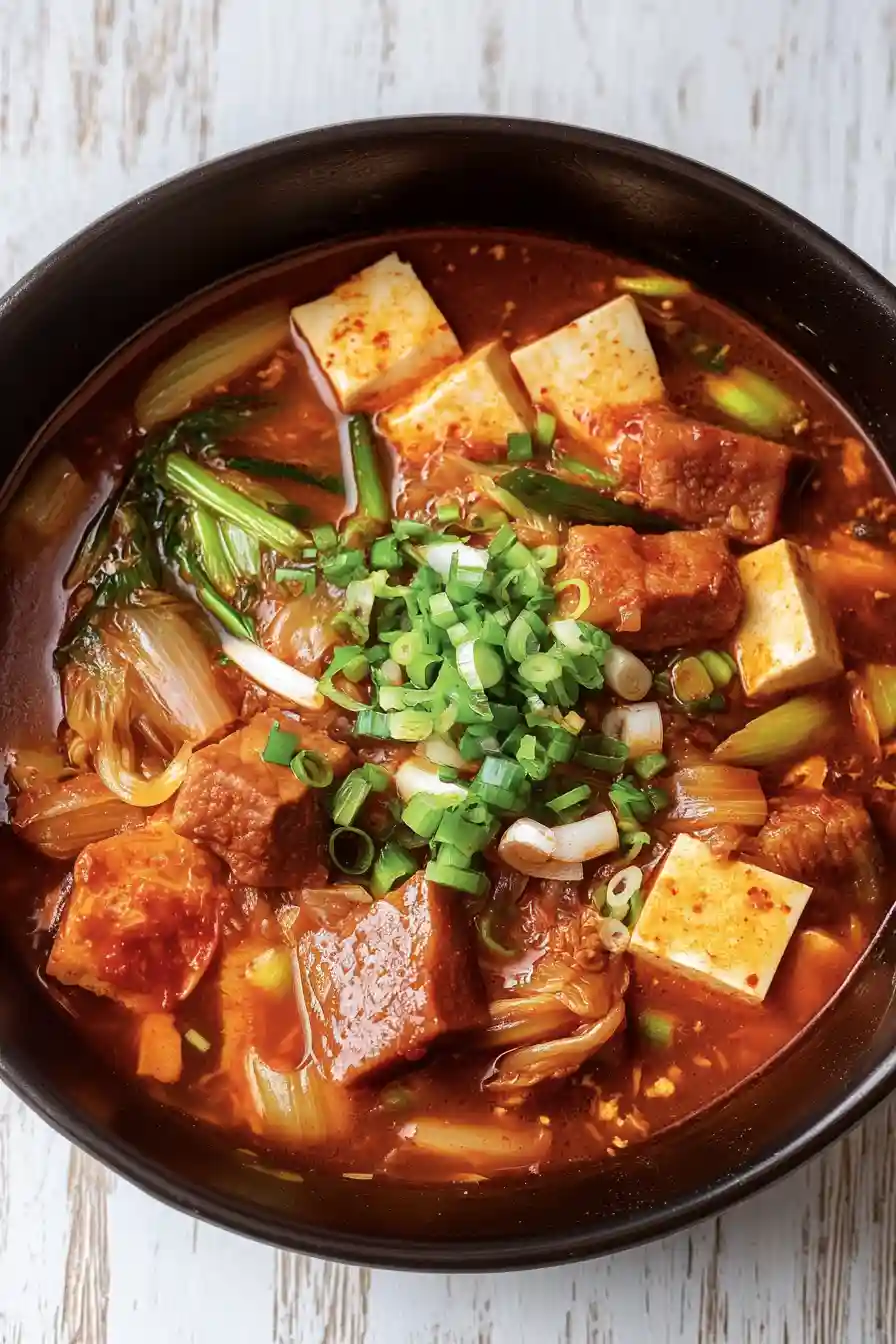
Why You’ll Love This Kimchi Stew
- Rich, complex flavors – The combination of tangy kimchi, tender pork belly, and savory broth creates a deeply satisfying taste that gets better with each spoonful.
- One-pot meal – Everything cooks together in a single pot, which means less cleanup and more time to enjoy your meal.
- Customizable heat level – You can easily adjust the spiciness by adding more or less gochugaru, making it perfect for both spice lovers and those who prefer milder flavors.
- Budget-friendly ingredients – This stew uses simple ingredients and turns them into something special – even leftover kimchi becomes a star ingredient.
- Quick weeknight dinner – Ready in under an hour, this warming stew fits perfectly into your busy schedule while delivering restaurant-quality taste.
What Kind of Pork Belly Should I Use?
For this stew, you’ll want to look for fresh, uncured pork belly with a good mix of meat and fat layers. The meat counter at Asian markets often sells it pre-sliced to the perfect thickness for stews, but you can also ask your local butcher to slice it for you or cut it yourself at home into bite-sized pieces. While you can use either skinless or skin-on pork belly, skinless is easier to work with in this dish. If you’re having trouble finding pork belly, you can substitute with fatty cuts like pork shoulder (Boston butt) – just make sure there’s enough fat marbling to keep the meat tender during cooking.
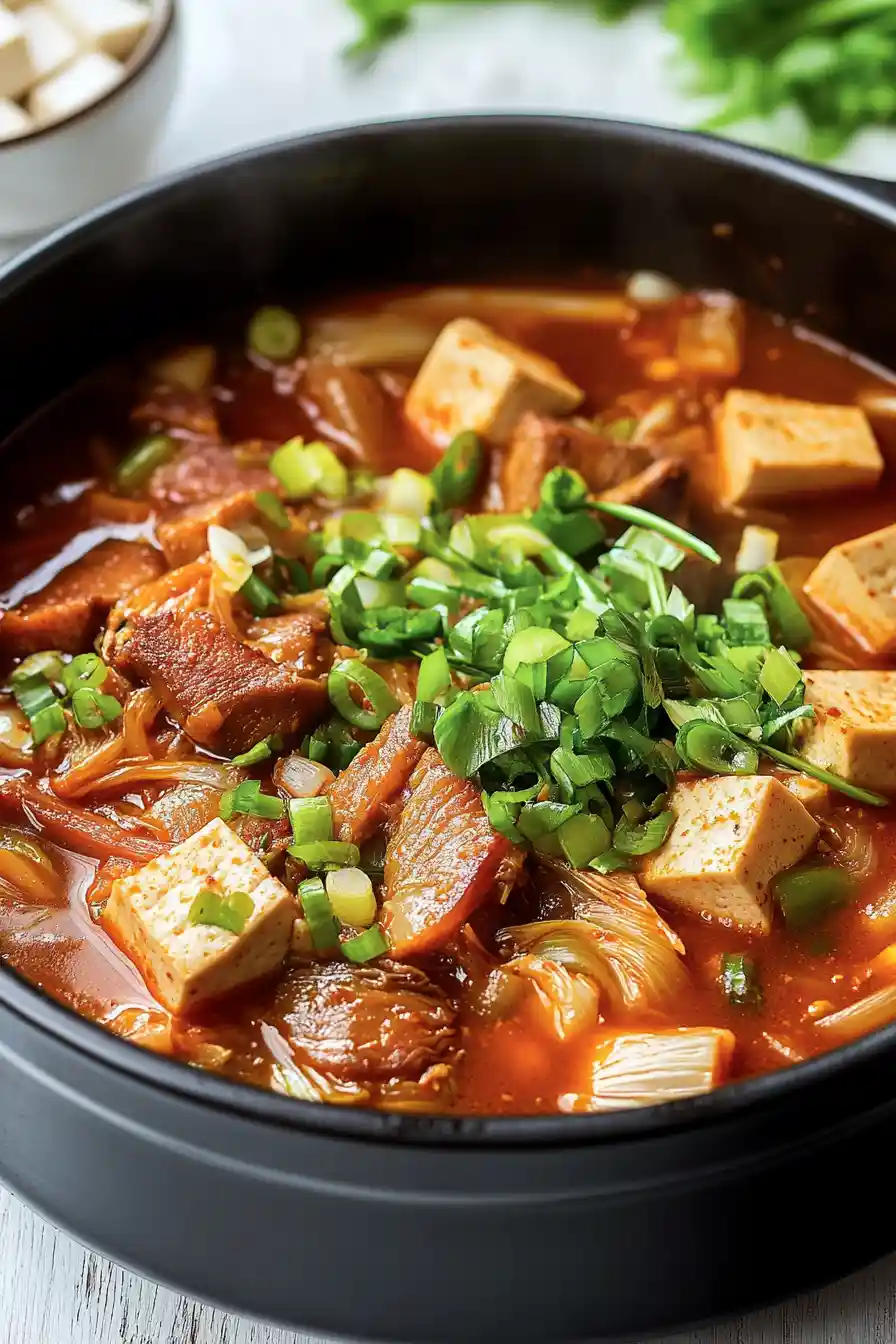
Options for Substitutions
Let’s talk about what you can swap in this stew if you need to make some changes:
- Kimchi: The kimchi is really the star here and can’t be substituted – you’ll want to use mature (sour) kimchi for the best flavor. If you can’t find kimchi liquid, you can add a splash of rice vinegar mixed with water to get that tangy taste.
- Pork belly: No pork belly? You can use bacon, pork shoulder, or even spam! For a lighter option, try chicken thighs. If you’re going vegetarian, mushrooms (especially king oyster or shiitake) make a good meat-free choice.
- Gochugaru: If you can’t find Korean chili flakes, you can use regular red pepper flakes, but start with half the amount as they’re usually spicier. For a milder option, use paprika mixed with a pinch of cayenne.
- Tofu: Any firmness of tofu works here, or you can swap it out for cubed soft potatoes or more mushrooms. Just add them earlier in the cooking process so they can get tender.
- Green onions: Regular chives or even thinly sliced regular onions can work in place of green onions. They’ll give you that same oniony kick.
Watch Out for These Mistakes While Cooking
The biggest mistake when making kimchi stew is rushing the cooking process – the pork belly needs time to render its fat and become tender, so cook it slowly over medium heat for at least 10-15 minutes before adding other ingredients.
Another common error is not using enough kimchi liquid, which provides the deep, complex flavor base – if your kimchi doesn’t have enough juice, you can add a splash of chicken broth or water mixed with a little gochugaru to achieve the right consistency.
The tofu can easily break apart if handled roughly, so add it gently towards the end of cooking and avoid stirring too vigorously.
For the best flavor development, let the stew simmer for at least 20 minutes after combining all ingredients, and remember to taste before adding any additional salt since both kimchi and soy sauce already contain significant sodium.
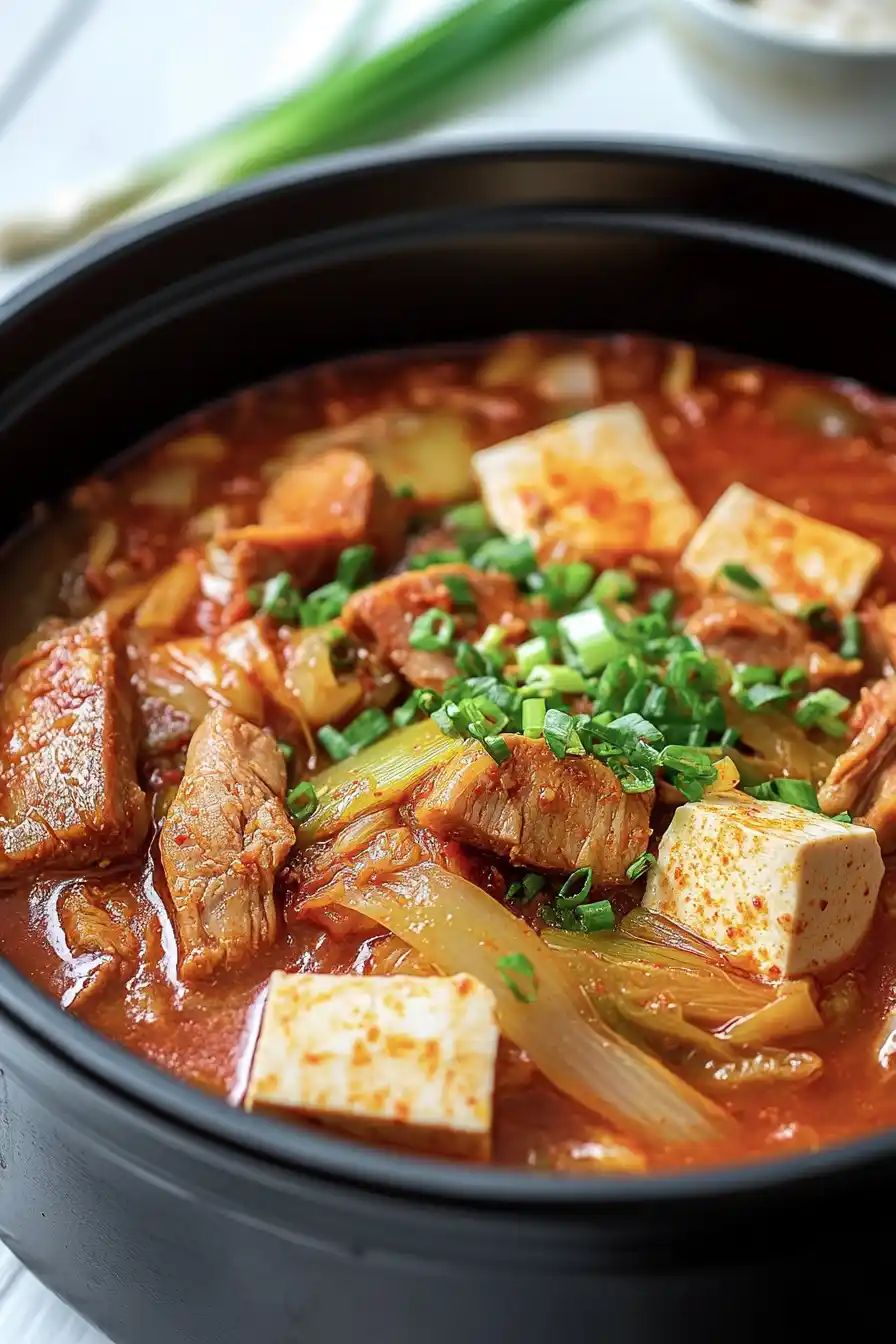
What to Serve With Kimchi Stew?
This hearty Korean stew pairs perfectly with a bowl of steaming white rice – it’s practically required to soak up all that flavorful broth! I like to serve some quick pickled cucumbers or radishes on the side to add a cool, crisp contrast to the rich, spicy stew. For a complete Korean meal, add a couple of simple banchan (side dishes) like seasoned spinach or bean sprouts, which help balance out the bold flavors of the stew. You can also throw in some dried seaweed sheets on the side – they’re great for wrapping up bites of pork belly and rice together.
Storage Instructions
Keep Fresh: This kimchi stew tastes even better the next day! Place it in an airtight container and keep it in the fridge for up to 3 days. The flavors will continue to develop and meld together, making each bowl more flavorful than the last.
Save: If you have leftover stew, transfer it to a container once it’s completely cooled. Keep the green onions separate and add them fresh when serving – this keeps them crisp and adds a nice pop of color to your reheated stew.
Warm Up: When you’re ready to eat, gently heat the stew in a pot over medium-low heat, stirring occasionally. Add a splash of water if it’s gotten too thick. The tofu might break up a bit, but that’s totally normal and won’t affect the taste. Top with fresh green onions before serving.
| Preparation Time | 15-20 minutes |
| Cooking Time | 30-40 minutes |
| Total Time | 45-60 minutes |
| Level of Difficulty | Medium |
Estimated Nutrition
Estimated nutrition for the whole recipe (without optional ingredients):
- Calories: 650-750
- Protein: 40-50 g
- Fat: 40-50 g
- Carbohydrates: 30-35 g
Ingredients
- 2 cups bite-sized kimchi (aged kimchi is best for flavor)
- 1 tbsp cooking oil (a neutral oil like grapeseed or vegetable works well)
- 1 tsp minced garlic (freshly minced for best flavor)
- 6 oz tofu (firm or extra-firm, cut into 1-inch cubes)
- 1/2 cup kimchi liquid (from the jar of kimchi)
- soy sauce
- 1 to 3 tsp Korean chili flakes (gochugaru, adjust to your spice preference)
- salt
- 2.5 cups water or broth
- 2 green onions (sliced for garnish)
- pepper
- 4 oz pork belly (sliced into 1/2-inch pieces)
Step 1: Prepare the Ingredients
Start by cutting the kimchi into bite-sized pieces.
Then, cut the meat (if using) into bite-sized portions as well.
Slice the tofu into approximately 1/2-inch thick slices, and roughly chop the scallions.
Set these ingredients aside for later use.
Step 2: Cook the Kimchi and Meat
Heat a small to medium pot with 1 tablespoon of oil over medium-high heat.
Add the kimchi, pork (if using), red pepper flakes, and garlic to the pot.
Cook until the kimchi is softened and the pork is cooked through, which should take about 5 to 7 minutes.
Stir occasionally to ensure even cooking.
Step 3: Add Liquids and Simmer
Pour in the kimchi juice and about 2 to 2.5 cups of water (or broth).
Bring the mixture to a boil and continue cooking for 5 minutes.
Then, reduce the heat to medium.
Cover the pot and let it simmer for about 15 minutes.
If the stew becomes too thick or dry, you can add more water as needed.
Step 4: Add Tofu and Scallions
Gently drop the tofu slices and chopped scallions into the pot.
Season with salt (or soup or regular soy sauce) and pepper to taste.
Note that adding salt might not be necessary if the kimchi was well-seasoned or kimchi juice is present.
Let the stew boil until the tofu is heated through, about 5 minutes.
Step 5: Serve the Kimchi Jjigae
Once the tofu is cooked through, your kimchi jjigae is ready to serve.
Carefully ladle it into bowls while still bubbling hot.
Enjoy this hearty, flavorful dish right away!
Step 6: Vegetarian Variation with Tuna or Salmon
For a meatless version, simply skip the pork and follow the same initial steps.
When adding the kimchi juice and water, include one can of tuna (chamchi) with oil and optionally some onion slices.
Boil the stew for 10 to 15 minutes before proceeding with the rest of the recipe.
Fresh or canned salmon can be used as alternatives to tuna for added variety.