Here is my take on duck a l’orange, a French classic that combines crispy-skinned roasted duck with a rich orange sauce. The sauce has fresh orange juice, a bit of white wine, and just enough butter to make it smooth and glossy.
This duck recipe has become my go-to dish when I want to make dinner feel extra special. I usually serve it for Sunday family dinners, and there’s rarely any left over. Something about that orange sauce gets everyone reaching for seconds!
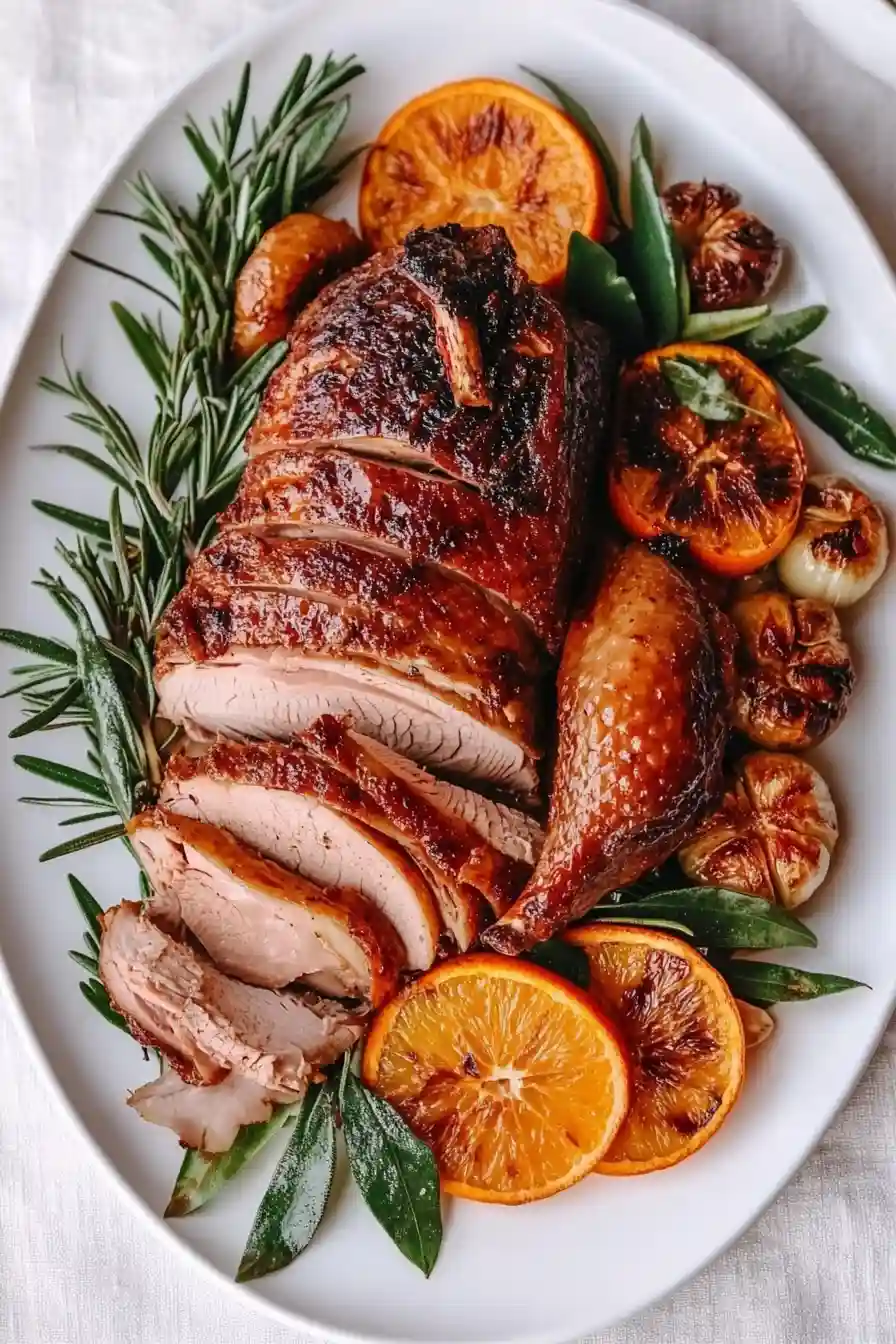
Why You’ll Love This Duck à l’Orange
- Restaurant-quality results – This classic French dish creates a perfectly crispy skin outside and juicy meat inside, rivaling what you’d get at an upscale restaurant.
- Impressive presentation – The golden-brown duck with its glossy orange sauce makes a show-stopping centerpiece for special occasions or dinner parties.
- Rich flavor combination – The sweet and citrusy orange sauce perfectly balances the savory duck meat, while herbs like rosemary and thyme add wonderful depth to the dish.
- One-pan recipe – Despite its fancy reputation, this recipe keeps things simple by cooking everything in one roasting pan, which means easier cleanup for you.
- Make-ahead friendly – You can prep components of this dish in advance, making it less stressful when entertaining guests.
What Kind of Duck Should I Use?
For duck a l’orange, Pekin (also called Long Island) duck is your best bet and the most widely available option at grocery stores and butcher shops. While Muscovy duck will work too, it tends to be larger and leaner, which means it could end up a bit tougher than the naturally fattier Pekin. When shopping, look for a duck that’s around 3-4 pounds – this size is perfect for roasting and will feed 4-6 people comfortably. If you’re buying frozen duck, make sure to thaw it completely in the fridge for 24-48 hours before cooking, and pat the skin dry really well with paper towels to help it crisp up nicely in the oven.

Options for Substitutions
While some ingredients in this classic French dish are essential, there’s room for flexibility with others:
- Duck: Duck is really the star here and can’t be substituted without completely changing the dish. The fat content and flavor are unique to duck.
- Grand Marnier: No Grand Marnier? You can use Cointreau, Triple Sec, or even skip the liqueur and add extra fresh orange juice plus 1 teaspoon of orange extract.
- Apple cider vinegar: White wine vinegar or regular white vinegar work just fine here. Use the same amount as called for in the recipe.
- Honey: You can swap honey with maple syrup or brown sugar. If using brown sugar, use 2 tablespoons instead of 3.
- Corn flour: Regular all-purpose flour or potato starch work well as thickeners. Use the same amount as corn flour.
- Fresh herbs: If you can’t find fresh rosemary, thyme, or bay leaves, use dried ones. Just remember to use about 1/3 of the amount since dried herbs are more concentrated.
- Chicken broth: Vegetable broth or even water with a chicken bouillon cube will work in place of chicken broth.
Watch Out for These Mistakes While Roasting
The biggest challenge when cooking duck is dealing with all that fat – score the skin in a diamond pattern without cutting into the meat, which allows the fat to render properly while keeping the meat juicy. A common mistake is not starting with a completely dry bird, so pat the duck thoroughly with paper towels and let it sit uncovered in the fridge overnight to ensure crispy skin. Temperature control is crucial – starting too hot will burn the skin before the fat renders, so begin at 300°F for the first hour to slowly render the fat, then increase to 375°F to crisp up the skin. When making the orange sauce, avoid rushing the process by reducing it too quickly over high heat, which can result in a bitter taste – instead, let it simmer gently until it reaches the right consistency and bright flavor.
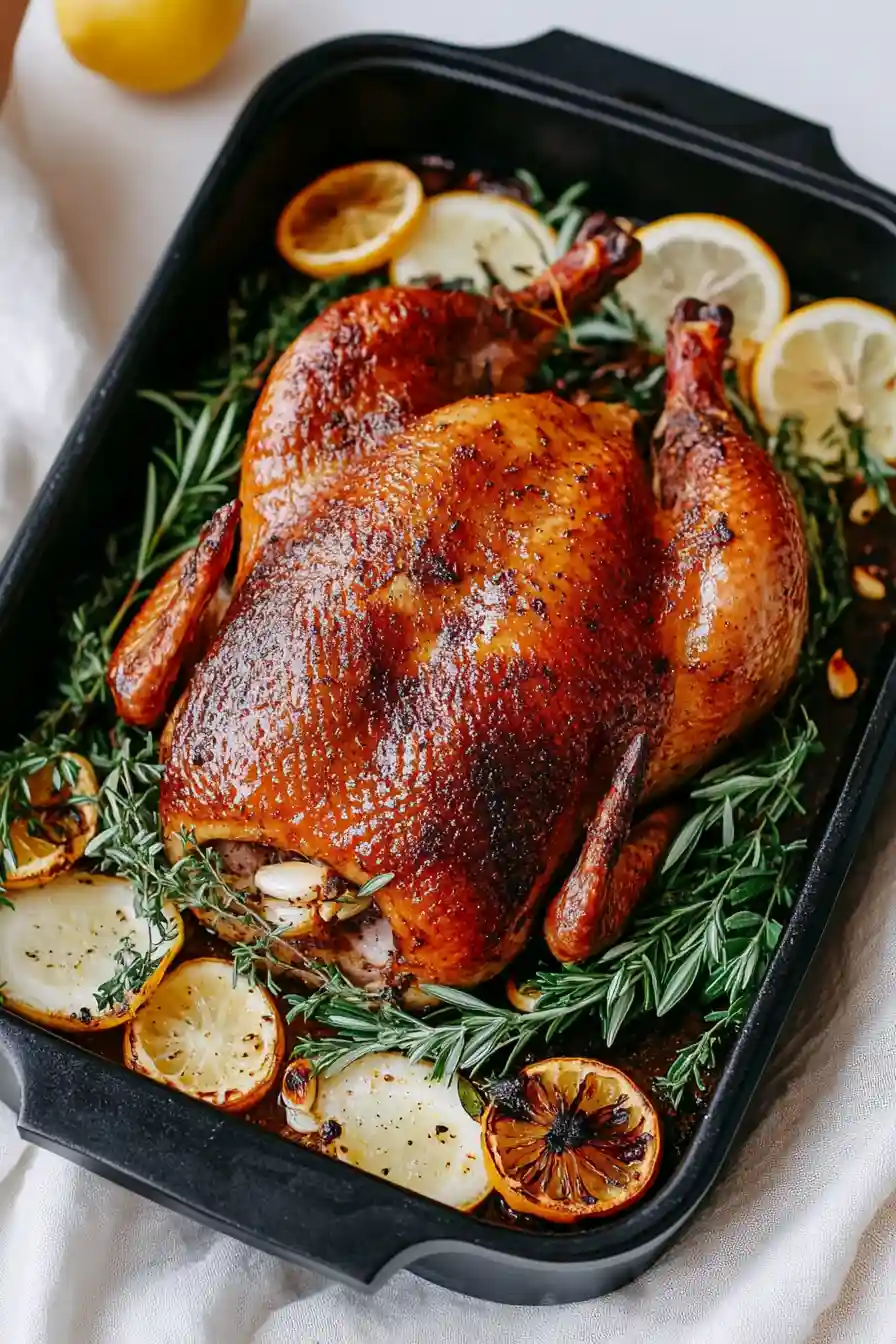
What to Serve With Duck à l’Orange?
This classic French dish pairs beautifully with simple sides that let the rich, citrusy duck take center stage. A bed of wild rice or roasted fingerling potatoes works great to soak up all that delicious orange sauce. For vegetables, try serving some French-style green beans (haricots verts) or roasted Brussels sprouts – they’re simple enough not to compete with the duck but still add nice color to your plate. I also like to include a light green salad dressed with a basic vinaigrette to balance out the richness of the duck and provide a fresh contrast to the sweet orange sauce.
Storage Instructions
Keep Fresh: Place any leftover duck in an airtight container and pour a bit of the sauce over it to keep the meat moist. It’ll stay good in the fridge for up to 3 days. The orange sauce can be stored separately in its own container, which makes reheating much easier.
Freeze: If you want to save your duck for later, you can freeze it for up to 2 months. Separate the meat from the bones and store it in a freezer-safe container. The orange sauce can be frozen separately in an ice cube tray – this way you can thaw just the amount you need!
Reheat: To bring back that lovely crispy skin, warm the duck in the oven at 350°F (175°C) for about 15-20 minutes. Heat the sauce separately in a small saucepan over low heat, stirring occasionally. If the sauce is too thick, thin it out with a splash of chicken broth.
Make Ahead: You can prep the orange sauce up to 2 days ahead and store it in the fridge. The duck itself is best roasted fresh, but you can prep the vegetables and measure out all your ingredients the day before to save time on cooking day.
| Preparation Time | 15-20 minutes |
| Cooking Time | 90-105 minutes |
| Total Time | 105-125 minutes |
| Level of Difficulty | Medium |
Estimated Nutrition
Estimated nutrition for the whole recipe (without optional ingredients):
- Calories: 3200-3500
- Protein: 180-200 g
- Fat: 220-250 g
- Carbohydrates: 100-120 g
Ingredients
For the duck:
- 1 small bunch carrots
- fresh thyme leaves
- 1 onion (quartered)
- 1 whole duck (3 lb)
- 2 garlic bulbs (halved)
- 2 to 3 rosemary sprigs
- 2 tsp salt
- fresh bay leaves
- freshly cracked black pepper (freshly ground preferred for more flavor)
For the orange sauce:
- 1/4 cup apple cider vinegar
- juice from 1 orange
- 2 cups low-sodium chicken broth
- 2 tbsp unsalted butter (I like Kerrygold unsalted butter for this)
- 1 tsp corn flour
- 3 tbsp liquid honey
For the orange garnish:
- 3 tbsp orange liqueur
- 3 oranges (zested and sliced)
Step 1: Prepare and Brown the Duck
Preheat your oven to 325°F (160ºC).
Season the whole duck generously with salt and pepper.
Heat a large cast-iron skillet over medium-high heat and brown the duck on all sides for about 10 minutes.
This step will help crisp up the skin and enhance the flavor of the duck.
Step 2: Roast the Duck with Vegetables and Herbs
In a baking pan, arrange the garlic heads, onion, carrots, and a selection of your favorite herbs.
Place the browned duck on top of the vegetables.
Roast the duck in the preheated oven for a total of 90 minutes, remembering to turn it upside down every 30 minutes to ensure even cooking and crisping of the skin.
Step 3: Prepare the Sauce
While the duck is roasting, prepare the sauce.
In a small saucepan, bring the apple cider vinegar, orange juice, and honey to a boil.
Gradually add the chicken stock to the boiling mixture, stirring constantly to combine.
Once well mixed, remove the saucepan from heat and set the sauce aside to steep and develop its flavors.
Step 4: Marinate Orange Slices
Blanch the orange slices by briefly boiling them in water for 2 minutes.
Transfer the blanched slices to a salad bowl and pour Grand Marnier over them.
Let the orange slices marinate as the duck continues roasting.
This will infuse the orange slices with a rich, flavorful liqueur profile.
Step 5: Finish Roasting with Marinated Oranges
Once the duck has roasted for 90 minutes, remove it from the oven and cover with foil to keep it warm.
Increase the oven temperature to 450°F (230ºC).
Arrange the marinated orange slices around the duck, sprinkle the oranges and duck with orange zest for added flavor and aroma.
Return the duck to the oven and roast for an additional 10 to 15 minutes, or until the skin is crisp and golden brown.
Step 6: Serve and Enjoy
Remove the duck from the oven and let it rest for a few minutes to retain its juices.
Carve the duck and serve it alongside the roasted vegetables and marinated orange slices.
Drizzle the prepared sauce over the duck before serving.
Enjoy your beautifully roasted duck, perfect for a special dining experience!