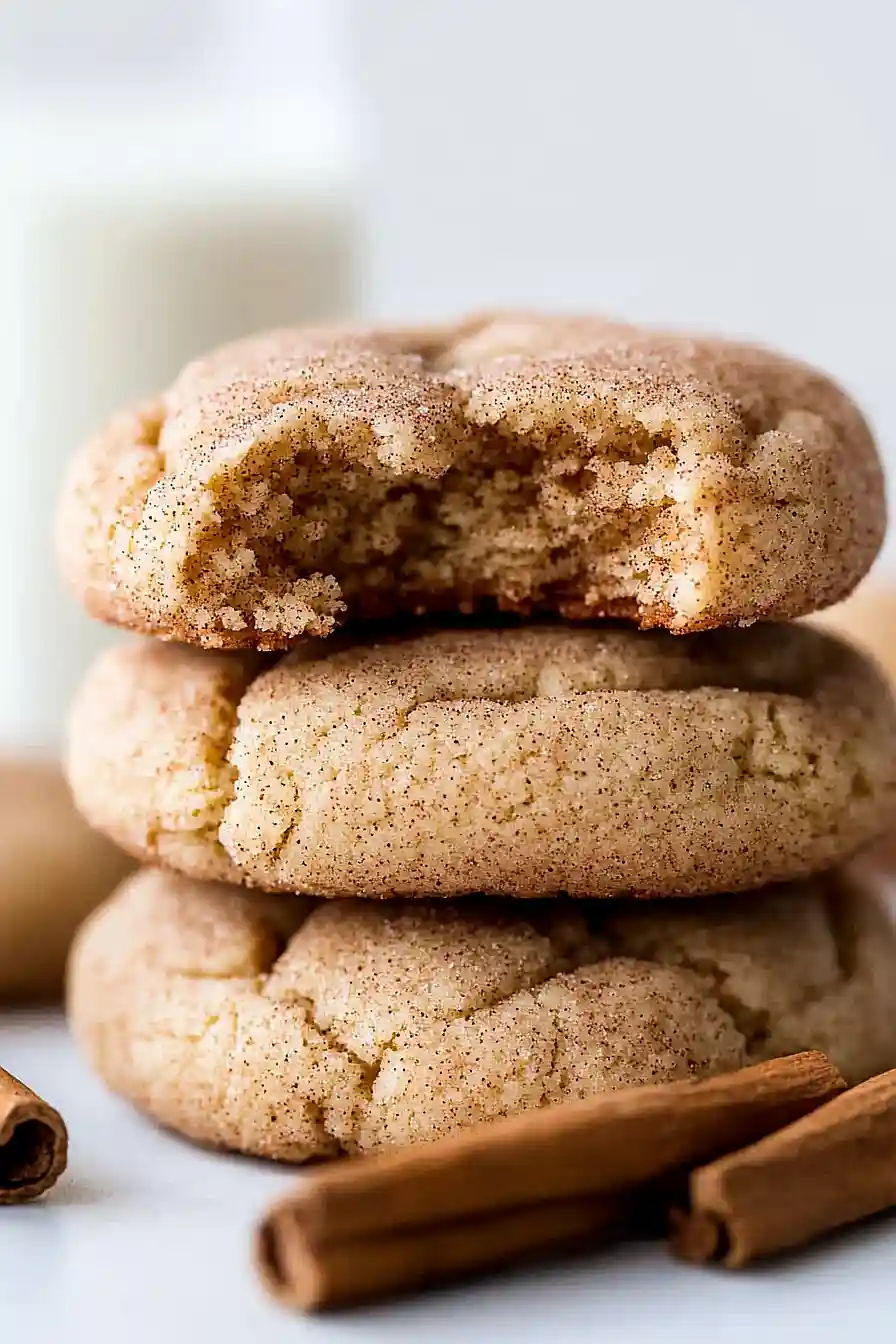
Here is my favorite snickerdoodle cookie recipe, with soft, chewy centers, perfectly crispy edges, and that classic cinnamon-sugar coating that makes them irresistible.
These snickerdoodle cookies are always the first to disappear from my cookie jar. My kids love helping me roll the dough balls in the cinnamon sugar – though half of it usually ends up on the counter instead of the cookies!

Why You’ll Love These Snickerdoodle Cookies
- Quick and easy – These cookies come together in just 25-35 minutes, making them perfect for when you need a sweet treat fast or want to bake with the kids on a whim.
- Simple pantry ingredients – You probably already have everything you need in your kitchen – no special trips to the store required for these classic cookies.
- Soft and chewy texture – The cream of tartar gives these cookies their signature tender, pillowy texture that melts in your mouth with every bite.
- Irresistible cinnamon sugar coating – Rolling the dough in cinnamon sugar creates that classic snickerdoodle flavor and gives each cookie a sweet, spiced exterior that’s hard to resist.
- Perfect for any occasion – Whether it’s a bake sale, holiday gathering, or just because you’re craving something sweet, these cookies always hit the spot.
What Kind of Flour Should I Use?
All-purpose flour is your best bet for snickerdoodles, and it’s what most bakers reach for when making these classic cookies. You’ll want to make sure you’re spooning the flour into your measuring cup and leveling it off rather than scooping directly from the bag, which can pack too much flour and make your cookies dense. If you only have bread flour on hand, your cookies will turn out a bit chewier, while cake flour will make them more tender but possibly too soft. For the most consistent results that give you that perfect chewy-yet-tender snickerdoodle texture, stick with regular all-purpose flour from any brand you trust.
Options for Substitutions
These classic cookies are pretty forgiving when it comes to swaps, but there are a few key ingredients you’ll want to keep:
- Cream of tartar: This is what gives snickerdoodles their signature tangy flavor and chewy texture, so I wouldn’t recommend substituting it. If you absolutely must, you can try 1 tablespoon of white vinegar or lemon juice, but the cookies won’t taste quite the same.
- Unsalted butter: Salted butter works fine – just reduce the added salt to 1/4 teaspoon. You can also use vegetable shortening for a slightly different texture, but stick with the same amount.
- All-purpose flour: You can substitute with a 1:1 gluten-free flour blend if needed, though the texture might be slightly different. Avoid using cake flour as it will make the cookies too tender.
- Granulated sugar: Light brown sugar can replace up to half the granulated sugar for chewier cookies with a hint of molasses flavor. Don’t use all brown sugar though, as you need some granulated for the rolling mixture.
- Egg yolk: If you only have whole eggs, use 2 whole eggs instead of 1 egg plus 1 yolk. The cookies will be slightly less rich but still delicious.
Watch Out for These Mistakes While Baking
The biggest mistake when making snickerdoodles is using butter that’s too warm or melted, which causes the cookies to spread too much and lose their signature soft, chewy texture – your butter should be softened but still hold its shape when pressed.
Another common error is skipping the cream of tartar, which gives snickerdoodles their characteristic tangy flavor and helps create that perfect tender crumb, so don’t substitute it with baking powder.
Over-mixing the dough once you add the flour will result in tough cookies, so mix just until the ingredients come together, and make sure to chill your dough for at least 30 minutes if it feels too soft to handle.
Finally, don’t overbake these cookies – they should look slightly underdone in the center when you pull them out, as they’ll continue cooking on the hot pan and finish with that perfect chewy texture.

What to Serve With Snickerdoodle Cookies?
These soft, cinnamon-sugar cookies are perfect on their own, but they’re even better with a tall glass of cold milk for dunking. I love serving them alongside a warm cup of coffee or hot chocolate, especially during the fall and winter months when that cozy cinnamon flavor really hits the spot. They also make a great addition to any dessert spread – try them with vanilla ice cream for an easy dessert, or pack them up as a sweet treat for lunchboxes and picnics. For something a little fancier, serve them with a scoop of cinnamon ice cream or alongside some fresh apple slices for a fun autumn-inspired snack.
Storage Instructions
Keep Fresh: These snickerdoodle cookies stay soft and chewy when stored in an airtight container at room temperature for up to one week. I like to toss a slice of bread in the container to help keep them extra soft – just replace the bread slice every couple of days.
Freeze: You can freeze baked cookies in a freezer-safe container for up to 3 months, or freeze the cookie dough balls on a baking sheet before rolling in cinnamon sugar. Once frozen solid, transfer the dough balls to a freezer bag and bake straight from frozen – just add an extra minute or two to the baking time.
Make Ahead: The cookie dough can be made up to 2 days ahead and stored in the refrigerator. Just let it come to room temperature for about 15 minutes before rolling into balls and coating with the cinnamon sugar mixture. This actually makes the cookies even more flavorful!
| Preparation Time | 15-20 minutes |
| Cooking Time | 10-15 minutes |
| Total Time | 25-35 minutes |
| Level of Difficulty | Easy |
Estimated Nutrition
Estimated nutrition for the whole recipe (without optional ingredients):
- Calories: 3550-3750
- Protein: 36-40 g
- Fat: 140-155 g
- Carbohydrates: 525-555 g
Ingredients
For the cookie dough:
- 2 tsp vanilla extract (I use Nielsen-Massey vanilla extract)
- 3 cups all-purpose flour
- 1 cup unsalted butter (room temperature, about 70°F)
- 1 large egg (at room temperature for better emulsion)
- 1/2 tsp salt
- 1 1/2 tsp ground cinnamon
- 1 large egg yolk
- 2 tsp cream of tartar
- 1 tsp baking soda
- 1 1/3 cups granulated sugar
For the cinnamon-sugar coating:
- 1 tsp ground cinnamon
- 1/3 cup granulated sugar
Step 1: Prepare Baking Sheets and Cinnamon-Sugar Topping
- 1/3 cup granulated sugar
- 1 tsp ground cinnamon
Preheat your oven to 375°F (190°C).
Line two large cookie sheets with parchment paper or silicone baking mats for easy cookie removal and cleanup.
In a small bowl, combine 1/3 cup of granulated sugar with 1 teaspoon of ground cinnamon to make the cinnamon-sugar topping.
Set everything aside for later use.
Step 2: Mix the Dry Ingredients
- 3 cups all-purpose flour
- 2 tsp cream of tartar
- 1 tsp baking soda
- 1 1/2 tsp ground cinnamon
- 1/2 tsp salt
In a medium bowl, whisk together the flour, cream of tartar, baking soda, ground cinnamon, and salt.
This will ensure even distribution of the leavening agents and spices throughout the dough.
Step 3: Cream the Butter and Sugar, Then Add Wet Ingredients
- 1 cup unsalted butter, room temperature
- 1 1/3 cups granulated sugar
- 1 large egg, room temperature
- 1 large egg yolk, room temperature
- 2 tsp vanilla extract
In a large bowl, using a hand mixer or a stand mixer fitted with the paddle attachment, beat the room temperature butter and 1 1/3 cups of granulated sugar together on high speed until smooth and creamy, which should take about 2 minutes.
Add the egg, egg yolk, and vanilla extract.
Beat on medium-high speed until fully combined, scraping down the sides and bottom of the bowl as needed.
Step 4: Combine Wet and Dry Ingredients to Make Dough
- dry ingredients from Step 2
- wet mixture from Step 3
With your mixer running on low speed, gradually add the dry ingredients mixture from Step 2 to the wet mixture from Step 3 in three additions.
This will help prevent the dough from becoming too dense or overmixed.
The finished dough will be thick and soft.
Step 5: Shape and Coat Cookie Dough Balls
- cookie dough from Step 4
- cinnamon-sugar topping from Step 1
Roll the cookie dough into balls using about 1.5 tablespoons (35g) of dough for each.
Next, roll each dough ball in the cinnamon-sugar topping from Step 1, ensuring each ball is fully coated.
Sprinkle any extra cinnamon-sugar on top if desired, then arrange the dough balls at least 3 inches apart on the prepared baking sheets.
I always use a cookie scoop for even-sized cookies—it’s a game-changer for consistency!
Step 6: Bake and Cool the Cookies
Bake the cookies in the preheated oven for 10 minutes, until they are puffy and soft but not browned.
While the cookies are still very warm, gently press down on each one with the back of a spoon or fork to flatten them slightly.
Allow the cookies to cool directly on the baking sheet for 10 minutes, then transfer them to a wire rack to cool completely.
For extra softness, I always make sure to let the cookies rest on the baking sheet before moving them.