Like many home bakers, I used to toss my sourdough discard straight into the trash. Then one day, while feeding my starter, I realized there had to be a better way to use this tangy mixture. That’s when I discovered the magic of sourdough discard focaccia. It’s become my go-to recipe for using up that extra starter.
What I love most about this focaccia is how simple it is to make. You don’t need fancy equipment or special skills – just your discard, a few basic ingredients, and a little patience. I usually mix the dough in the evening while cleaning up after dinner, let it do its thing overnight, and wake up to perfectly risen dough ready for baking.
If you’ve got sourdough discard sitting in your fridge right now, this recipe is calling your name. Trust me, once you try this focaccia, you’ll never look at discard the same way again. Plus, your kitchen will smell amazing!
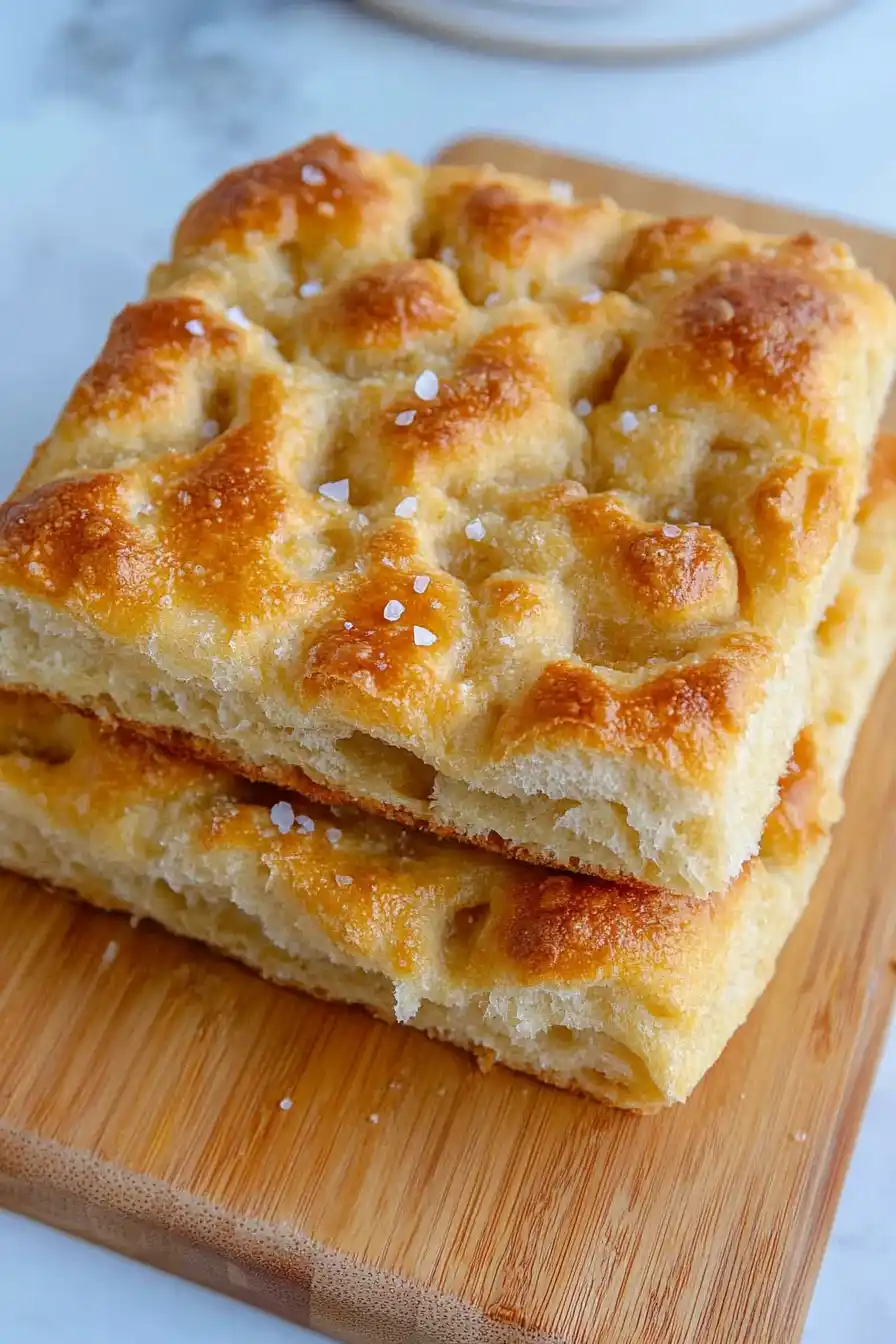
Why You’ll Love This Focaccia Bread
- No-waste baking – This recipe gives new life to your sourdough discard, making sure nothing goes to waste while creating something delicious.
- Quick turnaround time – Unlike traditional sourdough, this focaccia is ready in just over an hour – perfect for when you want fresh bread without the long wait.
- Simple ingredients – You’ll only need basic pantry staples plus your sourdough discard to make this bread, no fancy ingredients required.
- Foolproof recipe – The combination of instant yeast and sourdough discard means this bread rises reliably every time, making it perfect for both beginners and experienced bakers.
- Customizable topping options – While it’s delicious with just olive oil and sea salt, you can add herbs, olives, or cherry tomatoes to make it your own.
What Kind of Sourdough Starter Should I Use?
The beauty of this recipe is that it works with any unfed sourdough discard – whether it’s been in your fridge for a few days or even a couple of weeks. Since we’re adding commercial yeast to the recipe, you don’t need an active, bubbly starter like you would for traditional sourdough bread. Your discard can be at room temperature or straight from the fridge, though room temperature starter will mix more easily with the other ingredients. Just make sure your discard doesn’t show any signs of mold or have an overly sour smell, which could mean it’s past its prime. If you’re new to sourdough, you can use either a wheat-based or rye-based starter in this recipe – both will work great and add their own subtle flavor notes to your focaccia.
Options for Substitutions
Let’s talk about what you can swap in this focaccia recipe, though keep in mind some ingredients are key players:
- Sourdough discard: If you don’t have sourdough discard, you can’t simply skip it as it’s central to this recipe. This recipe is specifically designed for using discard – if you don’t have it, it’s better to find a regular focaccia recipe.
- Bread flour: While bread flour gives the best chewy texture, you can use all-purpose flour in a pinch. The bread will be slightly less chewy but still good. Avoid whole wheat flour as it will make the bread too dense.
- Instant yeast: Active dry yeast works too – just proof it in the warm water first for 5-10 minutes until foamy. You’ll need about 2 1/2 teaspoons to match the rising power.
- Olive oil: While olive oil adds great flavor, you can use another neutral oil like vegetable or canola oil. The taste will be different but the texture will stay the same.
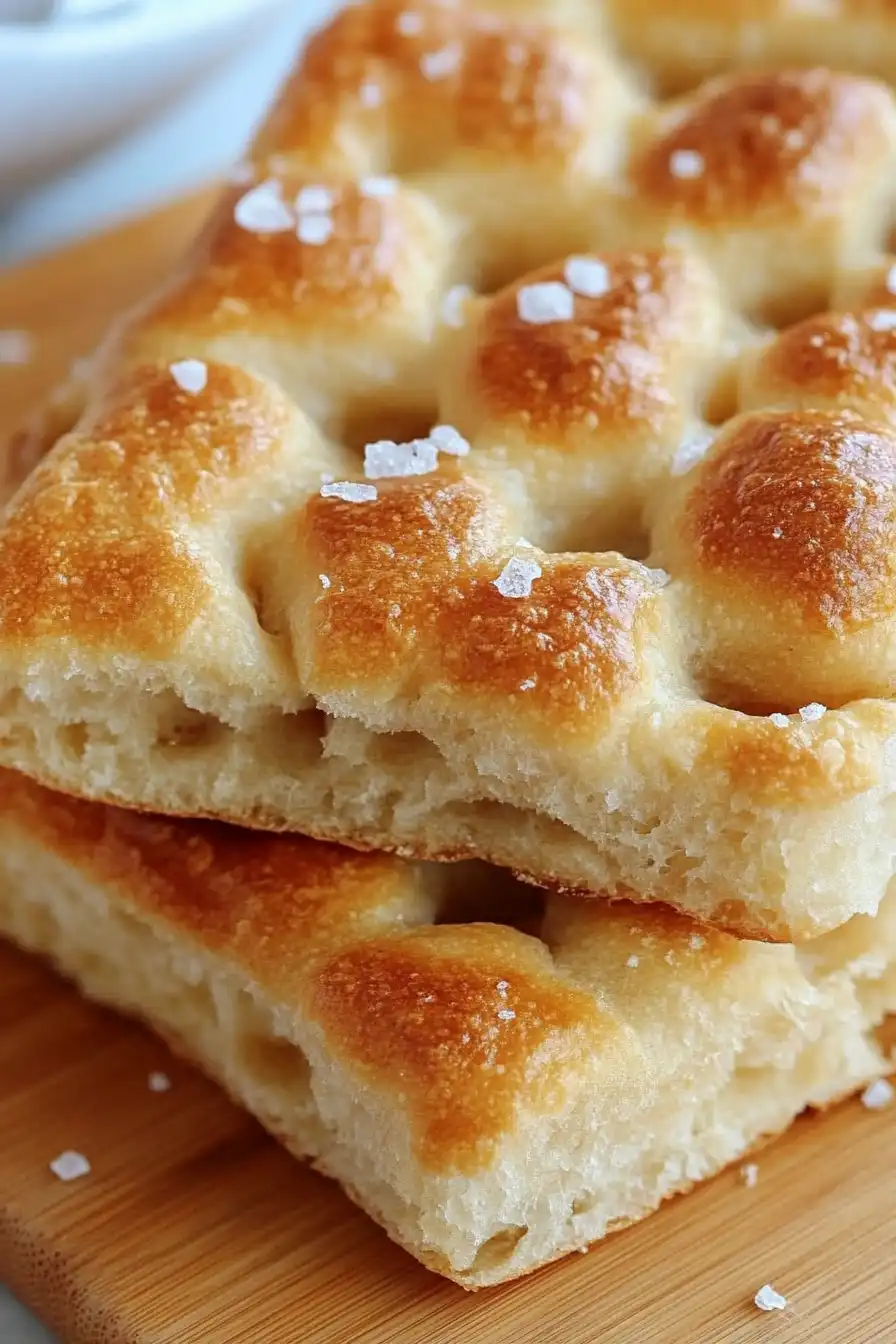
- Flaky sea salt: Regular kosher salt works fine for the topping, though it won’t give you that same crunchy finish. You could also try other toppings like dried herbs or everything bagel seasoning.
Watch Out for These Mistakes While Baking
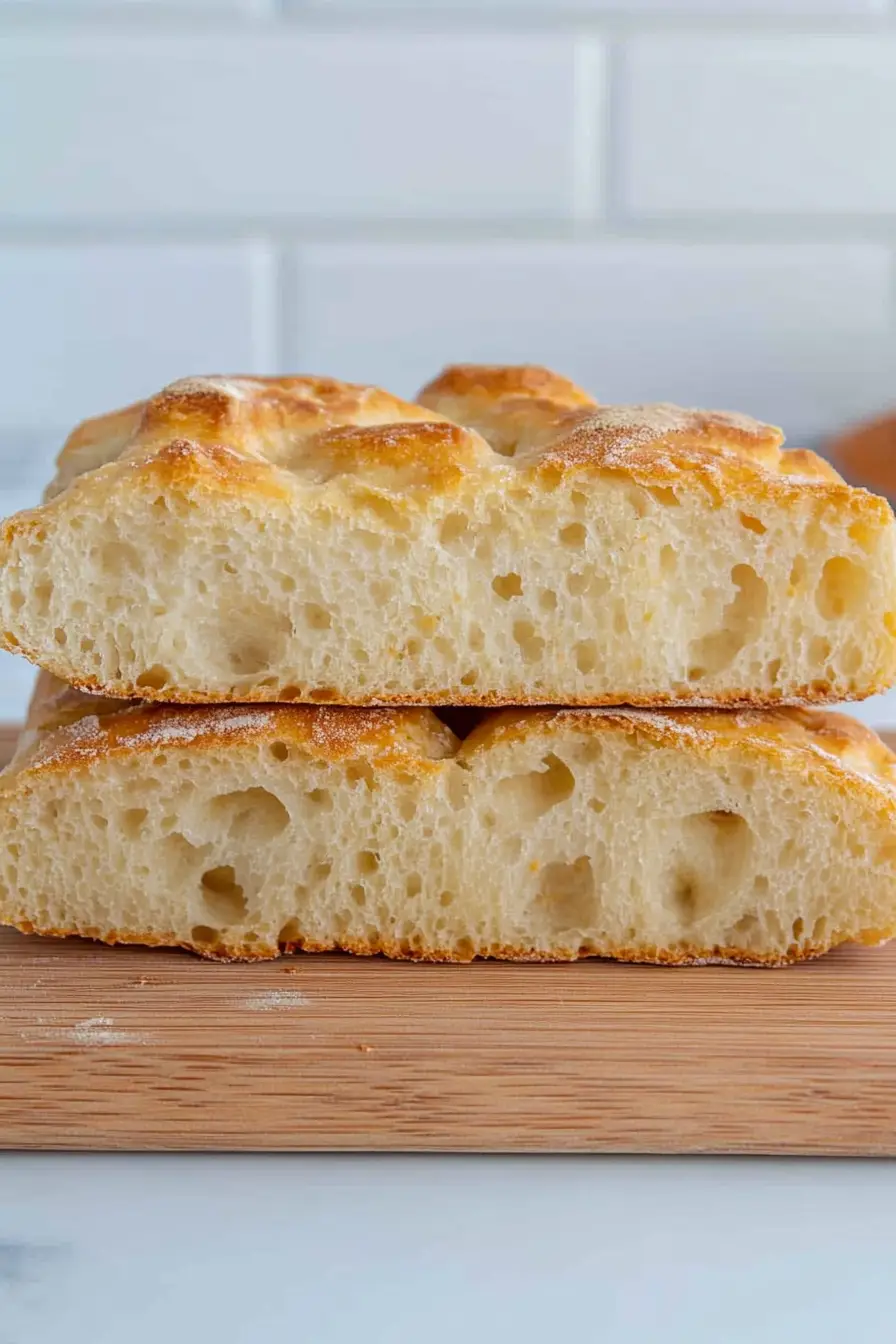
The biggest challenge when making focaccia is getting the hydration right – this dough is meant to be wet and sticky, so resist the urge to add extra flour even if the dough seems too loose, as this will result in a dense, tough bread instead of the light, airy texture we’re after.
Temperature control is crucial – if your water is too hot it will kill the yeast, while too cold water won’t activate it properly, so stick to around 100°F for optimal results and make sure your sourdough discard is at room temperature before mixing.
When dimpling the dough with your fingers, be gentle but firm – pressing all the way to the bottom of the pan can create uneven spots that bake differently, so aim to create evenly spaced indentations that are about halfway through the dough’s thickness.
For that classic crispy bottom, don’t skimp on the olive oil in the pan – a generous coating not only prevents sticking but also creates that golden-brown crust that makes focaccia so irresistible.
What to Serve With Focaccia?
This Italian flatbread is perfect for dipping into good olive oil and balsamic vinegar – just like they serve it at restaurants! For a casual lunch, I love serving focaccia alongside a bowl of warm marinara sauce or as the base for an amazing sandwich filled with Italian meats and cheeses. It’s also great paired with a big bowl of soup (especially tomato or minestrone) or served alongside a fresh green salad dressed with a simple vinaigrette. If you’re hosting a dinner party, try cutting the focaccia into smaller pieces and serving it as part of an antipasto platter with olives, cheese, and cured meats.
Storage Instructions
Keep Fresh: This focaccia stays good at room temperature for about 2 days when wrapped well in plastic wrap or stored in an airtight container. After day 2, move it to the fridge where it’ll keep for up to 5 days. The texture might change slightly, but it’s still perfectly good to eat!
Freeze: Cut the focaccia into portions before freezing – this makes it super easy to grab just what you need. Wrap each piece well in plastic wrap, then pop them in a freezer bag. They’ll stay fresh for up to 3 months in the freezer.
Revive: To bring back that fresh-baked taste, pop your focaccia in a 350°F oven for about 5-10 minutes until it’s warm and slightly crispy on the outside. If it’s frozen, let it thaw at room temperature first. You can also give it a quick zap in the microwave, though the texture won’t be quite as nice as oven-warming.
| Preparation Time | 30-45 minutes |
| Cooking Time | 25-30 minutes |
| Total Time | 55-75 minutes |
| Level of Difficulty | Medium |
Estimated Nutrition
Estimated nutrition for the whole recipe (without optional ingredients):
- Calories: 3000-3200
- Protein: 75-85 g
- Fat: 200-220 g
- Carbohydrates: 360-380 g
Ingredients
For the dough:
- 550g bread flour (King Arthur brand is excellent for focaccia)
- 8g instant yeast (Red Star is a reliable choice)
- 10g salt
- 390g warm water (around 95-105°F active starter)
- 240g sourdough starter (active, unfed discard works best)
For the topping:
- flaky sea salt (Maldon sea salt flakes for best texture)
- 80g olive oil (good quality extra virgin)
Step 1: Mix the Dough
In a large bowl, combine the sourdough discard and warm water.
Sprinkle instant yeast over the water.
The yeast will begin to activate right away, which you will notice by the smell and formation of clumps.
Add salt and bread flour to the bowl and mix everything together until a dough forms.
Cover the bowl with a kitchen towel and set it in a warm place for 15 minutes to rest.
Step 2: Perform Stretch and Folds
After resting for 15 minutes, uncover the bowl.
Wet your hand to prevent sticking, then perform a set of stretch and folds.
To do this, reach down to the bottom of the dough, pull it up, and fold it over the top.
Rotate the bowl 1/4 turn and repeat until you have completed four stretches and folds.
Cover and set aside for another 15 minutes.
Repeat this process for a total of three sets of stretch and folds with a 15-minute rest in between.
After the last set, cover the bowl and let the dough rise for another half hour or until it doubles in size.
Step 3: Prepare the Baking Pan
Pour 50 grams of olive oil into the bottom of a non-stick, metal 9 by 13-inch baking pan, ensuring that the entire base of the pan is covered.
You may add a little extra oil if you prefer.
Step 4: Proof the Dough
Once the dough has doubled in size, transfer it to the prepared pan.
Gently spread the dough to fill the entire pan.
Cover it with a kitchen towel and allow it to rise for about an hour until it doubles in size once more.
Step 5: Dimple and Bake the Focaccia
Preheat your oven to 450°F.
After the dough has risen and doubled in size again, pour 30 grams of olive oil over the top.
Using your fingers, gently dimple the dough, being careful not to deflate it too much.
The dough will be airy and jiggly.
Sprinkle with flaky sea salt or any toppings you desire.
Bake in the preheated oven for 25 minutes until golden and cooked through.
Step 6: Cool and Enjoy
Once baked, allow the focaccia to cool completely before cutting.
Enjoy your delicious, airy focaccia as a savory snack or accompaniment to any meal.