Finding a dessert that works for everyone during Easter celebrations can be tricky, especially when you’re trying to accommodate guests with egg allergies or dietary restrictions. Between coordinating egg hunts, preparing the holiday feast, and making sure everyone’s needs are met, the last thing you want is to stress about whether everyone can enjoy the dessert table.
That’s where this eggless carrot cake comes in: it’s a crowd-pleasing treat that’s easy to make ahead, tastes just like the traditional version, and happens to be perfect for those avoiding eggs. Plus, it still delivers all the warm spices and homey flavors we love about classic carrot cake.
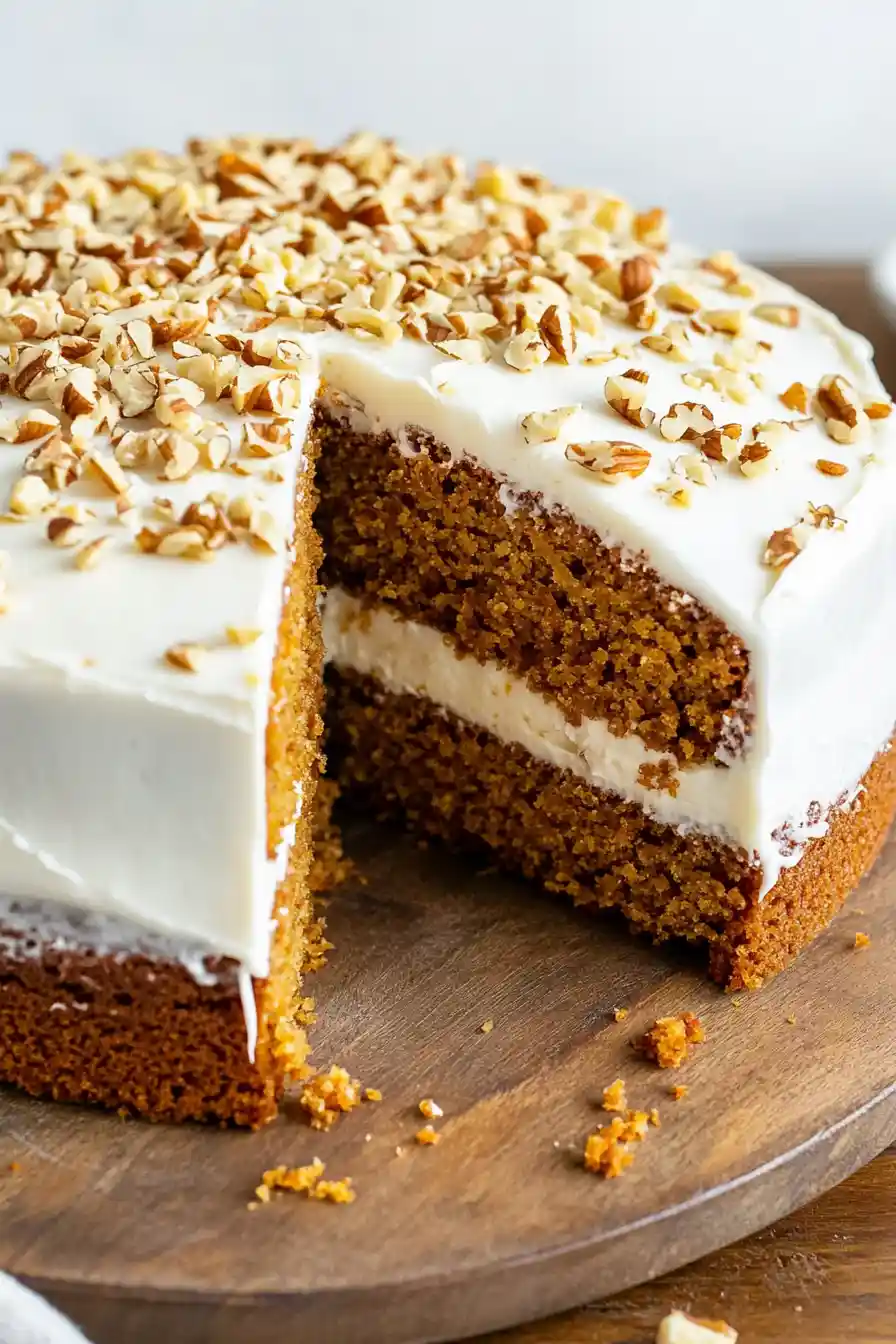
Why You’ll Love This Carrot Cake
- Egg-free baking success – Perfect for those with egg allergies or when you’re out of eggs – this recipe proves you can make a moist, delicious carrot cake without eggs.
- Customizable recipe – You can adjust the spices to your taste, swap oils, use whole wheat flour for extra nutrition, and choose between different toppings like nuts or coconut.
- Simple ingredients – Everything you need is probably already in your pantry, and there’s no need for fancy equipment or complicated techniques.
- Perfect for special diets – This recipe is naturally egg-free and can be made dairy-free by using plant-based milk and cream cheese alternatives, making it great for various dietary needs.
What Kind of Carrots Should I Use?
For carrot cake, medium to large fresh carrots from your grocery store’s produce section will work perfectly fine. The most important thing is to grate them finely – you want the carrot pieces small enough to cook through and blend seamlessly into your cake batter. I recommend using the small holes on your box grater rather than the larger ones, as this will give you the best texture in the finished cake. Just make sure your carrots are fresh and crisp – if they’re rubbery or soft, they won’t grate well and could affect the moisture content of your cake.
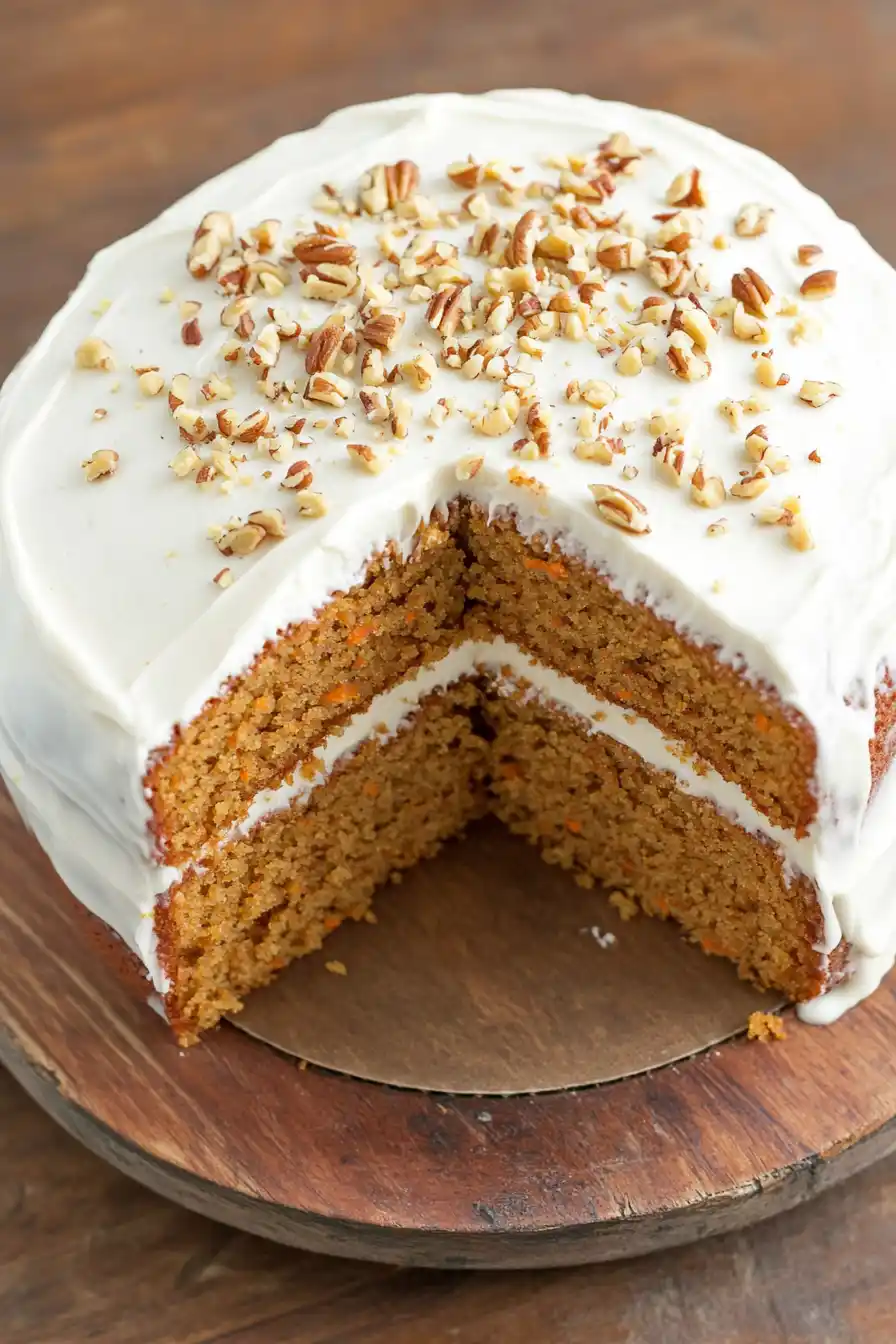
Options for Substitutions
This eggless carrot cake recipe is pretty adaptable! Here are some helpful swaps you can try:
- All-purpose flour: You can use whole wheat pastry flour as mentioned, or try a 1:1 gluten-free flour blend. Just make sure it contains xanthan gum for the right texture.
- Coconut oil: Any neutral vegetable oil works well here – try canola, sunflower, or even melted butter if you’re not keeping it vegan.
- Milk: Feel free to use any plant-based milk like almond, soy, or oat milk. Just make sure it’s at room temperature to prevent the coconut oil from solidifying if using.
- Vinegar: Apple cider vinegar or white vinegar both work great. You can also use lemon juice in the same amount – it’s needed to react with the baking soda.
- Cream cheese frosting: If you can’t find cream cheese, try making a simple buttercream, or use mascarpone cheese. For a dairy-free option, coconut whipped cream works nicely.
- Nuts: Any nuts work well for topping – try walnuts, pecans, or almonds. Toasted coconut is a great nut-free option, or you can skip the topping entirely.
Watch Out for These Mistakes While Baking
Since this is an eggless cake, the most crucial mistake to avoid is using cold ingredients – make sure your milk, grated carrots, and other ingredients are at room temperature to ensure proper mixing and even baking. The second common pitfall is overmixing the batter, which can lead to a dense, tough cake instead of a light and fluffy one – mix just until the ingredients are combined and no dry flour is visible. For the best texture, don’t skip grating the carrots finely, as larger pieces won’t cook properly and can make the cake heavy and wet. To make your cake extra moist and flavorful, try warming your milk slightly before adding the vinegar – this helps create a better reaction with the baking soda and results in a perfectly risen cake.
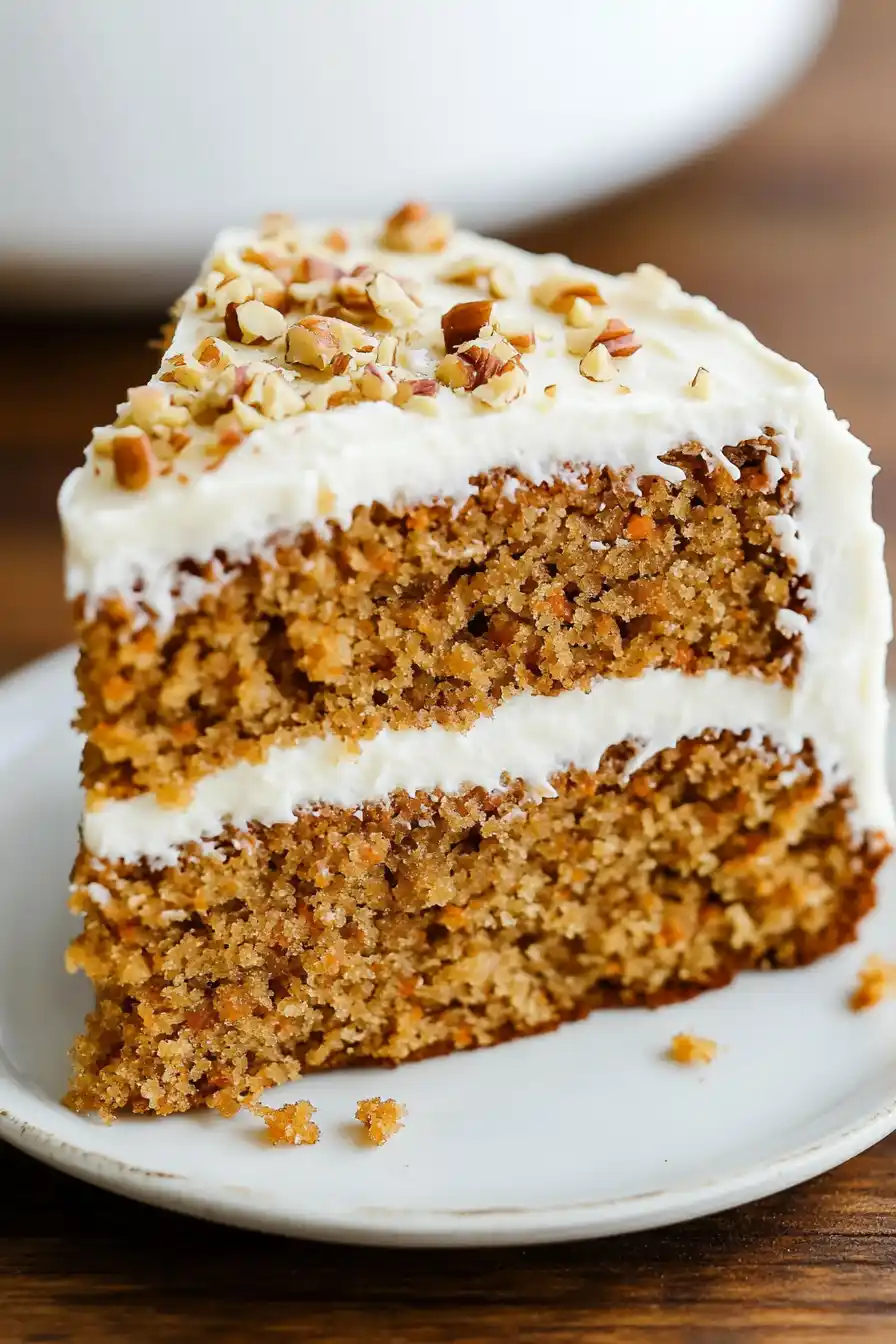
What to Serve With Carrot Cake?
This eggless carrot cake is perfect for serving with a hot cup of coffee or tea, making it ideal for an afternoon Easter gathering or spring celebration. A scoop of vanilla ice cream on the side adds a nice temperature contrast to the cake and plays really well with the cream cheese frosting. If you’re serving this for brunch, try pairing it with some fresh fruit on the side – berries or sliced peaches work especially well with the cake’s warm spices. For an extra special touch, you can serve each slice with a drizzle of caramel sauce or a sprinkle of toasted nuts to match those on top of the cake.
Storage Instructions
Counter Storage: If you plan to eat your carrot cake within 2 days, you can keep it at room temperature in a cake container or under a cake dome. Just make sure it’s unfrosted – cream cheese frosting needs to be refrigerated!
Refrigerate: Once frosted with cream cheese frosting, pop your carrot cake in the fridge in an airtight container. It’ll stay fresh and yummy for up to 5 days. The cake actually gets better after a day as the flavors have time to develop!
Freeze: Want to save some for later? You can freeze the unfrosted cake for up to 3 months. Wrap it well in plastic wrap and then aluminum foil. When you’re ready to enjoy it, thaw it overnight in the fridge and then frost it fresh.
Bring to Room Temperature: For the best taste and texture, take the cake out of the fridge about 30 minutes before serving. This lets the frosting soften a bit and brings out all those nice carrot cake spices.
| Preparation Time | 30-45 minutes |
| Cooking Time | 28-30 minutes |
| Total Time | 58-75 minutes |
| Level of Difficulty | Medium |
Estimated Nutrition
Estimated nutrition for the whole recipe (without optional ingredients):
- Calories: 1200-1400
- Protein: 15-20 g
- Fat: 60-70 g
- Carbohydrates: 150-160 g
Ingredients
For the cake:
- 1/4 cup 2 tbsp milk
- 3/4 cup finely grated carrot
- 1/2 tsp ground cinnamon
- 1 cup 2 tbsp all-purpose flour
- 3/4 tsp baking powder
- 1 tsp vanilla essence (use a good quality extract for best flavor)
- 3/4 tsp baking soda
- 1/2 cup 2 tbsp granulated sugar
- 1 large pinch ground nutmeg
- 1 tbsp vinegar
- 1 pinch salt
- 4 tbsp oil
For the frosting:
- 1 tbsp softened butter (I like Kerrygold unsalted butter for this)
- 1 tsp vanilla essence
- 4 tbsp powdered sugar
- 1/2 cup cream cheese (full-fat cream cheese for a richer frosting)
For the garnish:
- 2 tbsp chopped nuts (walnuts or pecans work great)
Step 1: Prepare the Baking Environment
Start by greasing a 6-inch pan and lining it with parchment paper to prevent sticking.
Preheat your oven to 340°F (170°C) and allow it to heat for at least 15 minutes to ensure even baking.
Step 2: Mix Wet Ingredients
In a mixing bowl, combine milk, vinegar, sugar, vanilla, and oil.
Stir the mixture well until it is uniform and make sure the sugar has completely dissolved.
This combination will form the base of your cake batter.
Step 3: Prepare and Combine Dry Ingredients
Before measuring, fluff up the flour in its container and then measure it by spooning it into a measuring cup and leveling it off.
Sift together the flour, baking soda, baking powder, cinnamon, nutmeg, and salt to ensure an even distribution of leavening agents.
Once sifted, mix the dry ingredients well.
Step 4: Combine Wet and Dry Mixtures
Stir the milk mixture again to ensure it’s well combined, then pour it into the bowl of dry ingredients.
Mix gently until just combined without overmixing, ensuring there are no lumps.
Next, fold in the grated carrots, mixing until just incorporated, taking care not to overmix.
Step 5: Bake the Cake
Pour the batter into the prepared cake pan.
Tap the pan a couple of times on the kitchen counter to release any air bubbles.
Transfer the pan to the preheated oven and bake for 28 to 30 minutes.
Check for doneness by inserting a tester or toothpick into the center; it should come out clean when the cake is done.
Allow the cake pan to cool on a cooling rack for 10 minutes before inverting onto the rack to cool completely.
Wait until the cake is completely cool before frosting.
Step 6: Prepare the Cream Cheese Frosting
To make the cream cheese for frosting, start by boiling about 4 cups of milk and curdling it using some lemon juice.
Drain the curds through a muslin cloth, knot the cloth, and hang it for 2 hours to remove all the whey.
Pulse the drained curds in a food processor until smooth to create your cream cheese.
In a mixing bowl, whisk together the smooth cream cheese and butter until it is smooth.
Add powdered sugar and beat the mixture until it becomes smooth, light, fluffy, and creamy.
Adjust the sweetness with more sugar to suit your taste.
If the frosting is too thick, add a tablespoon of milk or more powdered sugar and beat to adjust the consistency.
Step 7: Frost and Serve the Cake
Transfer the prepared frosting onto the cooled carrot cake and spread it evenly using a spatula.
To finish, sprinkle some chopped nuts over the top of the frosted cake.
Slice the eggless carrot cake and serve to enjoy!