I grew up thinking veggie platters were just those store-bought plastic trays with baby carrots and ranch dip that showed up at every party. That’s how my mom always did it, and honestly, no one seemed to mind.
But after watching those sad, dried-out carrots sit untouched at countless gatherings, I learned that making your own veggie platter is not only cheaper, it’s way better. The trick isn’t fancy ingredients or complicated prep – it’s just knowing which vegetables work well together and taking a few minutes to cut them properly. Trust me, it’s so simple that even my veggie-avoiding kids now grab from the platter without being asked.
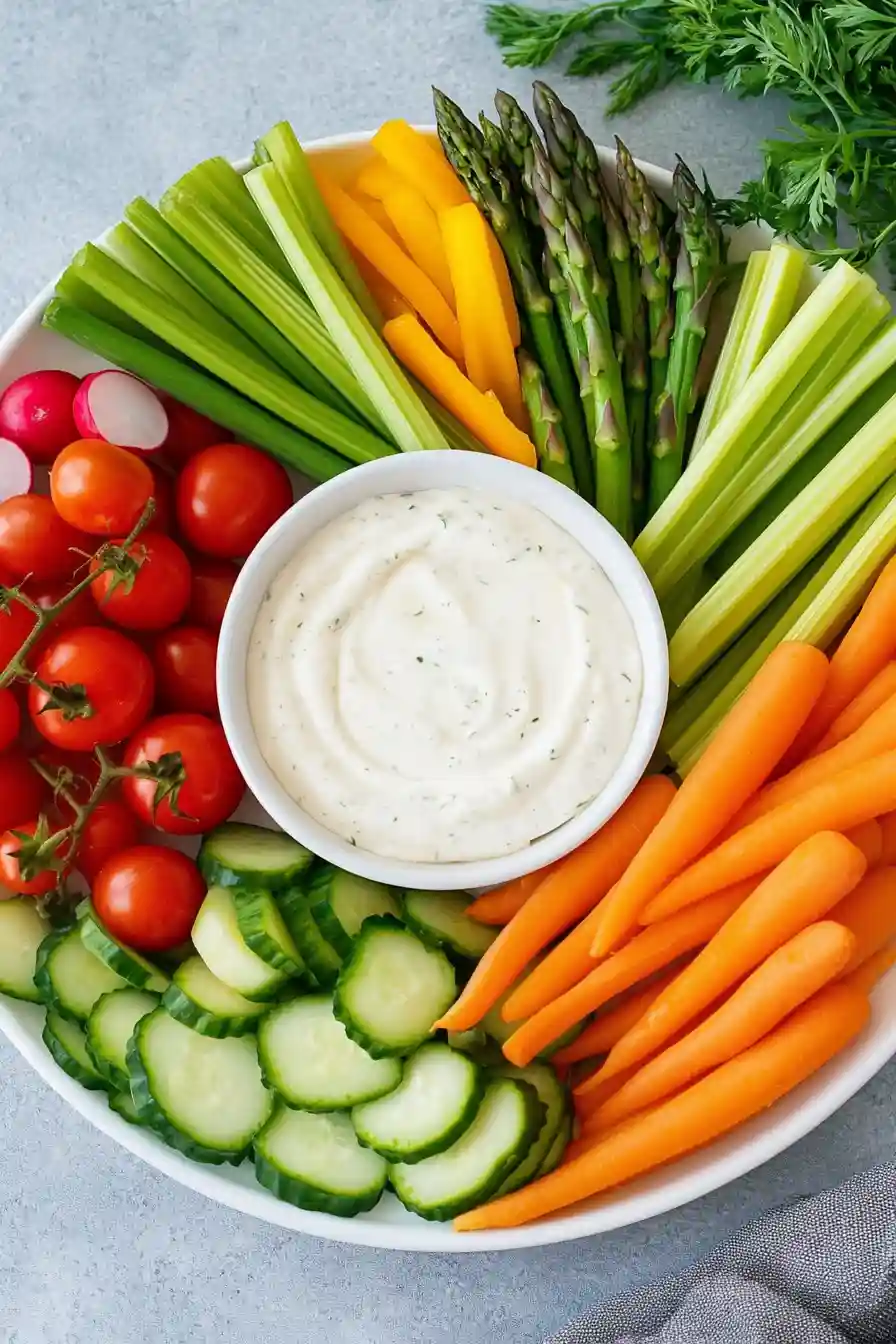
Why You’ll Love This Veggie Platter
- Quick and easy prep – Just wash, cut, and arrange – you’ll have a beautiful appetizer ready in 15 minutes or less. Perfect for those last-minute gatherings!
- Make-ahead friendly – You can prep all the vegetables several hours before your event and store them in the fridge, making party planning so much easier.
- Healthy snacking option – This colorful array of fresh vegetables provides tons of nutrients and fiber, making it a guilt-free choice for any occasion.
- Customizable – You can easily swap vegetables based on what’s in season or what your guests prefer, and pair them with any dips you like.
- No cooking required – Besides quickly blanching a couple vegetables, there’s no actual cooking involved – just simple, fresh ingredients arranged on a platter.
What Kind of Vegetables Should I Use?
For a veggie platter, freshness is absolutely key – you’ll want to pick vegetables that are crisp, bright, and in season. When shopping, look for carrots that are firm and smooth, celery that’s crisp with bright green leaves, and cucumbers that are deep green without any soft spots. Cherry tomatoes should be firm but give slightly when gently squeezed, while asparagus spears should have tight, compact tips and stems that aren’t woody. For the best results, try to buy your vegetables no more than 2-3 days before serving, and store them properly in the crisper drawer of your fridge. If you’re in a pinch, baby carrots or pre-cut vegetables can work too, though they might not be quite as flavorful as their whole counterparts.
Options for Substitutions
One of the great things about a veggie platter is how easy it is to swap things in and out based on what you have:
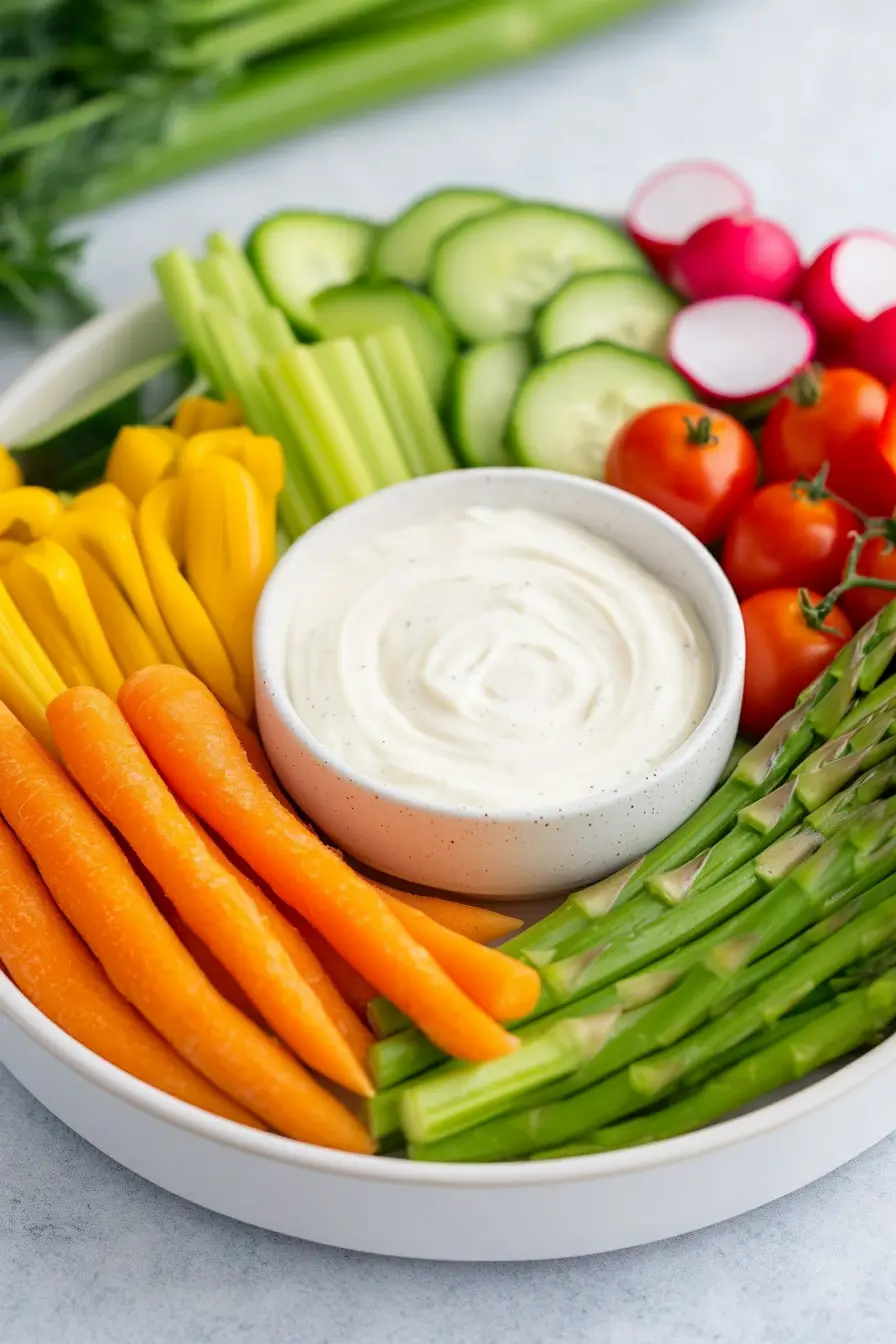
- Raw vegetables: Feel free to mix and match any crunchy vegetables you like or have on hand. Bell peppers, broccoli, cauliflower, snap peas, or jicama all make great alternatives to any of the listed vegetables. Just keep the pieces bite-sized and easy to grab.
- Blanched vegetables: Instead of asparagus and green beans, you could use blanched broccoli, sugar snap peas, or even baby carrots. Just remember to cook them until crisp-tender and give them an ice bath to keep their color bright.
- Dips: The dip options are endless! Try guacamole, tzatziki, baba ganoush, or even a simple herb-seasoned Greek yogurt dip. If you’re using store-bought dips, that’s totally fine too.
- Fresh herbs: Any fresh herbs work for decoration – try parsley, dill, or basil. You can even skip the herbs and use some lettuce leaves as a bed for your vegetables instead.
Watch Out for These Mistakes While Preparing
The biggest mistake when preparing a veggie platter is cutting vegetables too far in advance, which can lead to dried-out, wilted produce – instead, prep your veggies no more than 24 hours before serving and store them properly in sealed containers with a damp paper towel. When blanching vegetables like asparagus and green beans, many cooks skip the ice bath step, but this crucial process stops the cooking immediately and helps maintain that perfect crisp-tender texture while preserving the bright green color. Another common error is overcrowding your serving platter, which makes it difficult for guests to grab pieces and can cause the vegetables to look messy – arrange your veggies with enough space between each type, and consider having backup vegetables ready in the fridge to refill as needed. For the best presentation and taste, make sure to pat all vegetables completely dry before arranging them, as excess moisture can make them soggy and unappetizing over time.
What to Serve With a Veggie Platter?
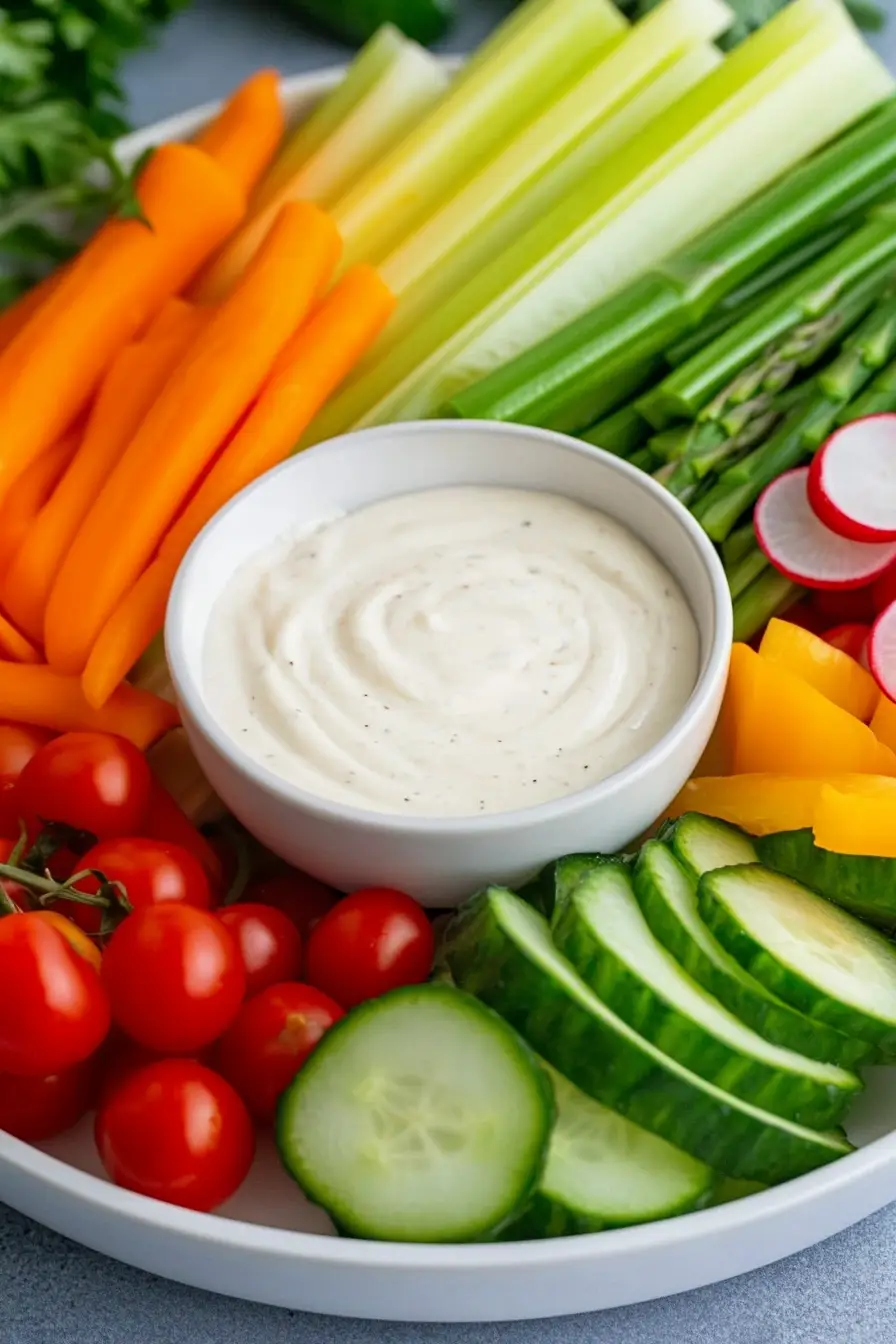
A veggie platter is such a great starter, but it can totally work as part of a bigger spread too! I like to pair it with some protein-rich options like grilled chicken skewers or a platter of cold cuts and cheese to make it more of a complete meal. Adding some warm pita bread or crispy crackers gives everyone something else to dip into those yummy sauces, plus it makes the spread more filling. For casual get-togethers, I’ll often set out some mixed nuts and maybe some olives nearby – it creates that relaxed, help-yourself kind of vibe that gets everyone snacking and chatting.
Storage Instructions
Keep Fresh: Your prepped veggies will stay crisp and fresh in airtight containers in the fridge for 3-4 days. I like to place a paper towel in the container to absorb excess moisture – this really helps keep everything crunchy! Store different vegetables separately to maintain their individual textures and prevent stronger-smelling veggies from affecting the others.
Prep Ahead: You can easily prep this platter a day before your event. Cut all the vegetables, wrap them in slightly damp paper towels, and keep them in sealed containers. Wait to arrange them on the platter until just before serving. For the dips, store them separately in covered containers and add them to your platter right before guests arrive.
Keep Cool: If you’re serving this platter at a party, you can keep it fresh for up to 4 hours by placing the serving tray on a bed of ice. Just remember to drain any melted ice periodically to prevent the vegetables from getting waterlogged.
| Preparation Time | 10-15 minutes |
| Cooking Time | 0 minutes |
| Total Time | 10-15 minutes |
| Level of Difficulty | Easy |
Estimated Nutrition
Estimated nutrition for the whole recipe (without optional ingredients):
- Calories: 400-500
- Protein: 10-15 g
- Fat: 20-30 g
- Carbohydrates: 60-70 g
Ingredients
- fresh herbs for decoration (such as parsley or dill)
- 3 cups various dips (homemade hummus, ranch, and spinach articioke recommended)
- 1 cup cherry tomatoes
- 1/2 cup radishes (thinly sliced)
- 1 cup blanched green beans
- 1 cup sliced cucumbers
- 1 cup peeled carrots (cut into 3-inch sticks)
- 1 cup celery sticks
- 1 cup blanched asparagus spears
Step 1: Arrange the Vegetables
Begin by arranging your choice of fresh vegetables on a large platter.
You can use a variety of colorful vegetables such as carrots, bell peppers, cucumbers, cherry tomatoes, and broccoli.
Spread them out evenly to create an appealing and inviting display.
Step 2: Add the Dips
Transfer your selected dips into small bowls.
Once the dips are in the bowls, place these bowls strategically on the platter amongst the vegetables.
This allows for easy access and dipping from all sides of the platter.
Step 3: Garnish and Serve
Finish your vegetable platter by garnishing it with fresh herbs such as parsley, dill, or basil.
Not only does this add a pop of color, but it also enhances the overall flavor.
Serve the platter immediately to enjoy at peak freshness, or cover and refrigerate it for up to 4 hours before serving.