I’ve always had a soft spot for Korean food. There’s something so comforting about a steaming bowl of stew, especially on those rainy Portland days when you just want to curl up at home. But I’ll be honest – I used to think dishes like gochujang stew were best left to the experts at my favorite Korean restaurant downtown.
That was until I started playing around with gochujang in my own kitchen. This fermented chili paste might look intimidating at first, but it’s actually super friendly to work with. And when you combine it with tender pork in a bubbling stew? Pure magic. The best part is that most of the ingredients are probably sitting in your pantry right now.
Whether you’re new to Korean cooking or just looking for a cozy weeknight dinner, this gochujang stew hits all the right notes. It’s warming, satisfying, and way easier to make than you might think. Trust me – your house will smell amazing while it’s cooking.
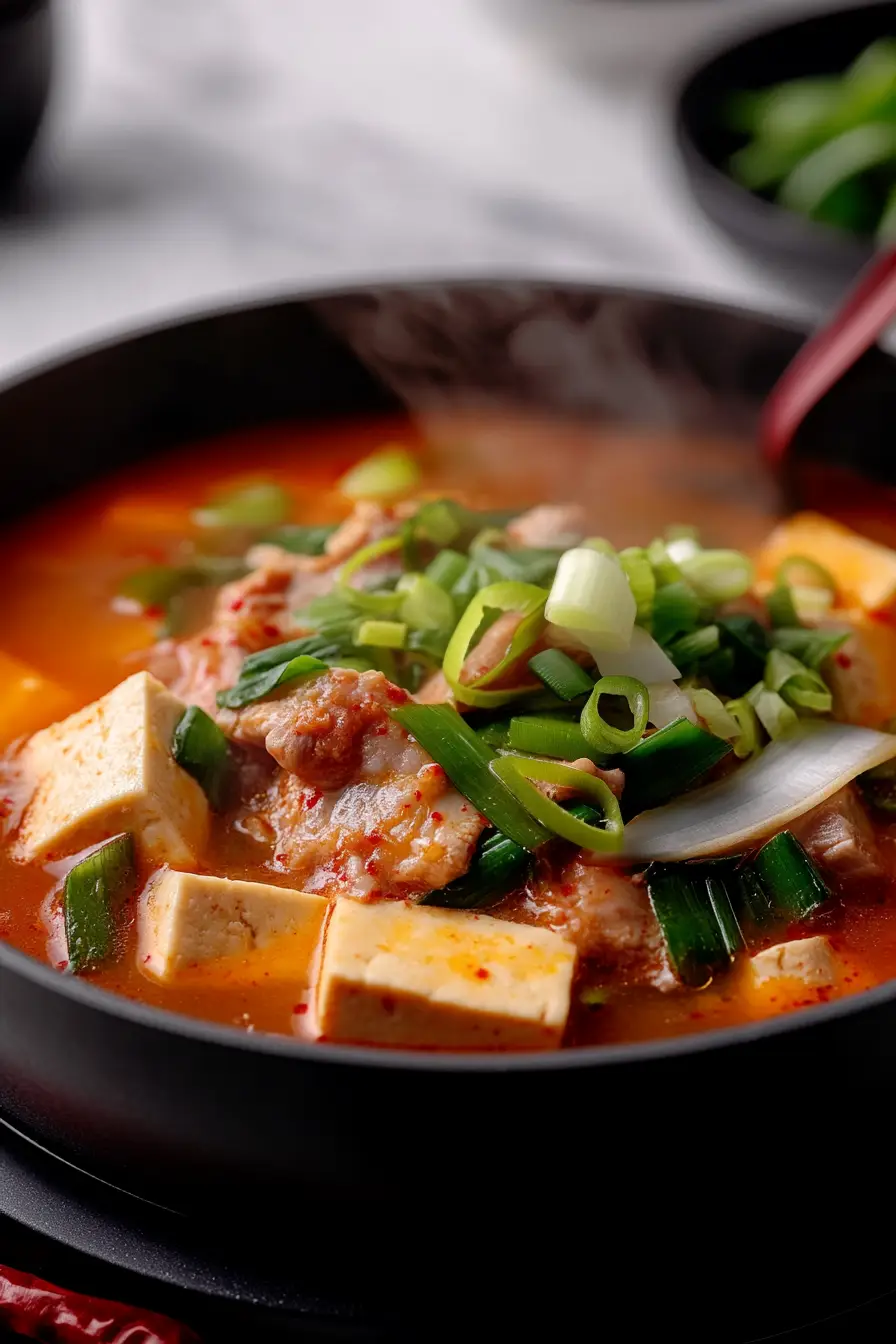
Why You’ll Love This Gochujang Stew
- Bold Korean flavors – The combination of gochujang and doenjang creates a rich, savory broth with just the right amount of heat that’ll warm you up from the inside out.
- One-pot meal – Everything cooks together in a single pot, making cleanup a breeze while allowing all the flavors to meld perfectly.
- Balanced nutrition – With protein from pork and tofu, plus plenty of vegetables, this stew gives you a complete meal in every bowl.
- Weeknight-friendly – Ready in under an hour, this stew fits perfectly into your busy schedule while still delivering homemade comfort food taste.
- Customizable heat level – You can easily adjust the spiciness by changing the amount of gochujang and gochugaru to match your preference.
Which Kind of Gochujang Should I Use?
For this hearty stew, you’ll want to use traditional Korean gochujang, which comes in different spice levels marked by the number of chilies on the package – usually ranging from mild (1 chili) to very hot (4-5 chilies). If you’re new to gochujang, start with a medium spice level (2-3 chilies) since you can always add more heat later with gochugaru. Look for gochujang in a red plastic tub at Asian grocery stores or in the international aisle of larger supermarkets. Just make sure to check the ingredient list – good quality gochujang should have red pepper powder, rice powder, and fermented soybeans as the main ingredients, without too many additives or corn syrup.
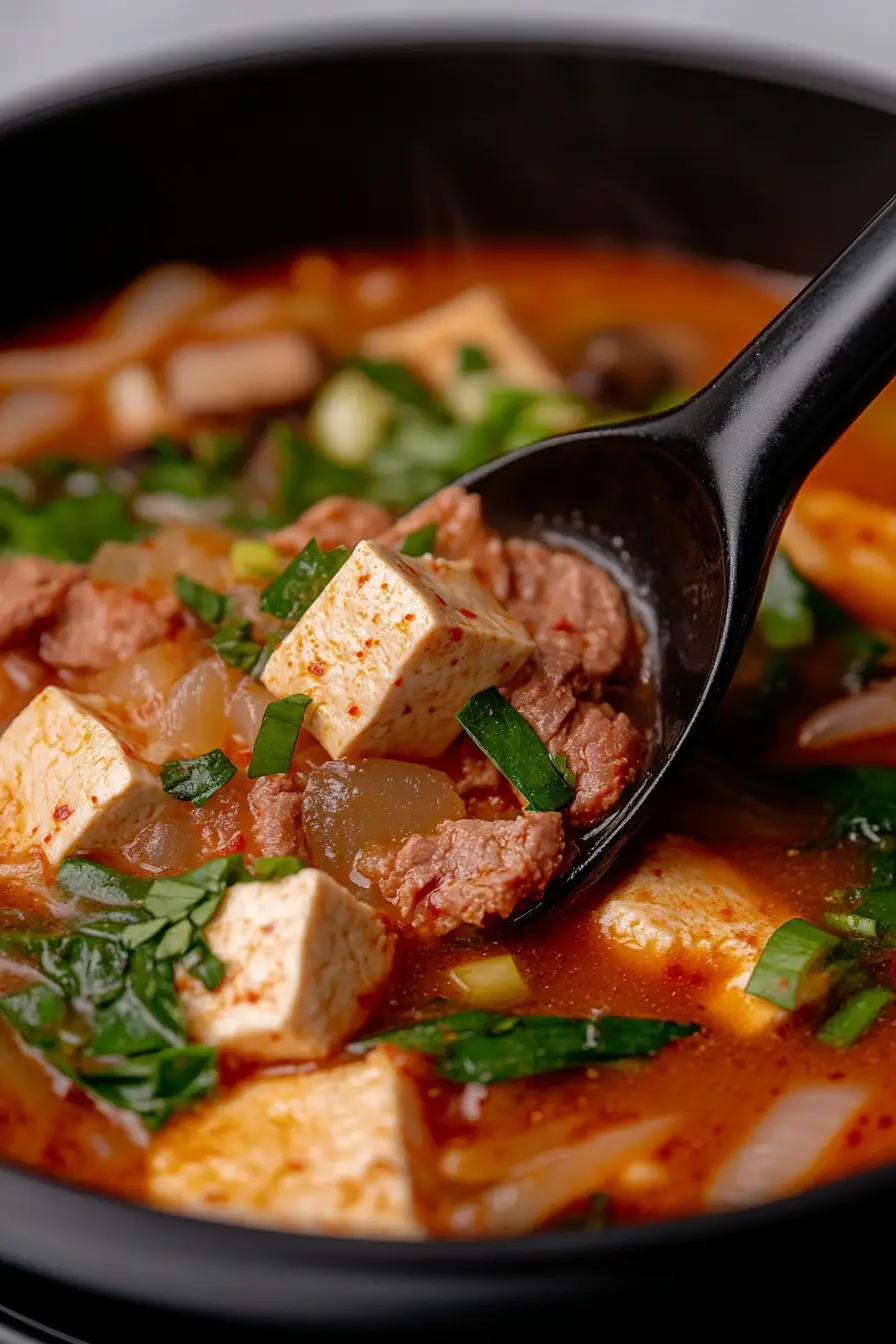
Options for Substitutions
While some ingredients are key to keeping this stew authentic, there’s room for a few swaps if needed:
- Gochujang: This Korean red chili paste is pretty essential for the authentic taste, but in a real pinch, you could mix 2 tablespoons of miso paste with 1 tablespoon of sriracha and 1 tablespoon of honey. Just know the flavor won’t be quite the same.
- Doenjang: If you can’t find doenjang, you can use Japanese miso paste as the closest substitute. Yellow or red miso would work best here.
- Pork shoulder: You can swap this with pork belly or even chicken thighs. If using chicken, reduce the cooking time by about 10 minutes.
- Gochugaru: Regular red pepper flakes can work, but use half the amount as they’re usually spicier than Korean chili flakes.
- Grapeseed oil: Any neutral cooking oil like vegetable or canola oil works fine here.
- Tofu: Feel free to use any firmness of tofu you prefer, or leave it out if you’re not a tofu fan. You could add more vegetables instead.
- Vegetables: The zucchini and potato can be swapped with similar vegetables like Korean radish, regular radish, or sweet potato. Just keep the quantities similar.
Watch Out for These Mistakes While Cooking
The biggest mistake when making gochujang stew is rushing the cooking process – giving the stew enough time to simmer (at least 30-40 minutes) allows the pork to become tender and the flavors to develop fully. Another common error is adding all the gochujang at once, which can make it difficult to adjust the spiciness level – instead, start with half the amount and add more gradually while tasting. When cutting the vegetables and meat, try to keep them in similar-sized pieces (about 1-inch chunks) so they cook evenly, and don’t skip browning the pork before adding the liquid as this step creates a deeper, richer flavor base. For the best texture, add the tofu and zucchini during the last 5-7 minutes of cooking to prevent them from becoming too mushy and falling apart in the stew.
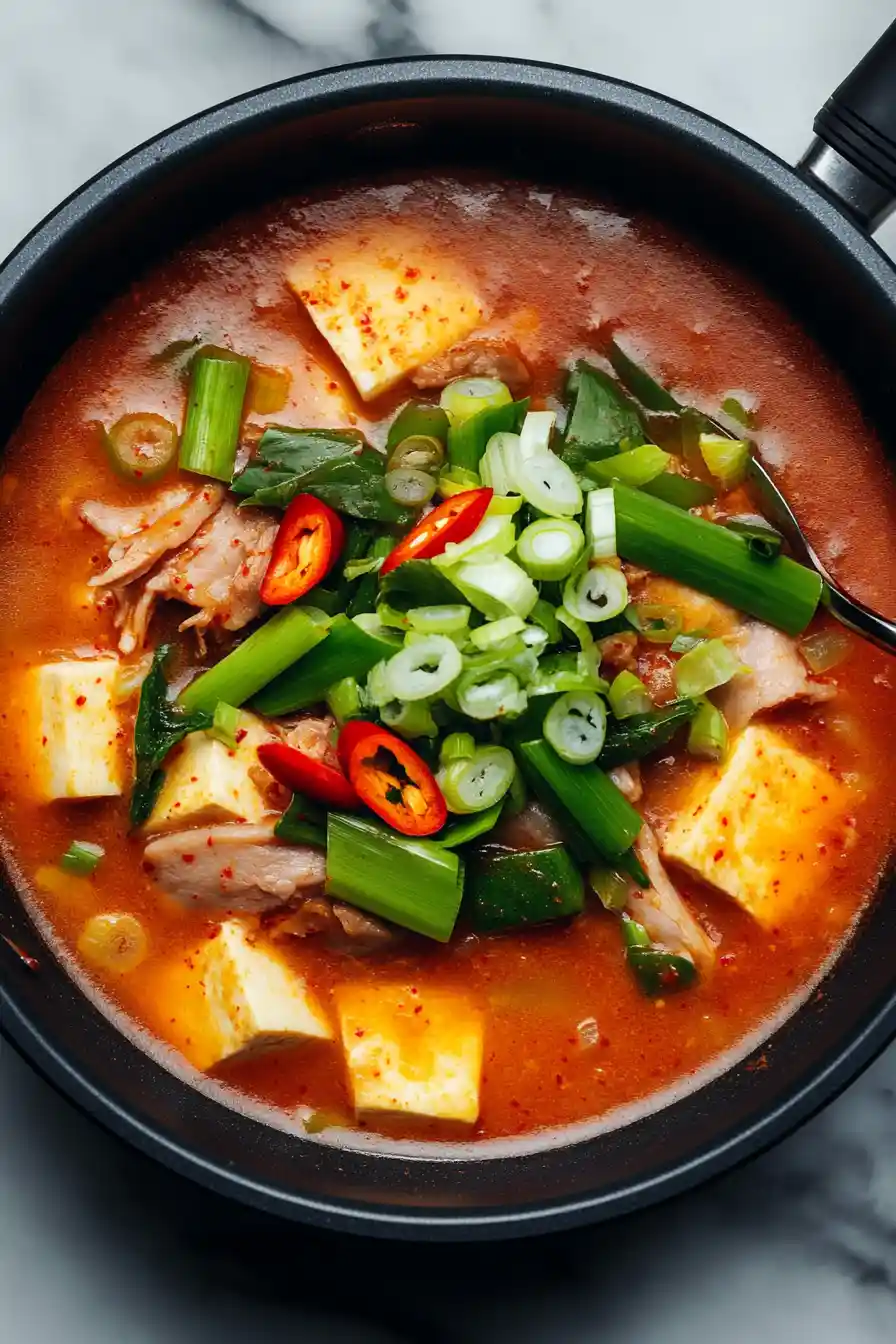
What to Serve With Gochujang Stew?
Like any good Korean stew, gochujang stew really shines when served with a bowl of steaming white rice to soak up all that spicy, savory broth. You can round out your meal with some simple banchan (Korean side dishes) like kimchi, pickled radish, or seasoned spinach. For a complete Korean dining experience, serve the stew while it’s bubbling hot in a stone bowl, and don’t forget to add a fried egg on top of your rice – the runny yolk adds an extra layer of richness that works so well with the spicy stew. If you want to tone down the heat a bit, serve it with cooling sides like cucumber salad or plain yogurt.
Storage Instructions
Keep: This hearty gochujang stew stays good in the fridge for up to 3-4 days when kept in an airtight container. The flavors actually get better after a day as all the ingredients have time to mingle together! Just remember that the zucchini might become a bit softer over time.
Freeze: You can freeze portions of this stew in freezer-safe containers for up to 2 months. The tofu texture might change slightly after freezing, but the overall taste will still be great. I like to portion it out into individual servings before freezing – it makes for such an easy dinner later!
Warm Up: To enjoy your leftover stew, simply heat it up in a pot over medium-low heat, stirring occasionally until it’s heated through. If it seems a bit thick after storage, feel free to add a splash of water while reheating. A quick zap in the microwave works too – just stir halfway through!
| Preparation Time | 15-25 minutes |
| Cooking Time | 30-40 minutes |
| Total Time | 45-65 minutes |
| Level of Difficulty | Medium |
Estimated Nutrition
Estimated nutrition for the whole recipe (without optional ingredients):
- Calories: 850-950
- Protein: 75-85 g
- Fat: 45-55 g
- Carbohydrates: 60-70 g
Ingredients
For the main stew:
- 1 tsp grapeseed oil (or any neutral oil like canola)
- 1/2 medium onion
- 11 oz pork shoulder (cut into 1-inch chunks)
- 2.5 cups water
- salt (as needed)
- 1/2 medium zucchini
- 1 green onion stalk
- 1/2 red chili
- 1 tsp sesame oil
- 7 oz tofu (firm or extra-firm)
- 2 garlic cloves (freshly minced for best flavor)
- 1 small potato
For the sauce:
- 4 tbsp gochujang (Korean chili paste, I use Sempio brand)
- 1 tsp gochugaru (optional, adds more heat)
- 2 tsp light soy sauce
- 1 tbsp doenjang (Korean soybean paste)
Step 1: Prepare the Ingredients
Begin by cutting the tofu, potato, zucchini, and onion into big chunks.
Soak the potato chunks in a bowl of water to remove any excess starch.
Slice the green onion diagonally and thinly slice half of a red chili for garnish.
Chop two cloves of garlic as well.
Additionally, cut 300g of pork shoulder into chunks.
Step 2: Sauté the Pork
Preheat a pot over medium heat and add 1 teaspoon of sesame oil and 1 teaspoon of grapeseed oil.
Once hot, sauté the pork in the pot until it is evenly browned on all sides.
This will help enhance the flavor of the stew.
Step 3: Boil and Add Vegetables
Add 2 1/2 cups of water to the pot and bring it to a boil.
Skim off any foam that forms on the surface.
Once boiling, add the soaked potatoes, zucchini, and onion to the pot and return it to a boil.
This step ensures the vegetables are cooked evenly.
Step 4: Prepare and Add the Sauce
In a small bowl, combine 4 tablespoons of gochujang, 1 tablespoon of doenjang (Korean soybean paste), and 2 teaspoons of light soy sauce.
Mix well to create a smooth sauce.
Stir this combined sauce into the pot, making sure it is mixed thoroughly with the other ingredients.
Bring everything to a boil once more.
Step 5: Add Remaining Ingredients
Add the tofu, garlic, green onion, and sliced red chili to the stew.
Ensure all the ingredients are fully submerged in the liquid.
Optionally, sprinkle 1 teaspoon of gochugaru (Korean chili flakes) into the stew for added spice and color.
Step 6: Simmer and Serve
Reduce the heat and cook the stew for an additional 3-5 minutes until the vegetables are fully cooked and tender.
Once done, turn off the heat and serve the gochujang jjigae hot alongside a bowl of rice.
Enjoy the rich and comforting flavors of this Korean stew!

