Finding a way to make grilled cheese feel a bit more grown-up can be tricky. Sure, the classic version with American cheese hits the spot when you’re craving comfort food, but sometimes you want something that’s still easy to make but feels a bit more special for lunch or dinner.
That’s where this smoked salmon grilled cheese comes in: it combines the comfort of melted cheese with the rich taste of smoked salmon, creating a sandwich that’s both familiar and just fancy enough for when you want to treat yourself to something different.
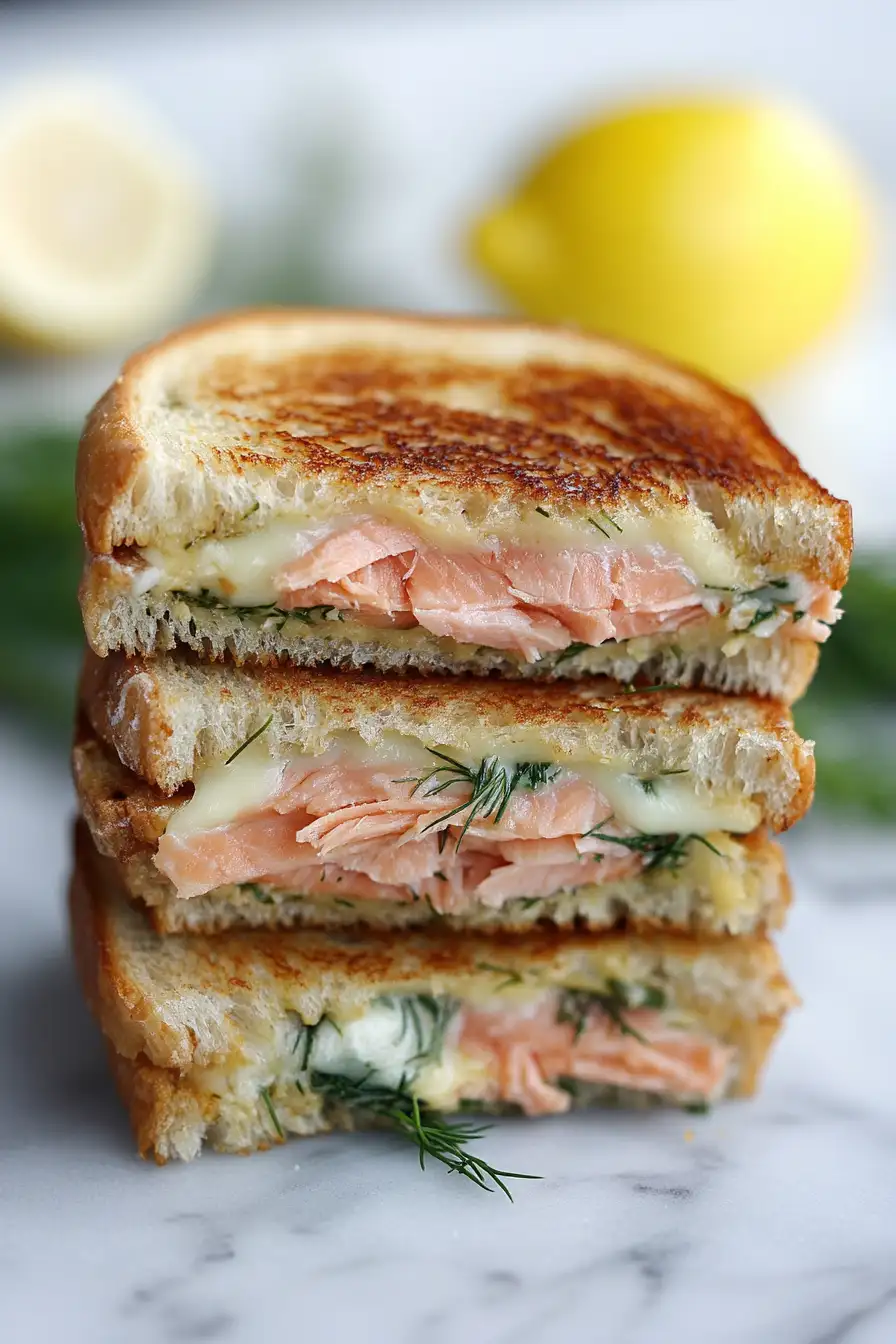
Why You’ll Love This Smoked Salmon Grilled Cheese
- Quick preparation – Ready in just 20 minutes, this sandwich is perfect for those busy weeknight dinners or when you need a fast but satisfying lunch.
- Gourmet twist – This isn’t your ordinary grilled cheese – the combination of smoky salmon, nutty Gruyere, and fresh dill creates a sandwich that feels fancy but is super easy to make.
- Simple ingredients – With just 6 main ingredients, you can create this elevated sandwich that tastes like it came from a café.
- Customizable – Feel free to switch up the bread type or cheese variety to match your preferences – it’s hard to go wrong with this flexible recipe.
What Kind of Smoked Salmon Should I Use?
For a grilled cheese sandwich, cold-smoked salmon (also called lox) tends to work better than hot-smoked salmon since it has a smoother, silkier texture that melts nicely with the cheese. You’ll find both farm-raised and wild-caught options at most grocery stores – either type works great in this recipe, though wild-caught typically has a more intense flavor. The most common variety you’ll see is Atlantic salmon, which comes in thin, orange-pink slices that are perfect for layering in sandwiches. If the salmon seems too salty, you can give it a quick rinse under cold water and pat it dry with paper towels before using it in your sandwich.
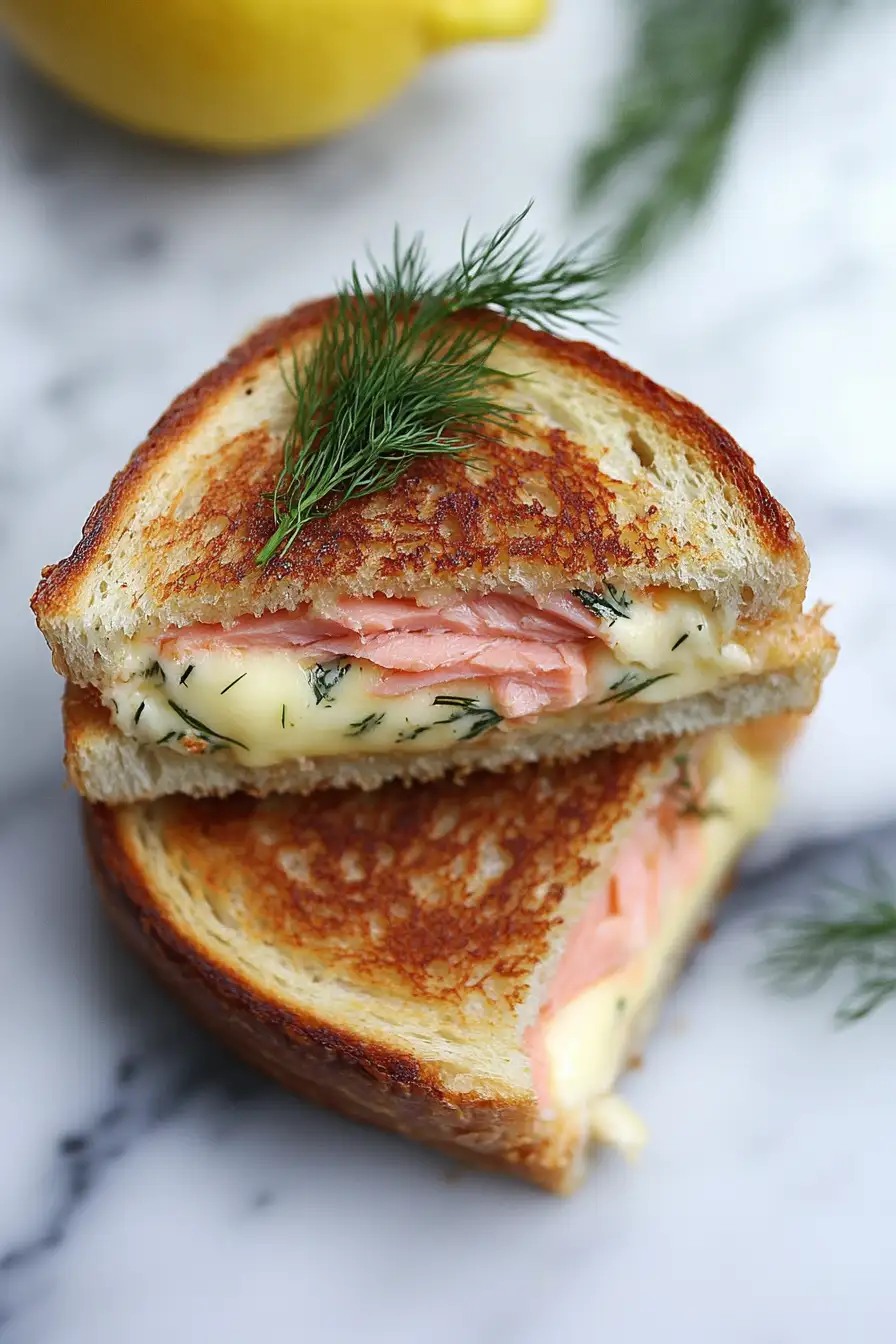
Options for Substitutions
This fancy grilled cheese sandwich is pretty flexible with substitutions. Here’s what you can swap:
- Gruyere cheese: If Gruyere isn’t available, Swiss cheese makes a great substitute. You could also try Emmental, Raclette, or even a mild white cheddar – just look for a cheese that melts well.
- Smoked salmon: While smoked salmon gives this sandwich its signature taste, you can try canned salmon (well-drained) in a pinch. Smoked trout is another good option that brings a similar smoky flavor.
- Fresh dill: No fresh dill? Use 2 teaspoons of dried dill instead. You could also try fresh chives or parsley, though the flavor will be different.
- Rye bread: Any sturdy bread works here – try sourdough, whole grain, or even a good quality white bread. Just make sure it’s fresh and can hold up to grilling.
- Butter: You can use mayonnaise instead of butter on the outside of the bread – it creates a nice golden crust and some folks actually prefer it!
- Lemon zest: If you don’t have fresh lemon, you can skip the zest, or add a tiny splash of lemon juice (about 1 teaspoon) to the cheese mixture instead.
Watch Out for These Mistakes While Grilling
The biggest mistake when making smoked salmon grilled cheese is cranking up the heat too high – this leads to burnt bread on the outside while the cheese stays cold and unmelted on the inside. Instead, keep your pan at medium-low heat and be patient, letting the cheese melt slowly while the bread turns golden brown. Another common error is skipping the room temperature prep – cold butter won’t spread evenly and can tear your bread, so let your butter soften on the counter for about 30 minutes before starting. To prevent your smoked salmon from becoming tough and chewy, add it to the sandwich only after the cheese has started to melt, and remember to pat the salmon dry with paper towels first to remove excess moisture that could make your sandwich soggy.

What to Serve With Smoked Salmon Grilled Cheese?
This fancy twist on grilled cheese pairs really well with a light soup like cucumber gazpacho or a simple tomato bisque. If you’re in the mood for something fresh, try serving it with a crisp arugula salad dressed with lemon vinaigrette – the peppery greens are perfect with the smoky salmon. For a brunch-style meal, add some pickled red onions or capers on the side, which bring a nice tangy contrast to the rich, melty sandwich. You could also go the traditional route with some crispy potato chips or a handful of cornichons for that satisfying crunch factor.
Storage Instructions
Keep Fresh: While smoked salmon grilled cheese sandwiches are best enjoyed right off the griddle, you can save any leftovers in an airtight container in the fridge for up to 2 days. Just know that the bread might not stay as crispy as when it’s fresh!
Prep Ahead: If you want to save time, you can mix the grated Gruyere with the lemon zest and dill ahead of time and keep it in the fridge for up to 2 days. This makes assembly super quick when you’re ready to cook your sandwiches.
Warm Up: To enjoy leftover sandwiches, wrap them in foil and pop them in a 350°F oven for about 10 minutes, or until the cheese starts to melt again. You can also use a pan on low heat to help bring back some of that original crispiness. I’d skip the microwave – it tends to make the bread soggy!
| Preparation Time | 10-15 minutes |
| Cooking Time | 6-10 minutes |
| Total Time | 16-25 minutes |
| Level of Difficulty | Easy |
Estimated Nutrition
Estimated nutrition for the whole recipe (without optional ingredients):
- Calories: 1600-1800
- Protein: 80-90 g
- Fat: 110-120 g
- Carbohydrates: 80-90 g
Ingredients
- 2 tbsp fresh dill (finely chopped for even distribution)
- 8 oz smoked salmon (thinly sliced, good quality wild-caught if possible)
- 8 slices bread (sourdough or brioche work wonderfully)
- 1 tbsp lemon zest
- 4 tbsp butter (I like Kerrygold unsalted butter for this)
- 1 cup shredded gruyere cheese (freshly grated for better melting)
Step 1: Prepare the Sandwich Layers
Begin with a large clean work surface.
Place 4 slices of bread on the surface.
For each slice, layer 1/8 cup of cheese, followed by 1/4 portion of the salmon.
Add a pinch of lemon zest and a touch of dill for flavor.
Finish with another 1/8 cup of cheese atop the ingredients.
Complete by topping each prepared slice with another slice of bread to form a sandwich.
Step 2: Cook the Sandwiches
Melt two tablespoons of butter in a large skillet over medium heat.
Place two sandwiches in the skillet at a time.
Cook each side for approximately 3 minutes, or until the cheese is melted and the bread turns golden brown.
Monitor the heat to avoid burning, adjusting as necessary.
Step 3: Finish and Serve
Repeat the cooking process for the remaining sandwiches, adding more butter to the skillet as needed to ensure each sandwich is cooked evenly.
Once all sandwiches are golden and crispy, remove from the skillet, cut in half for easier handling, and serve immediately for best flavor and texture.