Finding a quick and satisfying dinner recipe for those busy weeknights can feel like an endless struggle. Between after-school activities, work deadlines, and the general chaos of everyday life, it’s tempting to just order takeout or heat up another frozen meal.
That’s where this tomato ricotta pasta comes to the rescue: it’s comforting and fresh, takes less than 30 minutes to make, and uses simple ingredients you probably already have in your kitchen. Plus, it’s the kind of meal that makes everyone at the table happy.

Why You’ll Love This Tomato Ricotta Pasta
- Simple ingredients – With just a handful of basic Italian ingredients like ricotta, passata, and pasta, you can create this satisfying dish without hunting down specialty items.
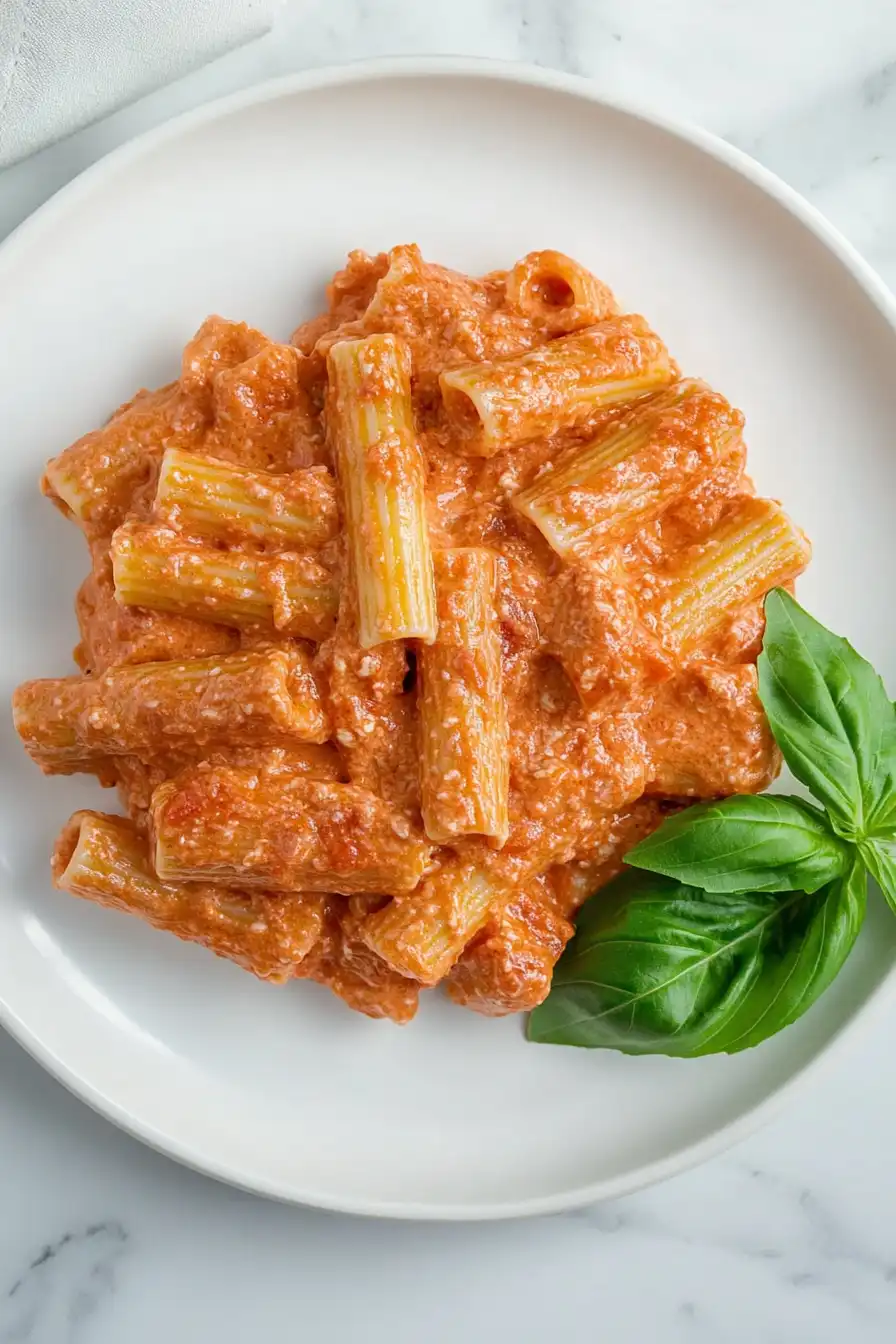
- Creamy comfort – The combination of fresh ricotta and tomato sauce creates a velvety, rich sauce that coats every bite of pasta perfectly.
- Weeknight friendly – You can have this pasta ready in under an hour, making it perfect for those busy evenings when you want something homemade but don’t have hours to spend in the kitchen.
- Vegetarian friendly – This meatless pasta dish is filling and satisfying while being completely vegetarian – perfect for meat-free Mondays or any day of the week.
What Kind of Ricotta Should I Use?
Fresh ricotta is the way to go for this pasta dish – you’ll notice a big difference compared to the pre-packaged varieties that have been sitting on the shelf. Look for whole milk ricotta that’s smooth and creamy, with a slightly sweet flavor and no grainy texture. If you can find it, Italian-style ricotta made from whey (rather than whole milk) has a lighter, fluffier texture that works beautifully in pasta dishes. When you’re at the store, check the expiration date and try to get the freshest container possible – fresher ricotta will be creamier and have a better flavor. Just make sure to drain off any excess liquid before adding it to your pasta.
Options for Substitutions
Let’s talk about what you can swap in this pasta dish if you need to:
- Pasta shapes: While tube-shaped pasta works best to catch the creamy sauce, you can use other shapes like fusilli, orecchiette, or even spaghetti. Just make sure to choose pasta with some texture to hold the sauce.
- Passata: If you can’t find passata, use crushed tomatoes or blend whole canned tomatoes until smooth. In a pinch, you can even use tomato puree mixed with a bit of water.
- Fresh ricotta: Fresh ricotta really makes this dish special, but if needed, you can use cottage cheese that’s been blended until smooth. The texture will be slightly different, but still tasty.
- Parmigiano-reggiano: You can swap this with Grana Padano or Pecorino Romano. Regular parmesan works too, though it won’t have quite the same flavor depth.
- Fresh basil: While fresh basil gives the best flavor, you can use dried basil in a pinch – just use about 1 teaspoon since dried herbs are more concentrated.
Watch Out for These Mistakes While Cooking
The biggest mistake when making tomato ricotta pasta is overcooking the pasta – always cook it 1-2 minutes less than the package instructions since it will continue cooking when tossed with the hot sauce. Another common error is adding cold ricotta directly to the hot pasta, which can make the sauce grainy and uneven – instead, let the ricotta come to room temperature and thin it out with a splash of pasta water before mixing. The secret to a silky smooth sauce lies in the pasta water, but many cooks forget to save some before draining – set aside at least 1 cup of that starchy liquid before draining your pasta. For the best flavor development, avoid rushing the onion-cooking process – let them slowly soften and become translucent over medium heat for about 5-7 minutes before adding the tomato passata.

What to Serve With Tomato Ricotta Pasta?
This creamy pasta dish pairs perfectly with a simple side salad dressed in olive oil and lemon juice – the bright flavors help balance out the rich, cheesy pasta. A loaf of crusty Italian bread is also great for soaking up any extra sauce left on your plate. If you want to add some green veggies to your meal, try serving some roasted broccoli or sautéed spinach on the side – they’re both easy to make while your pasta is cooking. For a complete Italian-style dinner, start with some marinated olives or a caprese salad before diving into the main course.
Storage Instructions
Keep Fresh: This tomato ricotta pasta keeps really well in an airtight container in the fridge for up to 3 days. The sauce might thicken up a bit as it sits, but that’s totally normal. When storing, make sure the pasta has cooled down completely before putting it away.
Prep Ahead: You can make the tomato ricotta sauce ahead of time and keep it in the fridge for up to 2 days. When you’re ready to eat, just cook fresh pasta and warm up the sauce. Add a splash of pasta water to bring the sauce back to its creamy consistency.
Warm Up: To enjoy your leftover pasta, gently heat it in a pan over medium-low heat with a splash of water or milk to loosen up the sauce. Stir occasionally until it’s heated through. You can also microwave it in 30-second intervals, stirring between each, until it’s warm and creamy again.
| Preparation Time | 10-15 minutes |
| Cooking Time | 35-50 minutes |
| Total Time | 45-65 minutes |
| Level of Difficulty | Medium |
Estimated Nutrition
Estimated nutrition for the whole recipe (without optional ingredients):
- Calories: 1300-1500
- Protein: 45-60 g
- Fat: 70-85 g
- Carbohydrates: 150-170 g
Ingredients
For the sauce:
- fresh basil (leaves torn or roughly chopped)
- 250 ml passata (I use Mutti Finely Chopped Tomatoes for best flavor)
- pepper
- 3 tbsp olive oil
- 1/2 onion (finely chopped for smoother sauce)
- salt
For the pasta:
- 300 grams pasta (such as penne or fusilli)
- pasta water
- 1 tbsp rock salt
For the ricotta mixture:
- Parmigiano-Reggiano (finely grated)
- 250 grams fresh ricotta (whole milk preferred for creaminess)
Step 1: Prepare Ingredients and Start the Sauce
Begin by choosing your pasta shape (e.g., penne, rigatoni, or elicoidali) and measure out 300 grams, which is enough for two people.
Chop half an onion into small pieces.
Gather the rest of your ingredients: fresh basil, 250 grams of ricotta, grated Parmigiano-Reggiano, extra virgin olive oil, salt, and pepper.
Heat a medium-sized pan over medium-low heat and add 3 tablespoons of extra virgin olive oil.
Once warm, add the chopped onion, cooking for about 10 minutes until it turns golden brown.
Step 2: Finish the Sauce
When the onion is golden brown, add passata to the pan and cook on low heat for 15-20 minutes until the sauce thickens.
Season generously with salt and pepper.
Tear the fresh basil by hand and add it to the sauce, allowing it to cook for a few more minutes.
Be careful not to overcook the basil to keep its flavor fresh.
Remove the saucepan from the heat to preserve the basil’s fresh taste.
Step 3: Cook the Pasta
Fill a large pot with 4-5 liters of water and add 1 tablespoon of rock salt.
Bring the water to a boil, then add the pasta, cooking for about 12 minutes.
Stir occasionally to prevent the pasta from sticking together.
While the pasta cooks, reserve some pasta water for later use.
Step 4: Prepare the Ricotta Mixture
In a separate bowl, place half of the ricotta and add a little pasta water to it.
Use a fork to break the ricotta and mix in grated Parmigiano-Reggiano until the ricotta becomes creamy.
Taste the mixture and adjust seasoning if necessary to ensure it’s flavorful.
Step 5: Combine the Sauce and Pasta
Return the saucepan with tomato sauce to the stove and gently stir in the ricotta mixture, creating a pink sauce.
Once the pasta is cooked, drain it, saving some additional pasta water.
Add the drained pasta to the sauce and stir gently to combine.
If the sauce needs thinning out, add a little reserved pasta water to reach your desired consistency.
Step 6: Serve the Dish
Plate the pasta, sprinkling more grated Parmigiano-Reggiano on top.
Garnish with fresh basil for added freshness and a burst of flavor.
Enjoy your delicious meal!