Making a classic Beef Wellington can feel like a huge undertaking, especially when you’re not a fan of mushrooms or have family members who push them away at dinner time. After all, most traditional recipes lean heavily on mushroom duxelles for that rich, savory layer, leaving many home cooks wondering if they can still create this special dish without this key ingredient.
Well, I’m happy to tell you that this mushroom-free version of Beef Wellington delivers all the wow-factor of the original: perfectly cooked beef wrapped in flaky pastry, with clever substitutions that keep all the flavor while skipping the fungi completely.
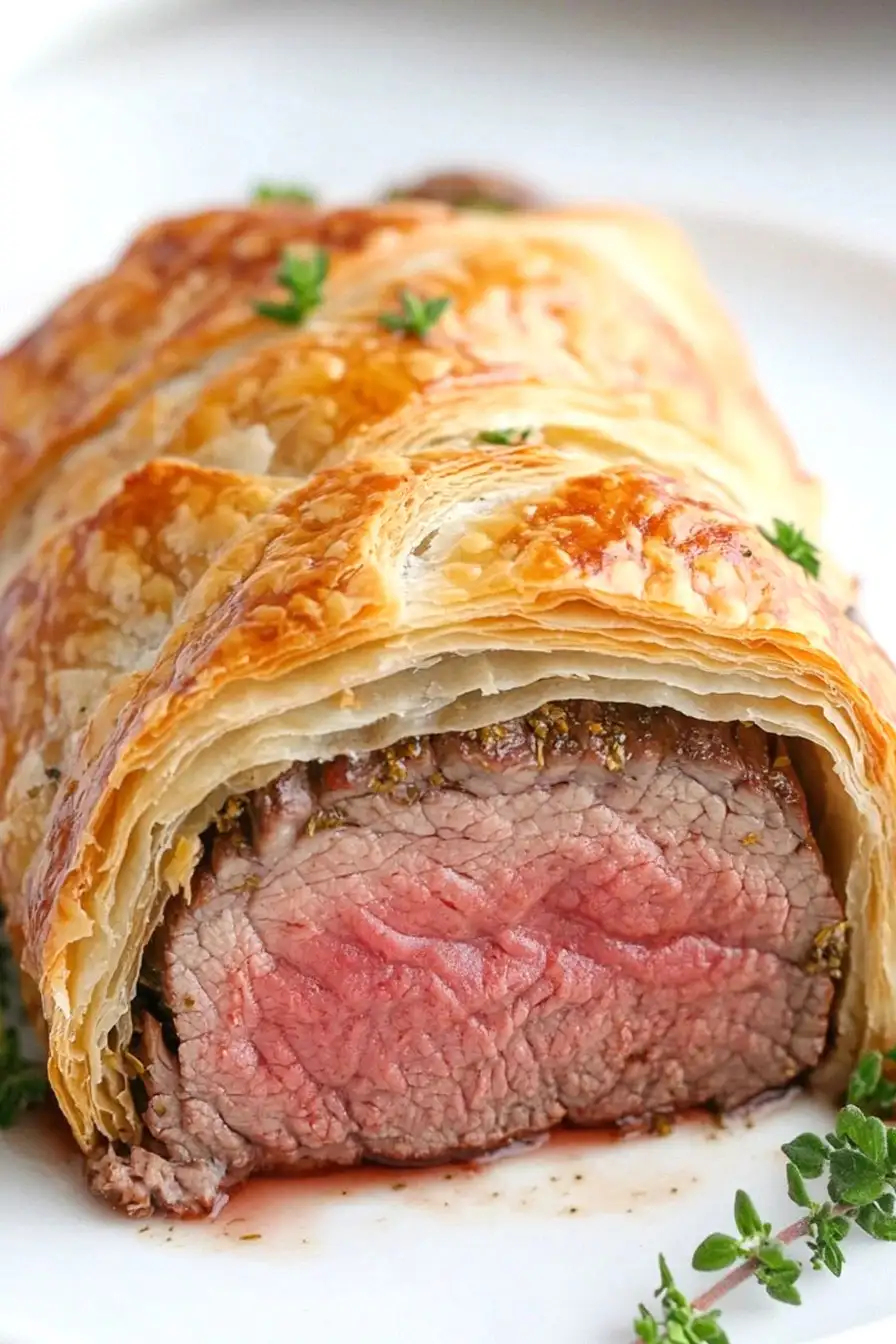
Why You’ll Love This Beef Wellington
- Restaurant-quality dish – You can make this impressive main course right in your own kitchen, and your guests will think you ordered from a fancy steakhouse.
- No mushroom version – Perfect for those who don’t like mushrooms but still want to enjoy this classic dish – the prosciutto and herbs provide plenty of rich flavor instead.
- Simple ingredients – While it looks fancy, you only need a handful of basic ingredients you can find at any grocery store.
- Make-ahead friendly – You can prep most of this dish in advance and just pop it in the oven when you’re ready to serve, making it perfect for special occasions.
What Kind of Beef Tenderloin Should I Use?
For Beef Wellington, you’ll want to focus on the center cut of the beef tenderloin, also known as the châteaubriand. This particular cut comes from the middle of the whole tenderloin and is prized for its even shape and consistent cooking. When shopping, look for meat that’s bright red with minimal silver skin and some marbling, but not too much since tenderloin is naturally lean. For the best results, ask your butcher for a center-cut piece that’s been trimmed and tied – this will give you that classic round shape that’s ideal for Beef Wellington. Just make sure to bring the meat to room temperature before cooking, and don’t forget to pat it dry with paper towels to help get that perfect sear on the outside.
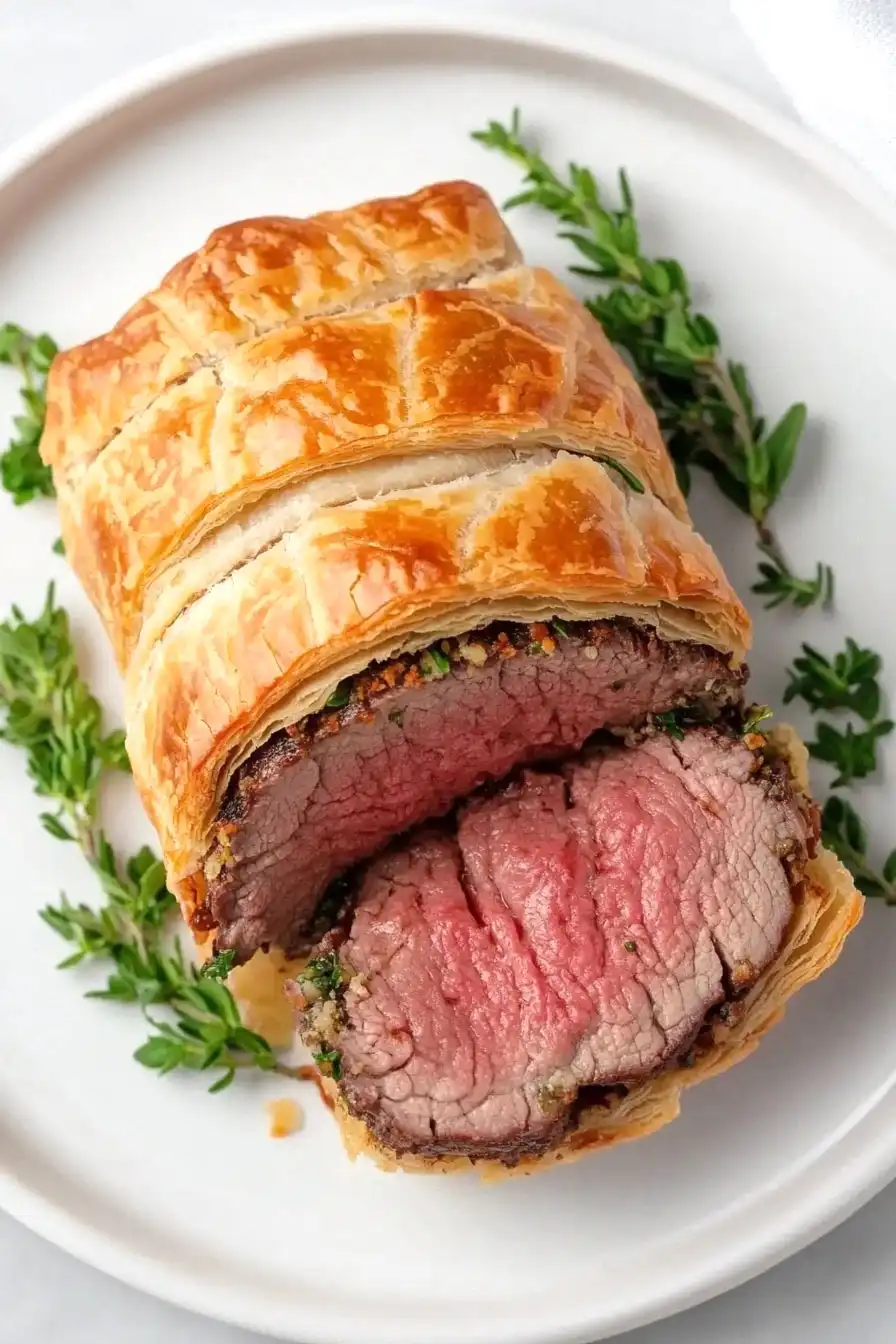
Options for Substitutions
While some ingredients in this Beef Wellington are essential, there’s room for a few smart swaps if needed:
- Beef tenderloin: This is really the star of the show and shouldn’t be substituted – the tenderness of this cut is crucial for the recipe’s success.
- Prosciutto: You can swap prosciutto with thin-sliced Parma ham, Serrano ham, or even regular deli ham in a pinch. Just make sure it’s sliced very thin.
- Grainy mustard: Dijon mustard works great too. If you’re not a fan of mustard, you can use a thin layer of pesto instead.
- Red wine: No wine? Use beef broth with a splash of balsamic vinegar to get that rich flavor.
- Puff pastry: Store-bought puff pastry is recommended, but in an emergency, you could use crescent roll dough – though the texture won’t be quite the same.
- Dried thyme: Fresh thyme works great (use 2 tablespoons instead), or try dried rosemary or herbs de Provence as alternatives.
Watch Out for These Mistakes While Cooking
The temperature of your meat is crucial – starting with cold beef tenderloin can lead to uneven cooking, so always let it rest at room temperature for 30-45 minutes before searing. A common error is not patting the meat completely dry before searing, which prevents that perfect golden crust from forming – use paper towels to remove any moisture and season generously with salt and pepper right before it hits the pan. The biggest challenge comes with achieving the right doneness – use a meat thermometer and remove the Wellington from the oven when it reaches 120°F for rare or 125°F for medium-rare, as it will continue cooking while resting. To prevent the dreaded soggy bottom, make sure your onion mixture is completely cooled before assembling, and don’t forget to cut small vents in the top of the pastry to allow steam to escape during baking.

What to Serve With Beef Wellington?
Since Beef Wellington is such a special main dish, I like to keep the sides simple but elegant. A classic pairing is roasted baby vegetables – think carrots, asparagus, or Brussels sprouts – which add color to the plate without stealing the show. For a starchy side, creamy mashed potatoes are perfect for soaking up any extra juices from the beef, though roasted fingerling potatoes work great too. If you want to add a fresh element, a light mixed green salad with a simple vinaigrette helps balance out the richness of the pastry-wrapped beef.
Storage Instructions
Keep Fresh: If you have any leftover Beef Wellington (which rarely happens!), wrap it well in foil or place it in an airtight container. It will stay good in the fridge for up to 3 days. Just keep in mind that the pastry won’t be as crispy as when it’s fresh.
Make Ahead: You can prep your Beef Wellington up to 24 hours before baking! After wrapping the beef in pastry, cover it tightly with plastic wrap and keep it in the fridge. When you’re ready to cook, just brush with egg wash and pop it in the oven.
Warm Up: To enjoy leftover Beef Wellington, heat your oven to 250°F and warm the slices for about 12-15 minutes. I don’t recommend microwaving as it can make the pastry soggy and might overcook the meat. The goal is to warm it gently to keep that perfect medium-rare center.
| Preparation Time | 30-45 minutes |
| Cooking Time | 35-45 minutes |
| Total Time | 75-90 minutes |
| Level of Difficulty | Medium |
Estimated Nutrition
Estimated nutrition for the whole recipe (without optional ingredients):
- Calories: 2400-2600
- Protein: 150-160 g
- Fat: 160-180 g
- Carbohydrates: 70-80 g
Ingredients
For the beef tenderloin:
- kosher salt (Diamond Crystal Kosher Salt)
- 1.5 lb beef tenderloin
- 2 tbsp olive oil (or other neutral oil like grapeseed)
- black pepper
For the mustard coating:
- 2 cloves garlic (freshly minced for best flavor)
- 1/2 tsp black pepper
- 2 tbsp grainy mustard (like Maille Old Style Whole Grain Dijon)
For the onion mixture:
- 1 tbsp olive oil
- 1/4 cup red wine
- 1/2 cup minced onion (finely chopped)
- 2 tsp dried thyme
For assembly:
- 1/4 lb prosciutto
- 1 egg (lightly beaten for egg wash)
- kosher salt
- 1 sheet puff pastry (thawed according to package instructions)
Step 1: Prep and Sear the Tenderloin
Preheat your oven to 425 degrees F.
Start by using butcher’s twine to tie the tenderloin at 1-inch intervals; this helps it maintain its shape during cooking.
Season the tenderloin liberally with salt and pepper.
Heat 2 tablespoons of olive oil in a cast iron skillet over high heat until it’s smoking.
Sear the tenderloin on all sides for about 2 minutes per side to create a rich brown crust.
Once seared, transfer the tenderloin to a large plate to rest and cool slightly.
Step 2: Prepare the Mustard Coating
In a small bowl, mix together spicy mustard, minced garlic, and ½ teaspoon of black pepper.
Once the tenderloin has cooled enough to handle, remove and discard the butcher’s twine, and rub the mustard mixture evenly over the beef.
Place the coated tenderloin in the refrigerator to chill while you prepare the remaining ingredients.
Step 3: Make the Onion Mixture
In the same skillet, add the remaining oil and set it over medium-low heat.
Sauté the onion and thyme for about 5 minutes until the onions are softened.
Stir in the red wine and allow the mixture to simmer for 2-3 minutes until the wine reduces slightly.
Remove the skillet from heat and let it cool.
Step 4: Assemble the Wellington
Lay out a double layer of plastic wrap, about 2 feet long and 1 foot wide, on a cutting board.
Place a layer of puff pastry dough on top of the plastic wrap.
Shingle the prosciutto over the pastry to form a thin, even layer, leaving a 2-inch border on the top and bottom.
Spread the cooled onion mixture evenly over the prosciutto.
Position the chilled beef tenderloin along the bottom edge of the prosciutto layer.
Using the plastic wrap to assist, carefully fold in the edges and roll the tenderloin up tightly.
Trim any excess pastry to avoid thick seams.
Wrap the rolled tenderloin in the plastic wrap, twisting the ends to tighten.
Refrigerate the roll for at least 30 minutes to firm up.
Step 5: Bake the Beef Wellington
Place the prepared beef Wellington on a foil-lined baking sheet.
Brush the top of the pastry with beaten egg to create a glossy finish and cut a few slits into the dough for steam release.
Sprinkle the top liberally with kosher salt for added flavor.
Bake the Wellington in the preheated oven for 35-45 minutes until the pastry is golden brown.
Use an instant-read thermometer to check the internal temperature; it should read 110 degrees F for rare or 120 degrees F for medium-rare.
Step 6: Rest and Serve
Upon reaching your desired doneness, remove the beef Wellington from the oven and allow it to rest for 10 minutes before slicing and serving.
This brief resting period ensures the juices redistribute throughout the tenderloin, offering a moist and flavorful dish.