When I was growing up, pasta primavera meant one thing in our house: opening a frozen dinner and popping it in the microwave. Mom wasn’t big on cooking fresh vegetables, and the idea of making this dish from scratch seemed way too complicated.
But here’s the thing – I learned that making pasta primavera at home is actually pretty simple. You don’t need fancy ingredients or chef-level skills. All you need are some fresh vegetables, pasta, and about 30 minutes of your time. It’s the kind of meal that makes people think you worked harder than you actually did.
Why You’ll Love This Pasta Primavera
- Quick weeknight dinner – Ready in just 30 minutes, this pasta dish is perfect for those busy evenings when you need a satisfying meal without spending hours in the kitchen.
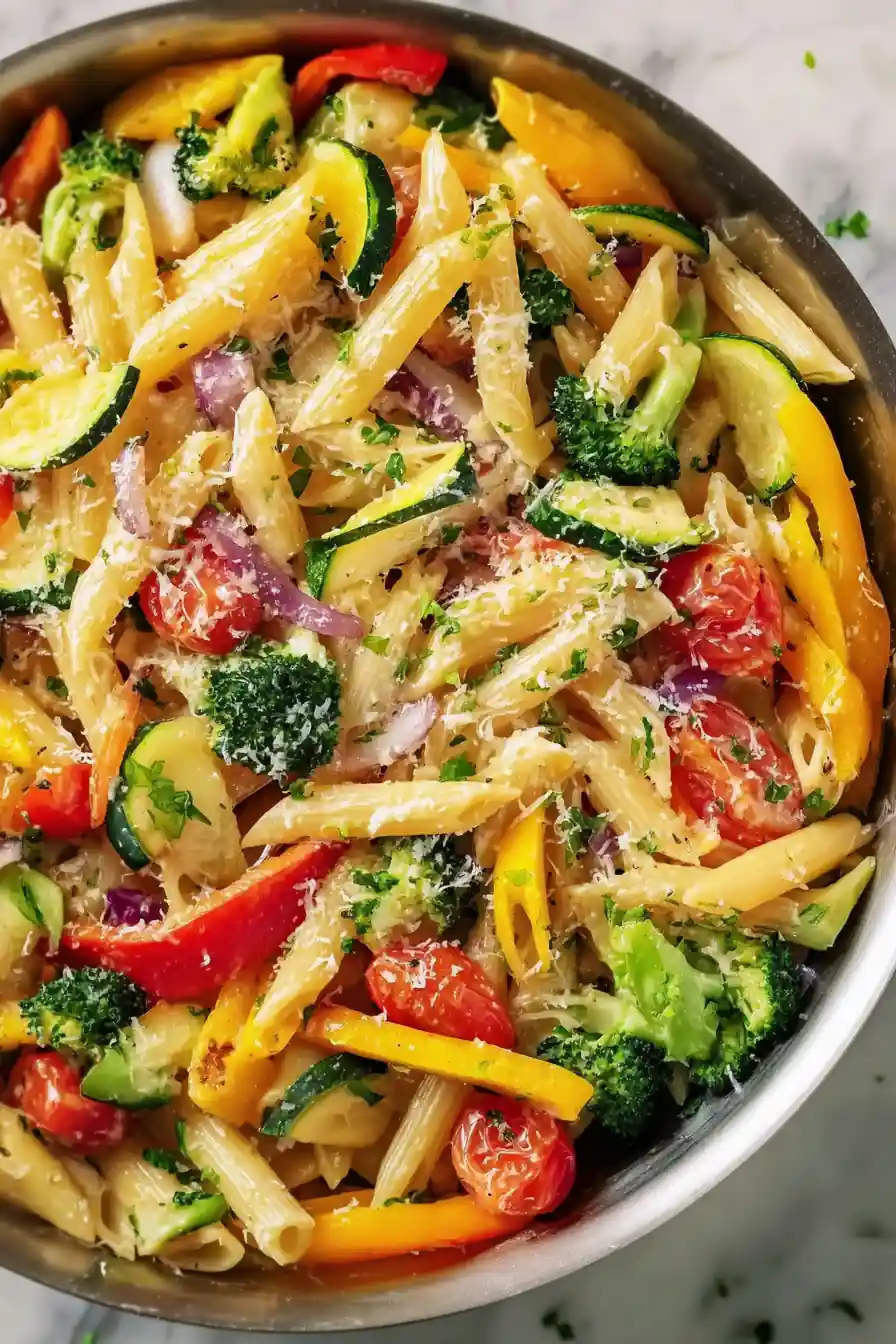
- Loaded with vegetables – With colorful bell peppers, zucchini, broccoli, and tomatoes, you’ll get several servings of vegetables in one delicious bowl.
- Customizable recipe – You can easily swap in whatever vegetables you have on hand or are in season – making this a flexible recipe that works year-round.
- Light and fresh – The combination of fresh vegetables, herbs, and light lemon-olive oil sauce makes this pasta feel satisfying but not heavy.
- Family-friendly – Kids love the pasta while parents appreciate all the hidden vegetables, making this a win-win dinner option for the whole family.
What Kind of Pasta Should I Use?
While this recipe calls for penne, you’ve got plenty of options when it comes to choosing your pasta shape. Medium-sized pasta shapes like fusilli, rotini, or bow ties (farfalle) work great because they catch the vegetables and sauce in their nooks and crannies. If you’re going for a healthier option, whole wheat pasta adds a nutty flavor and extra fiber, or you could try chickpea or lentil pasta for more protein. Just make sure to check the cooking time on the package since it varies by type – whole grain pastas typically take a few minutes longer to cook than traditional white pasta, while legume-based pastas often cook more quickly. For the best results, cook your pasta just until al dente (still slightly firm when you bite into it) since it’ll continue to soften slightly when tossed with the hot vegetables.

Options for Substitutions
This pasta dish is super adaptable and perfect for using what you have on hand. Here are some helpful swaps:
- Penne pasta: Any medium-sized pasta shape works great here – try fusilli, rotini, farfalle, or even rigatoni. Just cook according to the package instructions.
- Vegetables: The beauty of primavera is that you can mix and match vegetables. Swap in asparagus, green beans, snap peas, or mushrooms. Just make sure to cut them in similar sizes so they cook evenly.
- Italian herbs: If you don’t have an Italian herb blend, use a mix of dried basil, oregano, and thyme. Fresh herbs work too – just double the amount.
- Parmesan cheese: Pecorino Romano or Grana Padano make good substitutes. For a dairy-free version, try nutritional yeast or skip the cheese altogether.
- Fresh parsley: Fresh basil or cilantro can work instead. If using dried parsley, reduce the amount to 2 teaspoons.
- Lemon juice: White wine vinegar or apple cider vinegar can provide similar brightness – start with 1 tablespoon and adjust to taste.
Watch Out for These Mistakes While Cooking
The biggest mistake when making pasta primavera is overcooking the vegetables, which can turn them into a mushy mess – instead, add them to the pan in order of cooking time, starting with carrots and onions, followed by broccoli, and finishing with quick-cooking vegetables like tomatoes. Another common error is not saving enough pasta water before draining; this starchy liquid is essential for creating a silky sauce that perfectly coats your pasta and vegetables. To avoid ending up with a dry or clumpy dish, make sure to toss the pasta with the vegetables while everything is still hot, adding small amounts of the reserved pasta water as needed to create a light, smooth sauce. For the best flavor development, don’t rush the vegetable sautéing process – give them time to develop a light golden color, and remember to season each layer with salt as you cook.
What to Serve With Pasta Primavera?
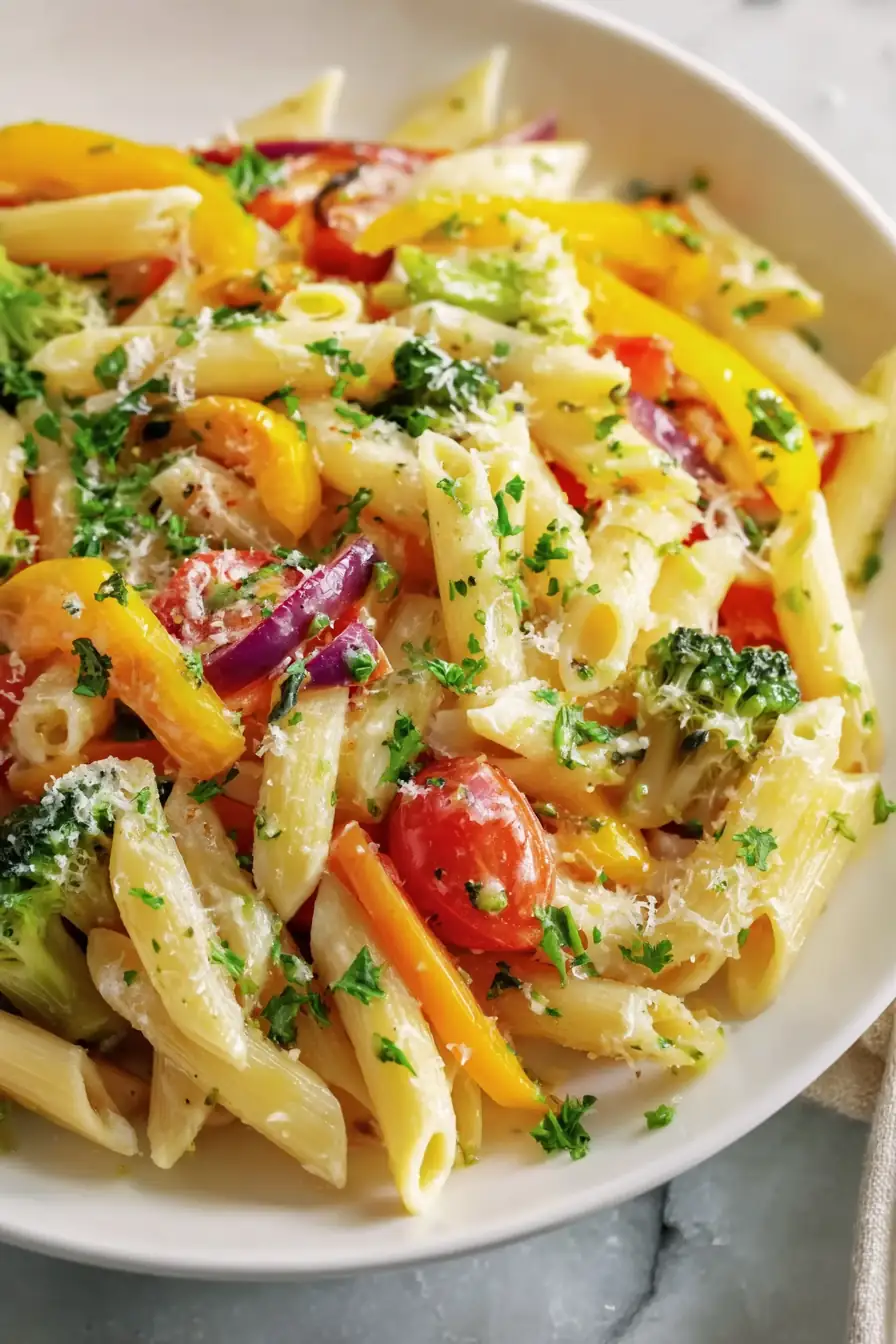
Since pasta primavera is already packed with veggies, I like to keep the sides simple and focus on adding some protein to round out the meal. A piece of grilled chicken breast or sautéed shrimp makes this veggie-loaded pasta dish even more filling. For a lighter option, try serving it with a simple mixed green salad dressed with Italian vinaigrette – the acid from the dressing helps cut through the richness of the pasta. And don’t forget some warm, crusty garlic bread on the side – it’s perfect for soaking up any extra sauce left on your plate!
Storage Instructions
Keep Fresh: Pop your pasta primavera in an airtight container and keep it in the fridge for up to 4 days. The vegetables might soften a bit over time, but the flavors actually get better as they meld together. It’s perfect for meal prep and makes great leftovers for lunch!
Make Ahead: If you want to prep ahead, you can chop all your veggies and store them separately in the fridge up to 2 days before cooking. When you’re ready to cook, just grab your prepped ingredients and you’ll have dinner on the table in no time.
Warm Up: To enjoy your leftover pasta primavera, give it a gentle warm-up in the microwave with a splash of water or olive oil to keep it from drying out. You can also toss it in a pan over medium heat for a few minutes. Add a fresh sprinkle of parmesan cheese and parsley to make it taste like new!
| Preparation Time | 10-15 minutes |
| Cooking Time | 15-20 minutes |
| Total Time | 25-35 minutes |
| Level of Difficulty | Easy |
Estimated Nutrition
Estimated nutrition for the whole recipe (without optional ingredients):
- Calories: 1200-1400
- Protein: 40-50 g
- Fat: 80-90 g
- Carbohydrates: 150-180 g
Ingredients
For the pasta:
- 10 oz penne pasta
- 1/2 cup pasta water (reserved from cooking pasta)
For the vegetables and sauce:
- 1 medium red bell pepper, sliced
- 1 cup grape tomatoes, halved
- 2 tsp dried Italian herbs
- 1 large carrot, sliced (cut into 1/4-inch rounds)
- 3-4 garlic cloves, minced (freshly minced for best flavor)
- 1 medium zucchini, sliced
- 1/2 medium red onion, sliced (thinly sliced for even cooking)
- 2 tbsp fresh parsley, chopped
- 1/4 cup olive oil (I like Kirkland Signature Organic olive oil)
- 1 medium yellow squash, sliced
- 2 tbsp fresh lemon juice
- salt, as needed
- 1/2 cup grated Parmesan cheese
- 2 cups broccoli (cut into small florets)
Step 1: Cook the Pasta
Bring a large pot of water to a boil.
Add a generous amount of salt to the boiling water.
Cook the penne pasta according to the package directions until al dente.
Before draining the pasta, reserve 1/2 cup of the pasta water for later use.
Drain the pasta and set aside.
Step 2: Sauté the Vegetables
In the meantime, heat olive oil in a 12-inch (and deep) skillet over medium-high heat.
Add the chopped red onion and carrot to the skillet and sauté for about 2 minutes.
Next, add the broccoli and bell pepper, sautéing for another 2 minutes.
Step 3: Finish Cooking the Veggies
Add the squash and zucchini to the skillet and continue to sauté for an additional 2 to 3 minutes, or until the vegetables have nearly softened.
Then, add the garlic, tomatoes, and Italian seasoning, and sauté everything together for another 2 minutes until fragrant.
Step 4: Combine Pasta and Vegetables
Transfer the sautéed veggies into the now-empty pasta pot or a large serving bowl.
Add the drained pasta to the vegetables.
Drizzle in some lemon juice and season with more salt if needed.
Toss everything together while gradually adding the reserved pasta water to loosen the mixture to your desired consistency.
Step 5: Add Cheese and Serve
Toss in 1/4 cup of Parmesan cheese and fresh parsley, mixing well to combine.
Serve the pasta immediately, topped with the remaining Parmesan cheese.
Enjoy your delicious vegetable-packed pasta!