Making persimmon vinegar at home has become one of my favorite fall traditions. There’s something special about turning those sweet, ripe persimmons into a tangy vinegar that adds just the right zip to dressings and marinades. I started making this years ago when my neighbor’s persimmon tree produced way more fruit than she could handle.
What I love most about this recipe is how simple it is – you don’t need any fancy equipment or hard-to-find ingredients. Just persimmons, sugar, and time. I usually start a batch in early autumn when persimmons are at their peak, and by winter, I have bottles of homemade vinegar ready to use or give as gifts.
If you’ve never tried making fruit vinegar before, don’t worry. This recipe is perfect for beginners, and I’ll walk you through each step. Plus, once you get the hang of it, you can experiment with different types of persimmons or even try this method with other fruits.
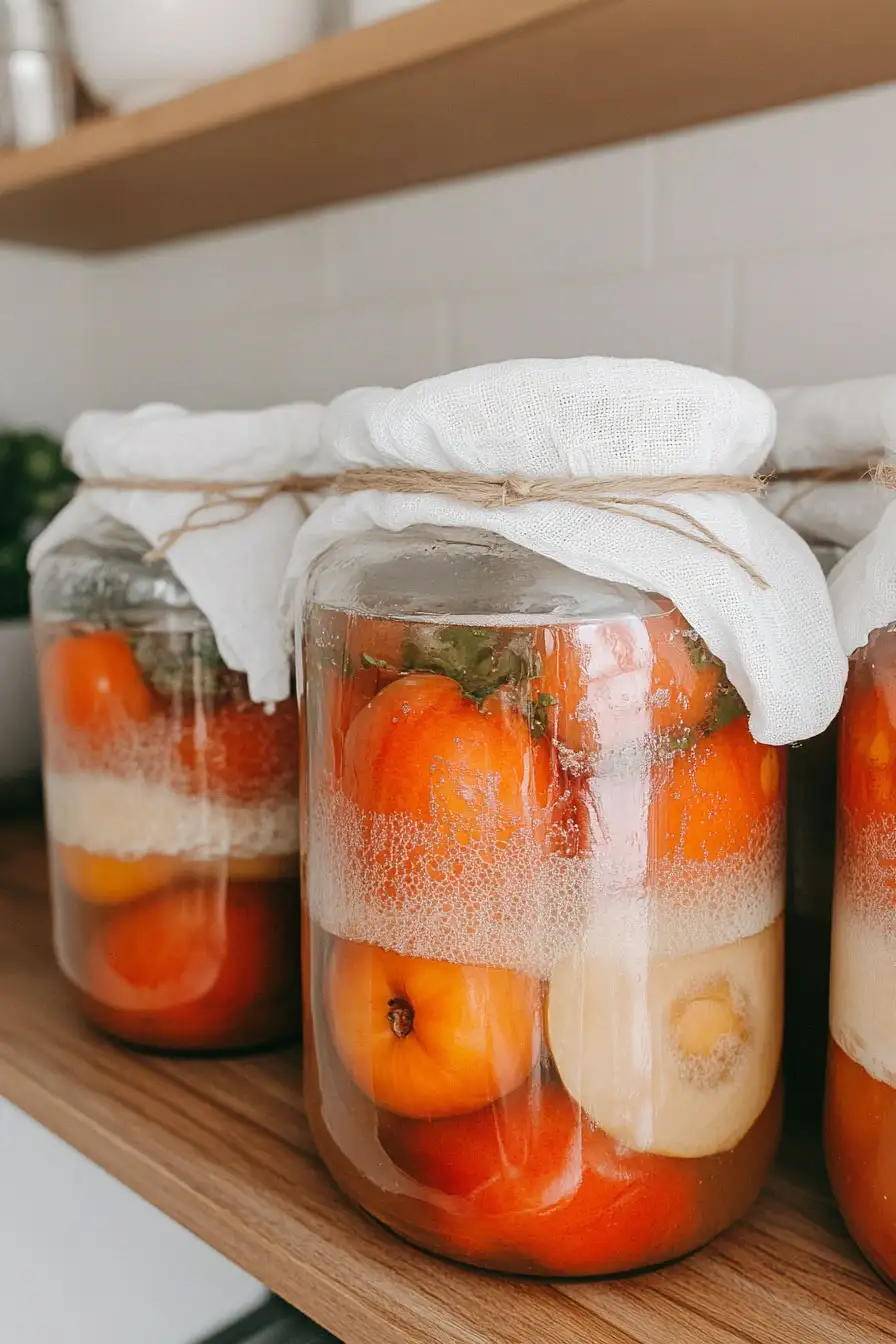
Why You’ll Love This Persimmon Vinegar
- Zero-waste cooking – This recipe is perfect for using up extra persimmons from your garden or farmer’s market, turning them into something valuable and long-lasting.
- All-natural ingredients – With just persimmons and time, you’ll create a pure, additive-free vinegar that’s free from artificial preservatives or flavors.
- Cost-effective – Making your own vinegar at home saves money compared to buying specialty vinegars, and you’ll get a large batch that lasts for months.
- Unique flavor – The natural fermentation process creates a complex, fruity vinegar that’s unlike anything you can buy in stores – perfect for dressings, marinades, and cooking.
What Kind of Persimmons Should I Use?
For making persimmon vinegar, you’ll want to use ripe, sweet persimmons – either Fuyu or Hachiya varieties will work, though Hachiyas need to be completely soft before using. Fuyu persimmons (the squat, tomato-shaped ones) can be used when they’re still firm but have a slight give when pressed, while Hachiya persimmons (the longer, heart-shaped ones) must be jelly-soft or they’ll be too tannic and astringent. If you’re buying persimmons for vinegar-making, look for fruits without any blemishes or bruises, and let them ripen at room temperature until they reach the right consistency. Keep in mind that you can mix both varieties in your vinegar batch – just make sure they’re all properly ripened before using.
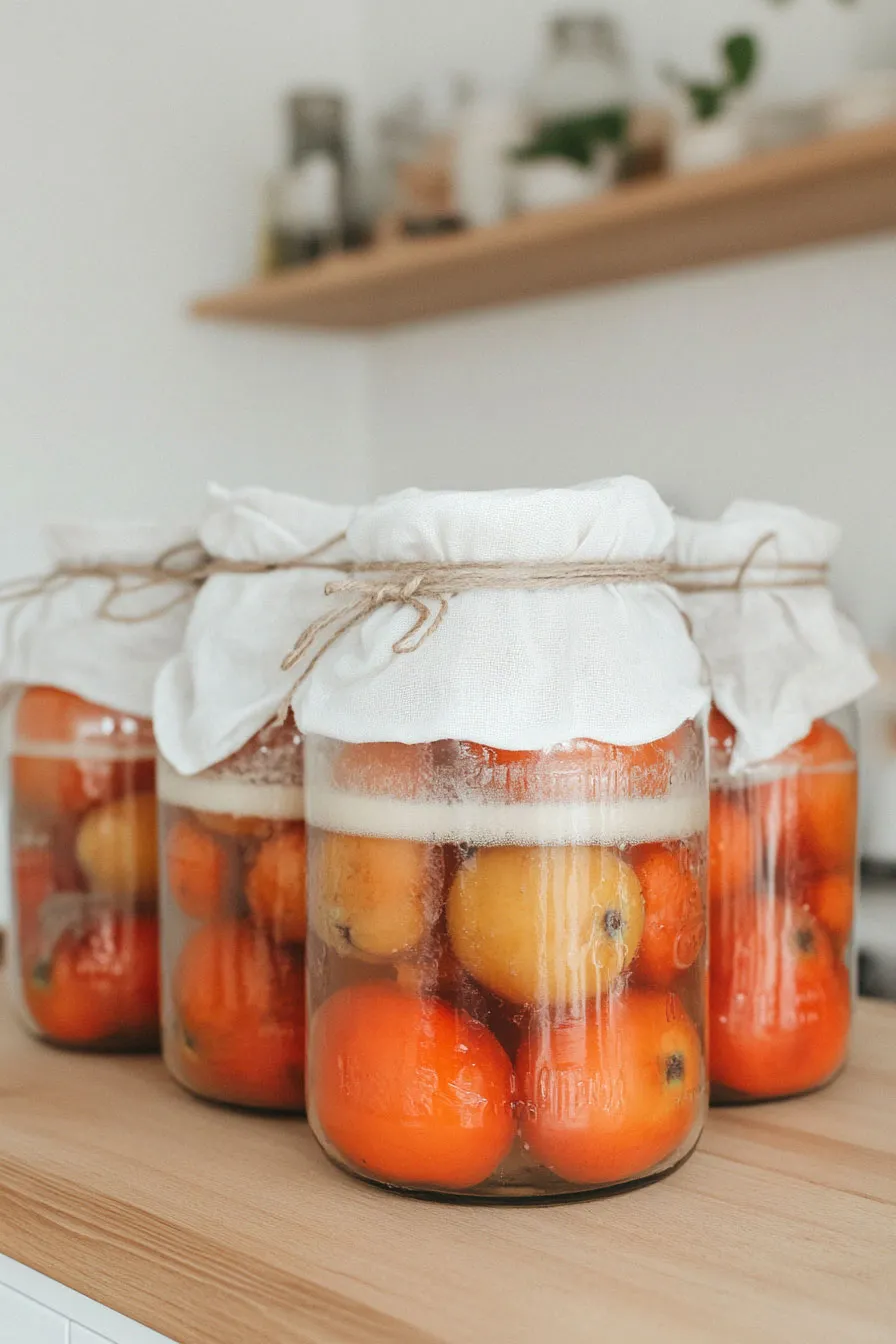
Options for Substitutions
When making persimmon vinegar, some ingredients and materials can be swapped, while others are essential:
- Persimmons: This is the key ingredient that cannot be substituted if you want true persimmon vinegar. Both Fuyu and Hachiya varieties work well, but make sure they’re very ripe. The amount can be scaled down proportionally if needed.
- Glass container: While a glass container is ideal, you can use a food-grade plastic container or a ceramic crock. Just make sure it’s completely clean and sanitized. Avoid metal containers as they can react with the acids during fermentation.
- Cling film: You can replace cling film with a clean cotton cloth, muslin, or even coffee filters. Just ensure whatever you use allows air flow while keeping out dust and insects.
- Elastic bands: String, twine, or jar rings can work instead of elastic bands. The important thing is to secure your covering tightly around the container.
- Plastic wrap: This can be replaced with a tight-fitting lid, as long as you remember to ‘burp’ the container daily to release built-up gases during fermentation.
Watch Out for These Mistakes While Making
The biggest challenge when making persimmon vinegar is using persimmons that aren’t ripe enough – they should be very soft and almost jelly-like to ensure proper fermentation and the best flavor development.
Temperature control is crucial during fermentation, so avoid keeping your container in direct sunlight or in a place that’s too cold (below 68°F) or too hot (above 82°F) – a steady room temperature in a dark corner of your kitchen works perfectly.
Many first-timers make the mistake of sealing the container too tightly, but fermentation needs some airflow – use breathable covers like cheesecloth or coffee filters secured with elastic bands instead of airtight lids to prevent mold growth while allowing gases to escape.
Remember to check your fermenting mixture daily and remove any white film that forms on top, as leaving it can affect the final taste and quality of your vinegar.
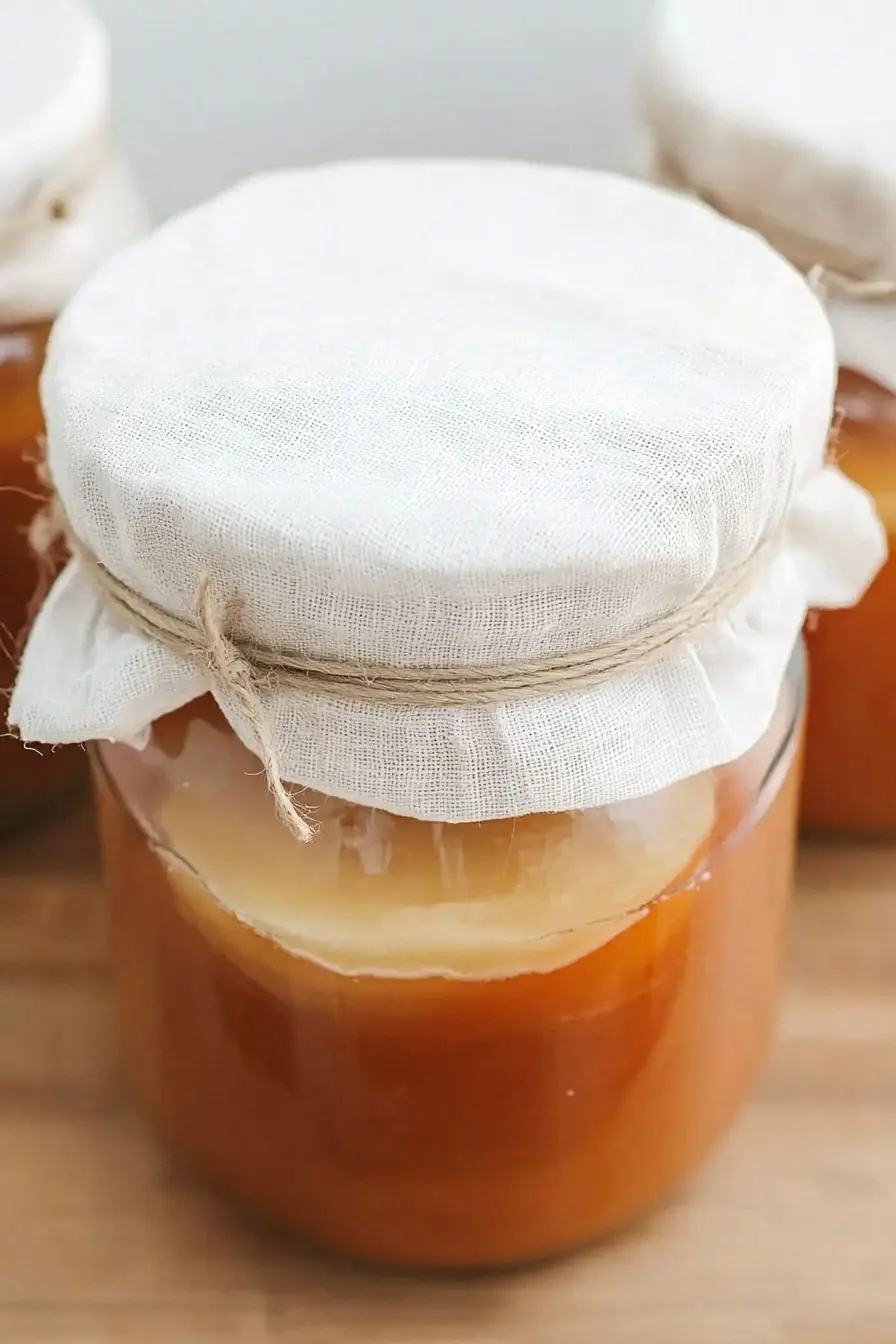
What to Serve With Persimmon Vinegar?
Homemade persimmon vinegar is such a fun ingredient to keep in your kitchen! This sweet-tart vinegar works really well in Asian-style dressings for cucumber or cabbage slaws, and it makes a great base for quick pickled vegetables. I love using it to make a simple vinaigrette for green salads – just mix it with some olive oil, a touch of honey, and a pinch of salt. You can also add a splash to marinades for chicken or fish, or use it to brighten up your favorite stir-fry dishes.
Storage Instructions
Ferment: During the fermentation process, keep your persimmon vinegar in a dark, room-temperature spot (around 68-75°F) for about 3-4 months. Make sure the container stays covered with cling film and secured with elastic bands to keep out dust while allowing fermentation gases to escape.
Store: Once your persimmon vinegar is ready and strained, transfer it to clean, sterilized glass bottles with tight-fitting lids. It will keep well in a cool, dark pantry or cabinet for up to 1 year. No need to refrigerate – just like other vinegars, it’s self-preserving!
Age: The flavor of your homemade persimmon vinegar actually gets better with time, developing deeper, more complex notes. Some folks like to age it for an extra 6 months before using, but it’s totally up to you – it’s ready to use right after the fermentation process is complete.
| Preparation Time | 15-20 minutes |
| Cooking Time | N/A |
| Total Time | 6-7 months |
| Level of Difficulty | Medium |
Estimated Nutrition
Estimated nutrition for the whole recipe (without optional ingredients):
- Calories: 0-0
- Protein: 0-0 g
- Fat: 0-0 g
- Carbohydrates: 0-0 g
Ingredients
- elastic bands
- cling film (heavy-duty preferred for a good seal)
- 50-60 persimmons
- 12 liter sterilized glass container (ensure it’s food-grade glass, not plastic)
Step 1: Prepare the Persimmons and Jar
Start by thoroughly washing the persimmons to remove any dirt or impurities.
Allow them to completely dry.
Once dry, fill a sterilized glass jar with the persimmons, reaching about 70%-80% of the jar’s capacity.
To ensure the jar is airtight, seal the opening with cling wrap and secure it with multiple rubber bands.
Step 2: Let the Persimmons Release Juice
Place the sealed jar in a location where it can sit undisturbed.
Over time, the persimmons will naturally break down and release their juice.
This process will take several months.
Step 3: Strain and Separate the Liquid
After 4-5 months, pour the contents of the jar through a colander to separate the solids from the liquid.
Allow it to sit overnight to naturally drain more juice.
Once drained, discard the solids.
Step 4: Transfer and Age the Vinegar
Transfer the liquid back into a clean, sterilized jar.
Cover the jar with plastic wrap and securely fasten with a rubber band to maintain an airtight seal.
Store the jar in a cool, dry place to allow the vinegar to age.
The vinegar can be enjoyed after about 6 months; however, allowing more time will develop a richer flavor.
Step 5: Clarify and Bottle the Vinegar
As the vinegar ages, you’ll notice the liquid will separate into two layers: a clear upper layer and a cloudy bottom layer with sediments.
For the highest quality vinegar, carefully scoop out the clear liquid and transfer it into a glass bottle for storage and use.
Appreciate the homemade persimmon vinegar in your culinary creations!


I am so confused. At first you say not to have it airtight but use cheesecloth or coffee filter and then the directions repeatedly say to make sure it is airtight. Which is it??