Growing up, Chinese takeout was our Friday night tradition. The sight of those white paper containers always meant good times with the family. But these days, I’m trying to eat a bit healthier while still keeping those familiar flavors I love.
That’s where spaghetti squash lo mein comes in. It’s basically the same dish I used to order, but instead of noodles, we’re using roasted spaghetti squash. The first time I made this swap, my kids didn’t even notice – they were too busy fighting over the last bits of sauce-coated veggies.
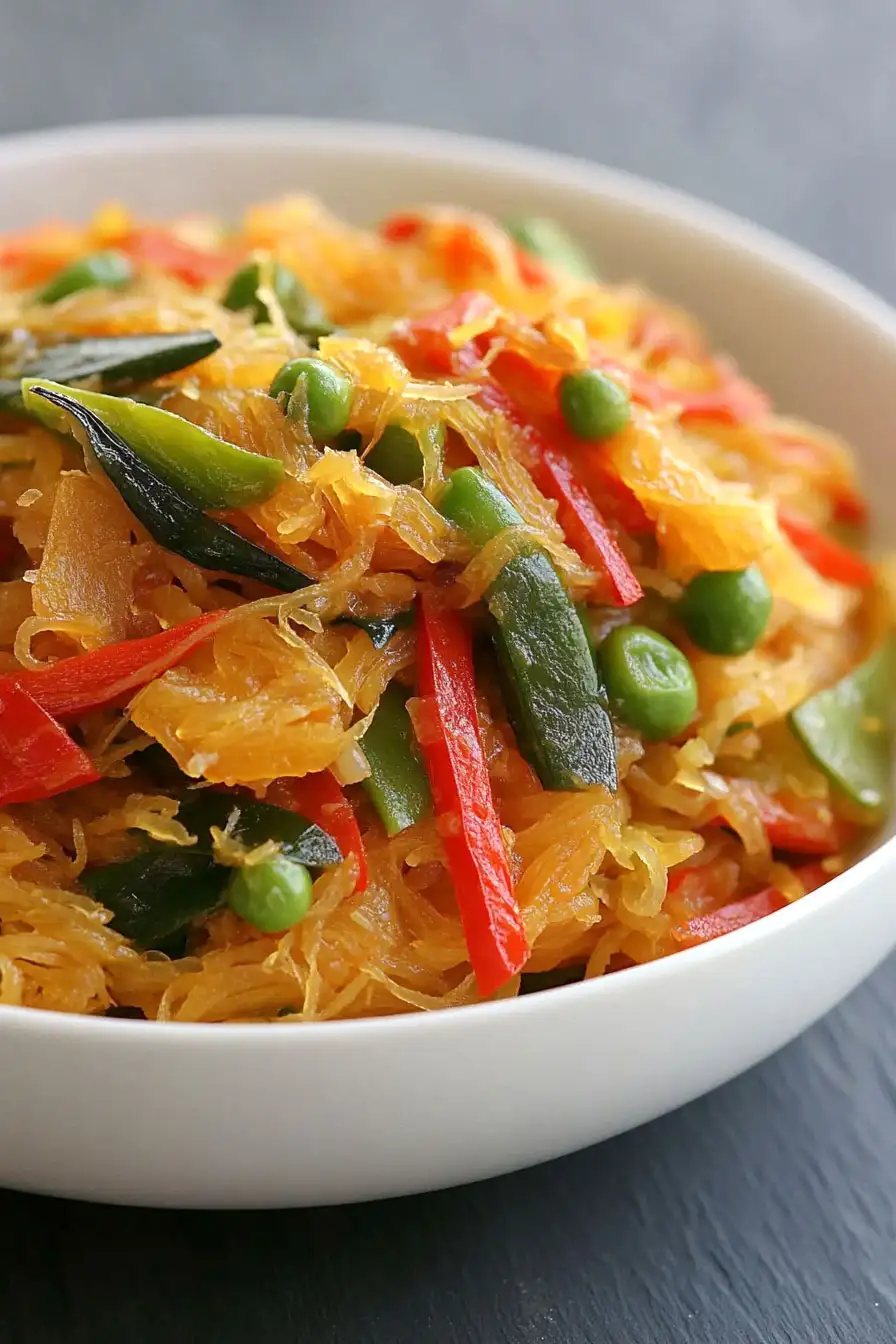
Why You’ll Love This Spaghetti Squash Lo Mein
- Low-carb alternative – This veggie-packed dish swaps traditional noodles for spaghetti squash, making it perfect for anyone watching their carb intake or following a keto diet.
- Authentic Asian flavors – The combination of tamari, oyster sauce, and Shao Xing wine creates that classic lo mein taste you love, without having to order takeout.
- Nutrient-rich ingredients – Packed with colorful vegetables like bell peppers, carrots, and snow peas, this dish delivers plenty of vitamins and fiber while keeping calories low.
- Customizable recipe – You can easily add your favorite protein or swap in different vegetables based on what you have in your fridge.
What Kind of Spaghetti Squash Should I Use?
When shopping for spaghetti squash, look for one that feels heavy for its size and has a firm, pale yellow shell without soft spots or blemishes. While you might find them year-round, they’re at their peak from fall through winter. The size matters too – for this lo mein recipe, you’ll want a medium squash around 2.5 to 3 pounds, which will give you enough “noodles” to serve 3-4 people. Once cooked, the squash should easily separate into spaghetti-like strands with a fork, making it a great noodle substitute. If you’re not using it right away, a whole spaghetti squash can keep for up to a month when stored in a cool, dry place.
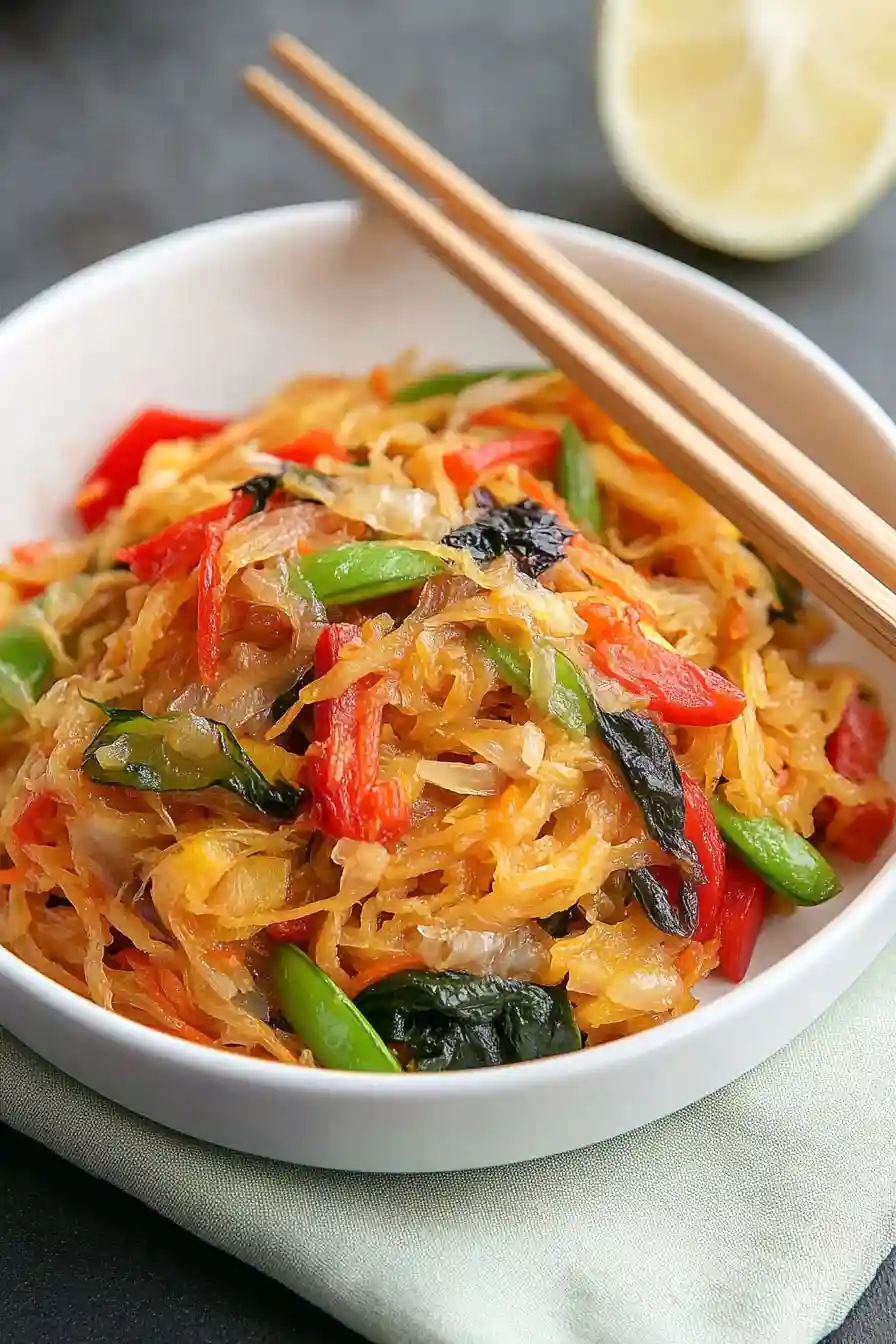
Options for Substitutions
This healthy twist on lo mein is pretty adaptable! Here are some handy swaps if you need them:
- Spaghetti squash: This is the star of the show, but if you can’t find it, try using spiralized zucchini noodles or hearts of palm noodles. Just remember these alternatives won’t need to be roasted – a quick sauté will do.
- Tamari/soy sauce: These can be swapped for each other, or use coconut aminos for a soy-free option (use a bit less as it’s sweeter).
- Oyster sauce: Vegetarian mushroom sauce works great here, or mix 1 tablespoon hoisin sauce with 1 tablespoon soy sauce.
- Shao Xing wine: Dry sherry is the best substitute, but you can also use mirin (reduce the honey since it’s sweeter) or just a splash of rice vinegar.
- Snow peas: Sugar snap peas or green beans work just as well. You can also use broccoli florets – just cut them small.
- Bell pepper and carrots: Feel free to swap in any crunchy vegetables you have – cabbage, celery, or bean sprouts all work great in this dish.
Watch Out for These Mistakes While Cooking
The biggest challenge when preparing spaghetti squash lo mein is overcooking the squash, which can turn the “noodles” mushy instead of maintaining that perfect al dente texture – check for doneness at the 30-minute mark by gently scraping the flesh with a fork to see if it separates easily into strands. Another common mistake is not removing excess moisture from the cooked squash strands, which can make your final dish watery; after scraping out the squash, let it drain in a colander for 5-10 minutes or pat gently with paper towels. When stir-frying the vegetables, avoid overcrowding the pan and cook them in batches if needed – this ensures they stay crisp-tender rather than becoming soggy, and helps maintain their individual flavors. For the best texture and taste, add the squash strands last to the stir-fry and toss quickly just until heated through, as prolonged cooking will make them break down and lose their noodle-like consistency.
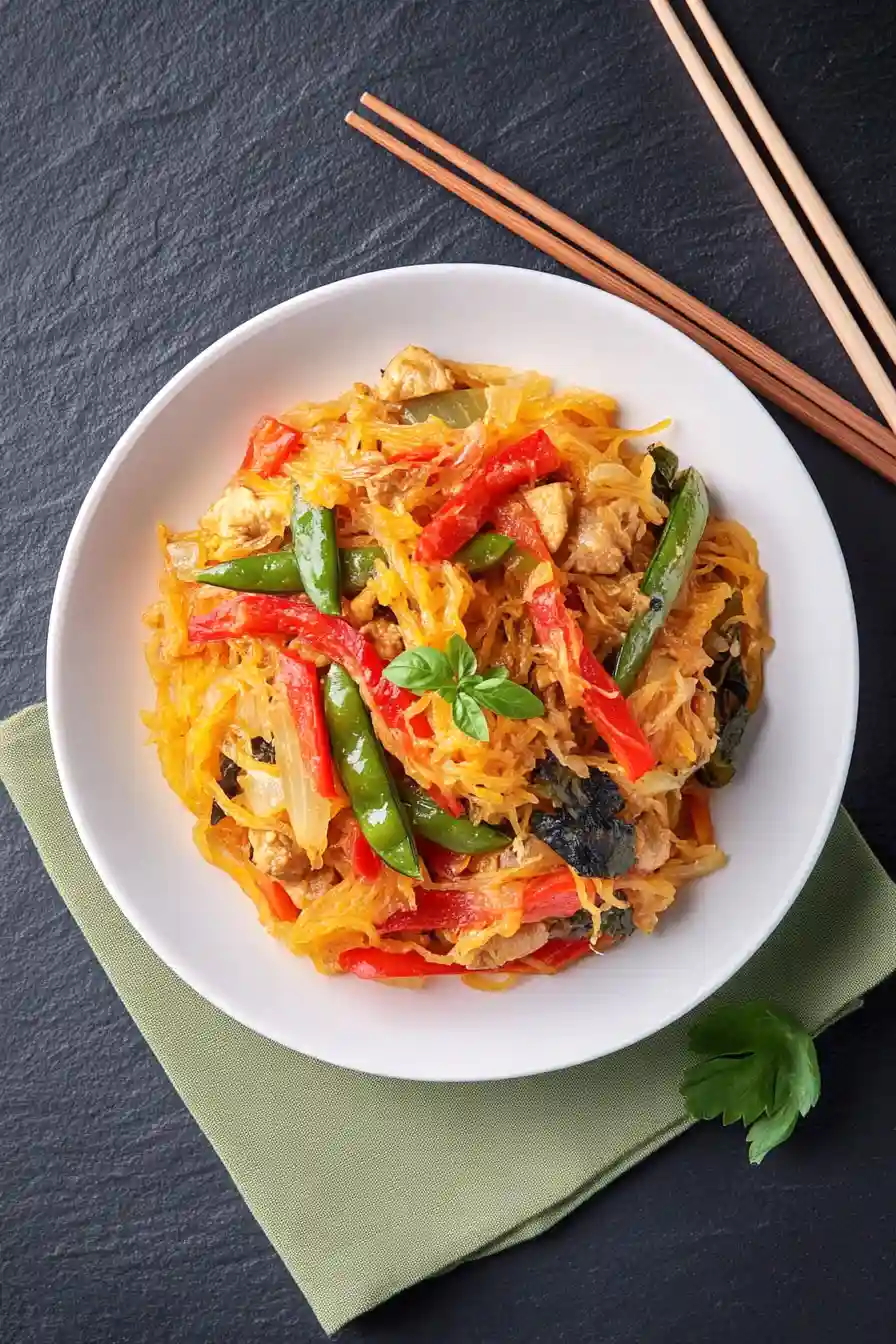
What to Serve With Spaghetti Squash Lo Mein?
This veggie-packed dish is already pretty filling on its own, but you can round out your meal with some tasty Asian-inspired sides. Try serving it with some crispy spring rolls or dumplings for that takeout-at-home feeling. If you want to add extra protein, some teriyaki chicken or honey garlic shrimp would work great alongside this low-carb noodle alternative. For a simple addition, whip up some steamed edamame with a sprinkle of sea salt – it’s an easy side that adds a fun hands-on element to your meal.
Storage Instructions
Keep Fresh: This veggie-packed lo mein stays good in an airtight container in the fridge for up to 4 days. The spaghetti squash might release a bit of liquid as it sits, but don’t worry – that’s totally normal! Just give it a quick stir before serving.
Meal Prep: You can prep the components ahead of time to make dinner assembly super quick. Cook the spaghetti squash and slice all your veggies up to 2 days before. Store them separately in the fridge, then just toss everything together in your wok when you’re ready to cook!
Reheat: To warm up leftovers, pop them in the microwave for 1-2 minutes, stirring halfway through. For better texture, reheat in a skillet over medium heat for about 3-4 minutes – this helps maintain the veggies’ crunch and prevents the squash from getting too soft.
| Preparation Time | 10-15 minutes |
| Cooking Time | 15-60 minutes |
| Total Time | 25-75 minutes |
| Level of Difficulty | Medium |
Estimated Nutrition
Estimated nutrition for the whole recipe (without optional ingredients):
- Calories: 300-350
- Protein: 10-15 g
- Fat: 10-15 g
- Carbohydrates: 50-60 g
Ingredients
For the spaghetti squash:
- 1 spaghetti squash (2.5 to 3 lbs)
For the lo mein sauce:
- 2 tbsp low-sodium tamari
- 1.5 tsp honey
- 2 tbsp oyster sauce (I use Lee Kum Kee brand for authentic flavor)
- 1 tbsp shao xing rice wine
- 1 tbsp sriracha sauce
For the stir-fry:
- 2 tsp fresh ginger (finely grated)
- 1 large garlic clove (freshly minced for best flavor)
- 1 large bell pepper (thinly sliced)
- 6 green onions (sliced thinly, white and green parts separated)
- 1 large carrot (julienned into thin strips)
- 1 tbsp peanut oil (or any high smoke point oil like canola)
- 1 cup snow peas
Step 1: Cook the Squash
Begin by placing the squash cut-side down in a microwave-safe dish.
Add 2 tablespoons of water to the dish and microwave, uncovered, on high power until the squash flesh is tender, approximately 10 minutes.
Alternatively, for an oven method, preheat your oven to 400 degrees F.
Place the squash halves cut-side down on a rimmed baking sheet and bake until tender, about 40 to 50 minutes.
Once tender, let the squash cool until it is safe to handle, then scrape out the flesh into a medium bowl.
Step 2: Prepare the Sauce
While the squash is cooking, prepare your sauce by combining soy sauce, oyster sauce, rice wine (or sherry), Sriracha (if using), and honey (or sugar) in a small bowl.
Stir the mixture until the ingredients are well combined and set aside.
Step 3: Stir-Fry the Aromatics
Heat oil in a wok or large skillet over medium-high heat.
Once the oil is shimmering, add scallions, garlic, and ginger.
Stir-fry these aromatics for about 15 seconds until they release their fragrance and become slightly golden.
Step 4: Cook the Vegetables
Following the aromatics, add the carrot, bell pepper, and snow peas to the pan.
Stir frequently as the vegetables cook, until they become tender but still crisp, about 3 to 5 minutes.
Keep the vegetables moving to ensure even cooking and prevent burning.
Step 5: Combine Squash and Sauce
Once the vegetables are ready, add the cooked squash and the prepared sauce to the pan.
Toss everything together to coat the vegetables and squash evenly with the sauce.
Continue cooking and stirring until everything is heated through, about 1 more minute.
Adjust seasoning if necessary, then serve hot.