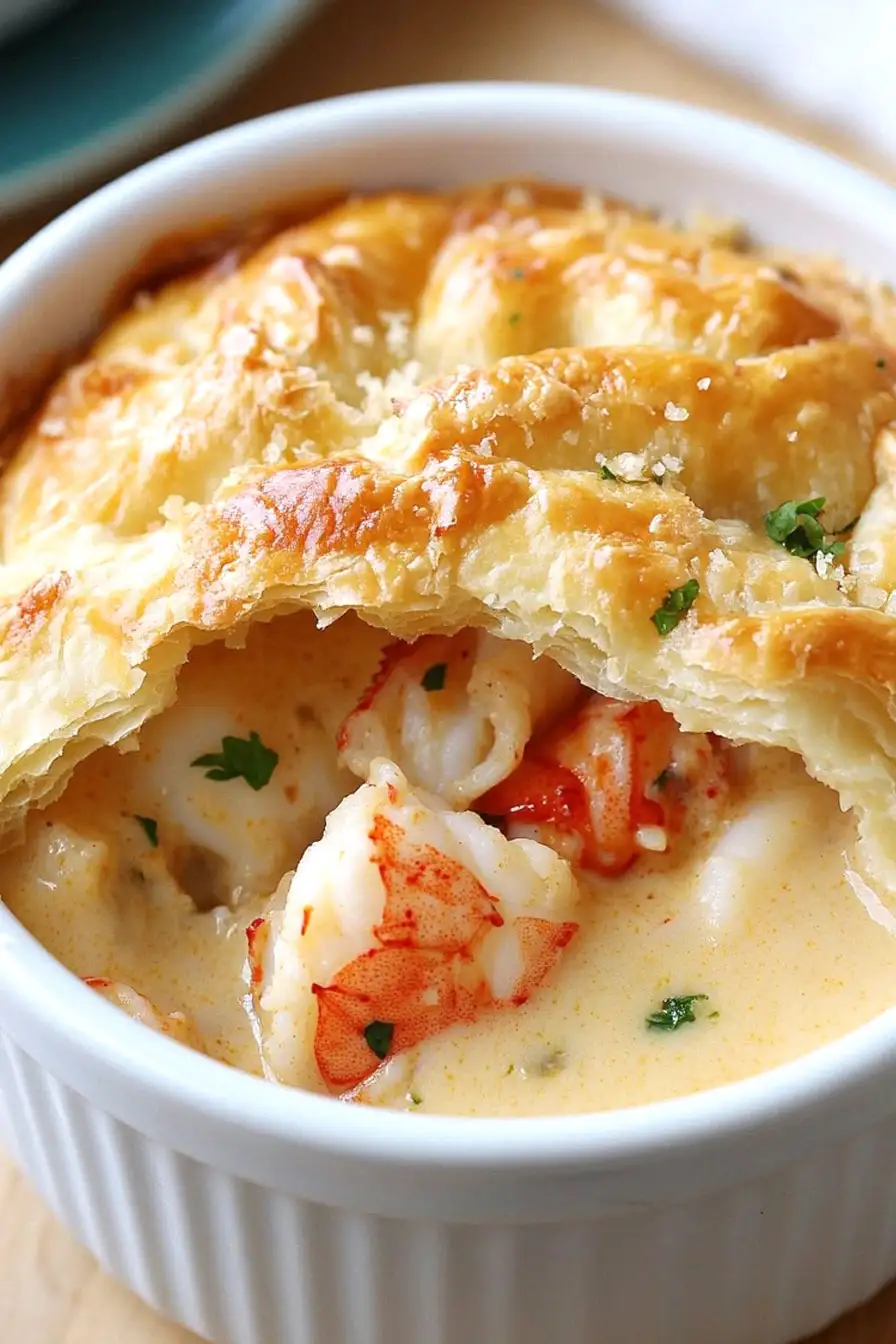
Here’s my take on a classic lobster bisque, wrapped in a golden puff pastry crust that makes it even more special. The rich, creamy soup is made with fresh lobster, aromatic vegetables, and a splash of sherry, all tucked under a warm, flaky blanket of pastry.
This fancy-looking dish has become my go-to recipe when I want to impress dinner guests. I learned pretty quickly to make extra because everyone always asks for seconds. And between you and me, the leftovers might taste even better the next day!

Why You’ll Love This Lobster Bisque en Croute
- Restaurant-quality dish – This elegant combination of creamy lobster bisque topped with golden puff pastry is the kind of dish you’d expect at a fine dining restaurant, but you can make it right in your kitchen.
- Rich, layered flavors – The combination of lobster, aromatic vegetables, and brandy creates a deep, complex flavor profile that’s made even better by the slow cooking process.
- Make-ahead friendly – You can prepare the bisque base ahead of time and just add the puff pastry top when you’re ready to serve, making it perfect for special occasions.
- Impressive presentation – The golden-brown puff pastry topping creates a show-stopping presentation that will make your guests feel extra special, even though it’s surprisingly straightforward to prepare.
What Kind of Lobster Should I Use?
For lobster bisque, cold-water lobsters like Maine or Canadian lobsters are your best bet since they have sweeter, more tender meat than their warm-water cousins. You’ll need both the meat and the shells for this recipe – the shells are crucial for developing that deep, rich seafood flavor in your bisque. If you can’t find whole fresh lobsters, many fish markets sell just the shells at a lower price, and you can buy separate lobster tails for the meat. When selecting your lobster, look for ones that are lively and have a hard shell (not recently molted), typically weighing between 1-1.5 pounds for the best flavor and texture.

Options for Substitutions
While some ingredients in this fancy soup are essential, there are several substitutions you can make if needed:
- Lobster and shells: This is the heart of the bisque, but if lobster isn’t available or is too pricey, you can use shrimp shells and meat instead. Your broth can be made with shrimp or seafood stock too, though the flavor will be different.
- Mirepoix and aromatics: If you’re missing leeks, just use extra onions. No fennel? Try celery with a pinch of fennel seeds. The key is keeping the aromatic base flavorful.
- Brandy: Cognac works perfectly here, or you can use dry sherry. If you prefer not to use alcohol, add extra stock with a splash of apple cider vinegar.
- Arborio rice: Any short-grain white rice will work as a thickener. You can also use regular white rice or even instant potato flakes in a pinch.
- Heavy cream: Half-and-half can work, but you’ll need to reduce the liquid a bit more. Don’t substitute milk – it’s too thin for this recipe.
- Tarragon: Fresh dill or chervil make good substitutes if you can’t find tarragon. Each will give a slightly different but still tasty flavor.
- Puff pastry: Store-bought is specified and recommended, but if you’re in a bind, you can use phyllo dough (use several layers) or even a pie crust.
Watch Out for These Mistakes While Cooking
The biggest challenge when making lobster bisque en croute is rushing the base soup – a proper bisque needs at least 45-60 minutes of gentle simmering to extract all the rich flavors from the lobster shells and vegetables. Another common mistake is overcooking the rice, which should remain slightly firm when added to help thicken the soup naturally – mushy rice will make your bisque grainy and affect its smooth texture. When working with the puff pastry top, make sure your bisque has cooled completely before covering the bowls, as hot soup will make the pastry soggy and prevent it from rising properly. For the best results, brush the pastry with egg wash twice (letting it dry between applications) to achieve that beautiful golden brown color, and don’t forget to cut a small vent hole in the top to allow steam to escape during baking.
What to Serve With Lobster Bisque en Croute?
Since lobster bisque en croute is already quite rich and elegant with its puff pastry top, you’ll want to keep the sides simple and light. A fresh green salad with champagne vinaigrette or lemon dressing makes a perfect partner – the bright, acidic notes help balance the creamy bisque. For extra veggies, try some simply roasted asparagus or haricots verts on the side. If you’re serving this as a starter, keep portions small since it’s quite filling, but if it’s your main course, you might want to add some crusty bread on the side (even though there’s puff pastry, trust me, you’ll want extra bread for soaking up every last drop!).
Storage Instructions
Keep Fresh: Once baked, your lobster bisque en croute is best enjoyed right away while the pastry is crispy and the bisque is hot. If you have leftovers, keep them in the fridge in an airtight container for up to 2 days. Just know that the pastry won’t stay as crispy after refrigeration.
Make Ahead: You can make the bisque part up to 2 days ahead and keep it in the fridge. When you’re ready to serve, just heat up the bisque, pour it into your serving dishes, top with the puff pastry, and bake. This makes entertaining so much easier!
Warm Up: To enjoy leftover bisque en croute, heat it in the oven at 350°F for about 10-15 minutes. The microwave works too, but the pastry won’t be as nice. If you stored just the bisque, warm it gently on the stovetop, stirring occasionally to prevent the cream from separating.
| Preparation Time | 30-45 minutes |
| Cooking Time | 60-90 minutes |
| Total Time | 90-135 minutes |
| Level of Difficulty | Medium |
Estimated Nutrition
Estimated nutrition for the whole recipe (without optional ingredients):
- Calories: 3000-3300
- Protein: 85-100 g
- Fat: 270-300 g
- Carbohydrates: 150-180 g
Ingredients
For the bisque base:
- pinch cayenne pepper
- salt, as needed
- 1.5 qt lobster broth
- 10 oz sliced leeks
- 2 oz Arborio rice (adds creaminess to the bisque)
- ground black pepper, to taste
- 4 smashed garlic cloves
- 6 fl oz white wine
- 2 tbsp lemon juice
- 1 qt water
- 2 oz light roux
- 12 fl oz heavy cream (gives better texture and moisture)
- 1.5 fl oz brandy
- 30 oz chopped mirepoix
- 3 roasted lobster shells
- 9 oz olive oil
- 18 oz fennel, cut small
- 2 oz tomato concentrate (I use Cento brand for rich flavor)
For the lobster and garnish:
- 2 whisked eggs
- 1 oz fresh tarragon leaves (finely chopped for aromatic garnish)
- 1 cooked lobster
- 1 oz melted butter
- 1 package puff pastry (thaw in the refrigerator overnight)
Step 1: Prepare Lobster and Mirepoix
Begin by steaming the lobsters for approximately eight minutes until they are just cooked through.
Immediately chill them and carefully separate the meat from the shells, reserving both meat and shells separately.
Next, sweat some chopped onions in a pan over medium heat.
Add the mirepoix (a mixture of finely diced carrots, celery, and onions), leeks, fennel, and garlic, continuing to sweat until the vegetables are fragrant.
Step 2: Cook with Tomato Paste and Flambé with Brandy
Stir in tomato paste to the vegetable mixture, ensuring it is well mixed with the vegetables and aroma has developed.
Incorporate the lobster shells into the mix.
Carefully add brandy to the pan and flambé by igniting with a lighter.
Allow the flames to subside naturally, then pour in white wine and let the liquid reduce by half.
Step 3: Create the Soup Base and Cook Rice
Add lobster stock and water to the pan, bringing the mixture to a boil, then reduce the heat to a gentle simmer.
Stir in the arborio rice and cook until the rice becomes soft, ensuring it blends well into the broth and flavors mingle beautifully.
Step 4: Blend and Refine the Bisque
Once the rice is fully cooked, blend the entire soup mixture until smooth.
Strain the blended soup through a fine chinois to achieve a silky texture.
Pour the strained soup back into a clean pot, adding heavy cream.
Continue to cook, reducing the soup until you reach your desired consistency.
Adjust the flavors by adding a pinch of cayenne pepper, a squeeze of lemon juice, and salt to taste.
Step 5: Prepare Lobster Garnish
When you are ready to serve, sweat the reserved leeks and bite-sized pieces of lobster meat in a sauté pan over medium heat.
Keep the knuckles and claws whole for a dramatic presentation.
Once the leeks and lobster are done, remove from heat and let cool slightly.
Step 6: Assemble and Serve
To serve, ladle the prepared bisque into serving bowls.
Add the sautéed leeks and lobster pieces to each bowl for garnish.
Ensure each bowl gets a whole knuckle or claw as a centerpiece.
Enjoy this luxurious and creamy lobster bisque with its rich aromas and flavors.