If you ask me, one pot beef stew is a lifesaver on busy weeknights.
This classic comfort meal brings together tender chunks of beef, hearty vegetables, and rich broth – all cooking together in a single pot. The beef slowly simmers with potatoes, carrots, and onions until everything is perfectly tender.
It’s made even better with a few simple seasonings and just enough time for the flavors to meld together. Fresh herbs and a splash of Worcestershire sauce give it that home-cooked taste that reminds me of Sunday dinners growing up.
It’s a satisfying meal that warms you from the inside out, perfect for those chilly evenings when you need something cozy and filling.

Why You’ll Love This Beef Stew
- One-pot convenience – Everything cooks in a single pot, which means less cleanup and dishes to wash after dinner – perfect for busy weeknights.
- Rich, hearty flavor – The combination of red wine, beef broth, and fresh vegetables creates a deep, satisfying taste that gets better as it simmers.
- No fancy ingredients – You’ll find most of these ingredients in your pantry or at any grocery store – no special shopping trips needed.
- Make-ahead friendly – This stew actually tastes better the next day, making it perfect for meal prep or when you want to cook ahead for busy days.
- Complete meal – With protein, vegetables, and potatoes all in one pot, you don’t need to worry about making side dishes.
What Kind of Beef Should I Use?
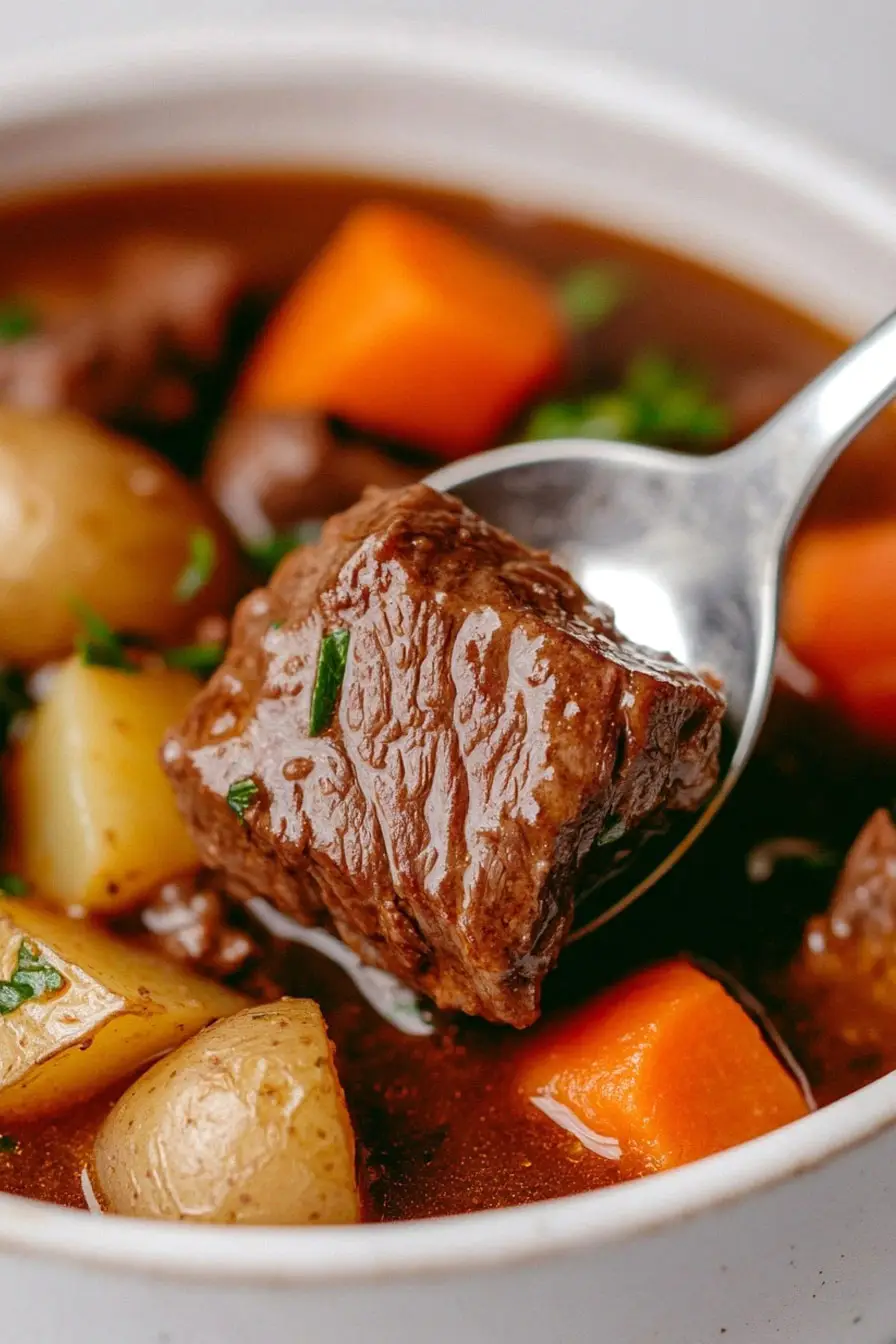
For beef stew, you’ll want to look for cuts specifically labeled as “stew meat” or choose chuck roast and cut it yourself into chunks. Chuck comes from the shoulder area of the cow and has the perfect amount of marbling (fat running through the meat) that makes it ideal for slow cooking. While you might be tempted to go for a leaner, more expensive cut, those actually won’t work as well – the fat and connective tissue in chuck break down during cooking to create that tender, melt-in-your-mouth texture we all love in a good stew. If you’re cutting the meat yourself, aim for chunks about 1-inch in size, and try to keep them relatively uniform so they cook evenly.
Options for Substitutions
This classic stew recipe is pretty forgiving when it comes to swaps. Here’s what you can change up:
- Stew beef: While beef chuck is ideal for this stew, you can use bottom round, brisket, or even lamb shoulder. Just make sure it’s a tough cut that benefits from long cooking.
- Red wine: Not into cooking with wine? Simply replace it with extra beef broth and add 1 tablespoon of balsamic vinegar to get that same rich flavor.
- Arrowroot/cornstarch: These thickeners are interchangeable – you can use regular flour (add a bit more), potato starch, or even tapioca starch. If using regular flour, you’ll want to coat the meat with it at the beginning rather than adding it later.
- White potatoes: Any potato variety works here – red potatoes, Yukon golds, or even sweet potatoes for a different twist. Just keep the chunks similar in size.
- Beef broth: In a pinch, you can use chicken broth or vegetable broth plus 1 teaspoon of soy sauce to add depth. Just note the flavor will be slightly different.
- Fresh/dried thyme: Out of thyme? Rosemary or oregano make good alternatives. If swapping dried for fresh herbs, remember to use about 1/3 of the amount as dried herbs are more concentrated.
Watch Out for These Mistakes While Cooking
The biggest mistake when making beef stew is rushing the browning process – resist the urge to overcrowd the pot, as this will steam rather than sear the meat, resulting in gray, tough beef instead of tender, flavorful pieces. Another common error is adding all vegetables at the beginning, which can turn them into mush – instead, add hardier vegetables like carrots and potatoes about halfway through the cooking time, and celery during the last 30 minutes. The third crucial mistake is lifting the lid too often while simmering, as this releases essential heat and moisture, extending cooking time and affecting the consistency of your stew. For the most tender results, make sure to cut your beef against the grain and keep the simmer gentle – a hard boil will toughen the meat. Finally, don’t skip the step of coating your beef in flour before browning, as this helps create a rich, thick gravy that clings perfectly to every bite.
What to Serve With Beef Stew?
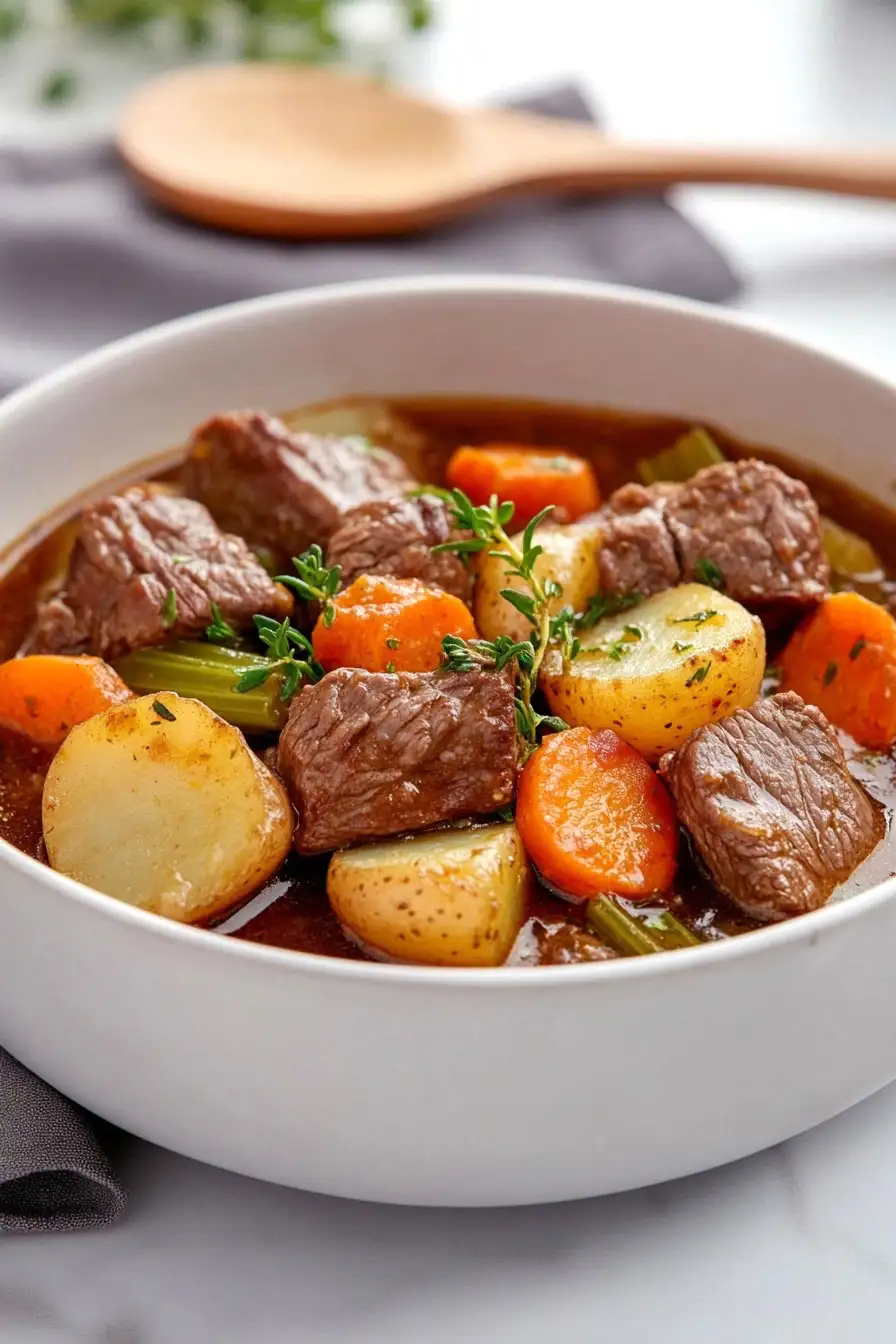
Since beef stew is already packed with meat, potatoes, and vegetables, you’ll want simple sides that can help soak up all that delicious gravy. A warm, crusty loaf of French bread or homemade dinner rolls are perfect for wiping your bowl clean. If you’re craving something green, a simple mixed green salad with a light vinaigrette dressing adds a fresh contrast to the rich stew. For extra comfort on cold nights, try serving the stew over a bed of buttered egg noodles or with a side of creamy mashed potatoes – yes, I know there are already potatoes in the stew, but who’s counting?
Storage Instructions
Keep Fresh: This hearty beef stew tastes even better the next day! Pop it in an airtight container and keep it in the fridge for up to 4 days. The flavors will continue to develop, making each serving more delicious than the last.
Freeze: Got leftovers? This stew is perfect for freezing! Let it cool completely, then transfer to freezer-safe containers or bags, leaving a bit of space for expansion. It’ll keep well for up to 3 months in the freezer. I like to freeze it in individual portions for easy weeknight dinners.
Reheat: When you’re ready to enjoy your stew again, thaw it overnight in the fridge if frozen. Then warm it up slowly on the stovetop over medium-low heat, stirring occasionally. You can add a splash of beef broth if it seems too thick. For smaller portions, the microwave works well too – just heat in 1-minute intervals, stirring between each.
| Preparation Time | 15-20 minutes |
| Cooking Time | 80-90 minutes |
| Total Time | 95-110 minutes |
| Level of Difficulty | Medium |
Estimated Nutrition
Estimated nutrition for the whole recipe (without optional ingredients):
- Calories: 2200-2400
- Protein: 150-175 g
- Fat: 90-100 g
- Carbohydrates: 200-220 g
Ingredients
For the beef:
- ½ tsp black pepper
- 1½ tsp coarse salt
- 2 lb stew beef (cut into 1-inch pieces)
- 2 tbsp olive oil (I use Bertolli extra virgin)
For the stew base:
- 4 cups beef broth (I use Pacific Foods organic low sodium)
- 2 tbsp arrowroot powder
- 4 garlic cloves (freshly chopped for best flavor)
- ½ tsp dried thyme
- 1 tbsp tomato puree
- 2 tbsp red wine vinegar (adds a nice tang)
- 1 large yellow onion (chunked into 1/2-inch pieces)
- 1 cup red wine (a robust Cabernet Sauvignon works well)
- 2 bay leaves
For the vegetables:
- 4 medium carrots (peeled and sliced diagonally about 1/2-inch thick)
- 3 celery stalks (diced into 1/2-inch pieces)
- 1 lb small white potatoes (halved or quartered depending on size)
Optional garnish:
- fresh thyme
Step 1: Season and Sear the Beef
Begin by patting the beef dry with paper towels to remove any excess moisture.
Season the beef generously with salt and pepper.
In a large stockpot or Dutch oven, heat some oil over medium-high heat.
Work in batches to avoid overcrowding the pot; place the beef in the pot and sear on all sides until it achieves a golden brown color, about 2 to 3 minutes per side.
Once seared, remove the beef from the pot and set it aside on a plate.
Step 2: Sauté the Onion and Garlic
With the pot still on medium-high heat, add the onion and garlic.
Pour in the vinegar, which will help deglaze the pot by loosening the browned bits stuck to the bottom.
Cook the mixture for about 3 to 4 minutes, until the onion softens.
Add the tomato paste and stir, cooking for about a minute more to thicken the base.
Step 3: Return Beef and Add Flour
Return the seared beef to the pot with the onion mixture.
Sprinkle flour over the top and stir until the flour is completely dissolved into the mix, ensuring there are no dry clumps.
Step 4: Add Liquids and Aromatics
Pour in the wine and broth, then add the thyme and bay leaf to the pot.
Use a large spoon or spatula to stir everything together, scraping up any remaining fond from the bottom of the pot.
Bring the mixture to a boil, then reduce the heat to low.
Partially cover the pot and allow it to simmer for 1 hour, letting the flavors meld and the beef become tender.
Step 5: Add the Vegetables
After the beef has simmered for an hour, add in the potatoes, carrots, and celery.
Continue cooking for an additional 20 to 30 minutes, or until the vegetables are fork-tender and infused with the broth’s flavors.
Step 6: Final Touches and Serve
Before serving, remove the bay leaves from the pot as they are not meant to be eaten.
If desired, garnish the stew with fresh thyme for an aromatic finish.
Serve hot and enjoy your hearty, flavorful beef stew.