Coming up with satisfying weeknight meals that don’t require hours in the kitchen can feel like an impossible task. Between rushing home from work, helping with homework, and trying to squeeze in some family time, the last thing anyone wants is to spend ages cooking dinner from scratch.
That’s why this pork belly yaki udon has become my go-to recipe for busy evenings – it comes together in under 30 minutes, uses ingredients you can easily keep on hand, and delivers the kind of comfort food satisfaction that makes everyone at the table happy.
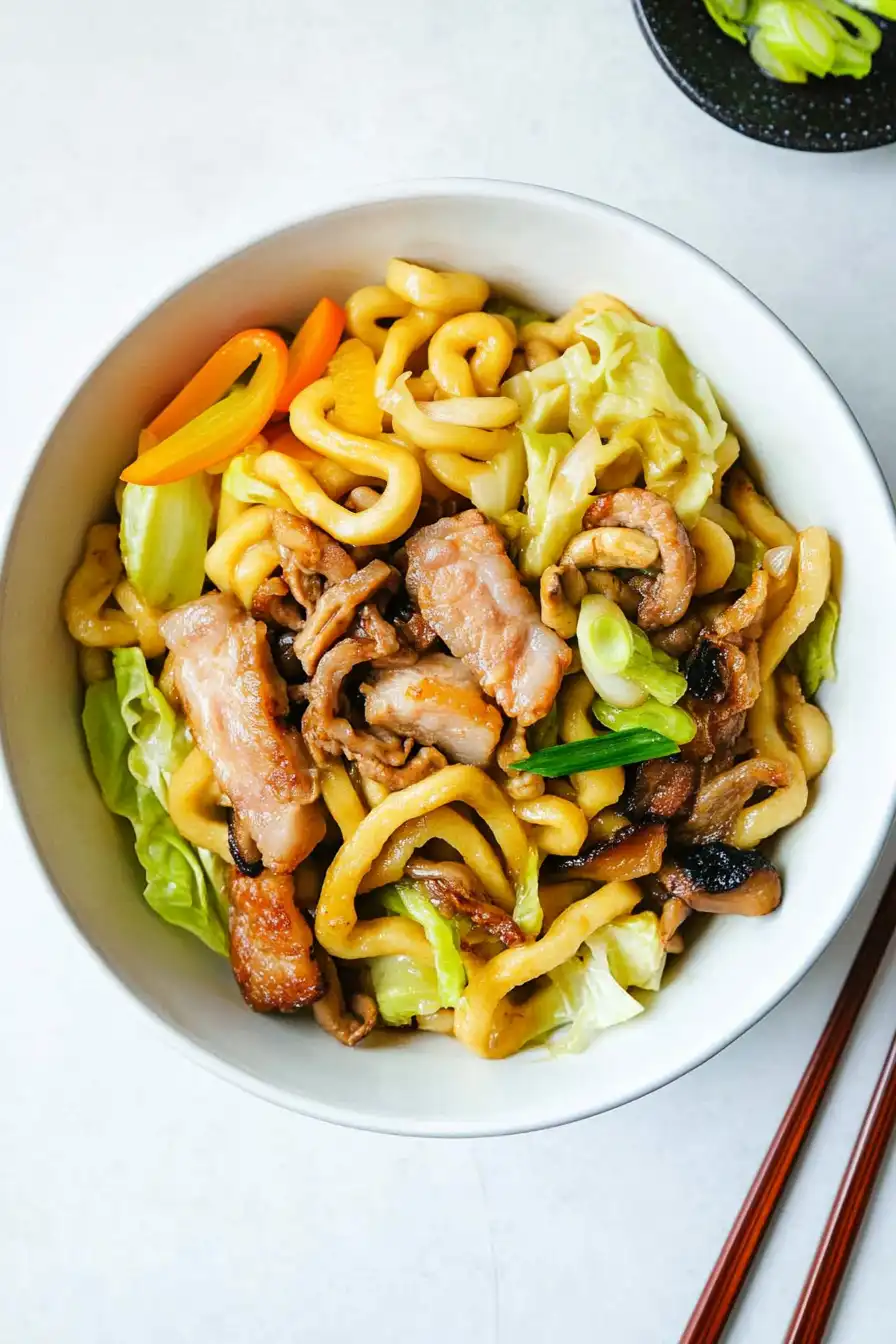
Why You’ll Love This Yaki Udon
- Quick preparation – This satisfying noodle dish comes together in just 35 minutes, making it perfect for busy weeknight dinners when you’re craving something special.
- Restaurant-quality at home – With its savory combination of chewy udon noodles and crispy pork belly, this dish brings the authentic flavors of a Japanese noodle shop right to your kitchen.
- Customizable – You can easily adjust the vegetables based on what you have on hand, and there’s even options to make it vegetarian by swapping out a few ingredients.
- One-pan meal – Everything cooks in a single pan, which means less cleanup and more time to enjoy your delicious homemade meal.
- Perfect balance of flavors – The combination of salty, sweet, and umami flavors from the soy sauce, mirin, and bonito flakes creates a perfectly balanced dish that’s both satisfying and crave-worthy.
What Kind of Pork Belly Should I Use?
For yaki udon, you’ll want to look for thinly sliced pork belly, which you can often find at Asian grocery stores labeled as “sliced pork belly” or “pork belly for BBQ.” If you can’t find pre-sliced pork belly, you can buy a whole piece and partially freeze it for about 30 minutes to make it easier to slice thinly at home. Fresh pork belly works better than cured or smoked varieties since it won’t overpower the other flavors in the dish. When shopping, look for pieces with a good meat-to-fat ratio – you want some fat for flavor, but not so much that it makes the dish greasy.
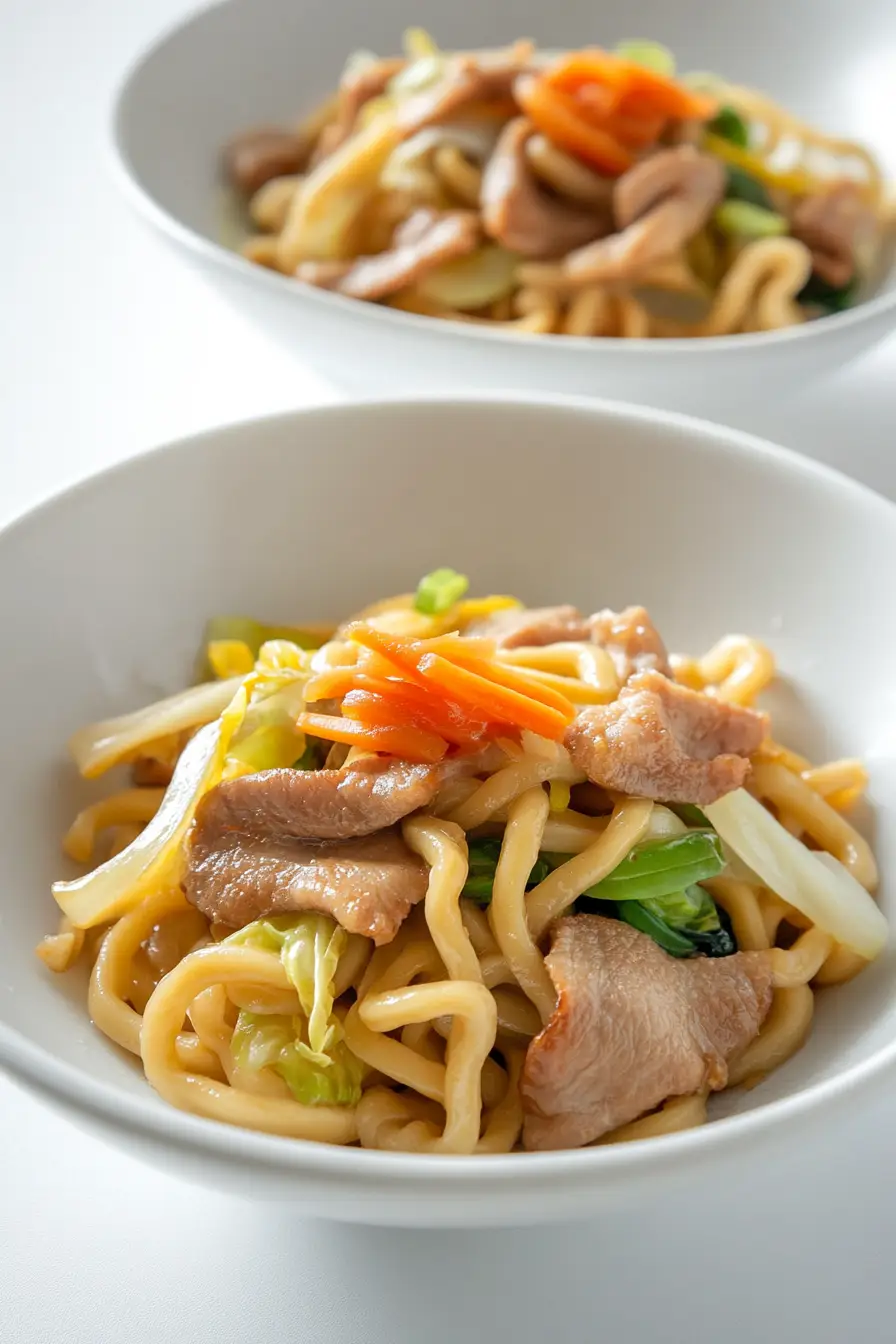
Options for Substitutions
This yaki udon recipe can be adapted with several substitutions if you can’t find all the Japanese ingredients:
- Udon noodles: While fresh udon noodles are best, you can use dried udon or even thick wheat noodles like lo mein in a pinch. Avoid using thin noodles like ramen, as they won’t give you the right texture.
- Pork belly: You can swap pork belly with regular bacon (cut into chunks), pork loin, or even chicken thigh meat. For a vegetarian version, try using firm tofu or mushrooms.
- Shiitake mushrooms: Other mushrooms like button, cremini, or oyster mushrooms work well too. Each will bring its own flavor to the dish.
- Mentsuyu: If you can’t find mentsuyu, mix 2 tablespoons soy sauce with 1 tablespoon mirin and a splash of water as a simple replacement.
- Sake: Dry white wine or Chinese rice wine (Shaoxing) can work instead. If you prefer non-alcoholic, use chicken or vegetable broth.
- Pickled red ginger: While it adds a nice pop of color and flavor, you can skip it or use regular pickled ginger if you can’t find the red variety.
- Bonito flakes: These add a smoky, umami flavor but can be left out for a vegetarian version. A splash of soy sauce can help make up for the lost savory taste.
Watch Out for These Mistakes While Cooking
The biggest challenge when making yaki udon is overcooking the noodles – they should be cooked just until tender but still chewy, as they’ll continue cooking when stir-fried with the other ingredients. A common mistake is not properly preparing your pork belly – for the best results, slice it thinly against the grain and let it come to room temperature before cooking, which helps it brown more evenly. When stir-frying, avoid overcrowding the pan as this will steam rather than sear your ingredients – cook in batches if needed, and make sure your pan is hot enough that you hear a sizzle when adding ingredients. For the perfect sauce consistency, add it gradually and let it reduce slightly before tossing with the noodles, and remember to taste and adjust the seasoning as you go since different brands of mentsuyu can vary in saltiness.
What to Serve With Yaki Udon?
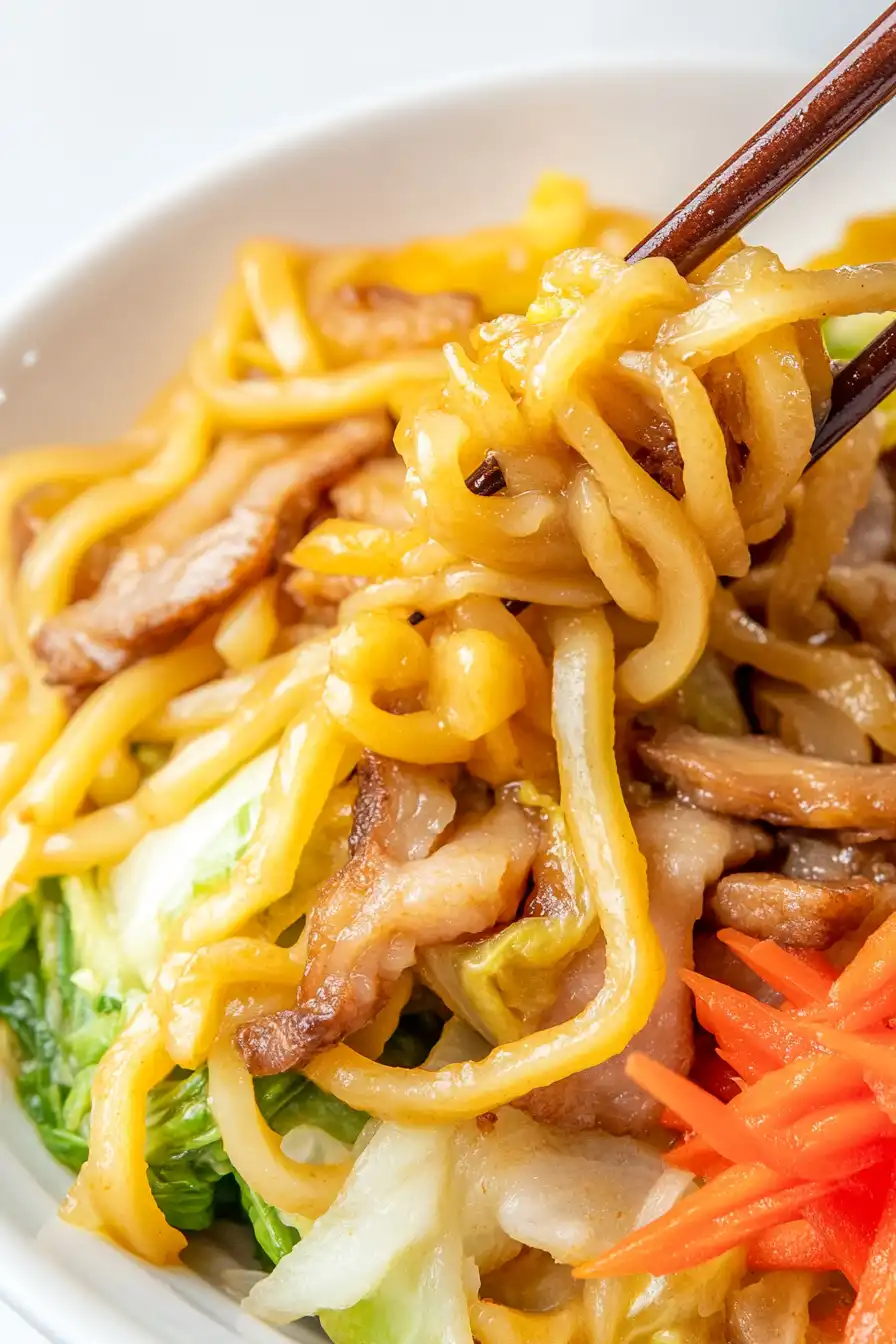
This savory stir-fried udon dish pairs perfectly with simple Japanese side dishes that balance out the rich, umami flavors of the noodles. A small bowl of miso soup makes a great starter, while a side of edamame adds a fresh element to the meal. You can also serve it with Japanese pickles (tsukemono) or a simple cucumber salad dressed with rice vinegar and sesame oil for a nice contrast to the hearty noodles. If you want to keep things really simple, just add a few pieces of tempura vegetables on the side – the crunch works really well with the chewy udon noodles.
Storage Instructions
Keep Fresh: Place your leftover yaki udon in an airtight container and pop it in the fridge – it’ll stay good for up to 3 days. The noodles might absorb more sauce over time, but that just means they’ll be extra flavorful when you have them again!
Pack Away: If you’re meal prepping, try to store the bonito flakes and pickled ginger separately from the main dish. This way, they’ll maintain their texture and you can add them fresh when you’re ready to eat. The vegetables and noodles can go together in the same container.
Warm Up: When you’re ready to enjoy your leftovers, heat them in a pan over medium heat for about 3-4 minutes, adding a splash of water if needed to loosen up the noodles. Give everything a good stir while heating to make sure it warms evenly. A microwave works too – just heat in 30-second intervals, stirring between each one.
| Preparation Time | 15-25 minutes |
| Cooking Time | 20-30 minutes |
| Total Time | 35-55 minutes |
| Level of Difficulty | Medium |
Estimated Nutrition
Estimated nutrition for the whole recipe (without optional ingredients):
- Calories: 800-900
- Protein: 35-45 g
- Fat: 40-50 g
- Carbohydrates: 80-90 g
Ingredients
For the stir-fry:
- 2 inches carrot (julienned)
- 2 green onions (sliced on the bias)
- 1/2 onion (thinly sliced)
- 6 oz pork belly slices (cut into 1-inch pieces)
- 2-3 green cabbage leaves (roughly chopped)
- 1/8 tsp black pepper (freshly ground is best)
- 2 portions udon noodles (pre-cooked)
- 1 tbsp cooking oil (grapeseed or vegetable oil)
- 2 shiitake mushrooms (stems removed, sliced)
- 1/8 tsp kosher salt
For the sauce (option A):
- 1/2 tsp dashi powder (instant dashi powder works well)
- 1 tsp mirin (sweet Japanese rice wine)
- 1 tbsp sake (cooking sake is fine)
- 2 tbsp soy sauce (Kikkoman brand for authentic flavor)
For the sauce (option B):
- 3 tbsp mentsuyu (concentrated noodle soup base)
- 1 tsp soy sauce
For the garnish:
- 2 tbsp pickled red ginger (beni shoga)
- 3 tbsp dried bonito flakes (katsuobushi, for umami)
Step 1: Prepare Ingredients and Boil Water
Begin by gathering all the necessary ingredients.
Next, bring a large pot of water to a boil on medium-high heat for boiling the udon noodles later.
While waiting for the water to boil, prepare the other ingredients: slice ½ onion thinly, remove the tough core from 2-3 green cabbage leaves and cut into 1-inch squares, peel and julienne a 2-inch section of carrot into thin 2-inch strips, discard the stems of 2 shiitake mushrooms and slice the caps, cut 2 green onions into 2-inch pieces, and cut 6 oz of pork belly into 1-inch pieces.
Step 2: Cook Udon Noodles
Once the water has reached a boil, blanch 2 servings of frozen udon noodles for 30-40 seconds until they start to loosen.
If using dry udon noodles, follow the package instructions for boiling.
After cooking, transfer the noodles to a plate and set them aside.
Step 3: Stir-Fry Pork and Onion
Preheat a large frying pan over medium heat.
Once hot, add 1 tablespoon of neutral oil, ensuring it’s evenly distributed.
Add the pork belly pieces to the pan and season with ⅛ teaspoon of Diamond Crystal kosher salt and ⅛ teaspoon of freshly ground black pepper.
Stir-fry the pork until it is no longer pink.
Add the sliced onions to the pan and stir-fry until they become tender.
Step 4: Cook Vegetables
Incorporate the cabbage, carrot, shiitake mushrooms, and green onions into the pan.
Mix well to ensure all ingredients are coated with oil.
Cover the pan with a lid, reduce the heat to low, and let the ingredients steam for 3 minutes, allowing the vegetables to slightly wilt.
Step 5: Combine Noodles and Season
Add the udon noodles to the pan and use a pair of tongs to toss and combine all ingredients.
Choose your seasoning option: for option A, add ½ tsp dashi powder, 2 Tbsp soy sauce, 1 Tbsp sake, and 1 tsp mirin; for option B, add 3 Tbsp mentsuyu and 1 tsp soy sauce.
Mix thoroughly, then taste and adjust the seasoning with additional ground black pepper and salt if needed.
Step 6: Serve and Garnish
Transfer the Yaki Udon to individual plates.
Optionally, divide 3 Tbsp katsuobushi and sprinkle on top, and divide 2 Tbsp pickled red ginger to garnish on the side of each plate.
Store any leftovers in an airtight container in the refrigerator for 3-4 days or freeze for up to a month.