Let’s talk about prime rib gravy – the secret weapon that makes a good roast even better. I’ve made my share of gravies over the years, but there’s something special about the rich drippings from a prime rib that just can’t be matched. Every time I host Sunday dinner, my family knows to expect a boat of this savory goodness on the table.
Making gravy used to stress me out (those lumps were my nemesis!), but I’ve learned a few tricks along the way that make it so much easier. Now I actually look forward to collecting those precious drippings and turning them into something that makes everyone at the table reach for seconds. Trust me, once you master this gravy, you’ll never want to serve prime rib without it.
And the best part? It’s really not as complicated as you might think. With just a few basic ingredients and some simple steps, you can make restaurant-quality gravy right in your own kitchen.
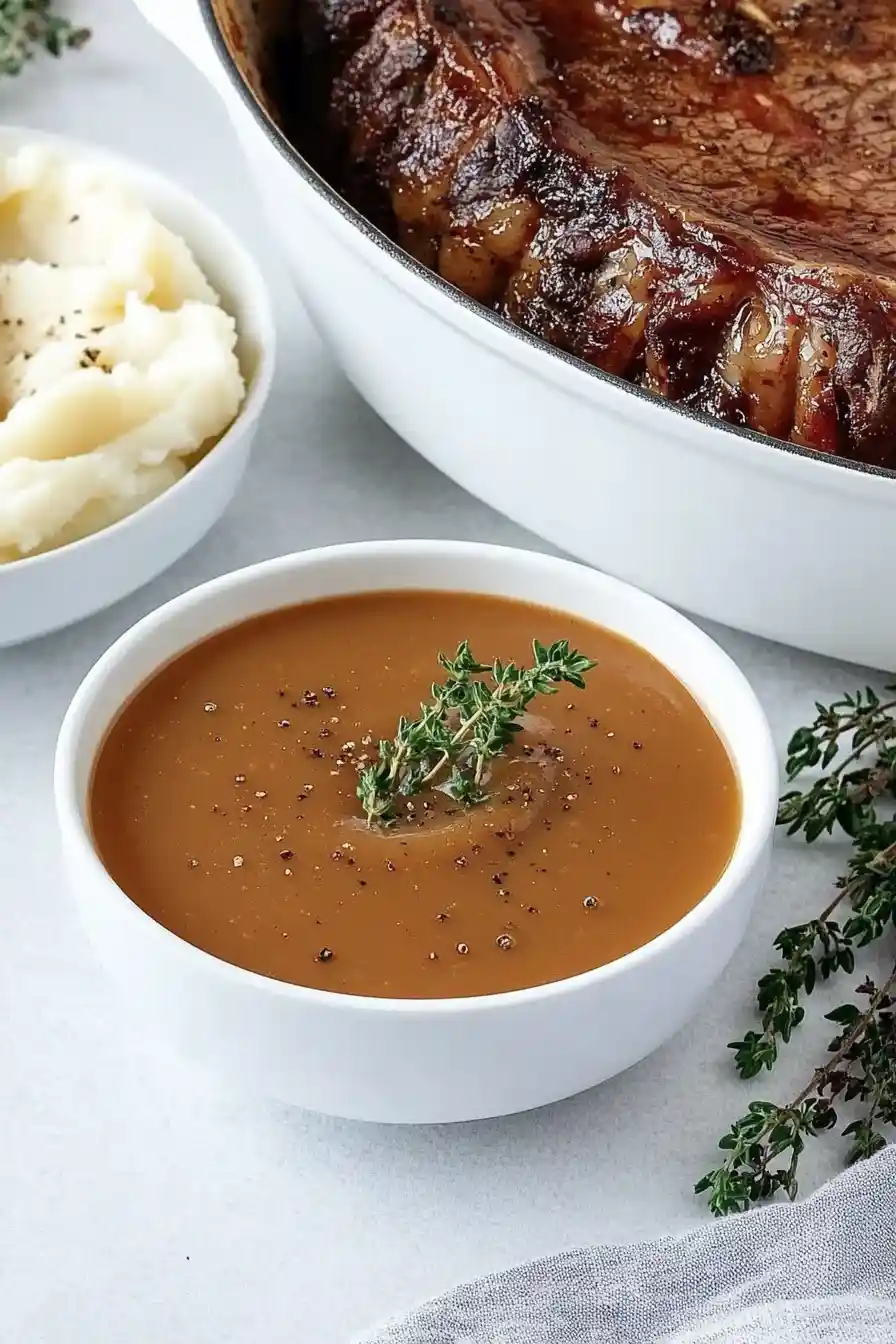
Why You’ll Love This Prime Rib Gravy
- Quick preparation – This gravy comes together in just 20-30 minutes, making it the perfect last-minute addition to your prime rib dinner.
- Rich flavor – Using real prime rib drippings and fresh herbs creates a deep, savory taste that store-bought gravy just can’t match.
- Simple ingredients – With basic pantry staples and a few fresh herbs, you can make restaurant-quality gravy right in your own kitchen.
- No waste cooking – This recipe makes good use of your prime rib drippings, ensuring nothing from your expensive roast goes to waste.
What Kind of Beef Drippings Should I Use?
The best drippings for this gravy come straight from your roasted prime rib – they’re packed with rich, beefy flavor and all those tasty browned bits from the bottom of the pan. If you don’t have enough drippings from your roast (or if you’re making the gravy ahead of time), you can substitute with unsalted butter, though you’ll lose some of that deep, meaty flavor. When collecting your drippings, let them sit for a minute so the fat rises to the top – this makes it easier to measure out exactly what you need. Just be sure to include some of those browned bits from the bottom of the pan, as they’re full of flavor and will make your gravy extra delicious.
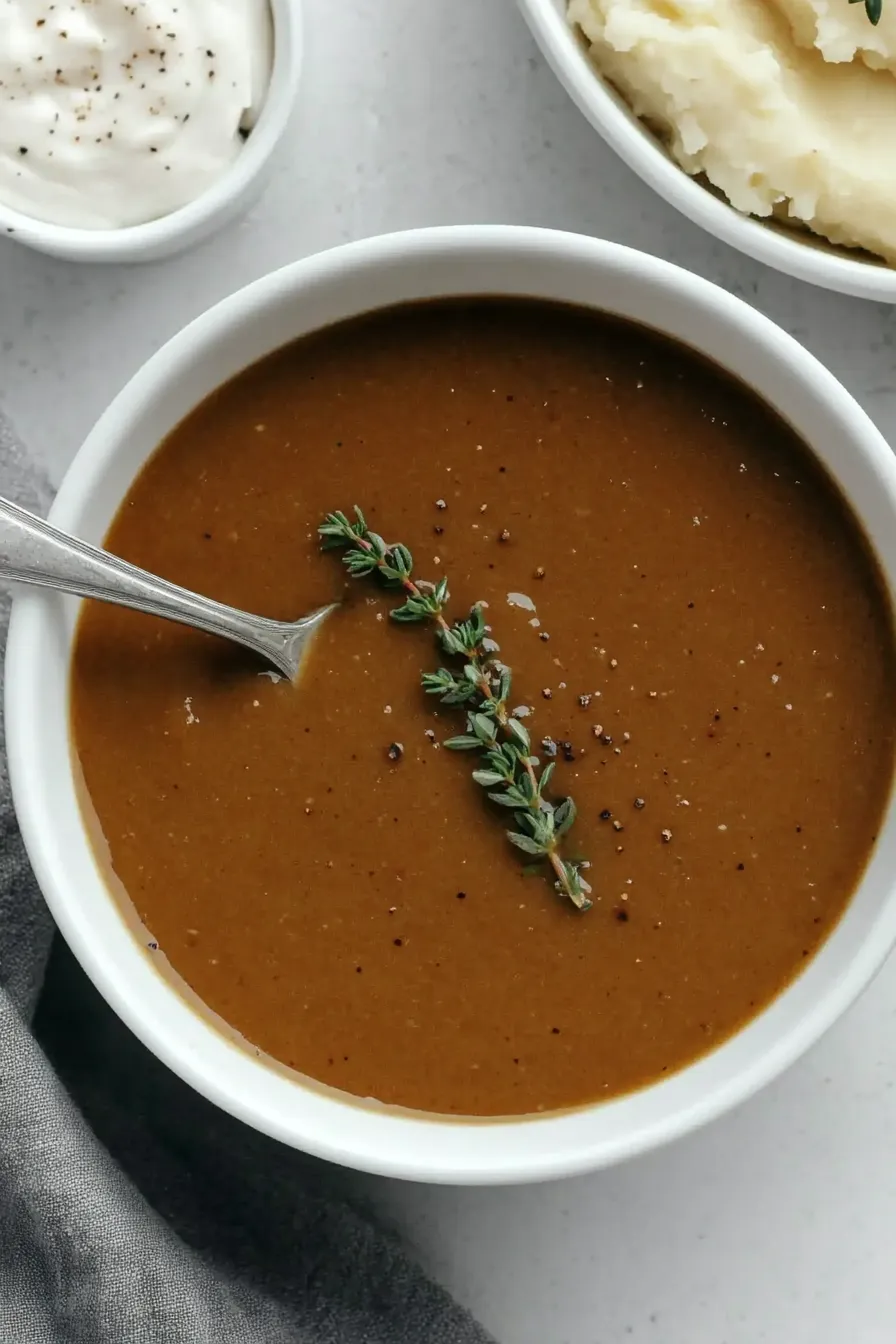
Options for Substitutions
While this gravy recipe is pretty straightforward, here are some helpful substitutions if you need them:
- Prime rib drippings: If you don’t have drippings, unsalted butter works perfectly fine. You could also use pan drippings from other roasted meats like beef roast or even turkey.
- Regular flour: For a gluten-free option, you can use cornstarch (use half the amount) or rice flour (same amount). Just remember that cornstarch needs to be mixed with cold liquid first to prevent lumps.
- Beef broth: You can swap in beef stock or beef bouillon mixed with water. In a pinch, chicken broth works too, but add a dash of Worcestershire sauce to get that deeper, beef-like flavor.
- Dijon mustard: Regular yellow mustard works in a pinch, or you can use whole grain mustard. If you’re not a fan of mustard, you can leave it out completely.
- Fresh herbs: If fresh herbs aren’t available, use dried ones – about 1 teaspoon each of dried rosemary and thyme. Remember, dried herbs are more concentrated than fresh ones.
- Fresh garlic: You can substitute with 1/2 teaspoon of garlic powder or 1 teaspoon of pre-minced garlic from a jar.
Watch Out for These Mistakes While Cooking
The biggest challenge when making prime rib gravy is rushing the roux – cooking the flour and drippings too quickly can leave you with a lumpy, floury-tasting sauce instead of a smooth, rich gravy. Take your time and cook the roux over medium heat for at least 3-4 minutes, whisking constantly until it turns golden brown and smells nutty. Another common mistake is adding cold beef broth all at once, which can create lumps – instead, gradually stream in warm broth while whisking continuously for the smoothest results. To get the most flavor from your herbs and garlic, don’t skip the step of letting them steep in the finished gravy for at least 5-10 minutes before straining them out, and remember to taste and adjust the seasoning at the very end since the flavors will concentrate as the gravy reduces.
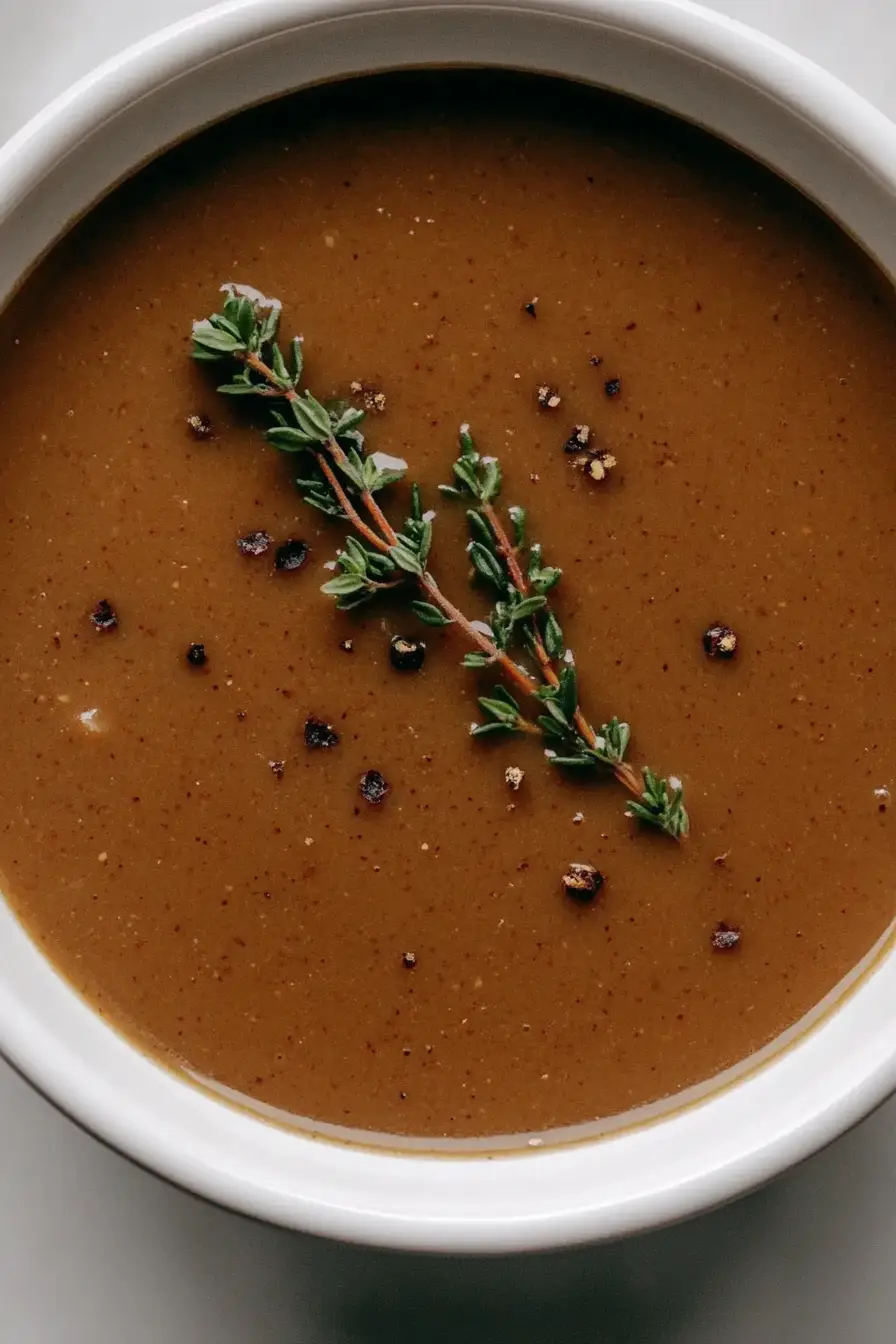
What to Serve With Prime Rib Gravy?
This rich, savory gravy is perfect for spooning over so many classic sides! Creamy mashed potatoes are the most obvious choice – they create little pools that catch all that delicious gravy. You can also ladle this gravy over roasted vegetables like carrots, parsnips, or Brussels sprouts to give them an extra boost of flavor. For something different, try serving it with Yorkshire puddings (those puffy bread bowls are basically gravy vessels), or pour it over thick slices of crusty bread. Just remember to serve the gravy nice and hot, since it tends to thicken as it cools.
Storage Instructions
Keep: Got leftover gravy? No problem! Pour it into an airtight container and pop it in the fridge. It’ll stay good for about 3-4 days. The gravy might thicken up a bit in the fridge, but that’s totally normal.
Freeze: This gravy freezes really well! Let it cool completely, then pour it into freezer-safe containers or ice cube trays for smaller portions. It’ll keep in the freezer for up to 3 months. Just remember to label it with the date so you know when you made it.
Warm Up: When you’re ready to use your gravy again, warm it up slowly on the stovetop over medium-low heat, stirring frequently. If it’s too thick, just add a splash of beef broth or water until you get the consistency you want. For frozen gravy, thaw it overnight in the fridge before reheating.
| Preparation Time | 10-15 minutes |
| Cooking Time | 10-15 minutes |
| Total Time | 20-30 minutes |
| Level of Difficulty | Easy |
Estimated Nutrition
Estimated nutrition for the whole recipe (without optional ingredients):
- Calories: 400-450
- Protein: 8-10 g
- Fat: 30-35 g
- Carbohydrates: 30-35 g
Ingredients
- 2 sprigs fresh thyme
- 2 smashed garlic cloves
- 2 sprigs fresh rosemary
- 1/4 cup all-purpose flour
- 1/4 cup prime rib drippings or unsalted butter (I like Kerrygold unsalted butter)
- 1 tbsp Dijon mustard (smooth or whole grain works well)
- 3 cups low-sodium beef broth
Step 1: Preheat the Skillet and Prepare the Fat
While your prime rib is resting, preheat a large skillet over medium heat.
Add 1/4 cup of beef drippings from the roasting pan used for the prime rib.
If beef drippings are unavailable, substitute with 1/4 cup of unsalted butter.
If using butter, allow it to melt completely before proceeding to the next step.
Step 2: Make the Roux
Once the fat is ready, vigorously whisk flour into the beef drippings or melted butter.
Cook the mixture for 2-3 minutes, or until it becomes a golden color.
This forms the roux, which will be the base for your gravy.
Step 3: Add Beef Stock and Whisk Continuously
Slowly add beef stock to the flour roux, whisking vigorously to prevent lumps from forming.
This step is crucial and requires attentive whisking.
Once the stock is incorporated smoothly, whisk in the mustard.
Step 4: Season and Simmer
Add thyme and rosemary to the mixture along with smashed garlic cloves.
Bring the sauce to a gentle boil, then lower the heat to a simmer.
Cook while whisking constantly until the gravy begins to thicken, approximately 3-4 minutes.
Step 5: Serve
Once the gravy reaches your desired consistency, transfer it to a gravy boat.
Serve alongside your prime rib roast for a delicious, savory accompaniment.