Here is my go-to spinach ricotta ravioli recipe, with soft homemade pasta dough wrapped around a creamy cheese filling mixed with fresh spinach, herbs, and a touch of nutmeg.
This ravioli has become my family’s favorite Sunday dinner tradition. I often make a double batch so we can freeze some for busy weeknights. Nothing beats having homemade pasta ready to go in the freezer, right?

Why You’ll Love This Spinach Ravioli
- Made from scratch – There’s something special about making pasta by hand – the process is rewarding and the results are so much better than store-bought. You’ll taste the difference in every bite.
- Classic Italian flavors – The combination of fresh spinach, creamy ricotta, and Parmesan cheese creates that authentic Italian taste you’d expect from a high-end restaurant.
- Freezer-friendly – Make a big batch and freeze the extras for later – these ravioli freeze beautifully and cook straight from frozen for an easy future meal.
- Customizable filling – Once you master the basic pasta dough, you can experiment with different cheese combinations or add herbs to make it your own.
- Perfect for special occasions – While it takes some time to prepare, this recipe is ideal for weekend cooking or when you want to impress dinner guests with a homemade Italian feast.
What Kind of Ricotta Should I Use?
Fresh, whole milk ricotta is your best bet for making these ravioli really shine. While you can use part-skim ricotta, the full-fat version gives you a creamier, richer filling that’s worth the extra calories. If possible, skip the mass-produced brands and look for ricotta from your local Italian deli or cheese shop – it tends to be drier and have a better texture for filling pasta. Before using your ricotta, you might want to drain it in a fine-mesh strainer lined with cheesecloth for an hour or two to remove excess moisture, which will help prevent your ravioli from becoming soggy. Just remember, the better quality your ricotta, the better your finished ravioli will taste.

Options for Substitutions
Let’s talk about what you can swap in this ravioli recipe while still keeping that classic Italian taste:
- Double zero flour: While double zero flour gives the best texture, you can use all-purpose flour in a pinch. The pasta might be slightly less silky, but it’ll still work well. Just reduce the amount by 2-3 tablespoons as all-purpose flour absorbs less moisture.
- Fresh spinach: Frozen spinach works too – just thaw and squeeze out all the water really well. Use about 4 ounces of frozen spinach to replace the fresh.
- Fresh ricotta: This is one ingredient I wouldn’t substitute – it’s the star of the filling. Store-bought ricotta is fine, but try to get good quality whole milk ricotta for the best results.
- Parmesan cheese: You can use Pecorino Romano or Grana Padano instead. They’re both hard Italian cheeses with similar properties to Parmesan.
- Nutmeg: If you don’t have nutmeg, you can skip it, though it adds a nice traditional flavor. Don’t substitute with other spices here.
- Butter sauce: Instead of the butter sauce, you could use olive oil with some sage leaves, or your favorite tomato sauce.
Watch Out for These Mistakes While Cooking
The biggest challenge when making homemade ravioli is rolling the pasta dough too thick, which can lead to chewy, heavy pasta – aim for a thickness where you can almost see your hand through the sheet. Another common mistake is overfilling the ravioli pockets; a tablespoon of filling is usually enough, as too much filling will cause the ravioli to burst during cooking. Making sure your filling isn’t too wet is crucial – always drain your spinach thoroughly and strain the ricotta for at least 30 minutes to remove excess moisture. When sealing the ravioli, press out any air bubbles around the filling and ensure the edges are tightly sealed, as trapped air can cause the pasta to float and cook unevenly. For the best texture, cook the ravioli in gently simmering (not rapidly boiling) water just until they float to the surface, usually 3-4 minutes, as overcooking will make them mushy and cause them to fall apart.
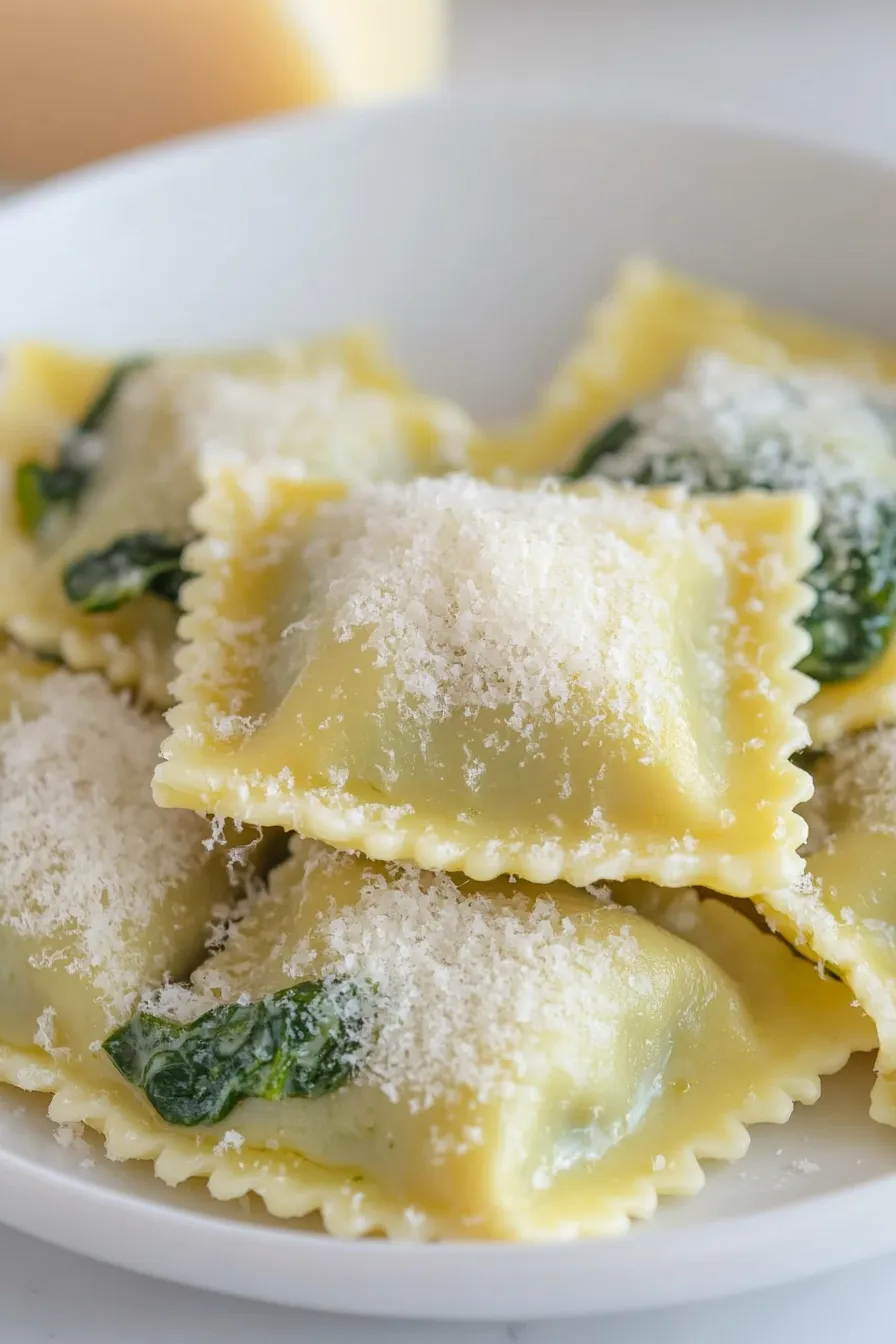
What to Serve With Spinach Ricotta Ravioli?
This homemade pasta deserves some simple but tasty sides that won’t overshadow its delicate cheese and spinach filling. A basic garlic bread or warm crusty Italian bread makes the perfect companion for soaking up any leftover sauce. For some freshness, try a light mixed green salad with cherry tomatoes and a simple lemon vinaigrette – nothing too heavy or complicated. If you want to add a veggie side, roasted asparagus or sautéed mushrooms work really well with the flavors of the ravioli. Just remember to keep the portions modest since ravioli can be quite filling on its own!
Storage Instructions
Keep Fresh: If you’ve got uncooked ravioli, dust them with a bit of semolina flour and place them in an airtight container. They’ll stay good in the fridge for up to 2 days. Just make sure to layer them with parchment paper to prevent sticking.
Freeze: These ravioli are perfect for freezing! Place them on a baking sheet lined with parchment paper, freeze until solid (about 2 hours), then transfer to a freezer bag. They’ll keep for up to 3 months. No need to thaw before cooking – just pop them straight into boiling water and add an extra minute or two to the cooking time.
Leftover Care: Already cooked ravioli can be stored in an airtight container in the fridge for up to 3 days. When you’re ready to eat them again, give them a quick dip in simmering water until they’re heated through, or warm them gently in your favorite sauce.
| Preparation Time | 60-90 minutes |
| Cooking Time | 5-10 minutes |
| Total Time | 65-100 minutes |
| Level of Difficulty | Medium |
Estimated Nutrition
Estimated nutrition for the whole recipe (without optional ingredients):
- Calories: 2500-2700
- Protein: 110-130 g
- Fat: 150-170 g
- Carbohydrates: 220-240 g
Ingredients
For the spinach filling:
- 1 tsp salt
- 1 egg (large)
- 4 oz grated parmesan cheese
- 8 oz fresh spinach
- 1/4 to 1/2 tsp nutmeg (freshly grated for best flavor)
- 1 lb fresh ricotta cheese (whole milk preferred for creaminess)
For the pasta dough:
- 3 1/3 cups 00 flour (Antimo Caputo Chef’s Flour is an excellent choice)
- 4 room temperature eggs
- semolina flour (for dusting, prevents sticking)
For serving:
- 4 oz salted butter (Kerrygold is lovely here)
- pinch of salt
- 2 oz grated parmesan cheese
Step 1: Prepare the Spinach Filling
Wash the spinach and wilt it in a skillet over medium heat without adding any extra water.
Allow it to cool, then squeeze out the excess moisture.
Chop the spinach finely and combine it with the remaining filling ingredients.
Cover the mixture and refrigerate until you are ready to use it.
Step 2: Make the Pasta Dough
Reserve a few tablespoons of flour to the side.
Pour the remaining flour onto your work surface and create a well in the center.
Break the eggs into the well and, using a fork or your fingertips, whisk the eggs as if you’re making scrambled eggs.
Gradually incorporate flour from the edges into the eggs.
As the dough starts to form, continue to work in more flour using a pastry scraper or your hands.
If the pasta dough becomes too sticky, knead in additional flour; if it’s too dry and hard to knead, add water teaspoon by teaspoon.
Knead the dough for 8-10 minutes until it is smooth.
Cover it with an upturned bowl or wrap it in plastic wrap and allow it to rest for about 30 minutes.
Step 3: Roll Out the Pasta Dough
Line large baking sheets with parchment paper and sprinkle with semolina flour.
Divide the pasta dough into four equal parts.
Take one portion, keeping the remainder covered.
Using a hand-cranked pasta machine or a stand mixer pasta attachment, set the rollers to the widest setting.
Flatten the dough slightly and pass it through the rollers.
Repeat this process on the widest setting until smooth, dusting with a little flour as needed.
Gradually reduce the roller width setting, passing the dough through until it reaches about 1/16 inch in thickness, or #6 on a KitchenAid pasta roller.
The resulting pasta sheet should be at least 30 inches long.
Step 4: Fill and Shape the Ravioli
Lay the pasta sheet onto a lightly floured surface and cut it in half to make two pieces that are 15 inches long.
Place heaped teaspoons of filling (or use a piping bag) about 1 inch apart along each length of the pasta, approximately ½ inch from the edge.
Fold the opposing long edge over the filling and press around each mound to seal, expelling air as you go.
Cut into squares using a fluted pastry wheel or a knife, and arrange the ravioli on the prepared baking sheets in a single layer.
Repeat this process with the remaining dough and filling.
Step 5: Cook the Ravioli
Bring a large saucepan of salted water to a boil.
Add the ravioli and reduce the heat to a gentle simmer.
Cook until the ravioli float to the top and are tender, about 3 minutes.
Drain them well.
Step 6: Make the Butter Sauce and Serve
Melt the butter in a small saucepan over medium heat with a pinch of salt.
You can choose to brown the butter or simply melt it.
Optionally, add torn sage leaves or sauté finely chopped garlic for additional flavor.
Spoon the butter sauce over the cooked ravioli and gently combine using a rubber spatula.
Sprinkle with Parmigiano Reggiano cheese and combine again before serving immediately.

