There’s something so comforting about a good curry, especially on those chilly evenings when you want dinner to feel like a warm hug. I started making this vegan yellow curry back when I was trying to add more plant-based meals to our weekly rotation, and it’s now one of our family favorites. What I love most about this recipe is how it comes together with ingredients I usually have in my pantry – coconut milk, curry powder, and whatever vegetables are hanging out in my fridge.
I’ve found that curry is one of those dishes that’s actually better the next day, once all the flavors have had time to get friendly with each other. That’s why I often make a big batch on Sunday afternoon while I’m meal prepping for the week. Plus, it’s perfect for those busy weeknights when cooking from scratch just isn’t happening.

Why You’ll Love This Yellow Curry
- Plant-based goodness – This vegan curry is packed with protein-rich tofu and colorful vegetables, making it a satisfying meal that happens to be completely plant-based.
- Rich authentic flavors – With fresh aromatics like lemongrass, galangal, and kaffir lime leaves, this curry delivers genuine Thai flavors right from your kitchen.
- Customizable heat level – You can easily adjust the number of bird’s eye chilis to make it as mild or spicy as you prefer – perfect for serving to different taste preferences.
- One-pot meal – Everything cooks in a single pot, which means less cleanup and more time to enjoy your meal.
- Meal-prep friendly – The flavors actually get better the next day, making this curry perfect for batch cooking and weekday lunches.
What Kind of Tofu Should I Use?
While the recipe calls for firm tofu, you actually have a few good options here depending on how you like your curry. Extra-firm tofu is probably your best bet since it holds its shape really well during cooking and won’t fall apart when stirred into the curry sauce. Regular firm tofu works too, but you’ll want to press it first – just wrap it in paper towels and put something heavy on top for about 15-20 minutes to remove excess moisture. If you’re new to cooking with tofu, look for it in the refrigerated section near the produce, and avoid using silken or soft tofu for this curry as it’ll just break down into the sauce.

Options for Substitutions
This curry recipe is pretty flexible and you can make several adjustments based on what you have in your kitchen:
- Bird’s eye chilis: You can use serrano peppers or Thai chilis instead. If you prefer less heat, try using just one chili or substitute with red pepper flakes (start with 1/2 teaspoon).
- Galangal and Kaffir lime leaves: These Thai ingredients can be hard to find. For galangal, use extra ginger plus a pinch of black pepper. For kaffir lime leaves, try using lime zest (from 2 limes) or bay leaves with some lime zest.
- Lemongrass: If fresh lemongrass isn’t available, use 2 tablespoons of lemongrass paste or add 2 teaspoons of lemon zest plus 2 teaspoons of grated ginger.
- Tofu: You can swap tofu with chickpeas, tempeh, or seitan. If using chickpeas, add them later in the cooking process so they don’t get too soft.
- Vegetables: Feel free to mix up the vegetables – try sweet potatoes, cauliflower, broccoli, or snap peas. Just keep the total amount about the same.
- Miso paste: If you don’t have miso, you can use a bit more tamari or soy sauce, though you’ll miss some of that fermented flavor. Start with an extra teaspoon of tamari.
Watch Out for These Mistakes While Cooking
The biggest challenge when making yellow curry is rushing the initial paste-frying step – not cooking your curry paste long enough can leave you with raw, harsh flavors instead of deep, developed ones, so take your time to cook it until fragrant and the oil starts to separate. Another common mistake is adding all the coconut milk at once; instead, start with just the thick cream that rises to the top of the can and cook it with the paste until the oil separates, then add the remaining milk. When it comes to the vegetables, avoid overcooking them by adding them in stages based on their cooking times – start with carrots, then add green beans, and finally bell peppers and bamboo shoots near the end. For the best tofu texture, make sure to press it well and pan-fry it separately until golden before adding it to your curry, as dropping raw tofu directly into the sauce can make it bland and soggy.
What to Serve With Yellow Curry?
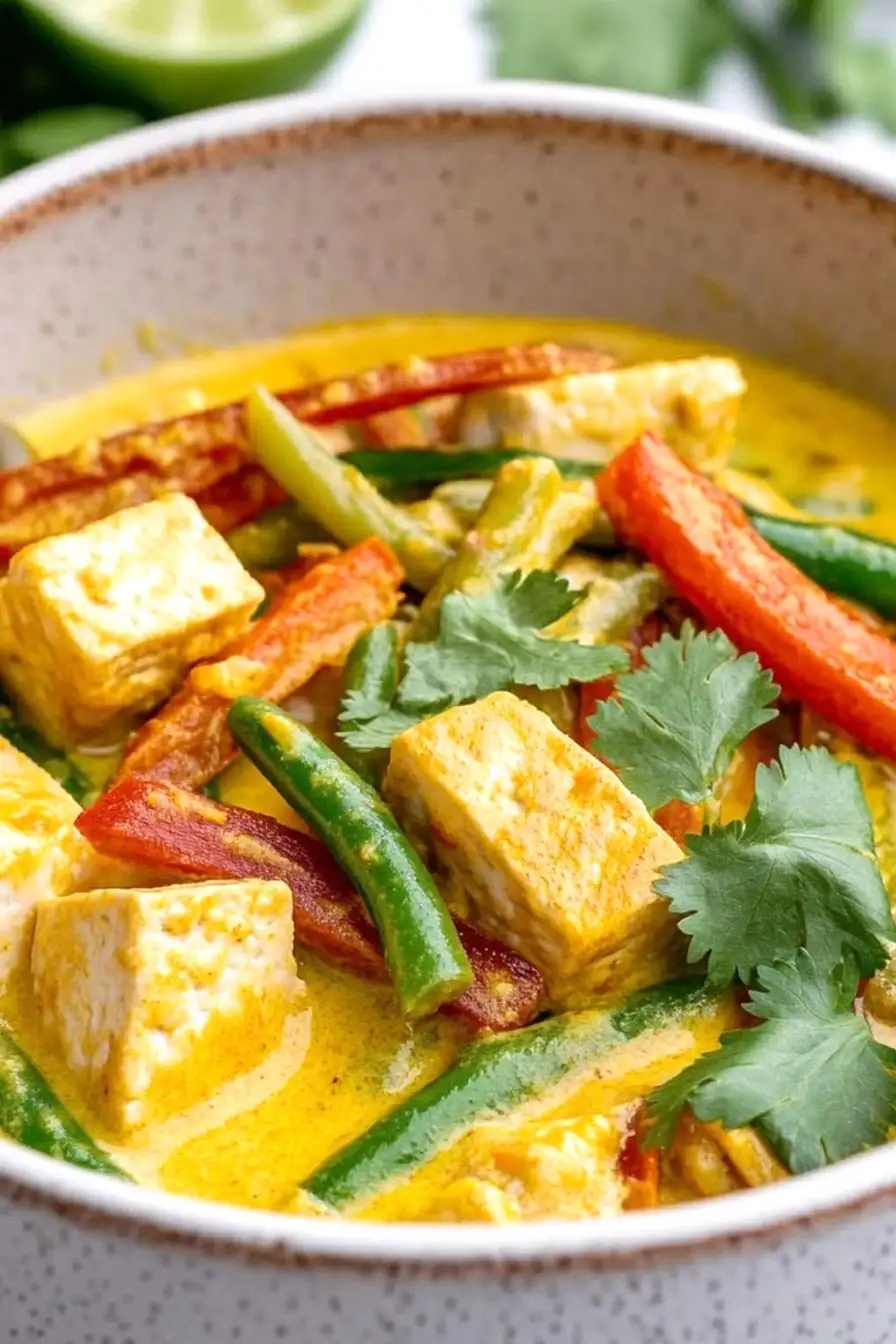
Jasmine rice is the perfect base for soaking up all that flavorful curry sauce – I always make extra because it’s just that good! For some added texture and freshness, try serving your curry with a side of cucumber salad dressed simply with rice vinegar and a pinch of salt. If you want to make it a bigger meal, some fresh spring rolls filled with herbs and vegetables make a nice starter, while a bowl of chopped peanuts and fresh cilantro on the table lets everyone add their own toppings. You can also serve some lime wedges on the side for people who like to add an extra zip to their curry.
Storage Instructions
Keep Fresh: This yellow curry tastes even better the next day after all the flavors have had time to mingle! Pop it in an airtight container and keep it in the fridge for up to 4 days. The vegetables might soften a bit more over time, but the flavor will still be amazing.
Freeze: Good news – this curry freezes really well! Let it cool completely, then transfer it to a freezer-safe container. It’ll keep for up to 3 months in the freezer. Just keep in mind that the vegetables might be a bit softer when thawed, but the curry sauce will taste just as good.
Warm Up: When you’re ready to enjoy your leftover curry, just heat it gently on the stovetop over medium-low heat, stirring occasionally. If it seems a bit thick, you can thin it out with a splash of coconut milk or water. For smaller portions, the microwave works too – just heat in 30-second intervals, giving it a good stir between each.
| Preparation Time | 15-30 minutes |
| Cooking Time | 30-45 minutes |
| Total Time | 45-75 minutes |
| Level of Difficulty | Medium |
Estimated Nutrition
Estimated nutrition for the whole recipe (without optional ingredients):
- Calories: 800-900
- Protein: 30-35 g
- Fat: 60-70 g
- Carbohydrates: 70-80 g
Ingredients
For the curry paste:
- 2 stalks lemongrass
- 1 thumb-size ginger
- 3 bird’s eye chilies
- 1 tsp miso paste (I use Miso Master organic red miso)
- 1/2 tsp salt
- 1 tsp ground cumin
- 1 shallot
- 1 tsp ground turmeric
- 1 tsp ground coriander (freshly ground for best aroma)
- 1/2 tsp ground white pepper
- 4 slices galangal
- 2 garlic cloves
- 2 kaffir lime leaves
- 1 tsp curry spice blend
For the curry:
- 1 cup green beans
- 2 carrots (peeled and sliced into rounds)
- 300 g firm tofu (pressed and cubed into 1-inch pieces)
- 1/2 tbsp sugar
- 1 cup bamboo shoots
- 300 ml water or vegetable broth
- 400 ml coconut milk (full-fat for rich creaminess)
- salt as required
- 1 tbsp tamari or soy sauce
- 1/2 bell pepper (any color, thinly sliced)
- 2 tbsp yellow curry paste (or homemade from above)
Step 1: Prepare the Ingredients
Begin by finely chopping and deseeding the fresh chilies.
Chop the shallot, peel and chop the garlic cloves, peel and slice the galangal, peel and finely chop the ginger, and slice the bottom part of the lemongrass stalks.
Keep the greener part of the lemongrass to add to the curry later.
Remove the stalks from the lime leaves.
Step 2: Make the Curry Paste
Add all the aromatic ingredients (chopped chilies, shallots, garlic, galangal, ginger, lemongrass, and lime leaves) into a food processor.
Add turmeric powder, curry powder, cumin, coriander, white pepper, miso paste, and salt.
Blend until the mixture turns into a smooth paste, which may take a couple of minutes depending on your machine.
Reserve this curry paste for later use.
Step 3: Cook the Curry Base
Heat some coconut oil in a large pot over medium heat.
Add the curry paste along with 2 or 3 tablespoons of coconut milk.
Stir and cook the mixture for 4-5 minutes until it becomes fragrant.
Then, add the remaining coconut milk, vegetable broth or water, stir well, and bring the mixture to a simmer.
Step 4: Prepare and Add the Vegetables
While the curry is simmering, prepare your vegetables.
Wash, peel, and slice the carrot.
Wash and slice the red pepper.
Wash and chop the green beans.
Drain the water from the canned bamboo shoots.
Add these veggies into the curry pan and allow them to simmer for about 20 minutes.
Step 5: Fry the Tofu
While the veggies are cooking, prepare the tofu.
Remove the excess water from the tofu using a paper towel.
Cut the tofu block into cubes.
Using a medium-sized frying pan, pan-fry the tofu cubes, turning them occasionally to ensure they cook evenly on all sides.
Step 6: Combine and Serve
Once the vegetables are cooked (they should still have a bit of a crunch and not be too soft), add the pan-fried tofu, soy sauce or tamari, and sugar to the curry.
Stir and taste, adjusting with salt if needed.
Serve the curry hot, garnished with chopped cilantro and lime.
Optionally, add some chili flakes or sriracha for extra heat.