If you ask me, coconut cakes are pure nostalgia in dessert form.
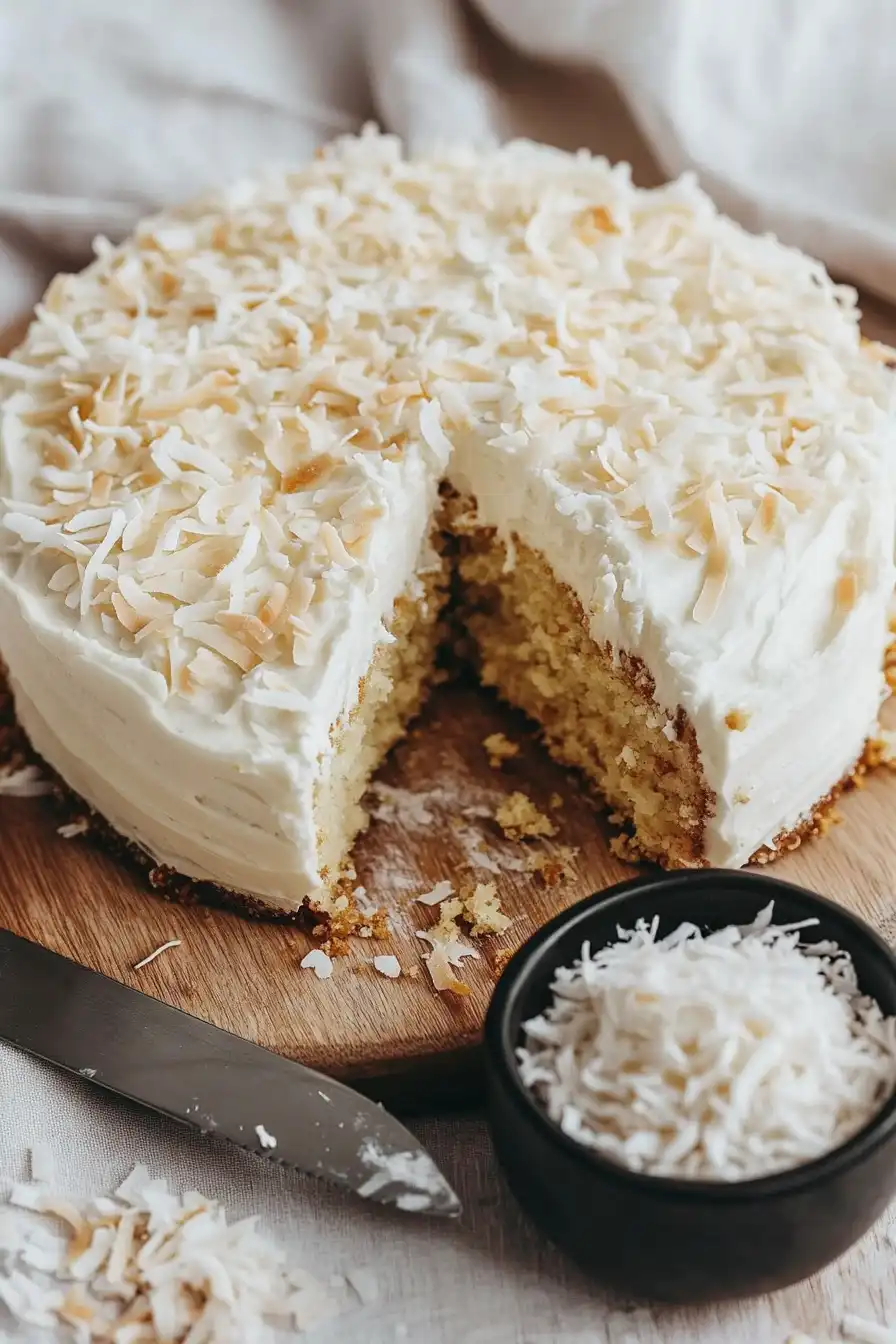
This single-layer Easter cake brings all the classic flavors you remember from family celebrations, but in a simpler, more approachable size. Sweet shredded coconut covers a soft vanilla cake, creating that familiar snow-white look we all love during spring.
The frosting is perfectly sweet and creamy, making it easy to get that traditional coconut coating to stick. I’ve kept the decorating simple – just a sprinkle of coconut is all you need to make it feel special.
It’s a friendly little cake that’s just right for smaller gatherings, and it won’t leave you with leftovers for days.
Why You’ll Love This Coconut Cake
- Perfect small batch dessert – This single-layer cake is ideal when you want something special but don’t need to feed a crowd – perfect for small gatherings or intimate celebrations.
- Real coconut flavor – With coconut milk, coconut oil, and fresh coconut flakes, you get authentic coconut taste in every bite, not just artificial flavoring.
- Quick preparation – You can have this cake ready in about an hour, making it perfect for last-minute entertaining or when you need a quick dessert fix.
- Light and fluffy texture – Using cake flour and separating the egg gives you an incredibly tender, soft cake that’s never dense or heavy.
What Kind of Coconut Should I Use?
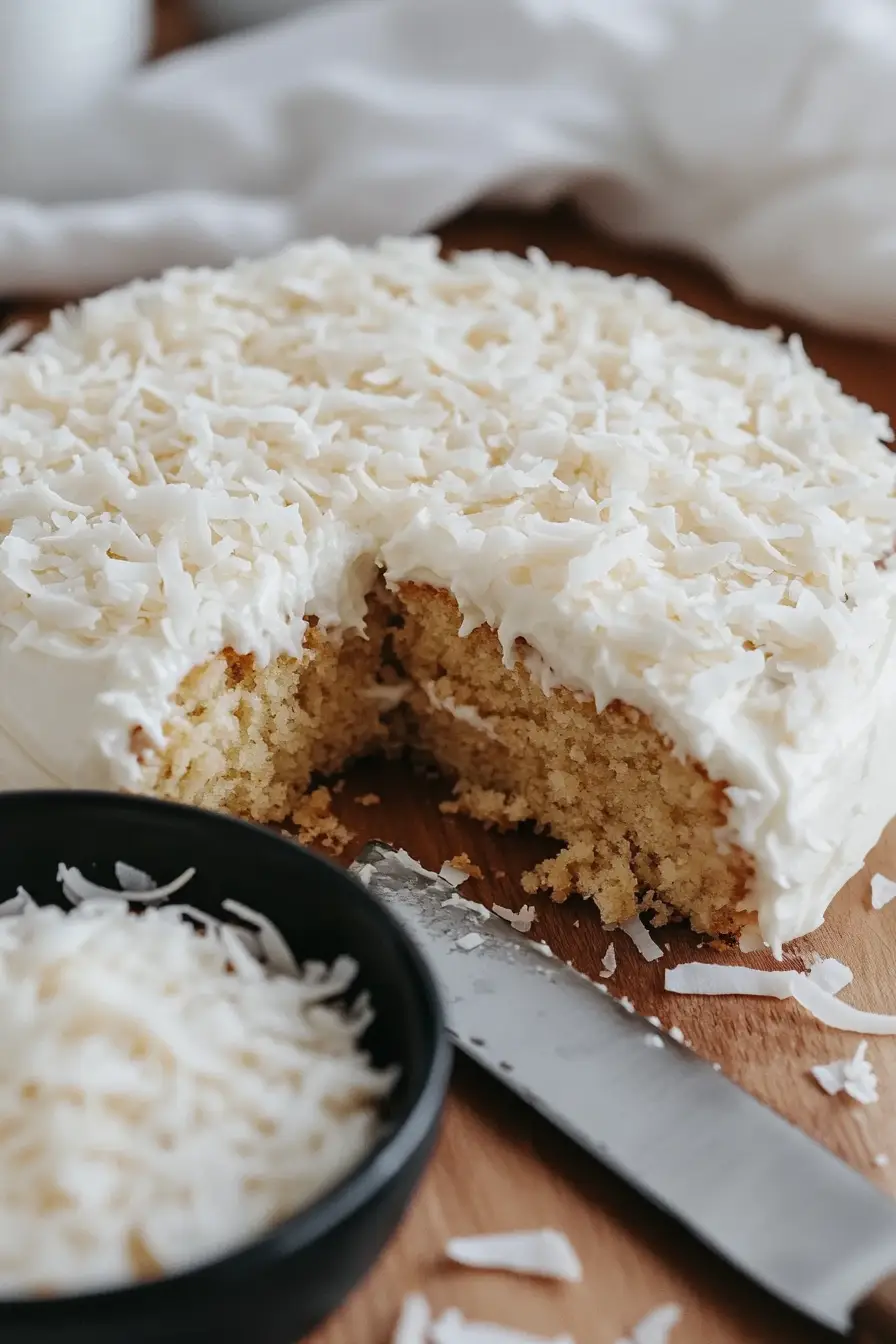
For this recipe, you’ll want to use sweetened shredded coconut flakes, which are readily available in most grocery stores’ baking aisles. These flakes are thinner and more delicate than desiccated coconut, making them perfect for both mixing into the cake and decorating the outside. Regular sweetened coconut flakes work better than unsweetened ones here, as they help add the right amount of sweetness and moisture to the cake. If your coconut flakes seem unusually dry or clumped together, you can give them a quick ruffle with your fingers to separate them before using – this helps them distribute more evenly throughout your batter and creates a prettier presentation when decorating.
Options for Substitutions
Need to make some swaps? Here are some helpful substitutions for this coconut cake:
- Cake flour: If you don’t have cake flour, you can make your own by measuring 1 cup of all-purpose flour, removing 2 tablespoons, and replacing it with 2 tablespoons of cornstarch. Sift this mixture twice before using.
- Coconut oil: You can replace coconut oil with an equal amount of butter or any neutral vegetable oil, though you’ll lose some coconut flavor.
- Coconut milk: Regular whole milk works too, but try to stick with coconut milk for the best flavor. If using regular milk, add an extra 1/4 teaspoon of coconut flavoring.
- Coconut flavoring: While coconut flavoring gives the best results, you can use vanilla extract instead. The cake will still be good, just less coconutty.
- Cream of tartar: If you’re out of cream of tartar, use 1/4 teaspoon of lemon juice or white vinegar for the egg white.
- Shredded coconut: You can use unsweetened coconut instead of sweetened – just know your cake will be slightly less sweet. For the topping, you really need the sweetened version for the right texture and taste.
Watch Out for These Mistakes While Baking
The success of this coconut cake heavily depends on the temperature of your ingredients – using cold butter, eggs, or coconut milk can lead to a lumpy batter and uneven texture, so make sure everything is truly at room temperature before starting. When beating the egg white, avoid overwhipping past stiff peaks, as this can make your cake tough and dry – stop as soon as the peaks hold their shape and look glossy. Another common mistake is opening the oven door too early during baking, which can cause your cake to sink in the middle – resist the urge to peek until at least 80% through the baking time. For the best texture, don’t rush the cooling process before frosting – a warm cake will cause the butter-based frosting to melt, so give it at least an hour to cool completely on a wire rack.
What to Serve With Coconut Cake?
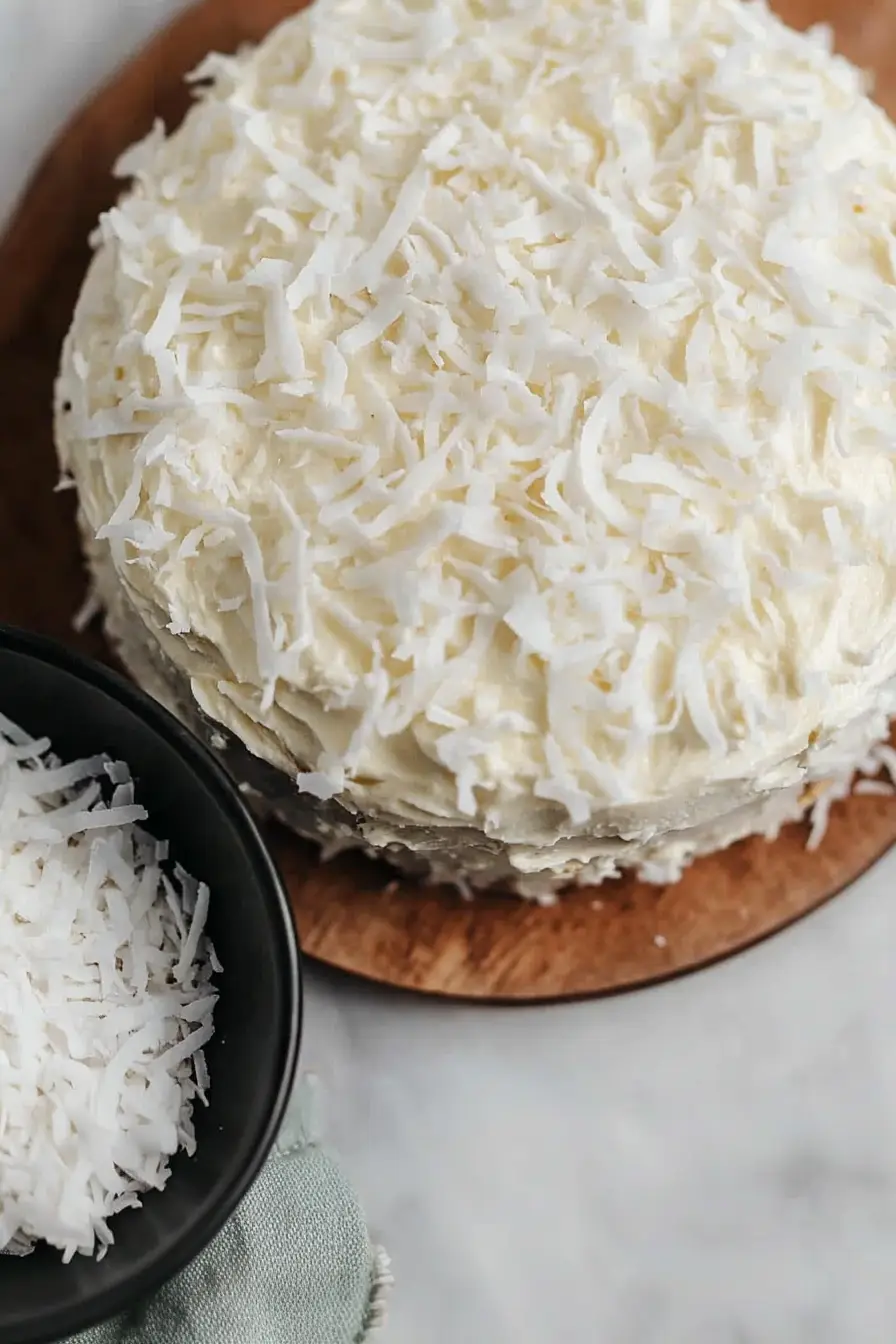
This sweet coconut cake pairs perfectly with a hot cup of coffee or tea for an afternoon treat. If you’re serving it for dessert, try adding a scoop of vanilla ice cream or a dollop of whipped cream on the side – the cool, creamy texture works so well with the cake’s coconut flavor. For a tropical twist, serve it alongside some fresh fruit like mango, pineapple, or strawberries, which complement the coconut perfectly. You could also drizzle each slice with a bit of caramel sauce or chocolate sauce if you’re feeling extra indulgent.
Storage Instructions
Counter Storage: Your coconut cake will stay fresh at room temperature for up to 2 days when stored under a cake dome or in an airtight container. The coconut flavor actually gets better after the first day, making it perfect for making ahead for special occasions!
Refrigerate: For longer storage, pop your cake in the fridge in an airtight container. It’ll stay good for up to 5 days. Just remember that the butter in the frosting will firm up, so let the cake sit at room temperature for about 30 minutes before serving for the best texture.
Freeze: This cake freezes really well! Wrap it tightly in plastic wrap, then aluminum foil, and freeze for up to 2 months. When you’re ready to enjoy it, thaw overnight in the refrigerator, then bring to room temperature before serving. The coconut flakes might lose a bit of their crunch, but the cake will still taste great!
| Preparation Time | 20-30 minutes |
| Cooking Time | 30-35 minutes |
| Total Time | 50-65 minutes |
| Level of Difficulty | Medium |
Estimated Nutrition
Estimated nutrition for the whole recipe (without optional ingredients):
- Calories: 2000-2200
- Protein: 15-20 g
- Fat: 130-150 g
- Carbohydrates: 220-240 g
Ingredients
For the cake:
- 1/8 tsp cream of tartar
- 1 tsp coconut extract
- 1/3 cup sweetened shredded coconut (toasted for deeper flavor)
- 1 large egg yolk
- 1/8 tsp salt
- 1/3 cup unsweetened coconut milk (full-fat for rich flavor)
- 1 cup cake flour (sifted for a lighter cake)
- 1 large egg white
- 2 tbsp coconut oil
- 1/2 tsp baking powder
- 1/2 tsp vanilla extract
- 1/2 tsp baking soda
- 1/3 cup white sugar
- 1/4 cup unsalted butter (softened at room temperature)
For the frosting:
- 2 1/3 cups powdered sugar (sifted to prevent lumps)
- 2 tbsp unsweetened coconut milk
- 1/2 cup sweetened shredded coconut
- 1/2 cup unsalted butter (I like Kerrygold for this recipe)
- 1/2 tsp coconut extract
Step 1: Prepare the Cake Pan and Toast the Coconut Flakes
Preheat your oven to 350ºF (175ºC).
Generously spray a 6-inch round cake pan with a flour-based baking spray and set it aside.
In a small skillet, toast the sweetened coconut flakes over medium heat, stirring continuously.
Once they start to turn a light golden brown, remove them from heat.
Monitor this process closely to avoid burning.
Set the toasted coconut flakes aside to cool.
Step 2: Whisk and Mix Dry Ingredients
In a medium bowl, whisk together the cake flour, baking powder, baking soda, and salt.
Set the dry mixture aside for later use.
Step 3: Beat Egg Whites and Mix Wet Ingredients
Using a hand mixer or stand mixer fitted with the whisk attachment, beat the egg white and cream of tartar at high speed until stiff peaks form (approximately 2-3 minutes).
In a separate bowl, with the paddle attachment, beat the unsalted butter, vegetable oil, and granulated sugar on medium speed until well blended.
Add the egg yolk, coconut extract, vanilla extract, and unsweetened coconut milk to this mixture and continue beating until combined.
Step 4: Combine Cake Batter Components
Gradually add the whisked dry mixture to the wet ingredients, mixing until just combined.
Gently fold the beaten egg white into the coconut cake batter.
Then, fold in the cooled toasted coconut flakes, making sure to incorporate them evenly throughout the batter.
Step 5: Bake the Cake
Pour the prepared cake batter into the greased 6-inch round cake pan.
Bake in the preheated oven for 30-35 minutes.
Check for doneness by inserting a toothpick into the center of the cake; it should come out clean.
Once baked, remove the cake from the oven and allow it to cool completely on a wire cooling rack before proceeding to frosting.
Step 6: Prepare and Apply the Frosting
Using a hand mixer or stand mixer with the paddle attachment, beat unsalted butter on medium-high speed until smooth and creamy.
Turn the mixer to low speed, slowly add sifted powdered sugar, then add coconut extract and unsweetened coconut milk.
Mix until the frosting is smooth and well blended, scraping down the sides of the bowl as needed.
Finally, beat or stir in the shredded coconut flakes.
Once the cake is completely cooled, frost with the prepared coconut frosting to finish.
Enjoy your moist and flavorful coconut cake!

