Finding the perfect pasta salad for spring and summer gatherings can feel like a real challenge. Between potlucks, backyard BBQs, and family picnics, you want something that’s easy to transport, stays fresh in the warm weather, and actually tastes good after sitting out for a while.
That’s where this spring orzo pasta salad comes in: it’s light but filling, super easy to throw together, and can be made ahead of time – plus it works with pretty much any seasonal vegetables you have in your fridge.
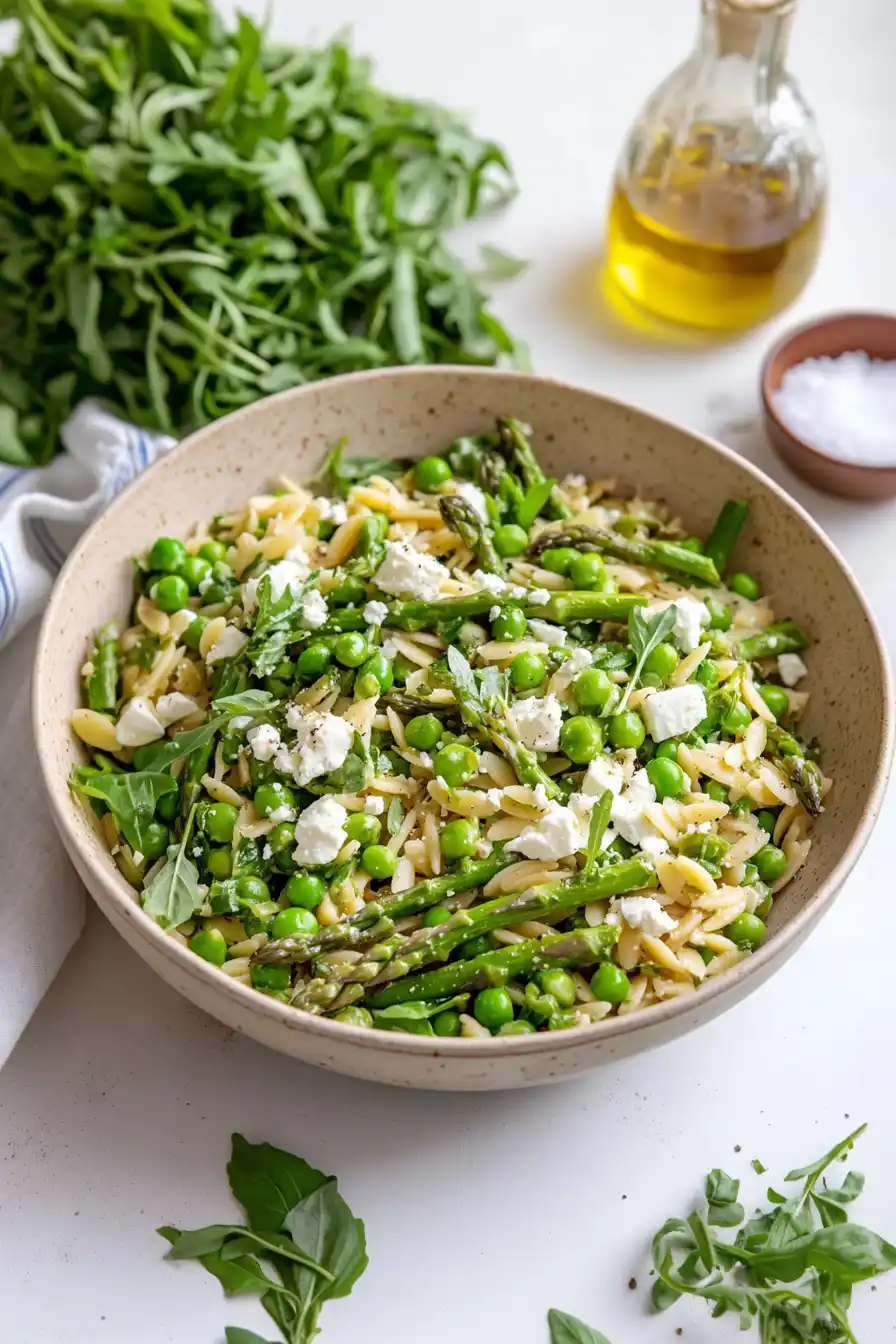
Why You’ll Love This Orzo Pasta Salad
- Quick preparation – Ready in just 30 minutes, this pasta salad is perfect for those busy weeknights when you want something fresh but don’t have hours to spend in the kitchen.
- Fresh spring ingredients – Loaded with seasonal vegetables like asparagus, peas, and fresh herbs, this salad brings the best spring flavors to your table.
- Make-ahead friendly – You can prepare this salad in advance and keep it in the fridge, making it perfect for meal prep, picnics, or potlucks.
- Light and nutritious – The combination of whole grain pasta, fresh vegetables, and herbs creates a balanced meal that’s satisfying without being heavy.
- Customizable recipe – This versatile salad works great as a side dish or main course, and you can easily swap ingredients based on what you have on hand.
What Kind of Orzo Should I Use?
Regular white orzo pasta is the classic choice for this salad, but you’ve got some other options if you want to switch things up. Whole wheat orzo adds a nutty flavor and extra fiber, while gluten-free orzo (usually made from rice or corn) works great if you’re avoiding wheat. When cooking orzo, treat it just like any other pasta – make sure you’ve got plenty of salted water at a rolling boil, and cook it until it’s tender but still has a slight bite (al dente). One helpful tip: since orzo is small, it can go from perfectly cooked to mushy pretty quickly, so start checking it a minute or two before the package directions suggest.
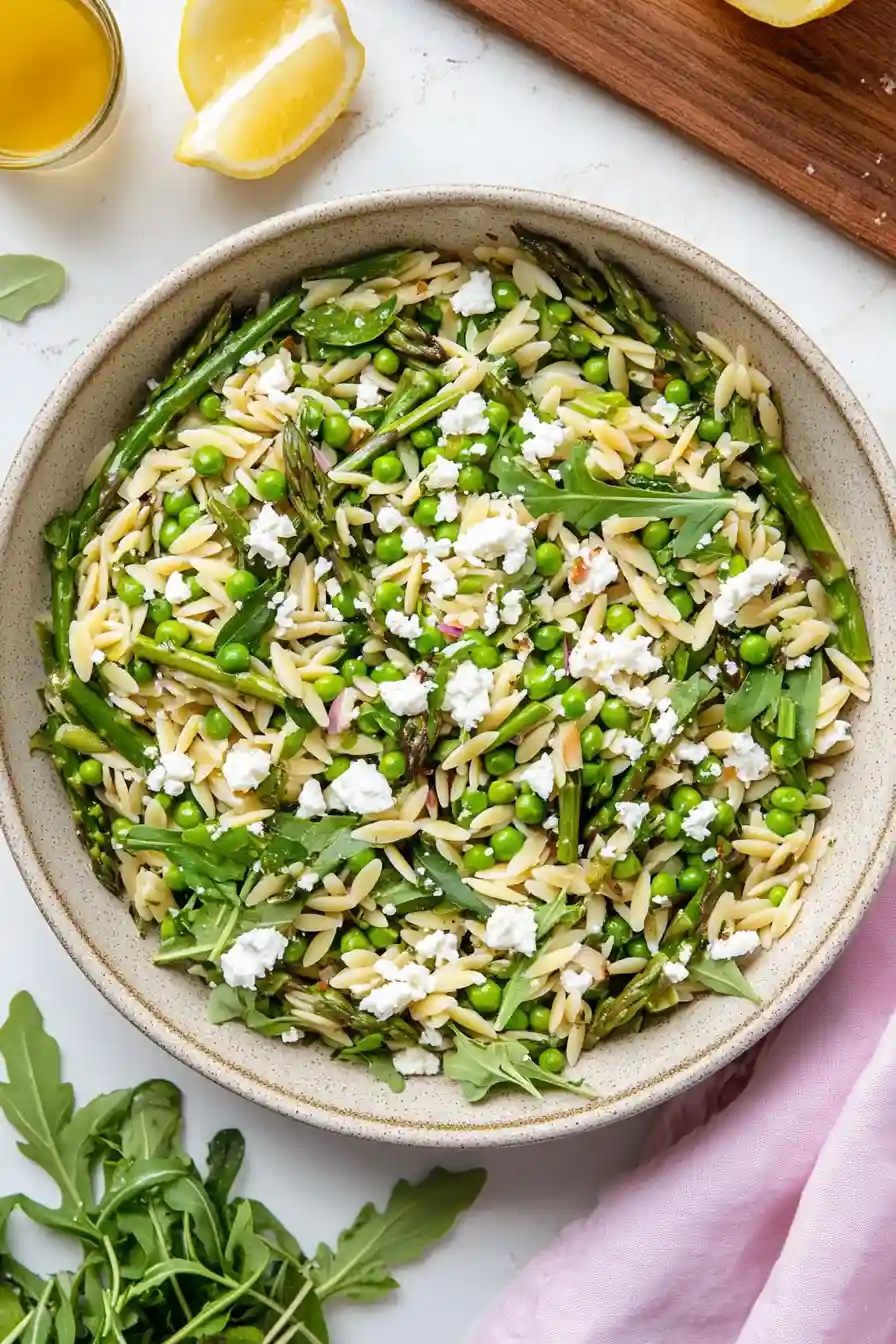
Options for Substitutions
This spring pasta salad is pretty flexible and you can make several swaps based on what you have in your kitchen:
- Orzo pasta: If orzo isn’t in your pantry, try small pasta shapes like ditalini, small shells, or even pearl couscous. Just cook according to the package instructions for each substitute.
- Arugula: Not a fan of arugula’s peppery kick? Baby spinach, mixed spring greens, or watercress make great alternatives.
- Feta cheese: You can swap feta with crumbled goat cheese, fresh mozzarella pearls, or even shaved parmesan for a different cheese experience.
- Fresh herbs: Feel free to mix up the herbs – parsley, dill, or chives work well here. If using dried herbs instead of fresh, use just 1 tablespoon each as dried herbs are more concentrated.
- Red wine vinegar: White wine vinegar or apple cider vinegar can step in for red wine vinegar. You might need to adjust the amount slightly to match your taste.
- Shallots: No shallots? Try finely diced red onion or green onions instead. For red onion, use about half the amount as they’re stronger than shallots.
Watch Out for These Mistakes While Cooking
The biggest mistake when making orzo pasta salad is overcooking the pasta – always cook it just until al dente since it will continue to absorb the dressing as it sits, and overcooked orzo can become mushy and unappetizing. Another common error is adding the arugula too early; wait until just before serving to mix in these delicate greens, preventing them from wilting and maintaining their fresh, peppery crunch. When it comes to the vegetables, avoid overcooking the asparagus and peas – they should be blanched just until bright green and still crisp-tender, then immediately plunged into ice water to stop the cooking process and preserve their color. For the best flavor development, try making the dressing at least 30 minutes ahead of time to let the shallots mellow and the flavors meld together, and remember to taste and adjust the seasoning just before serving since cold temperatures can dull flavors.
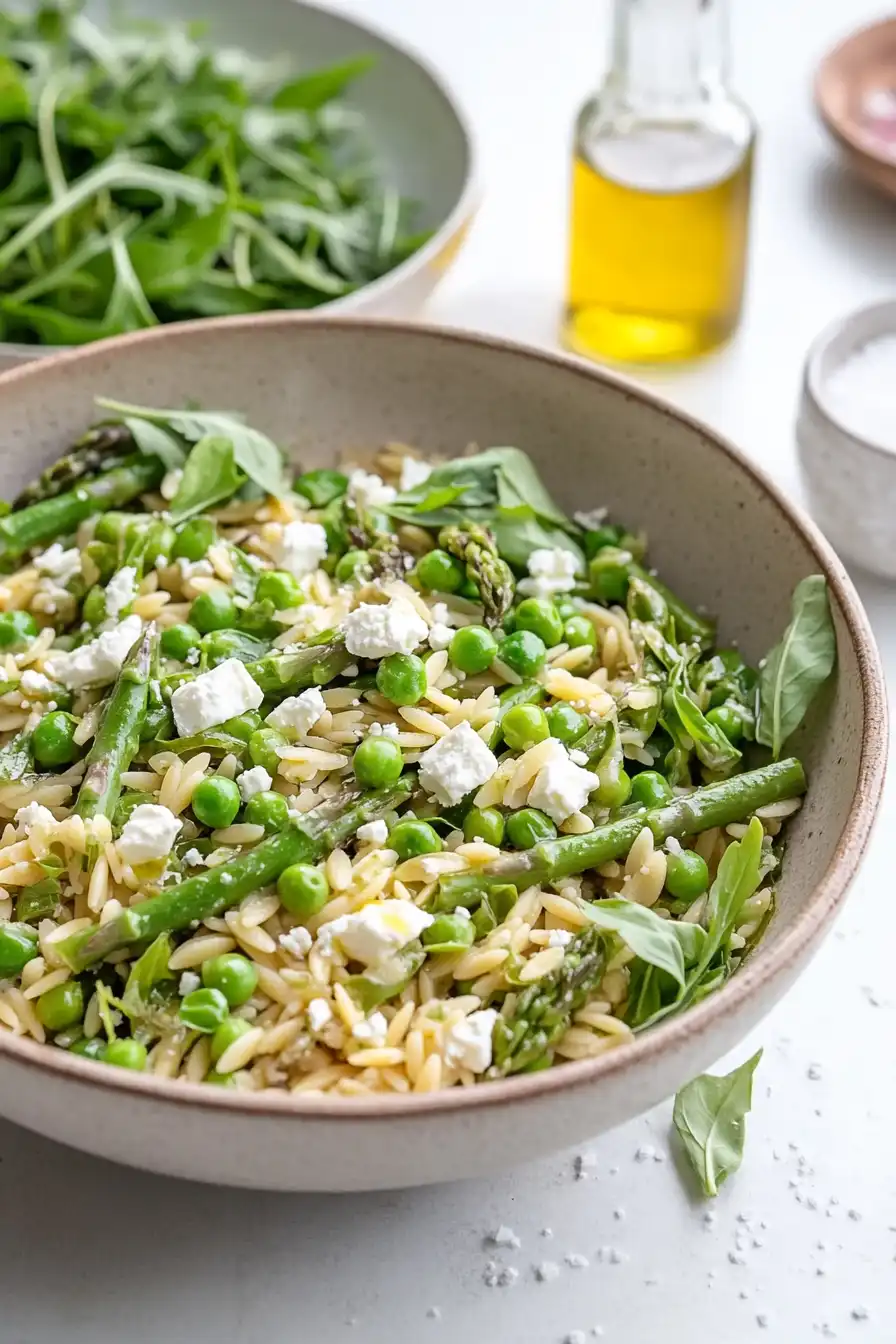
What to Serve With Spring Orzo Salad?
This fresh and light pasta salad makes a perfect side dish, but it can easily become a complete meal with just a few additions. Try serving it alongside some grilled chicken breast or seared salmon for a protein boost that complements all those spring vegetables. If you’re keeping things vegetarian, a bowl of chilled gazpacho or some crusty bread with herb butter would be lovely companions. For casual outdoor gatherings, I like to pair this salad with simple grilled vegetables like zucchini or bell peppers, which pick up on the Mediterranean flavors of the feta and herbs.
Storage Instructions
Keep Fresh: This spring orzo pasta salad stays good in the fridge for up to 4 days when kept in an airtight container. The flavors actually get better after a day as everything mingles together! Just give it a quick toss before serving to redistribute the dressing.
Make Ahead: Want to prep this in advance? Cook the orzo and veggies up to a day ahead, but wait to add the arugula and fresh herbs until just before serving to keep them crisp. The dressing can be made 3-4 days ahead and stored separately in the fridge – just shake it well before using.
Serve: When you’re ready to eat, let the salad sit at room temperature for about 15 minutes – the flavors come alive when it’s not super cold. If the pasta seems a bit dry, drizzle with a little extra olive oil and give it a good toss.
| Preparation Time | 10-15 minutes |
| Cooking Time | 15-20 minutes |
| Total Time | 25-35 minutes |
| Level of Difficulty | Easy |
Estimated Nutrition
Estimated nutrition for the whole recipe (without optional ingredients):
- Calories: 800-900
- Protein: 25-30 g
- Fat: 60-70 g
- Carbohydrates: 70-80 g
Ingredients
For the salad:
- 4 oz crumbled feta cheese (I prefer Atalanta feta for its creamy texture)
- 1 1/2 cups chopped asparagus (cut into 1-inch pieces, about 1 bunch)
- 1 cup green peas (frozen, thawed and patted dry)
- 3 tbsp chopped basil (freshly chopped for best aroma)
- 8 oz pasta (orzo is traditional, but any small pasta shape works well)
- 3 tbsp chopped mint
- 4 to 5 cups fresh arugula (or baby spinach, for a milder flavor)
- salt
- pepper
For the shallot vinaigrette:
- juice and zest of 1/2 lemon (freshly squeezed for brighter flavor)
- salt
- 1/3 cup olive oil (I use Colavita extra virgin olive oil)
- 1 large or 2 small shallots (finely minced, about 2 tbsp)
- 1 tsp honey
- 2 tbsp red wine vinegar
- pepper
- 1/2 tsp dijon mustard
Step 1: Prepare the Shallot Vinaigrette
Begin by heating olive oil in a skillet over medium heat.
Add the shallots and stir them frequently until they become golden brown, making sure not to burn them.
Once cooked, transfer the shallots, along with the oil, to a jar or bowl.
Combine this mixture with the remaining vinaigrette ingredients and set it aside to allow the flavors to meld together.
Step 2: Cook the Orzo
While the vinaigrette is resting, prepare the orzo according to the package instructions.
This will typically involve boiling it in salted water until tender.
Once cooked, drain the orzo and set it aside until ready to use.
Step 3: Sauté the Asparagus
In the same skillet used for the shallots, add a drizzle of olive oil and heat over medium heat.
Add the chopped asparagus and sauté for 3-4 minutes, or until they are cooked to your desired level of tenderness.
Be sure to stir occasionally to ensure even cooking.
Step 4: Combine and Season the Salad
In a large bowl, combine the cooked orzo, sautéed asparagus, and shallot vinaigrette.
Toss all the ingredients together until they are well mixed.
Season the salad to taste with additional salt and pepper if needed, ensuring that the flavors are well balanced.
Serve immediately for a fresh and vibrant dish.