I used to think “vegan” and “charcuterie” were complete opposites. Growing up, our family’s cheese and meat boards were packed with, well… cheese and meat. It wasn’t until my friend Sarah brought a plant-based board to a potluck that my mind completely changed.
Turns out, making a vegan charcuterie board isn’t just possible – it’s actually really fun. You get to play around with different textures and flavors using nuts, fruits, and plant-based spreads. And the best part? Even my meat-loving friends grab seconds when I serve this at parties.
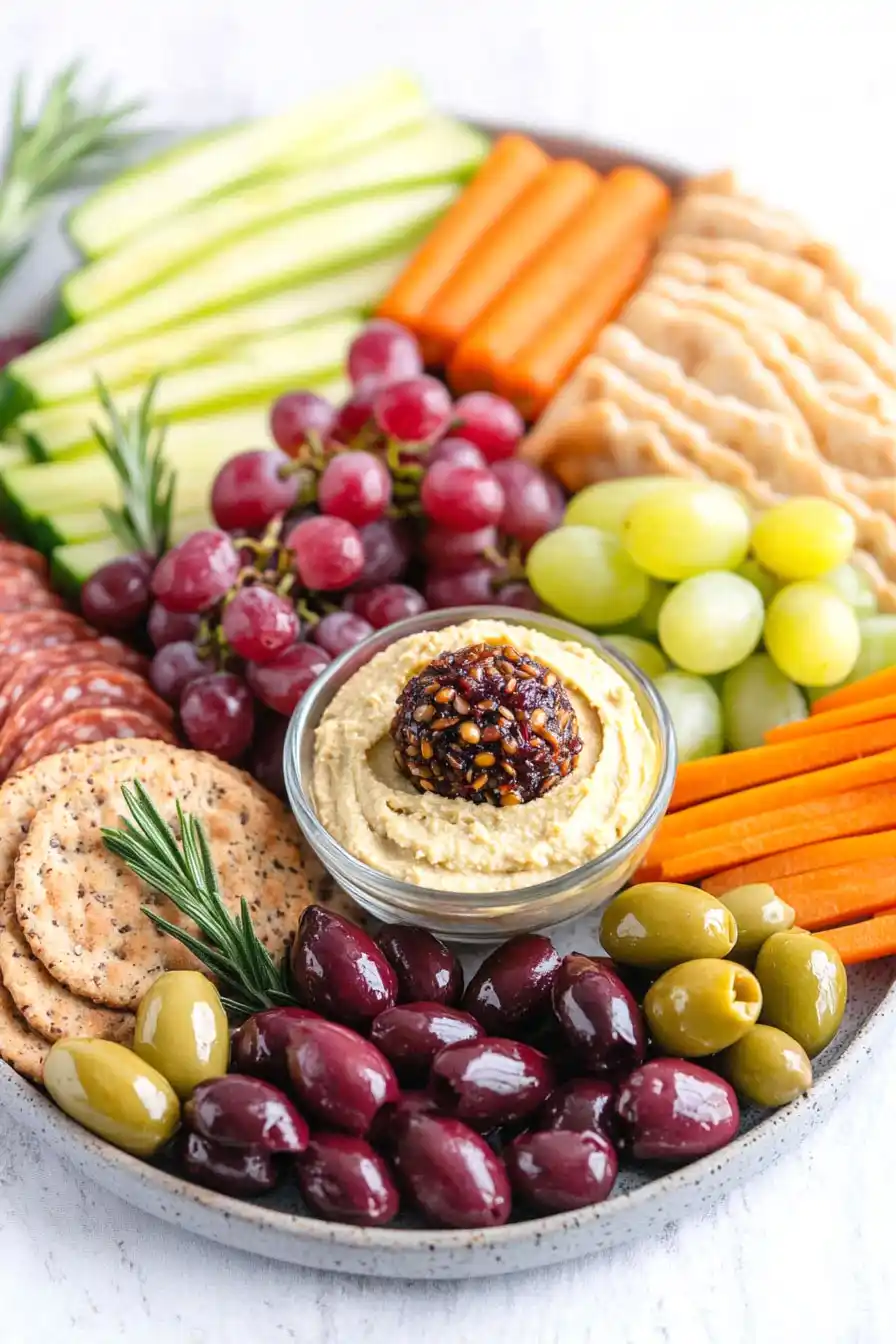
Why You’ll Love This Charcuterie Board
- Plant-based friendly – This vegan version of a classic charcuterie board lets everyone enjoy the fun of grazing, regardless of dietary preferences.
- No cooking required – Just arrange and serve – it’s perfect for those times when you want to impress guests without spending hours in the kitchen.
- Customizable options – Mix and match different vegan meats, cheeses, fruits, and nuts based on what you like or what’s available at your local store.
- Perfect party food – It’s ideal for entertaining since guests can pick and choose their favorite combinations while mingling, plus it looks beautiful on any table.
- Make-ahead friendly – You can prep most components hours before your guests arrive, making party planning so much easier.
What Kind of Vegan Cheese Should I Use?
The world of vegan cheese has come a long way, and you’ve got plenty of options for your charcuterie board. Store-bought varieties like aged cashew cheese or almond-based cheese wheels work great since they have a firm texture that’s easy to slice and arrange. If you’re making your own, cultured cashew cheese or a spreadable herb-infused cheese can add wonderful variety to your board. Just remember to include a mix of textures – maybe a soft spreadable cheese alongside a firmer sliceable one. For the best flavor combination, try using one mild option (like a mozzarella-style) and one stronger flavored choice (like an aged cheddar or smoked gouda style).
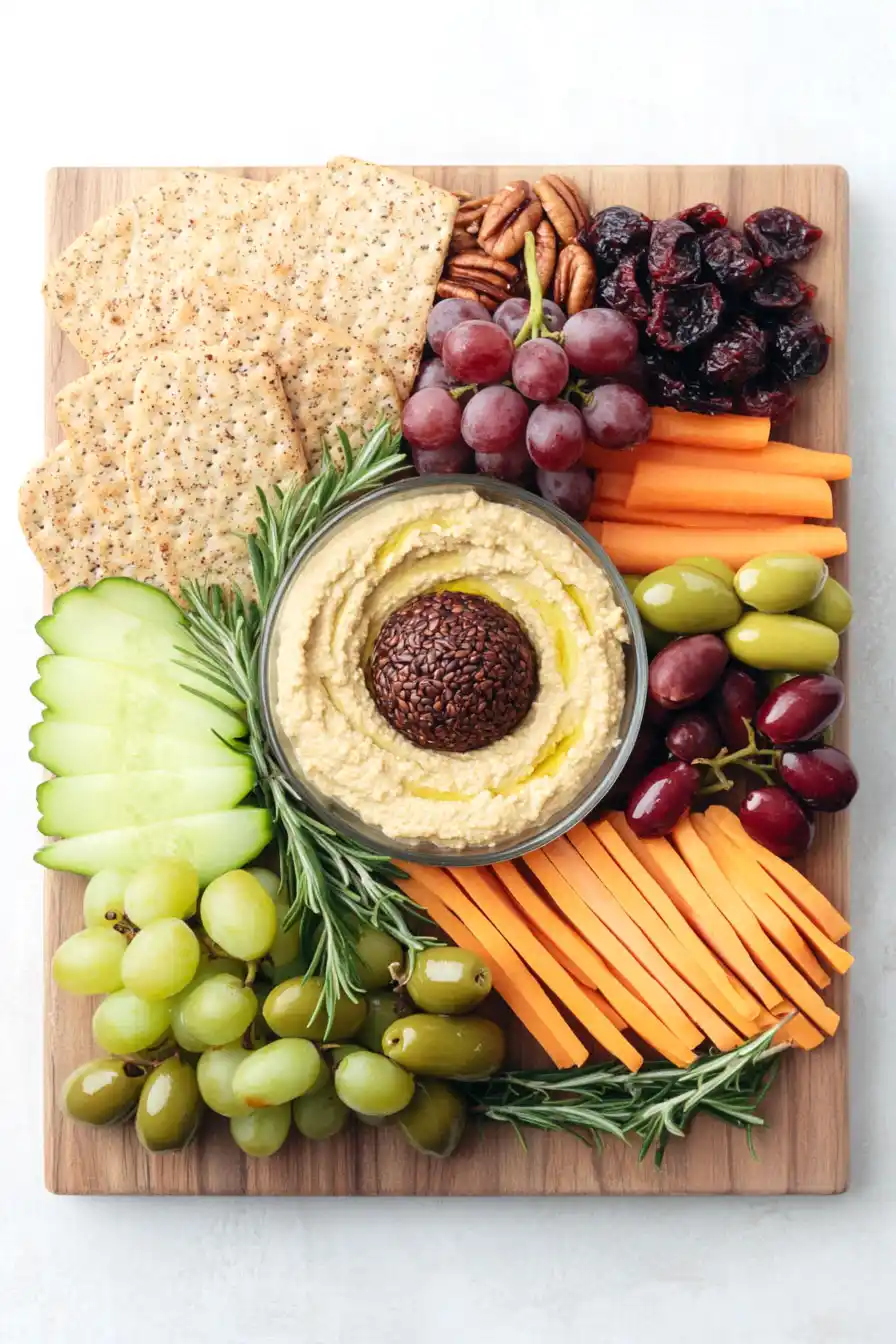
Options for Substitutions
The great thing about a vegan charcuterie board is how easy it is to swap ingredients based on what you have or prefer:
- Vegan meats: If you can’t find Tuscan veggie sausages or plant-based ham, try using marinated tempeh, seitan slices, or smoked tofu. You can also use mushroom-based deli slices that are becoming more common in stores.
- Vegan cheese: Store-bought vegan cheese works great, but you can also use different spreads like cashew cheese, almond ricotta, or even more hummus. Each brand has its own taste, so try a few to find your favorite.
- Fruits: Feel free to swap grapes and cranberries with any seasonal fruits. Try figs, berries, apple slices, or dried fruits like apricots or dates. Just make sure to add something sweet to balance the savory items.
- Vegetables: The veggie choices are totally flexible – swap in cucumber slices, cherry tomatoes, radishes, or any fresh vegetables you enjoy. Raw or pickled vegetables both work great.
- Nuts: Any nuts will work here – try walnuts, cashews, or pistachios. If there are nut allergies, replace with roasted chickpeas or pumpkin seeds for that nice crunch.
- Crackers: Any crackers you like will work – try rice crackers, seed crackers, or even sliced baguette. Just check the ingredients to make sure they’re vegan if that’s important to you.
Watch Out for These Mistakes While Preparing
The biggest mistake when assembling a vegan charcuterie board is overcrowding your platter – remember to leave some breathing room between items so guests can easily grab what they want without disrupting the entire arrangement. Temperature control is crucial too – vegan cheeses often become too soft at room temperature, so it’s best to take them out of the fridge just 15-20 minutes before serving, and keep backup portions chilled. Another common error is not providing enough textural contrast – make sure to balance soft elements (hummus, jam) with crunchy items (nuts, crackers), and remember to slice your veggie sausages and plant-based ham right before serving to prevent them from drying out. For the most appealing presentation, start by placing your larger items (cheese blocks, dips) first, then fill in the spaces with smaller items like nuts and olives, creating natural flowing patterns that guide the eye across the board.
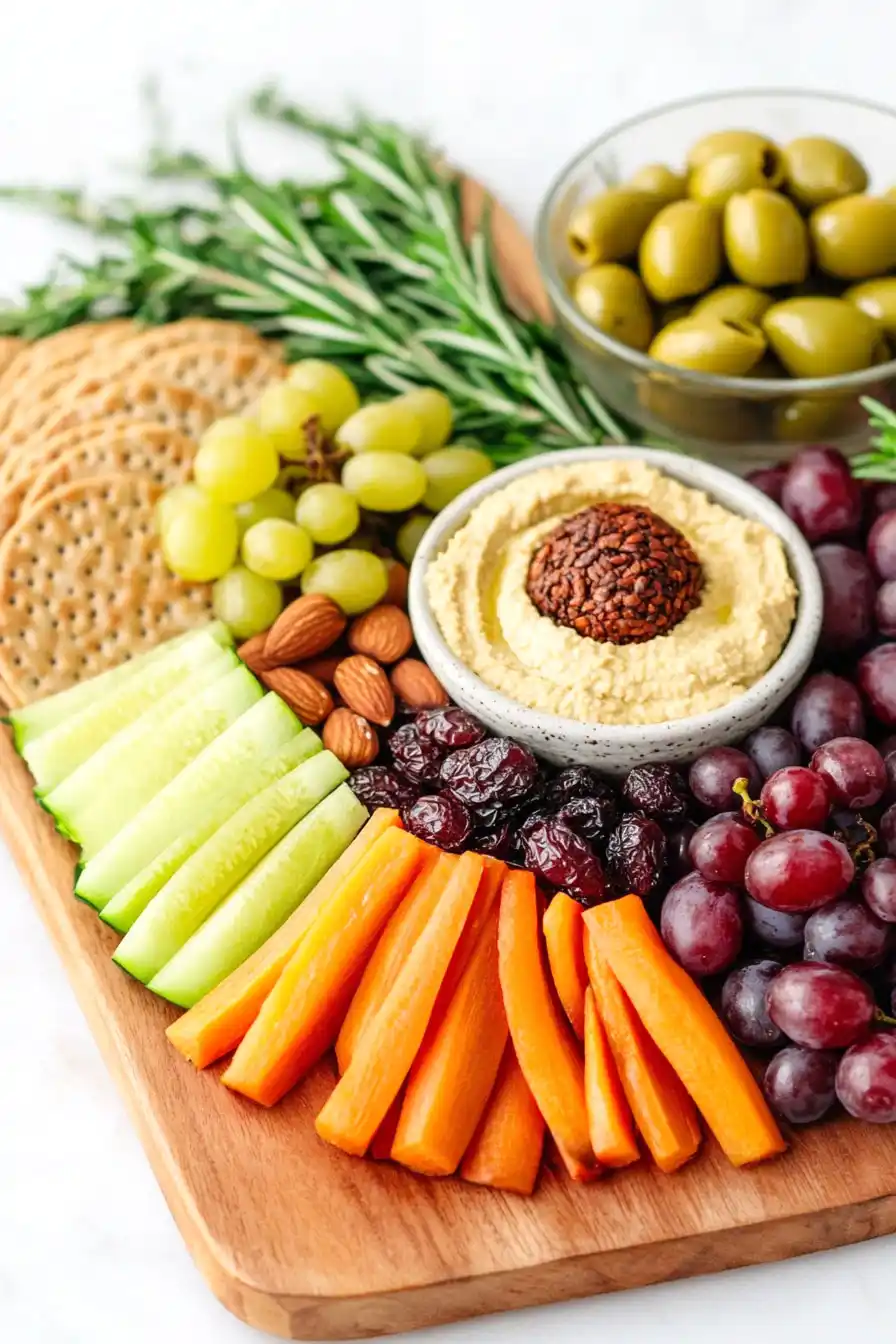
What to Serve With a Vegan Charcuterie Board?
A charcuterie board is already a complete spread, but you can make your gathering even more special with a few thoughtful additions. A nice selection of beverages works really well – think kombucha, craft beer, or your favorite wine (both red and white options are great). For a more substantial spread, add a warm baguette or focaccia on the side, and maybe a bowl of warm marinated olives for a cozy touch. If you’re hosting a bigger group, consider setting up a small soup station with something simple like butternut squash soup or tomato basil soup in mini cups – it’s perfect for dipping those extra crackers!
Storage Instructions
Keep Fresh: If you have leftover components from your charcuterie board, store them separately in airtight containers. Keep the plant-based meats and cheeses in the fridge for up to 5 days. Fresh veggies will stay crisp for 3-4 days when stored in containers lined with paper towels to absorb excess moisture.
Prep Ahead: You can prep most elements of this board up to 24 hours in advance. Cut your veggies, portion out your nuts, and arrange your plant-based meats and cheeses in separate containers. Keep everything in the fridge, then just assemble your board when guests arrive. The nuts and crackers can stay at room temperature in sealed containers.
Assembly Tips: For the best presentation, take the vegan meats and cheeses out of the fridge about 30 minutes before serving – they’ll taste better at room temperature. Add fresh elements like herbs and cut vegetables just before serving to keep them looking fresh and crisp.
| Preparation Time | 10-15 minutes |
| Cooking Time | 10-20 minutes |
| Total Time | 20-35 minutes |
| Level of Difficulty | Easy |
Estimated Nutrition
Estimated nutrition for the whole recipe (without optional ingredients):
- Calories: 2200-2500
- Protein: 40-50 g
- Fat: 120-140 g
- Carbohydrates: 250-280 g
Ingredients
For the board items:
- 1/2 cup pecan halves
- 1 package Tuscan veggie sausages
- 1/2 cup almonds
- 1 package plant-based ham (I like Tofurky deli slices)
- 2 medium carrots (cut into sticks)
- vegan cheese (homemade or store-bought, variety of textures recommended)
- 1/2 cup jam or jelly (tart fruit jams like fig or raspberry work well)
- 1 box whole grain crackers (assorted shapes and flavors)
- 1/2 cup hummus
- 1 bell pepper (any color, thinly sliced)
- 1/2 cup olives (marinated Castelvetrano olives are a great choice)
- 1 cup fresh cranberries
- 16 oz grapes (green or red)
- 2 celery stalks (cut into sticks)
For the garnish:
- fresh rosemary (for aromatic decoration)
Step 1: Prepare and Cook Veggie Sausages
Begin by cooking the veggie sausages as per the package directions to ensure they are prepared safely and taste their best.
Once cooked, place the sausages on a large serving tray alongside the veggie ham slices, arranging them neatly.
Step 2: Prepare Dips and Spreads
Portion out vegan cheese, hummus, and jam into separate small bowls.
These will serve as flavorful accompaniments to the other items on the tray.
Once prepared, place the bowls onto the serving tray, spacing them evenly to enhance accessibility and presentation.
Step 3: Assemble the Charcuterie Board
Complete your tray by arranging a selection of fresh fruit, vegetables, crackers, and nuts around the sausages, ham, and bowls of cheese, hummus, and jam.
For a touch of fragrance and color, add sprigs of rosemary to the platter.
This touch not only elevates the visual appeal but adds an aromatic element to the board.
Step 4: Serve and Enjoy
Your vibrant and inviting charcuterie board is now ready to be served.
Allow guests to pick and choose their favorites from the diverse selection.
Enjoy the delightful combination of flavors and textures!