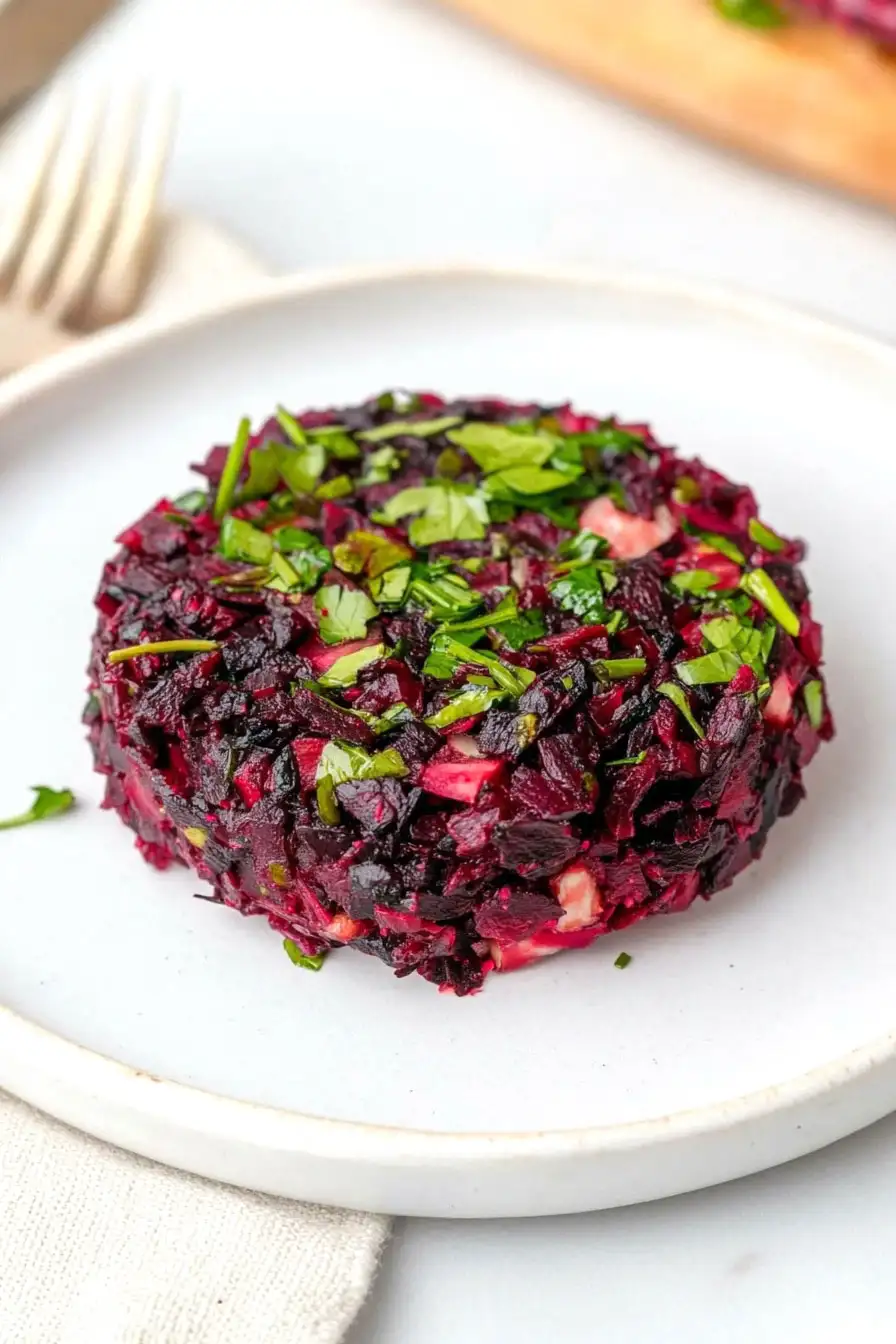
Here’s my take on beet tartare, a clever plant-based spin on the classic French dish. It uses fresh, raw beets cut into small pieces, mixed with capers, shallots, and herbs, all brought together with a simple mustard dressing.
It’s become my go-to appetizer when I have friends over for dinner. I love watching their faces light up when they realize it’s made from beets instead of the traditional beef. Plus, it looks pretty fancy on a plate – but between you and me, it’s actually super easy to make!
Why You’ll Love This Beet Tartare
- Plant-based alternative – This vegetarian take on classic tartare gives you all the sophisticated presentation and rich flavors without any meat, making it perfect for vegetarians and vegans alike.
- Quick preparation – Ready in just 35-45 minutes, this elegant appetizer comes together faster than you might expect for such an impressive dish.
- Simple ingredients – With just a handful of easy-to-find ingredients, you can create this restaurant-worthy starter right in your own kitchen.
- Health-conscious choice – Beets are packed with nutrients and antioxidants, making this a lighter alternative that doesn’t sacrifice on taste or presentation.
What Kind of Beets Should I Use?
Raw red beets are the star of this tartare, though golden or chioggia beets could work too if you want to switch things up (just keep in mind you’ll lose that classic deep red color). When shopping, look for firm, smooth beets that feel heavy for their size – avoid any that are soft or wrinkled. Medium-sized beets are perfect for this dish since they’re usually more tender and less woody than the really big ones. If you’re buying beets with the greens still attached, make sure the leaves look fresh – it’s a good sign the beets are recently harvested. Just remember to peel your beets well before using them in this recipe, as the skin can be a bit tough and earthy.
Options for Substitutions
This plant-based take on tartare can be adapted with several ingredient swaps:
- Beetroot: Since beets are the star here, they’re pretty essential. However, you could try using different varieties like golden or chioggia beets for a different color and slightly different flavor profile.
- Dark miso paste: If you can’t find dark miso, you can use red miso paste. In a pinch, you could substitute with soy sauce, though you’ll want to use less (about 1/4 teaspoon) since it’s more liquid.
- Capers: No capers? Try finely chopped pickled cornichons or green olives for that briny punch. You’ll want about the same amount.
- Shallot: You can swap shallot with finely minced red onion (use about half the amount) or green onion for a different but still tasty result.
- Fresh dill: Fresh chives or parsley work well here too. If using dried dill, use just 1/4 teaspoon since dried herbs are more concentrated.
- Rice bran/sunflower oil: Any neutral-flavored oil works here – try grapeseed, canola, or light olive oil.
Watch Out for These Mistakes While Cooking
The biggest challenge when making beet tartare is achieving the right texture – over-processing the beets will turn them into a mushy paste instead of the desired fine, meat-like dice, so it’s best to chop them by hand or pulse very carefully in short bursts if using a food processor. Another common mistake is not cooking the beets properly beforehand – they should be tender enough to pierce easily with a fork, but not so soft that they lose their structure and become watery. To keep the flavors balanced, avoid adding all the seasonings at once; instead, start with small amounts of miso, lemon juice, and salt, then taste and adjust gradually since beets’ natural sweetness can vary significantly. For the best flavor development, let your tartare rest in the refrigerator for at least 30 minutes before serving, allowing the ingredients to meld together while maintaining their distinct textures.
What to Serve With Beet Tartare?
This vegetarian take on classic tartare pairs wonderfully with toasted crostini or thinly sliced rye bread – both provide the perfect crunch to complement the tender beets. Since beet tartare is often served as an appetizer, I like to round out the plate with some peppery arugula dressed simply in olive oil and lemon juice. For a more substantial meal, try serving it alongside a warm quinoa salad or roasted fingerling potatoes. And don’t forget some crisp white wine – a dry Riesling or Sauvignon Blanc works great with the earthy-sweet flavors of the beets!
Storage Instructions
Keep Fresh: Your beet tartare will stay fresh in an airtight container in the fridge for up to 3 days. The flavors actually get better after a day as they have time to mingle together. Just give it a quick stir before serving to redistribute any liquid that might have separated.
Make Ahead: This is a great dish to prep in advance for parties! You can dice the beets and mix all ingredients except the fresh dill up to 24 hours ahead. Just add the chopped dill right before serving to keep it looking fresh and perky.
Serve: When you’re ready to enjoy your stored beet tartare, take it out of the fridge about 15 minutes before serving to let it come to room temperature. This helps the flavors really shine through. Give it a quick taste and adjust the seasoning if needed, as cold temperatures can dull flavors a bit.
| Preparation Time | 20-30 minutes |
| Cooking Time | 15 minutes |
| Total Time | 35-45 minutes |
| Level of Difficulty | Easy |
Estimated Nutrition
Estimated nutrition for the whole recipe (without optional ingredients):
- Calories: 120-150
- Protein: 3-5 g
- Fat: 5-7 g
- Carbohydrates: 18-22 g
Ingredients
For the roasted beetroot:
- 200g beetroot
- 1/2 tsp dark miso paste (enhances umami flavor)
- 1/2 tsp mild oil (like rice bran or sunflower)
For the fresh additions:
- 1 sprig fresh dill (finely chopped for garnish)
- 1/2 shallot (finely diced for a mild onion flavor)
- 1 tbsp capers (finely minced)
For assembly and seasoning:
- salt to taste
- 1 tsp lemon juice (freshly squeezed for best taste)
- 1/2 tsp olive oil (I use Colavita extra virgin)
- pepper to taste
Step 1: Prepare and Cook the Beetroot
Preheat your oven to 180°C fan.
Wash, peel, and grate the beetroot.
In a mixing bowl, combine the grated beetroot with dark miso paste and neutral oil until well coated.
Spread the beetroot mixture thinly across some baking paper placed inside a baking tray.
Bake for 15 minutes at 180°C fan.
Once baked, allow the beetroot to cool slightly.
If you’re preparing ahead of time, you can place the beetroot in the fridge and continue the recipe the next day.
Step 2: Prepare the Fresh Ingredients
While the beetroot is cooling, finely chop the capers, shallot, and fresh dill.
Place these chopped ingredients into a bowl.
This will add a burst of flavor to your tartare.
Step 3: Assemble the Beetroot Tartare
Add the cooled beetroot to the bowl with the chopped capers, shallot, and dill.
Pour in some lemon juice and olive oil, then gently mix everything together until well combined.
Season the mixture with salt and pepper to taste, balancing the flavors as desired.
Step 4: Shape and Serve the Tartare
To serve the tartare, place a round cookie cutter onto a plate.
Carefully spoon the beetroot mixture into the center of the cookie cutter, pressing it down gently to form a compact shape.
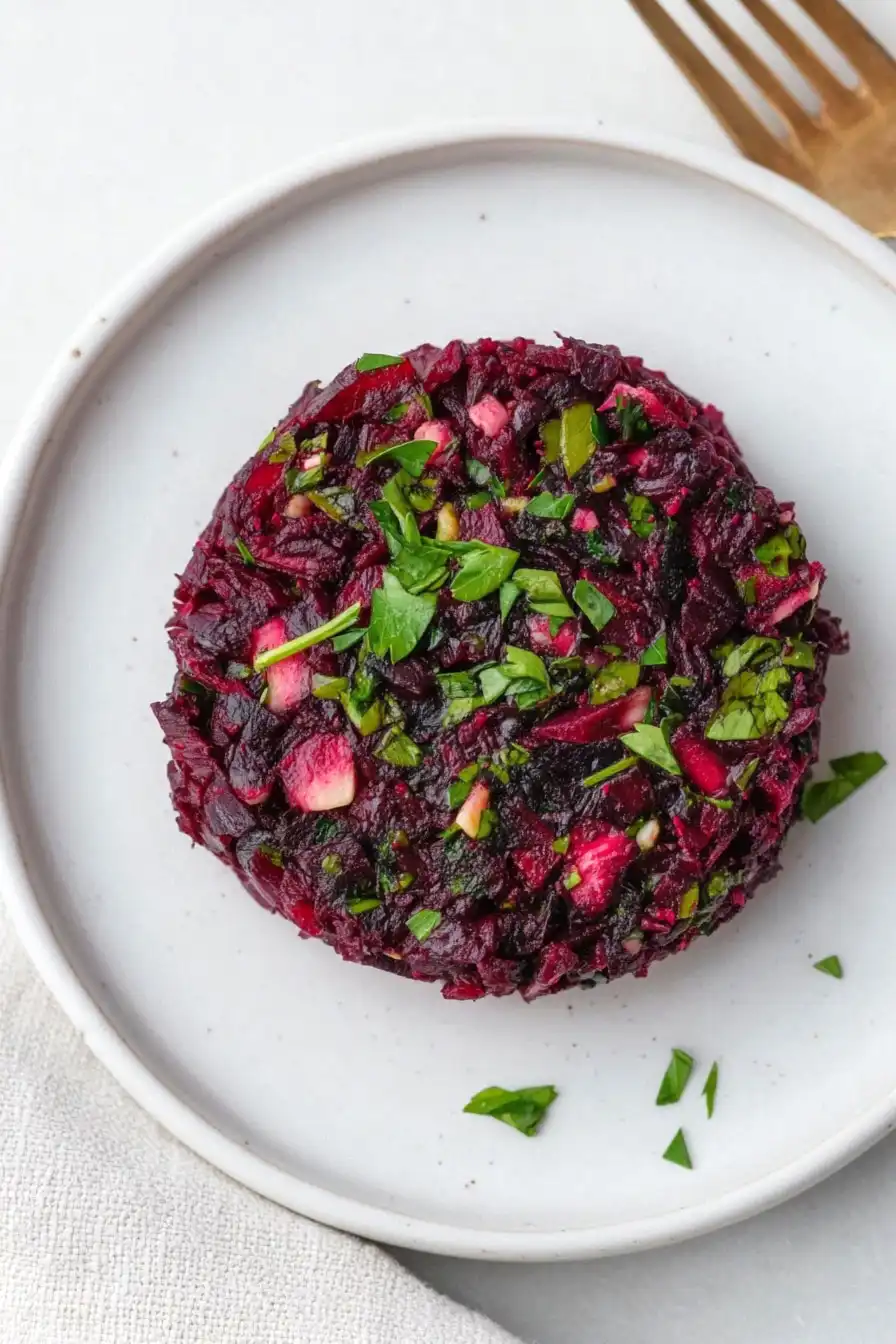
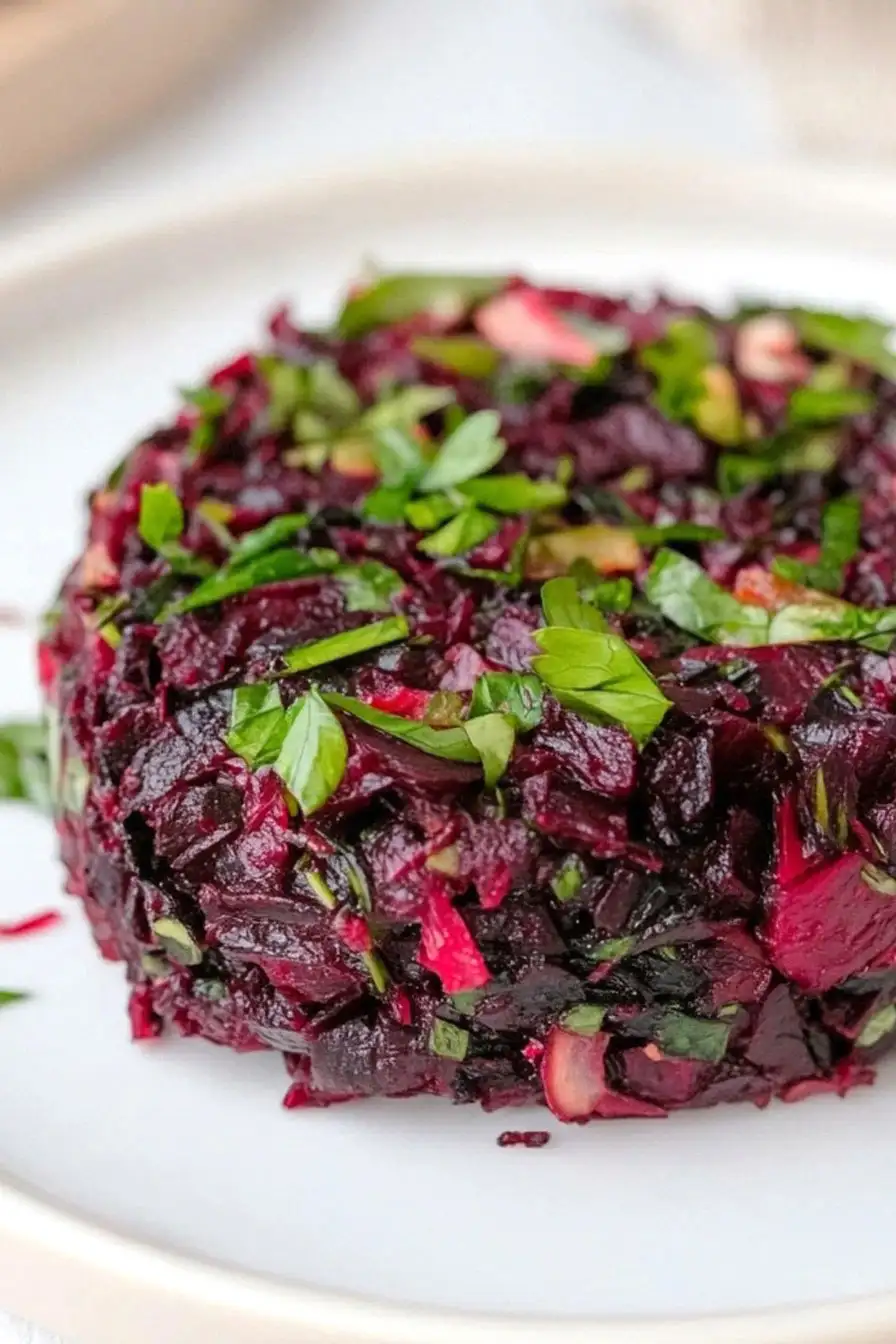
Once all the mixture is added and pressed down, slowly remove the cookie cutter to reveal a beautifully shaped tartare.
Enjoy your refreshing and delicious beetroot tartare!