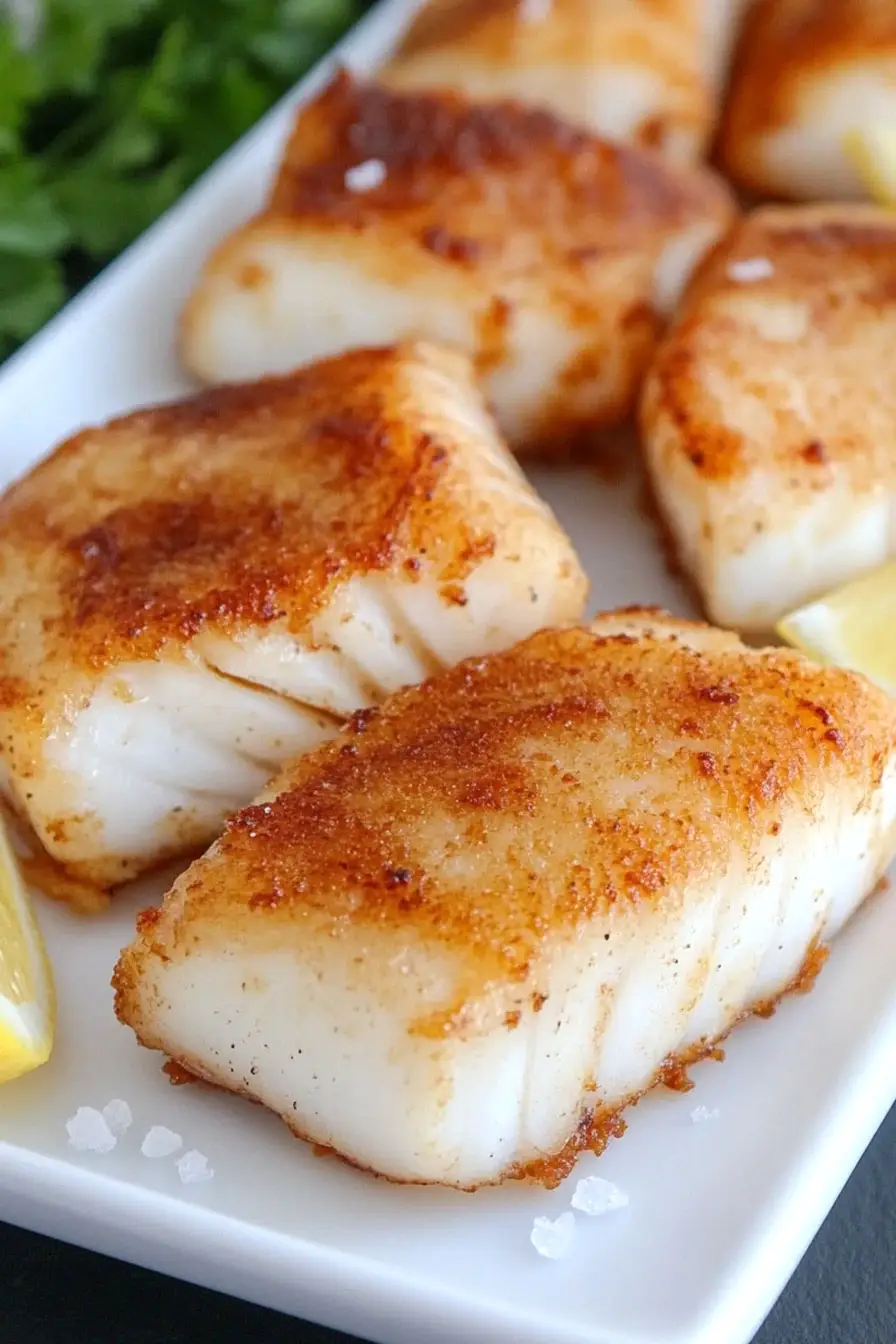
If you ask me, halibut cheeks are one of the ocean’s best-kept secrets.
These small, round pieces of fish are like hidden treasures tucked away inside the fish’s head. They’re tender and mild, with a clean taste that even people who aren’t big fish fans tend to enjoy.
When cooked just right, they turn soft and flaky, almost like little scallops. I love how they pick up whatever seasonings you pair them with, from simple lemon and herbs to bolder Asian-inspired sauces.
They’re quick to prepare and make for an easy weeknight dinner that feels special without being fussy.
Why You’ll Love These Halibut Cheeks
- Quick cooking time – These tender fish cheeks cook up in less than 40 minutes, making them perfect for both weeknight dinners and special occasions.
- Restaurant-quality at home – Halibut cheeks are considered a delicacy, and this simple preparation method lets you enjoy this premium cut of fish right in your own kitchen.
- Light and healthy – With lean protein and a fresh lemon-wine sauce, this dish is naturally low in calories while being high in protein and omega-3 fatty acids.
- Simple ingredients – The recipe uses basic pantry staples like olive oil, wine, and lemon to create a light yet flavorful sauce that complements the fish perfectly.
What Kind of Halibut Cheeks Should I Use?
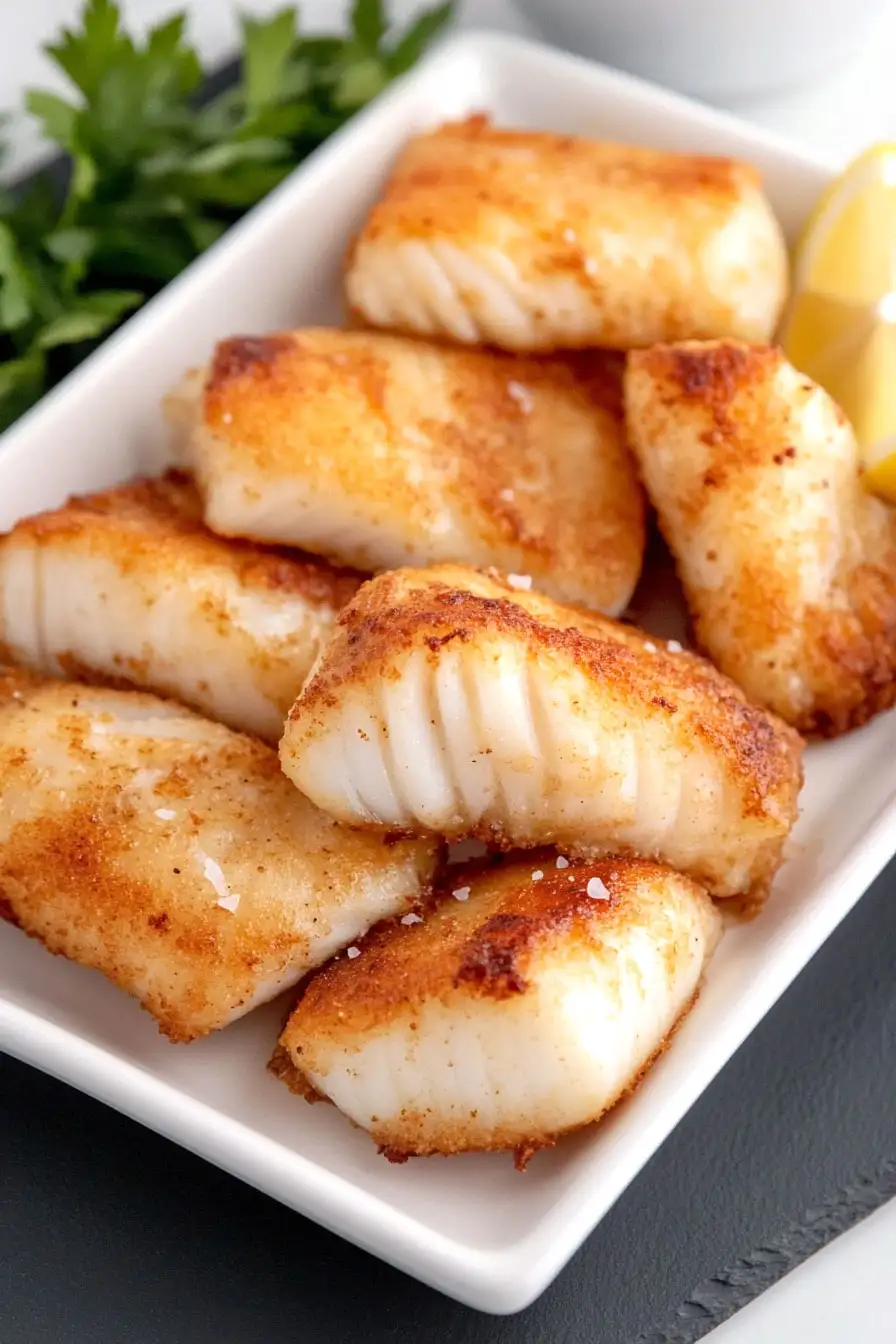
Halibut cheeks are actually a specific cut from the head of the fish – they’re the small, round muscles that the halibut uses to open and close its gills. Fresh halibut cheeks are your best bet, but good-quality frozen ones will work just fine too. When shopping, look for cheeks that are plump, firm, and roughly silver dollar-sized – they should have a clean, ocean-like smell without any fishiness. If you can’t find halibut cheeks at your local market, you can ask your fishmonger to save them for you when they’re breaking down whole halibut, as they’re often considered a prized cut by those in the know.
Options for Substitutions
This recipe can be adapted with several substitutions, though some ingredients are key to getting the best results:
- Halibut cheeks: While halibut cheeks have a special texture and sweetness, you can use regular halibut filets cut into similar-sized pieces. Other firm white fish like cod cheeks, scallops, or even chunks of monkfish would also work well.
- Shallots: No shallots? Use 1/4 cup finely diced sweet onion or red onion instead. They’ll give you a similar flavor profile.
- White wine: If you prefer not to use wine, replace it with fish stock or chicken broth plus 1 tablespoon of white wine vinegar to maintain that slight acidic note.
- Cherry tomatoes: Regular diced tomatoes work fine here – use about 2 cups. In a pinch, you could even use drained canned diced tomatoes.
- Mixed dried herbs: Feel free to use any herbs you have on hand – thyme, oregano, or herbs de Provence all work well. Fresh herbs are great too – just double the amount.
- Olive oil: You can swap this with grapeseed oil or avocado oil, which both have mild flavors and high smoke points good for searing fish.
Watch Out for These Mistakes While Cooking
The biggest mistake when cooking halibut cheeks is overcooking them, as these delicate pieces of fish can quickly become tough and rubbery – they only need 2-3 minutes per side until they’re opaque and easily flake with a fork.
Temperature control is crucial, so make sure your pan is hot enough to create a light golden crust (medium-high heat), but not so hot that the outside burns before the inside cooks through.
When preparing the sauce, avoid rushing the wine reduction process – letting it simmer until reduced by half concentrates the flavors and creates the perfect consistency to complement the fish.
For the best results, pat the halibut cheeks completely dry before cooking and season them just before they hit the pan, as salt applied too early can draw out moisture and prevent proper searing.
What to Serve With Halibut Cheeks?
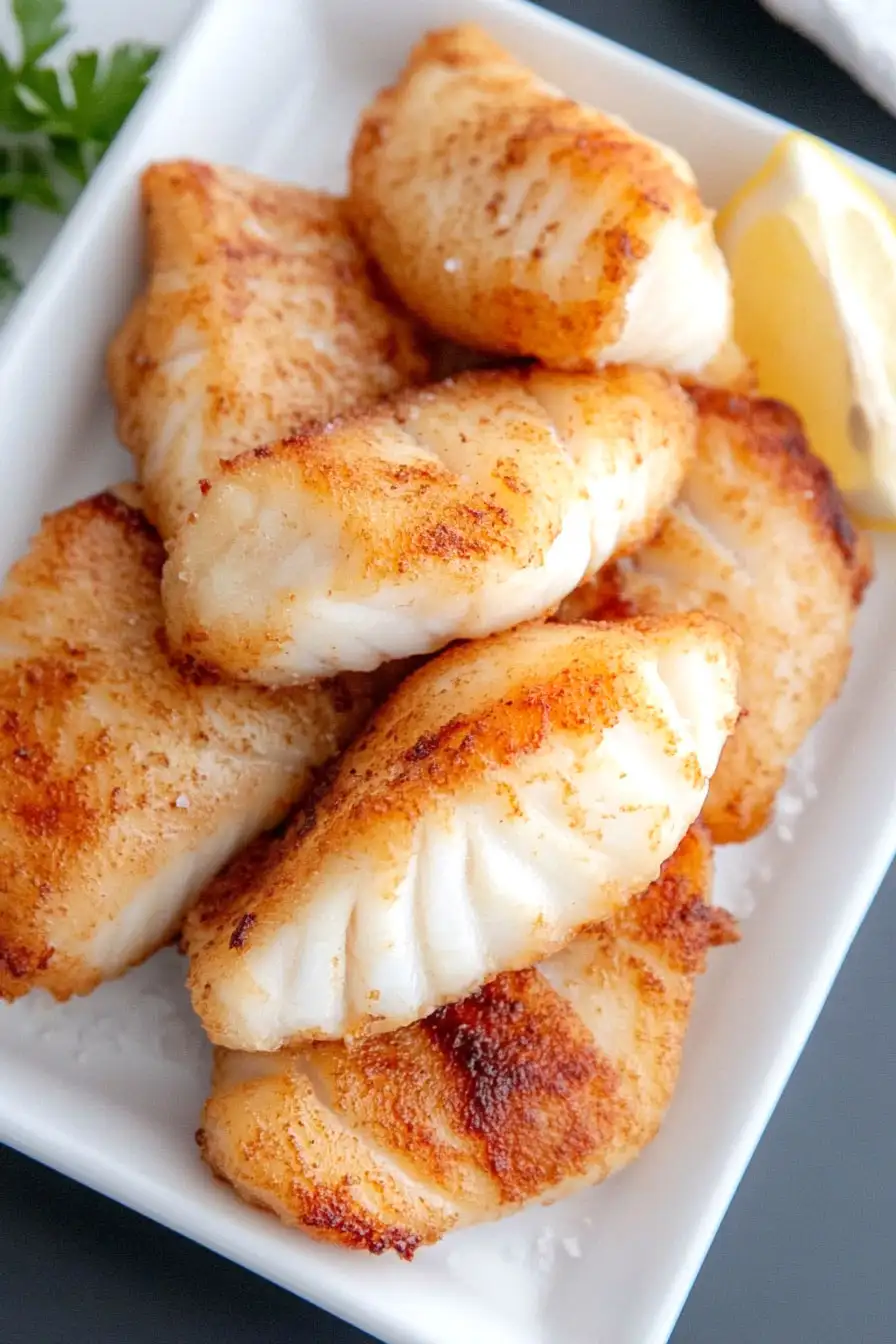
These tender, delicate halibut cheeks are perfect with simple sides that let the fish stay in the spotlight. A bed of fluffy rice or creamy mashed potatoes makes an excellent base to soak up all that wonderful lemony sauce. For vegetables, I like to keep it simple with roasted asparagus, steamed green beans, or a light mixed green salad dressed with a basic vinaigrette. You could also serve some crusty bread on the side – it’s perfect for mopping up every last drop of the wine and lemon sauce. If you’re serving this for a special occasion, start with a light appetizer like chilled cucumber soup or a small seafood salad.
Storage Instructions
Keep Fresh: Cooked halibut cheeks are best enjoyed right away, but if you have leftovers, place them in an airtight container with the sauce and tomatoes. They’ll stay good in the fridge for up to 2 days. The sauce actually gets even better as the flavors meld together!
Make Ahead: You can prep the sauce ingredients ahead of time – chop the shallots, slice the garlic, and measure out your wine and lemon juice. Store these prepped ingredients separately in the fridge for up to 24 hours. The fish itself is best cooked just before serving to maintain its tender texture.
Enjoy Later: To serve leftover halibut cheeks, gently warm them in a covered pan over low heat just until heated through. Be careful not to overcook them as they can become tough. The sauce can be warmed separately and poured over the fish once heated.
| Preparation Time | 10-15 minutes |
| Cooking Time | 15-25 minutes |
| Total Time | 25-40 minutes |
| Level of Difficulty | Medium |
Estimated Nutrition
Estimated nutrition for the whole recipe (without optional ingredients):
- Calories: 800-900
- Protein: 70-75 g
- Fat: 60-65 g
- Carbohydrates: 20-25 g
Ingredients
For the halibut cheeks:
- salt
- 2 tbsp olive oil
- pepper
- 1 lb halibut cheeks
For the sauce:
- 1 pint cherry tomatoes (halved)
- 2 tbsp olive oil
- pepper
- salt
- 2 garlic cloves (freshly minced for best flavor)
- 1/2 cup lemon juice (freshly squeezed preferred)
- zest from 1 lemon
- 1/2 tsp dried herbs (I use McCormick Italian Seasoning Blend)
- 1 cup white wine
- 2 medium shallots (finely diced)
Step 1: Prepare and Season the Halibut Cheeks
Lay the halibut cheeks out in a single layer on a clean surface and pat them dry using a dry paper towel.
Season generously with salt and pepper to taste, ensuring that both sides are evenly coated.
Step 2: Cook the Halibut Cheeks
In a large sauté pan, heat 2 tablespoons of olive oil over medium heat.
Once the oil is hot, add a few halibut cheeks to the pan, working in batches to avoid overcrowding.
Cook the halibut cheeks until they are browned on one side, then flip and continue cooking on the second side until browned.
This process will take roughly 3 to 4 minutes per side.
Once cooked, remove the cheeks from the pan and set aside.
Step 3: Prepare the Shallot and Garlic Mixture
As the halibut cheeks are cooking, heat 1 tablespoon of olive oil in a small saucepan over medium heat.
Add finely diced shallots and sliced garlic to the pan.
Cook this mixture for about 2 minutes, or until the shallots and garlic have begun to soften and become fragrant.
Step 4: Create the Sauce
To the softened shallot and garlic mixture, add herbs de Provence and stir for about 1 minute.
Pour in the lemon juice and wine, and allow the sauce to cook until it reduces by about half.
Once reduced, add sliced cherry tomatoes and cook them just until they begin to soften.
Season the sauce with salt and pepper to taste.
Step 5: Serve and Garnish
Once the sauce is ready, remove it from the heat.
Serve it alongside the cooked halibut cheeks.
Finish by garnishing with fresh lemon zest for added brightness and flavor.
Enjoy your delicious meal!