Growing up, the closest thing I had to a hot pot was Campbell’s soup on the stovetop. My mom wasn’t big on Asian cooking, and the idea of cooking meat right at the dinner table seemed pretty strange to me back then. It wasn’t until my neighbor invited me over for a pork belly hot pot that I realized what I’d been missing all those years.
The beauty of hot pot is that it’s actually easier than traditional cooking – you basically just prep the ingredients and let everyone cook their own food right at the table. And when it comes to cuts of meat, pork belly is perfect for this style of cooking. The fat melts just right in the simmering broth, making each piece tender and flavorful.
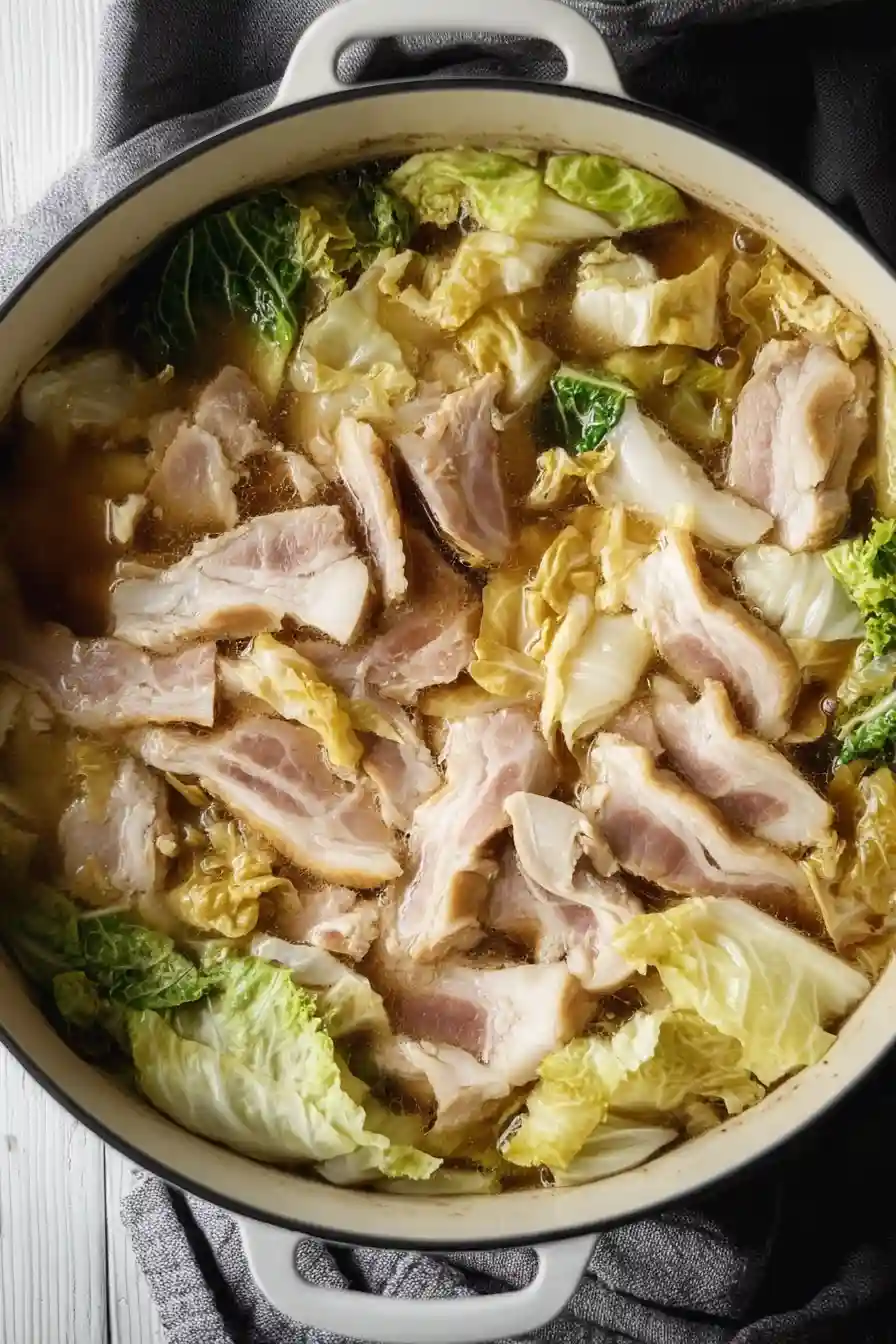
Why You’ll Love This Pork Belly Hot Pot
- Quick comfort food – This warming hot pot comes together in under an hour, perfect for those chilly evenings when you need something cozy and satisfying.
- Restaurant-quality at home – With tender pork belly and chewy udon noodles in a savory broth, you’ll get the authentic Japanese hot pot experience without leaving your kitchen.
- One-pot meal – Everything cooks in a single pot, which means less cleanup and more time to enjoy your meal with family or friends.
- Customizable heat level – The shichimi togarashi chili powder lets each person adjust their own spice level, making it perfect for serving to both spice lovers and those who prefer milder flavors.
- Simple ingredients – Most ingredients can be found at your local Asian market or regular grocery store, and the recipe doesn’t require any complicated techniques.
What Kind of Pork Belly Should I Use?
For hot pot, you’ll want to look for fresh pork belly that has good meat-to-fat layering – those distinctive stripes of lean meat and fat that make pork belly so special. The key is to get it sliced really thin (about 2-3mm thick), similar to bacon cuts, which helps it cook quickly and stay tender in the hot pot. If you can’t find pre-sliced pork belly at your local Asian market, ask your butcher to slice it for you, or partially freeze the meat at home for about 30 minutes to make it easier to slice yourself. Make sure to remove the skin before slicing, as it can become tough and chewy in the hot pot broth.

Options for Substitutions
This cozy hot pot recipe can be adapted with several substitutions if you need them:
- Dashi seasoning: If you can’t find dashi, chicken or vegetable stock works well here. You can add a piece of dried kombu seaweed to the broth if you have it, to get that umami flavor.
- Pork belly: While pork belly gives the best flavor and texture, you can use thick-cut bacon or even sliced pork shoulder. Just keep in mind that leaner cuts won’t be as tender.
- Napa cabbage: Regular green cabbage or bok choy can work instead of Napa cabbage. Cut regular cabbage into thinner pieces since it’s tougher than Napa.
- Udon noodles: You can swap udon with thick rice noodles or even ramen noodles. Just adjust cooking time according to package instructions.
- Ponzu sauce: No ponzu? Mix soy sauce with a bit of lemon or lime juice (3 parts soy to 1 part citrus). It won’t be exactly the same but will give you that tangy-salty taste.
- Shichimi togarashi: Regular red pepper flakes or a mix of black pepper and cayenne can work as alternatives. Start with less and adjust to taste.
Watch Out for These Mistakes While Cooking
The biggest challenge when cooking pork belly hot pot is getting the meat’s texture right – slicing the pork belly too thick will result in chewy, difficult-to-eat pieces, so aim for thin, bacon-like slices about 2-3mm thick. Another common mistake is boiling the broth too vigorously, which can make the pork tough and the cabbage mushy – instead, maintain a gentle simmer throughout the cooking process. When adding the udon noodles, don’t overcook them as they’ll continue to soften in the hot broth; cook them just until they separate and become pliable, usually 2-3 minutes. For the best flavor development, let the broth simmer with the ginger for at least 10 minutes before adding other ingredients, and remember to taste and adjust the seasoning before serving since the salt level can vary depending on your choice of dashi or stock.
What to Serve With Pork Belly Hot Pot?
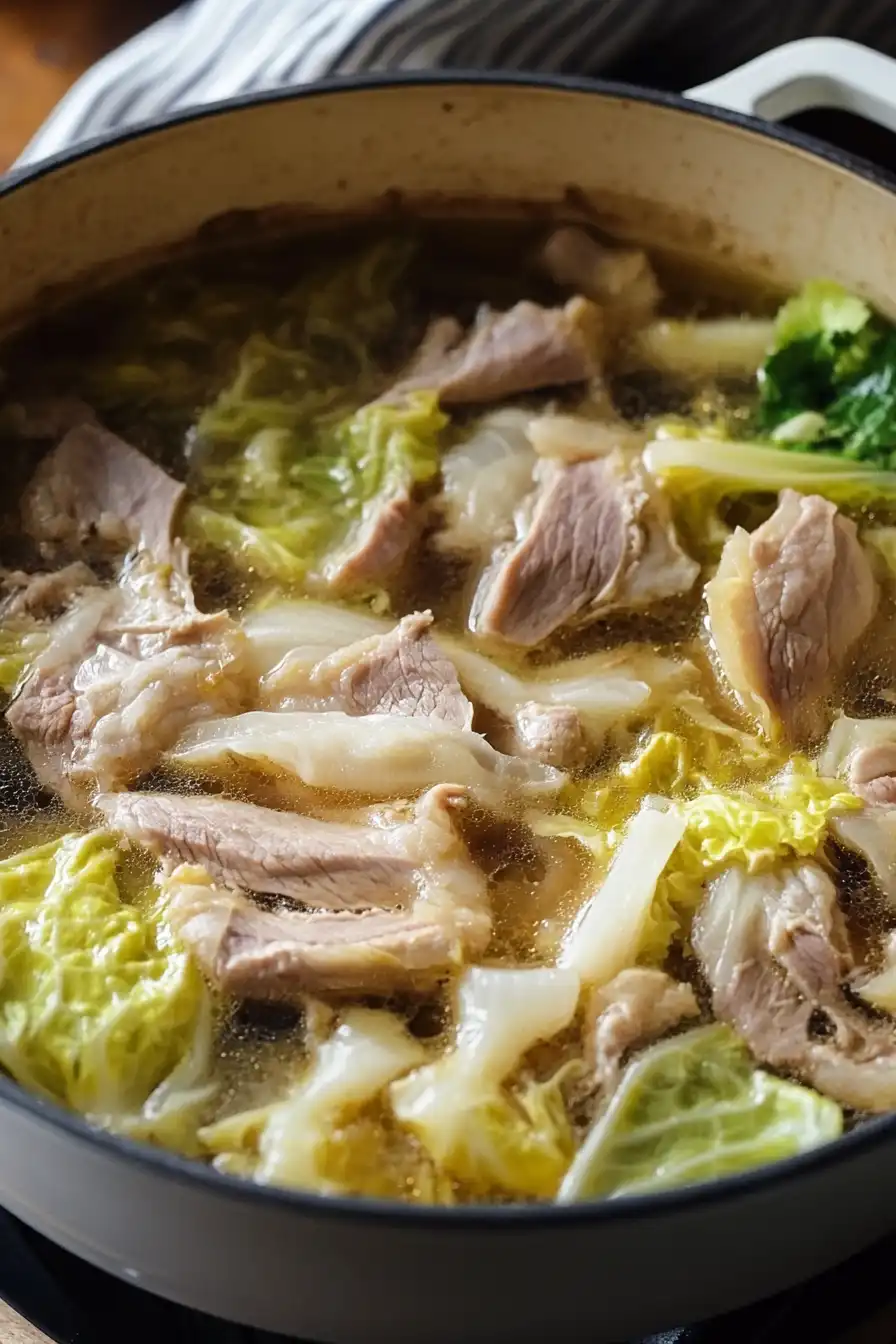
This warming Japanese-style hot pot is pretty much a complete meal on its own, but there are some simple sides that can make it even better! A small bowl of steamed white rice is perfect for soaking up the tasty broth, while some pickled vegetables like kimchi or Japanese-style pickled cucumbers add a nice tangy crunch to balance out the rich pork belly. I like to serve some extra raw vegetables on the side too – think thinly sliced mushrooms, extra napa cabbage, or some bean sprouts that people can add to their bowls as they eat. For a really cozy meal, finish things off with a cup of green tea, which helps cut through the richness of the pork.
Storage Instructions
Keep Fresh: If you have leftover hot pot broth and ingredients, separate the solids from the liquid. Store the strained broth in an airtight container in the fridge for up to 3 days. Keep the cooked pork belly and vegetables in a separate container – they’ll stay good for 2 days in the refrigerator.
Save Dipping Sauce: The ponzu dipping sauce mixture can be kept in a sealed container in the fridge for up to 5 days. Just give it a quick stir before using, as the ingredients might separate a bit.
Warm Up: To enjoy your leftovers, heat the broth in a pot until it’s simmering. Add the stored pork belly and vegetables during the last few minutes of heating. For the udon noodles, it’s best to cook fresh ones rather than storing cooked noodles, as they can get mushy when reheated.
| Preparation Time | 20-30 minutes |
| Cooking Time | 20-30 minutes |
| Total Time | 40-60 minutes |
| Level of Difficulty | Medium |
Estimated Nutrition
Estimated nutrition for the whole recipe (without optional ingredients):
- Calories: 1800-2000
- Protein: 100-120 g
- Fat: 120-140 g
- Carbohydrates: 150-160 g
Ingredients
For the hot pot:
- 4 cups water
- 1 tbsp soy sauce (low-sodium preferred)
- 2 packets udon noodles
- 700g pork belly (skin removed, sliced like bacon for quick cooking)
- 5 slices fresh ginger
- 5 tsp chicken stock granules (I use Knorr brand)
- 450g napa cabbage (cut into 1-inch pieces)
- 1 tsp salt
- 1 tsp ground white pepper
For the dipping sauce:
- 1 tbsp chopped chives
- shichimi togarashi (Japanese seven-spice blend)
- freshly grated ginger
- 1/2 cup ponzu sauce (citrusy and tangy)
Step 1: Prepare and Simmer the Broth
In a medium-sized saucepan, combine 4 cups of water with dashi or stock powder, 5 slices of fresh ginger, 1 tablespoon of soy sauce, and half of the salt and pepper mixture.
Bring this mixture to a boil, then reduce the heat to a simmer for 5-10 minutes to let the flavors meld.
After simmering, remove and discard the ginger pieces to leave a clear broth.
Step 2: Prepare and Clean Napa Cabbage
Prepare a 20cm (8-inch) pot with a lid for the cooking process.
Wash the Napa cabbage thoroughly and drain it upside down to remove excess water.
Cut the cabbage into quarters lengthwise, ensuring that the leaves remain attached at the base.
Gently wash each quarter, and set aside any leaves that naturally fall off during the washing process.
Step 3: Layer Pork Belly with Cabbage
Insert a slice of pork belly between each leaf of the cabbage quarters, using approximately 4-5 slices per quarter.
If a slice of pork belly is longer than the cabbage, trim it with scissors and reserve the excess.
Place any excess pork pieces at the bottom of your pot to add flavor.
Continue this process for all cabbage quarters.
Step 4: Trim and Arrange Cabbage in Pot
Once all cabbage quarters have been layered with pork, trim the bases of each quarter.
Cut each quarter in half or to match the height of the pot.
Arrange the cabbage quarters cut side up around the edge of the pot, ensuring they are snug.
Use any extra cabbage pieces to support bundles and fill any gaps at the top for even cooking.
Repeat this process until all cabbage and pork are arranged securely in the pot.
Step 5: Final Setup and Cooking
Ensure the cabbage bundles fit snugly within the pot to ensure even cooking and flavor absorption.
Once arranged, you’re ready to proceed with cooking, ensuring the broth from Step 1 will infuse the cabbage and pork layers during the heat process.