Here is my go-to recipe for roasted Muscovy duck, with crispy golden skin, tender meat, and a simple pan sauce made from the natural drippings, herbs, and a splash of red wine.
This duck has become our Sunday dinner champion at home. I usually serve it when we have friends over because it’s so straightforward to make but still feels special. And those leftovers? They make the best sandwiches for lunch the next day!
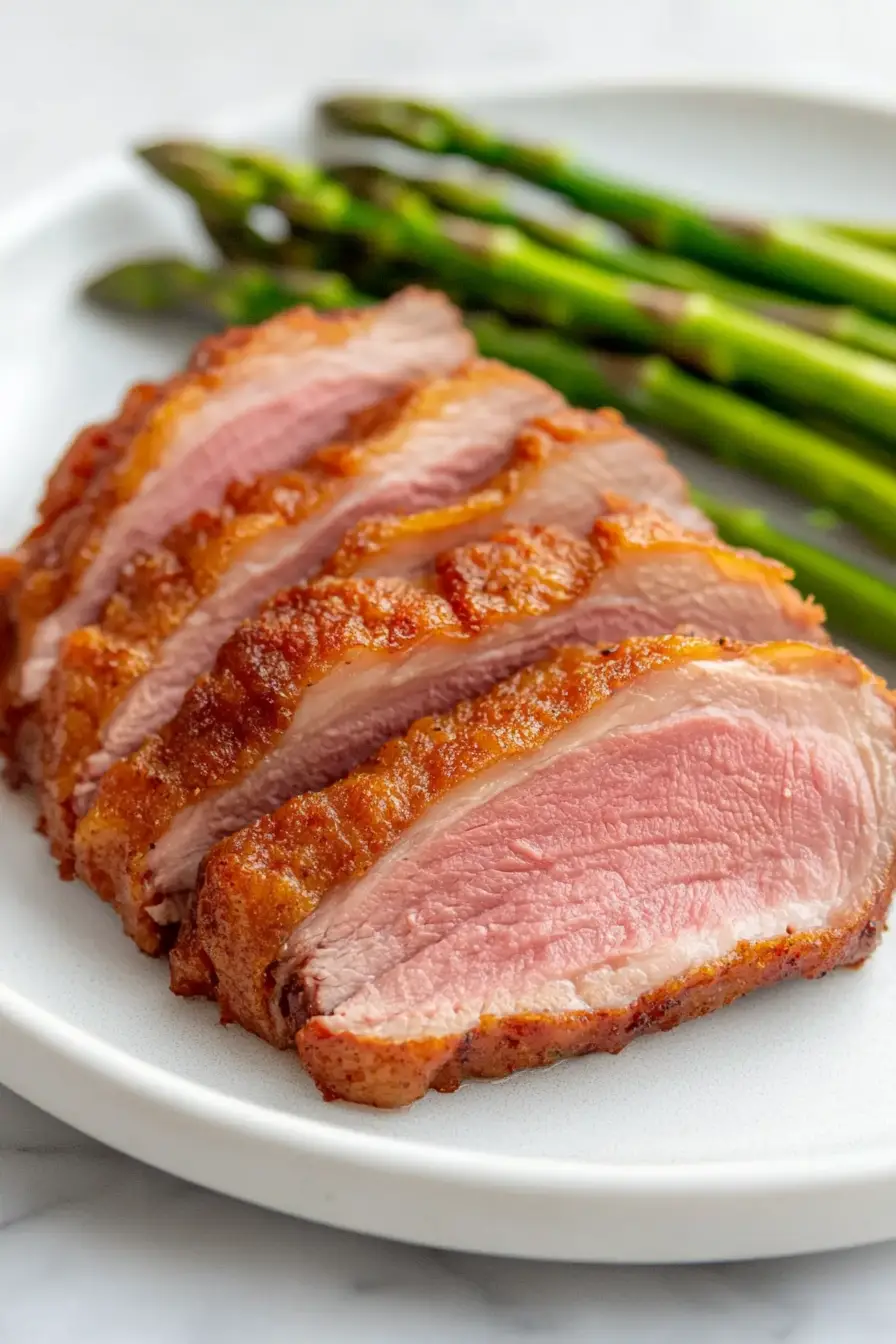
Why You’ll Love This Roasted Duck
- Restaurant-quality result – This recipe helps you create a perfectly roasted duck with crispy skin and juicy meat – the kind you’d usually only get at high-end restaurants.
- Simple ingredients – You only need basic pantry staples and vegetables to make this impressive main dish, with most ingredients probably already in your kitchen.
- Foolproof method – The straightforward roasting technique takes away the intimidation factor of cooking duck, making it accessible even for home cooks who’ve never prepared it before.
- Special occasion worthy – While not complicated to make, this roasted duck delivers such impressive results that it’s perfect for holidays, celebrations, or when you want to make dinner feel extra special.
What Kind of Duck Should I Use?
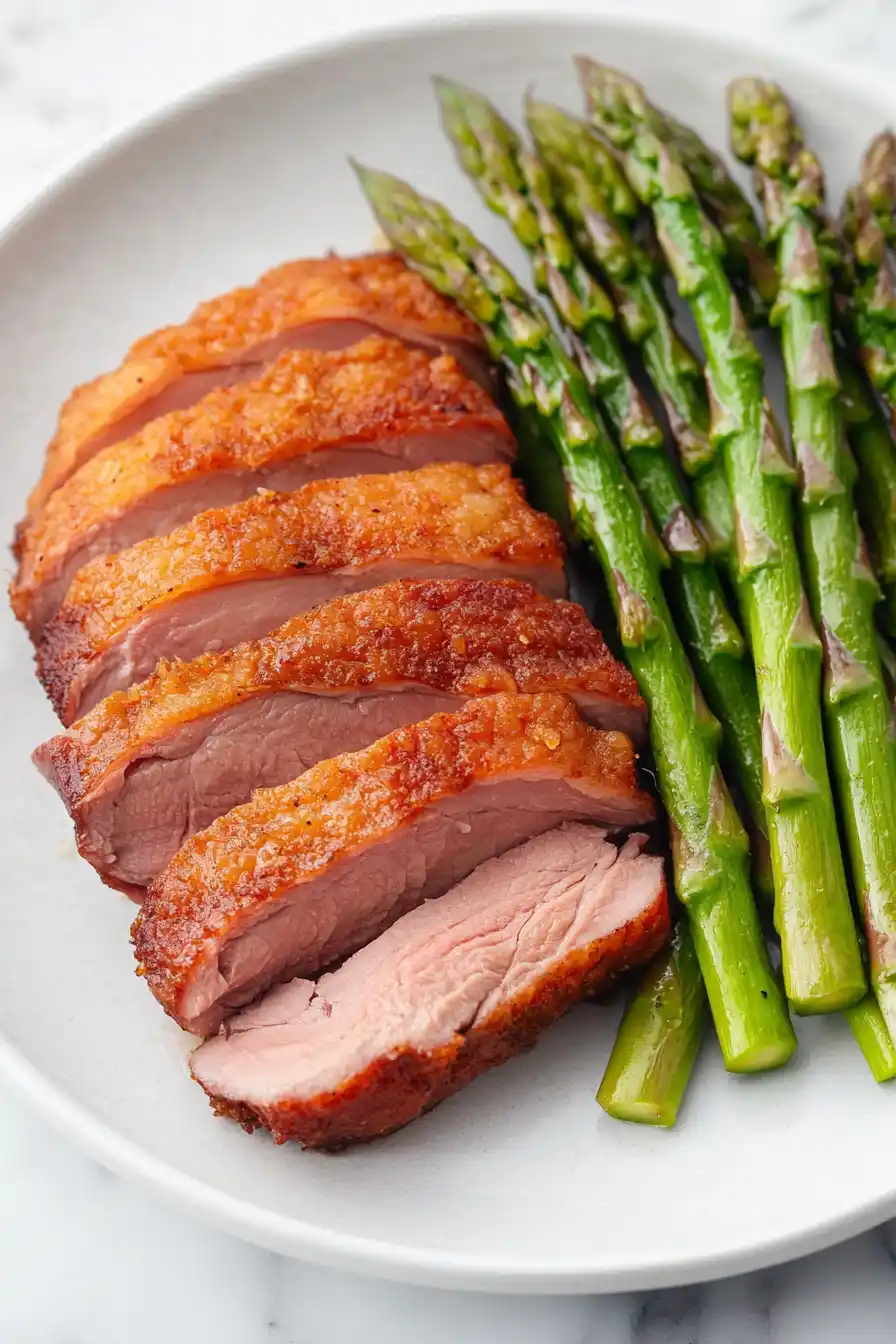
Muscovy duck is quite different from the regular duck you might find at the grocery store, which is usually Pekin duck. Muscovy has darker, leaner meat with less fat under the skin, making it taste more like veal than traditional duck. While Pekin duck could work in this recipe, stick with Muscovy if you can find it – it’s worth seeking out at specialty markets or butcher shops. When shopping, look for a duck with clear, moist skin that’s free from blemishes or dry patches. The duck should feel firm, and if you’re buying fresh rather than frozen, there shouldn’t be any strong odors. Just keep in mind that Muscovy ducks are typically larger than other varieties, so you might need to adjust cooking times accordingly.
Options for Substitutions
While this roasted duck recipe is pretty straightforward, here are some helpful substitutions you might want to consider:
- Muscovy duck: If you can’t find Muscovy duck, you can use Pekin (Long Island) duck instead. Just note that Pekin duck is generally smaller and a bit more fatty, so you’ll need to adjust cooking time down by about 15-20 minutes. Regular duck is also fine, but avoid substituting with chicken or other poultry as the cooking method is specifically designed for duck.
- Chicken broth: You can easily swap chicken broth with vegetable broth or duck stock if you have it. In a pinch, you can even use water with a chicken bouillon cube dissolved in it.
- Vegetables: The aromatic vegetables (carrot, onion, celery) can be switched around based on what you have. Leeks, parsnips, or shallots work great too. These vegetables mainly add flavor to the drippings, so feel free to be flexible.
- Olive oil: Any neutral cooking oil will work here – try vegetable oil, canola oil, or even melted butter.
- White wine: Since it’s optional anyway, you can skip it entirely, or replace it with a splash of chicken broth mixed with a teaspoon of lemon juice for some acidity.
Watch Out for These Mistakes While Roasting
The biggest challenge when roasting Muscovy duck is dealing with its thick layer of fat – not scoring the skin in a diamond pattern before cooking will prevent the fat from rendering properly, leaving you with a greasy rather than crispy result.
Temperature control is crucial: starting with a high heat (around 425°F) helps render the fat, but continuing at this temperature will burn the skin before the meat is done, so remember to lower it to 350°F after the first 15 minutes.
A common error is not letting the duck rest at room temperature for 30 minutes before cooking, which can lead to uneven cooking and tough meat – and equally important is letting it rest for 15-20 minutes after roasting before carving.
For the crispiest skin possible, pat the duck completely dry with paper towels before cooking, and baste it every 30 minutes with the pan drippings, being careful not to pierce the meat itself when basting.
What to Serve With Roasted Duck?
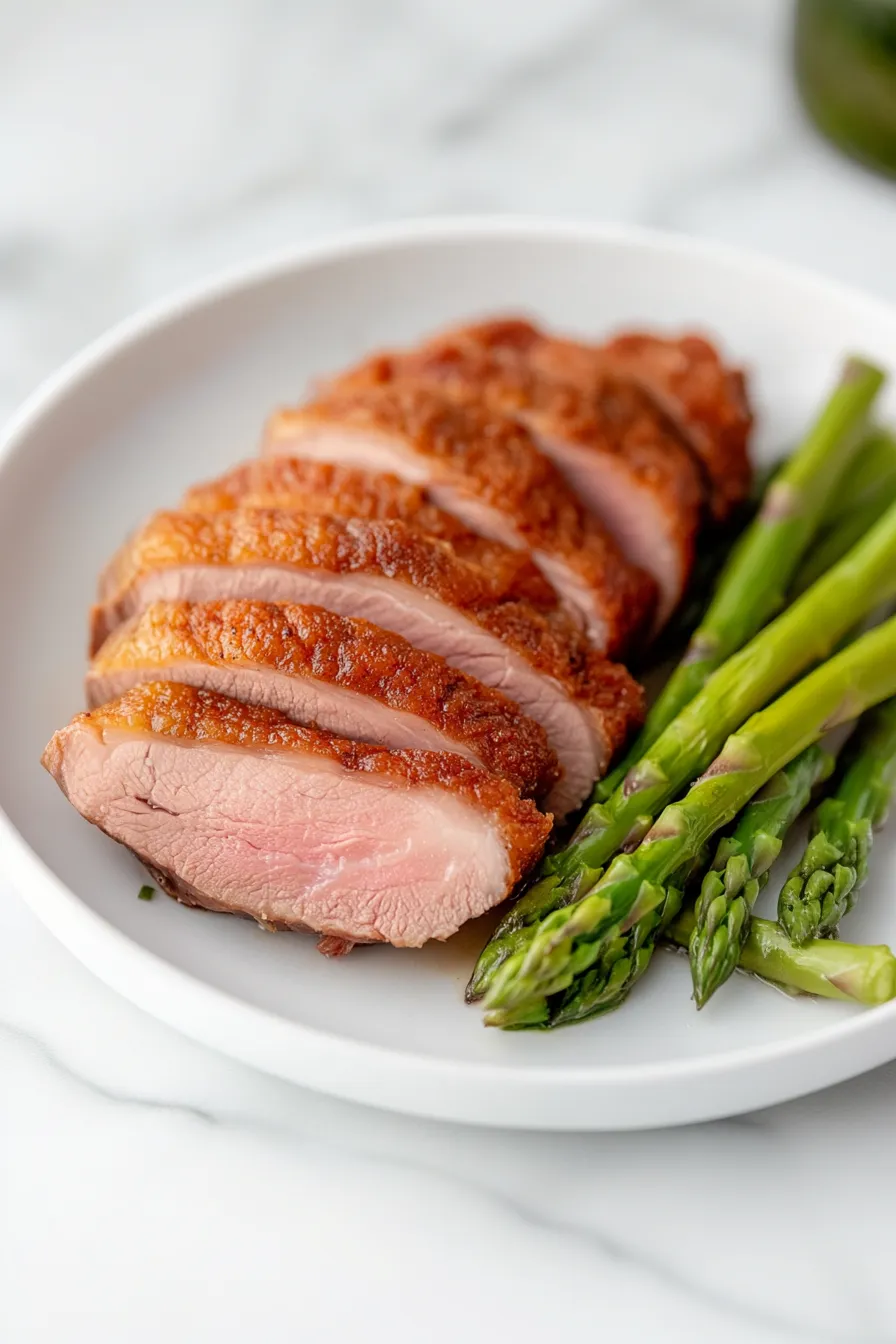
Since duck is rich and savory, it pairs really well with sides that have some sweetness or acidity to balance things out. A classic orange sauce or cherry compote makes a perfect companion to the meat, while roasted root vegetables like carrots, parsnips, and potatoes soak up all those tasty duck drippings. For a green vegetable, try serving braised red cabbage with apples, sautéed green beans with garlic, or a simple arugula salad with a light vinaigrette. If you want to round out the meal with a starch, wild rice or roasted fingerling potatoes work great with duck and help soak up any extra sauce on your plate.
Storage Instructions
Keep Fresh: Got leftover roasted duck? Place it in an airtight container and pop it in the fridge within two hours of cooking. It’ll stay good for up to 3 days. Pro tip: store the meat separate from any pan juices to keep the skin from getting soggy.
Freeze: If you want to save your duck for later, you can freeze it! Remove the meat from the bones, wrap it well in foil or freezer paper, then place in a freezer bag. It’ll keep nicely for up to 3 months. The bones can be frozen separately to make stock later.
Reheat: To bring back that lovely crispy skin, reheat your duck in the oven at 350°F for about 15-20 minutes. If you’re working with frozen duck, thaw it overnight in the fridge first. A quick tip: sprinkle a few drops of water on the meat before reheating to keep it moist.
| Preparation Time | 20-30 minutes |
| Cooking Time | 60-75 minutes |
| Total Time | 80-105 minutes |
| Level of Difficulty | Medium |
Estimated Nutrition
Estimated nutrition for the whole recipe (without optional ingredients):
- Calories: 2500-2800
- Protein: 180-200 g
- Fat: 180-200 g
- Carbohydrates: 20-30 g
Ingredients
For the duck:
- olive oil (I prefer California Olive Ranch extra virgin)
- pepper
- 1 muscovy duck
- salt
For the roasting pan:
- 1 carrot (cut into 1-inch chunks)
- 1 cup chicken broth
- 1 sliced onion
- a dash of white wine (optional, adds depth of flavor)
- 1 celery stalk (cut into 1-inch chunks)
Step 1: Preheat the Oven
Begin by preheating your oven to 450°F (232°C).
This high initial temperature will help to crisp the skin of the duck.
Step 2: Prepare the Duck
Remove the legs and thighs from the whole Muscovy duck.
Braise these parts separately according to your preferred method or recipe; this ensures they are tender and flavorful.
Step 3: Prepare the Roasting Pan
In a roasting pan, arrange a bed of sliced carrots, onion, and celery.
Pour in 1 cup of chicken stock to add moisture and flavor to the roasting process.
You can also add a touch of white wine for additional depth of flavor, if desired.
Step 4: Season the Duck
Rub the remaining duck body with olive oil to help crisp the skin and enhance flavor.
Season both the inside and outside of the duck generously with salt and pepper.
Step 5: Roast the Duck
Place the seasoned duck on top of the vegetables in the roasting pan.
Roast in the preheated oven for approximately 15 minutes at 450°F (232°C).
This initial high heat will help to seal in the juices and crisp the skin.
Step 6: Adjust Temperature and Continue Roasting
After 15 minutes, reduce the oven temperature to 350°F (177°C).
Continue to roast the duck for another 45 minutes, or until the breast meat reaches medium rare to medium doneness, as this will ensure a juicy and tender result.
Step 7: Rest and Serve
Once the duck is cooked to your desired doneness, remove it from the oven and let it sit for at least 10 minutes.
This resting period allows the juices to redistribute throughout the meat, keeping it moist and flavorful.
Serve sliced along with the roasted vegetables from the pan.