I never knew there was such a thing as homemade corned beef until my neighbor shared some during St. Patrick’s Day last year. Growing up, corned beef only came from those vacuum-sealed packages at the grocery store. When my husband tried making it from scratch, it was way too salty and tough.
That’s because he didn’t know the secret to good corned beef—it’s all in the brine. While store-bought corned beef is convenient, making your own brine lets you control the saltiness and add exactly the spices you like. Plus, once you get the basic process down, it’s actually pretty simple to do.
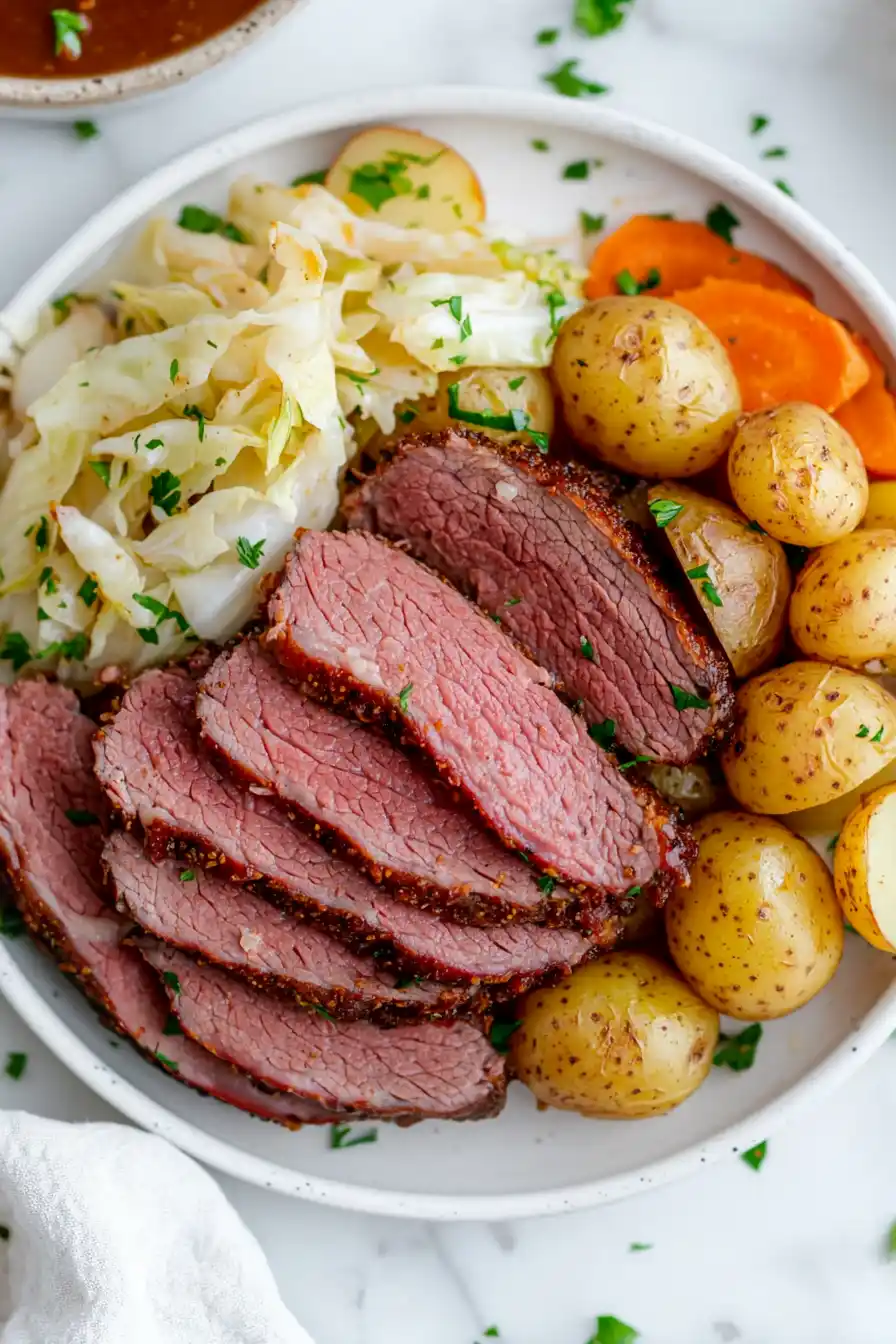
Why You’ll Love This Corned Beef Brine
- Made from scratch – Skip the store-bought versions and create your own corned beef with a perfect blend of spices. You’ll know exactly what goes into your meat, with no artificial preservatives or mystery ingredients.
- Rich flavor profile – The combination of whole spices, aromatic herbs, and traditional curing ingredients creates a deep, complex taste that store-bought versions just can’t match.
- Cost-effective – While it takes time to cure, making your own corned beef is much cheaper than buying pre-made versions, especially when you’re preparing a large brisket.
- Make-ahead friendly – Start this recipe days before you need it, and the actual hands-on prep time is minimal. Most of the time is just waiting while the brine does its magic.
What Kind of Beef Brisket Should I Use?
For corned beef, you’ll want to start with a good quality beef brisket, which comes in two different cuts – the flat cut and the point cut. The flat cut (also called first cut) is leaner and more uniform in shape, making it easier to slice and a popular choice for corned beef. The point cut has more marbling and fat content, which can make for a more flavorful result but can be slightly trickier to slice evenly. For beginners, I recommend starting with the flat cut since it’s more forgiving and easier to work with. Just make sure your brisket has a nice fat cap on top – about 1/4 inch thick is perfect – as this will help keep the meat moist during the curing and cooking process.
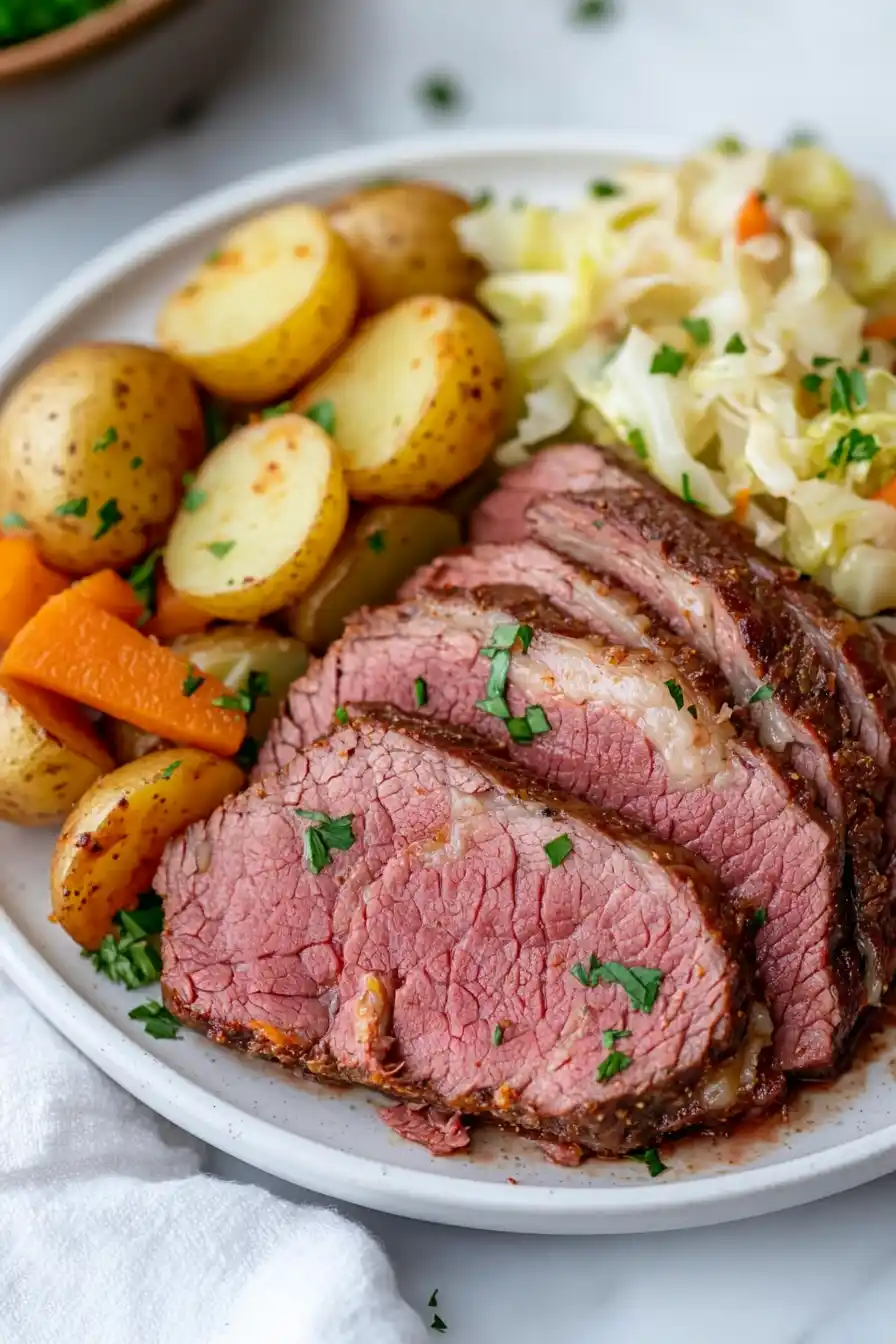
Options for Substitutions
When making corned beef brine, some ingredients are essential while others can be adjusted. Here’s what you need to know:
- Pink curing salt: This is a must-have ingredient that cannot be substituted – it’s crucial for food safety and gives corned beef its characteristic pink color and flavor.
- Coarse salt: You can use kosher salt instead of coarse salt. If using table salt, reduce the amount by half since it’s more concentrated.
- Spices: While the traditional spice blend gives the best flavor, you can make adjustments: swap coriander seeds with caraway seeds, use ground spices instead of whole (use half the amount), or replace fresh garlic with 2.5 teaspoons of garlic powder.
- Brisket: Stick with beef brisket for this recipe – other cuts won’t give you the same texture and result you’re looking for in corned beef.
- White sugar: Brown sugar works just as well, or you can use honey (use 3 tablespoons instead of ¼ cup sugar).
- Water: The amount of water is crucial for proper brining – don’t adjust this ratio as it ensures the right concentration of salt and curing ingredients.
Watch Out for These Mistakes While Brining
The biggest risk when making corned beef brine is using too much pink curing salt, which can be harmful if not measured precisely – always use a proper measuring spoon and never eyeball this ingredient. Another common mistake is not fully dissolving the salts and sugar before adding the brisket, which can result in uneven curing and flavor distribution – make sure to stir until everything is completely dissolved in warm (not hot) water. To ensure food safety and proper curing, keep your brining meat at a consistent temperature between 36-40°F throughout the entire process, which typically takes 5-7 days. For the best flavor development, don’t skip toasting your whole spices before adding them to the brine, and remember to turn the meat daily to ensure even distribution of the brine throughout the brisket.
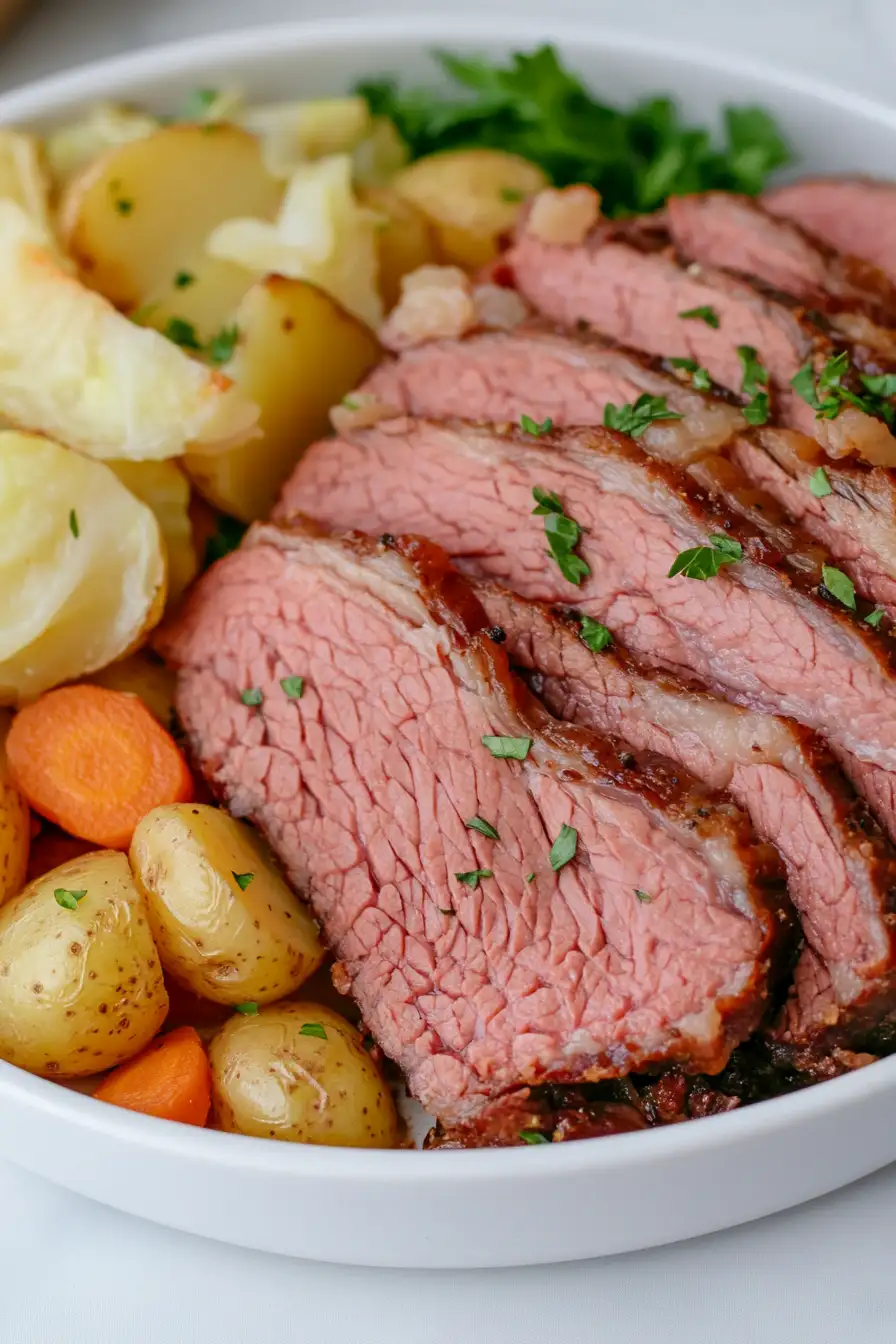
What to Serve With Corned Beef?
When it comes to serving corned beef, you can’t go wrong with the traditional combination of cabbage, carrots, and potatoes – these vegetables soak up all the tasty cooking liquid and complement the salty, spiced meat perfectly. A dollop of whole grain mustard or horseradish sauce on the side adds a nice kick that cuts through the richness of the beef. For a complete Irish-inspired meal, serve some fresh soda bread on the side to mop up the flavorful juices. If you’re looking to add some green to your plate, steamed Brussels sprouts or a simple side salad work great too.
Storage Instructions
Brine: Keep your corned beef submerged in the brine solution in a large, non-reactive container (like glass or food-grade plastic) in the refrigerator. The meat needs to stay completely covered by the brine for 5-7 days to properly cure. Make sure to flip the brisket once daily to ensure even curing.
After Cooking: Once your corned beef is cooked, let it cool slightly and store it in an airtight container in the fridge for up to 4 days. The cooking liquid can be saved separately and used to keep the meat moist when reheating.
Freeze: Cooked corned beef freezes really well! Wrap it tightly in foil or plastic wrap, then place in a freezer bag with as much air removed as possible. It’ll keep for up to 3 months. Just remember to slice it against the grain after thawing for the best texture.
| Preparation Time | 10-15 minutes |
| Cooking Time | 180-210 minutes |
| Total Time | 4 days 3-4 hours |
| Level of Difficulty | Medium |
Estimated Nutrition
Estimated nutrition for the whole recipe (without optional ingredients):
- Calories: 2000-2200
- Protein: 150-160 g
- Fat: 150-160 g
- Carbohydrates: 30-40 g
Ingredients
For the brine:
- 1/2 cup coarse salt (like kosher salt, I prefer Morton’s brand)
- 8 cups water
- 10 garlic cloves (lightly crushed)
- 5 tsp pink curing salt (Prague Powder #1)
- 1/4 cup white sugar
For the seasoning blend:
- 2 tsp whole allspice
- 3 tsp crushed red pepper flakes
- 2 tsp coriander seeds
- 2 cinnamon sticks
- 2 tsp mustard seeds
- 6 bay leaves (dried)
- 2 tsp whole cloves
- 2 tsp whole black peppercorns
- 2 tsp ground ginger
- 2 tsp nutmeg powder (freshly ground for best flavor)
For the corned beef:
- 5 lb beef brisket (preferably flat cut)
Step 1: Prepare the Brine
Begin by combining water, pink salt, sugar, garlic, and salt in a large pot.
Divide the brining seasonings in half; add one half to the pot and set the other half aside for later use during cooking.
Bring the water mixture to a simmer, stirring until the sugar and salts have fully dissolved.
Remove the pot from heat and allow the brine to come to room temperature.
Once cooled, refrigerate the brine for an hour or two until it’s completely chilled.
Step 2: Brine the Brisket
Once the brine is completely chilled, place the brisket in the pot, ensuring it is fully submerged in the brine.
Cover and refrigerate the brisket in the brine for 4 days.
This extended brining period will deeply flavor the meat.
Step 3: Prepare for Cooking
After 4 days, remove the brisket from the brine and rinse it thoroughly with cold water to remove excess salt.
This step is crucial to ensure a balanced flavor.
Step 4: Cook the Brisket
To cook the brisket, place it in a large pot and fill the pot with water, ensuring the brisket is completely covered.
Add the reserved half of the brining seasonings and approximately 4 teaspoons of kosher salt to the pot.
Bring the water to a boil, then reduce the heat to low, cover, and allow it to gently simmer for about 3 hours.
Monitor and replenish the water level as needed to keep the brisket submerged.
The brisket is done when it is fork tender.
Step 5: Finish and Serve
Once the brisket is tender, remove it from the pot and slice it against the grain for optimal tenderness.
Be sure to reserve some of the cooking liquid; this can be used to moisten the meat and to braise any accompanying cabbage or vegetables.
Serve the brisket slices with whole grain mustard and horseradish for a classic pairing that complements the rich, savory flavors of the brisket.