If you ask me, making pasta from scratch is one of those things that sounds harder than it actually is.
This pumpkin pasta dough brings a subtle sweetness and beautiful orange color to your homemade noodles. The pumpkin puree adds moisture and a hint of fall flavor without being too heavy.
It rolls out just like regular pasta dough and works great with a pasta machine or by hand. The dough holds together well and cuts cleanly into whatever shape you’re craving.
It’s a fun way to switch up your usual pasta routine, especially when you want something that feels a little more special than the boxed stuff.
Why You’ll Love This Pumpkin Pasta Dough
- Beautiful fall flavors – The pumpkin adds a subtle sweetness and earthy taste that makes every bite feel like autumn on your plate.
- Simple ingredients – You probably have most of these pantry staples at home already, and canned pumpkin puree works just as well as fresh.
- Impressive homemade touch – Making fresh pasta from scratch always feels special, and the golden color from the pumpkin makes it look restaurant-quality.
- Flexible and fun – You can shape this dough into any pasta you like, from fettuccine to ravioli, and it pairs perfectly with both creamy and simple butter sauces.
What Kind of Pumpkin Should I Use?
You have several great options when it comes to choosing pumpkin for your pasta dough. Fresh cooked pumpkin, buttercup squash, or kabocha squash all work wonderfully and will give you a rich, earthy flavor. If you’re short on time, canned pumpkin puree is a perfectly acceptable substitute and will save you the hassle of roasting and pureeing your own. Just make sure you’re using plain pumpkin puree, not pumpkin pie filling which has added spices and sugar. Whatever option you choose, the key is making sure your pumpkin puree isn’t too watery – if it seems wet, drain it through a fine mesh strainer for about 15 minutes before using.
Options for Substitutions
This pumpkin pasta dough is pretty forgiving, but there are a few key things to keep in mind when making swaps:
- Pumpkin puree: You can easily swap pumpkin for butternut squash, sweet potato, or even roasted carrots – just make sure whatever you use is well-drained and smooth. Canned pumpkin works great if you don’t want to roast your own.
- “00” flour: Regular all-purpose flour works perfectly fine if you can’t find “00” flour. The texture might be slightly less silky, but your pasta will still taste great.
- Semolina flour: If you don’t have semolina, you can use regular flour for dusting your work surface, though semolina helps prevent sticking better. You can also skip it in the dough itself – just use a bit more all-purpose flour.
- Fresh nutmeg: Pre-ground nutmeg works fine, though fresh gives better flavor. You can also try a pinch of cinnamon or allspice for a different warm spice note.
- Eggs: Stick with regular large eggs here – extra-large eggs can make the dough too wet, and you’ll end up adding more flour than needed.
Watch Out for These Mistakes While Cooking
The biggest mistake when making pumpkin pasta dough is adding too much moisture from wet pumpkin puree, which will make your dough sticky and impossible to work with – always make sure to drain excess liquid from your pumpkin puree by pressing it through a fine mesh strainer or patting it dry with paper towels.
Another common error is adding all the flour at once instead of gradually incorporating it, since pumpkin’s moisture content can vary and you might need less flour than the recipe calls for.
Don’t skip the resting period after kneading – let your dough rest for at least 30 minutes wrapped in plastic, as this allows the gluten to relax and makes rolling much easier.
Finally, keep extra semolina flour handy while rolling and cutting, because pumpkin dough tends to be slightly stickier than regular pasta dough and needs that extra dusting to prevent sticking.
What to Serve With Pumpkin Pasta?
This pumpkin pasta dough is perfect for making fresh pasta that pairs beautifully with simple, seasonal sauces that won’t overpower the subtle pumpkin flavor. I love tossing it with brown butter and sage – just melt some butter until it’s golden and nutty, then add fresh sage leaves until they’re crispy. A sprinkle of toasted pine nuts and plenty of freshly grated parmesan cheese makes it feel like a cozy fall dinner. You could also go with a light cream sauce with mushrooms, or even just olive oil, garlic, and a handful of arugula for something fresh and simple.
Storage Instructions
Keep Fresh: Fresh pumpkin pasta dough is best used within a day or two of making it. Wrap it tightly in plastic wrap and store it in the fridge for up to 2 days. The pumpkin keeps the dough nice and moist, but don’t let it sit too long or it might get a bit sticky.
Freeze: This dough freezes really well for up to 3 months! Wrap it tightly in plastic wrap, then pop it in a freezer bag. When you’re ready to use it, just thaw it overnight in the fridge and let it come to room temperature before rolling.
Roll and Shape: If you’ve already rolled and cut your pasta, dust it generously with semolina flour and nest it loosely on a baking sheet. You can keep fresh pasta at room temperature for a few hours, or in the fridge for up to a day before cooking. Just make sure it’s not sticking together!
| Preparation Time | 25-45 minutes |
| Cooking Time | 30-60 minutes |
| Total Time | 55-105 minutes |
| Level of Difficulty | Medium |
Estimated Nutrition
Estimated nutrition for the whole recipe (without optional ingredients):
- Calories: 675-750
- Protein: 23-26 g
- Fat: 9-11 g
- Carbohydrates: 130-145 g
Ingredients
For the dough:
- Pinch freshly grated nutmeg (adds a warm, earthy note)
- 1/3 cup pumpkin puree (I use Libby’s pumpkin puree for consistent results)
- 2 tbsp semolina flour
- 2 large eggs (room temperature for better emulsion)
- 2 to 2 1/4 cups all-purpose flour (King Arthur all-purpose flour works well here)
- 3/4 tsp fine sea salt (enhances flavor without being too salty)
For shaping:
- Additional semolina flour for dusting (prevents sticking and adds texture)
Step 1: Combine Pumpkin and Egg
- 1/3 cup pureed cooked pumpkin or other winter squash (canned pumpkin puree acceptable)
- 1 large egg (of the 2 large eggs listed)
In a small bowl, whisk together the pureed cooked pumpkin (or canned pumpkin puree) and one of the eggs until fully combined.
This mixture will help flavor and color the pasta dough.
Step 2: Mix Dry Ingredients
- 2 cups ’00’ flour or all-purpose flour, unbleached
- 2 tbsp semolina flour
- 3/4 tsp fine sea salt
- pinch freshly grated nutmeg
In the bowl of a food processor, combine 2 cups of the ’00’ flour or all-purpose flour (reserve the remaining 1/4 cup for adjustments), semolina flour, fine sea salt, and a pinch of freshly grated nutmeg.
Briefly pulse just to blend the dry ingredients evenly.
Step 3: Form the Pasta Dough
- pumpkin and egg mixture from Step 1
- remaining 1 large egg (of the 2 large eggs listed)
- remaining 1/4 cup ’00’ flour or all-purpose flour, unbleached (as needed)
Add the pumpkin and egg mixture from Step 1 to the dry ingredients in the food processor and pulse briefly to combine.
Add the remaining egg and pulse until the mixture forms crumbs resembling small curds.
Test the dough by pinching some together and rolling it—if it forms a soft ball, it’s ready.
If the dough is too dry, pulse in a few droplets of water.
If it’s sticky, add more flour (from the reserved 1/4 cup), one tablespoon at a time, pulsing each time, until you achieve the right consistency.
I always check the dough texture here, since the moisture in pumpkin can vary a lot!
Step 4: Knead and Rest the Dough
- additional semolina flour for dusting
Turn the dough mixture out onto a clean work surface that’s been lightly dusted with semolina flour.
Press the mixture together to form a rough ball.
Knead the dough with the palm of your hand, pushing away from you, then folding it back over itself.
Rotate and continue kneading for several minutes until the dough is smooth and elastic.
Shape into a ball and wrap tightly in plastic wrap.
Let rest at room temperature for 30 minutes.
This resting period relaxes the gluten for easier rolling and shaping.
Step 5: Roll Out and Cut the Pasta
- kneaded dough from Step 4
Unwrap the rested pasta dough and flatten it slightly.
If using a pasta machine, start with the widest setting and feed the dough through.
Fold the sheet into thirds and repeat, passing through the rollers 4 or 5 times in total.
Then, progressively roll the dough thinner by decreasing the machine’s settings one at a time, until you reach your desired pasta thickness.
For lasagne, go as thin as 1/16 inch.
If the dough gets too long, cut it in half and continue in batches.
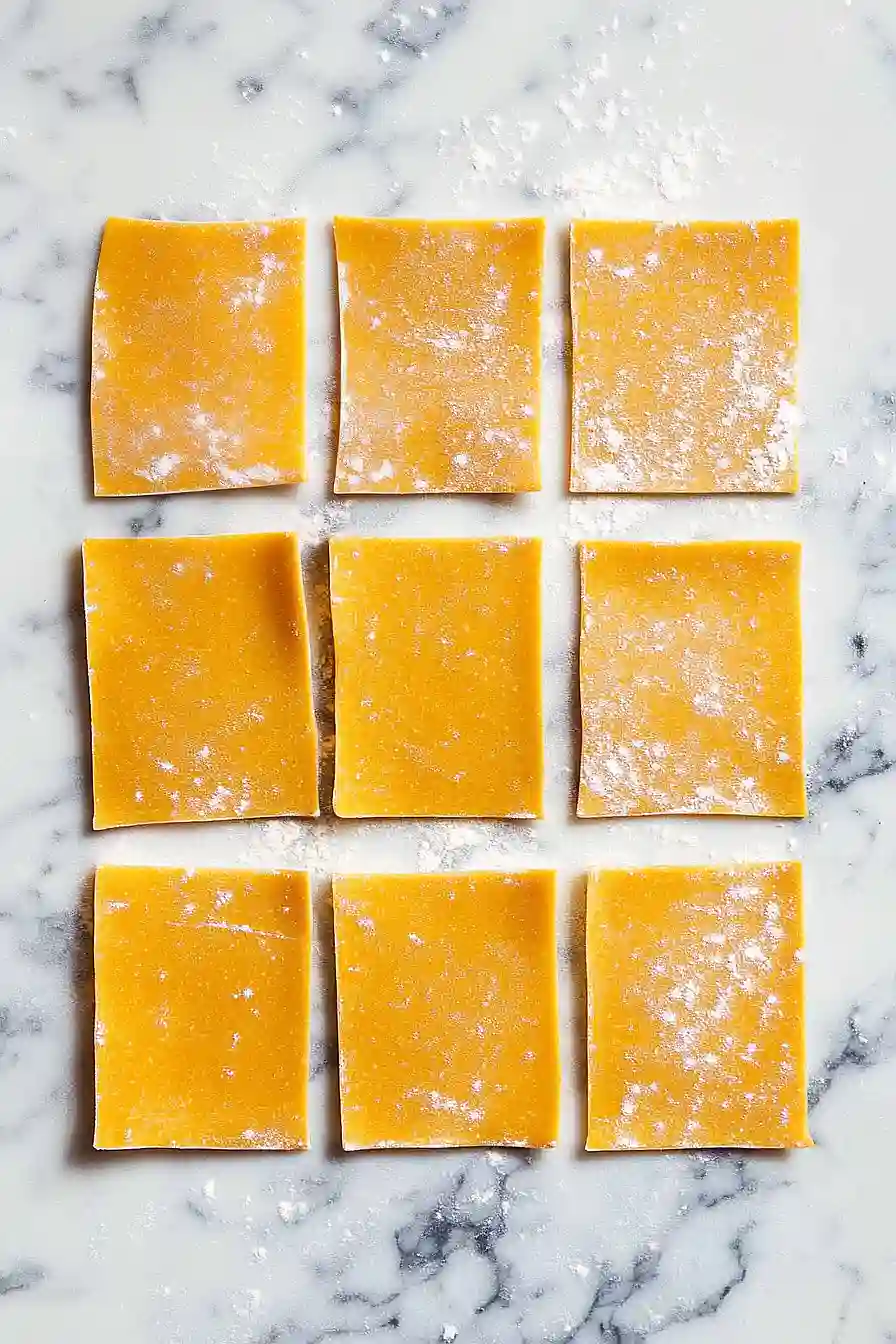
To form lasagne noodles, use a sharp knife to cut sheets into rectangles about 4 by 5 inches.
For other shapes, follow your preferred method.
I find that working with smaller sections of dough is easier and gives more uniform results.