You know what I love about making naan at home? It brings back memories of my first time trying Indian food, sitting in that tiny restaurant downtown with the amazing aromas floating through the air. I used to think making naan without dairy would be impossible, but here we are! After lots of testing in my kitchen (and yes, a few flat-out fails), I’ve finally got a vegan version that’s just as good as the original.
Making your own naan might sound like a project, but trust me – it’s easier than you’d think. The dough comes together in minutes, and watching those bubbles form as it cooks is kind of therapeutic. Plus, there’s nothing better than warm, fresh bread straight from the pan. I usually make a double batch because my family gobbles these up faster than I can cook them!
Why You’ll Love This Naan
- Plant-based friendly – This dairy-free version of classic naan bread tastes just as good as the traditional recipe, making it perfect for vegans and those with dairy allergies.
- Basic pantry ingredients – You’ll only need simple ingredients that are easy to find at any grocery store – no special trips to specialty markets needed.
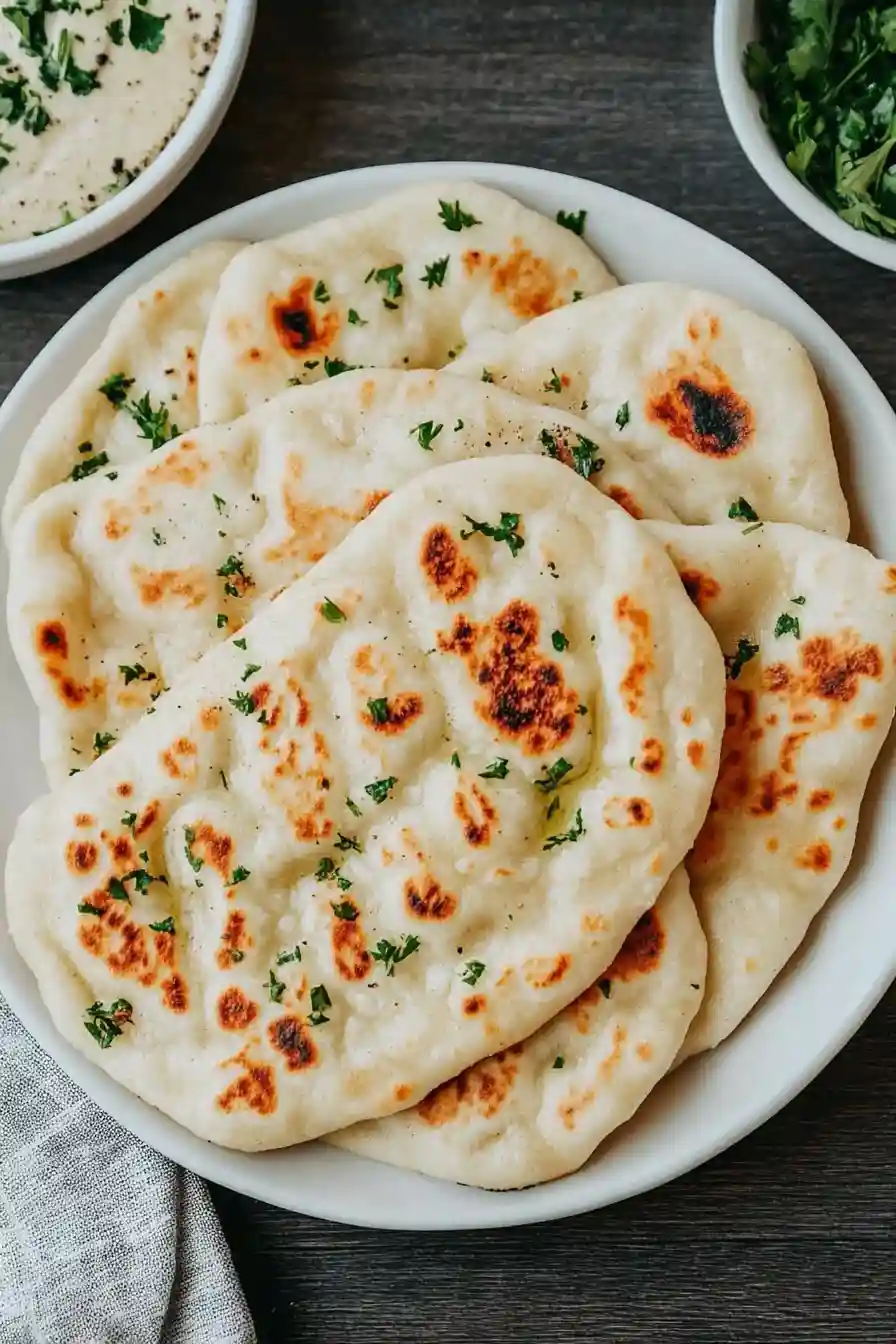
- Restaurant-quality results – The soft, pillowy texture and garlic-butter topping give you that authentic Indian restaurant experience right in your own kitchen.
- Make-ahead friendly – You can prepare the dough ahead of time and let it rise while you work on other dishes, making it perfect for meal planning.
What Kind of Flour Should I Use?
Regular all-purpose flour is your best bet for making naan at home, and you don’t need anything fancy. While bread flour can work, it might make your naan a bit too chewy, and whole wheat flour alone will make it too dense. If you want to experiment, you can try using half all-purpose and half whole wheat flour for a nuttier taste while still keeping the texture light. Just make sure your flour is fresh – flour that’s been sitting in your pantry for ages can affect how well your dough rises. When measuring, either use a kitchen scale for accuracy or spoon the flour into your measuring cup and level it off, rather than scooping directly from the bag.

Options for Substitutions
This vegan naan recipe is pretty adaptable and here’s what you can swap out:
- All-purpose flour: You can use bread flour for a chewier texture. For a whole wheat version, replace up to 1 cup of all-purpose flour with whole wheat flour, but know the naan will be denser.
- Grapeseed oil: Any neutral-flavored oil works here – try olive oil, avocado oil, or even melted coconut oil. Just avoid oils with strong flavors that might overpower the bread.
- Plant-based butter: Feel free to use any vegan butter brand you like, or make a garlic oil instead by heating olive oil with garlic.
- Active dry yeast: Instant yeast works too – use the same amount but you can skip the proofing step with warm water. Just mix it directly with the dry ingredients.
- Cilantro: Not a cilantro fan? Try fresh parsley, mint, or skip the herbs altogether. You can also add nigella seeds or sesame seeds for extra flavor.
- Sugar: Any type of sugar works here – try maple syrup, agave, or even plain white sugar. It’s just food for the yeast, so don’t skip it completely.
Watch Out for These Mistakes While Baking
The trickiest part of making vegan naan is working with the yeast – if your water is too hot (above 110°F) or too cold (below 100°F), it will kill the yeast or prevent proper activation, leading to flat, dense bread instead of that fluffy texture we love.
When kneading the dough, resist the urge to add extra flour even if it feels sticky – a slightly tacky dough is essential for achieving that classic chewy texture, so use oiled hands instead of more flour to handle it.
Rolling out the naan too thin or cooking it at too low a temperature are common mistakes that result in crispy crackers rather than soft, pillowy bread – aim for about 1/4 inch thickness and make sure your pan is properly preheated to high heat before cooking.
For the best results, brush the naan with garlic butter immediately after cooking while it’s still hot, allowing the butter to melt and seep into all those beautiful bubbles and crevices that form during cooking.

What to Serve With Naan?
This homemade vegan naan is perfect for scooping up your favorite Indian curries, like chickpea masala or vegetable korma. A warm bowl of dal (lentil soup) makes an excellent partner too – the naan is great for getting every last bit of those tasty lentils. For a casual lunch, try serving it alongside a simple cucumber raita or hummus for dipping, or use it as a base for quick veggie wraps. If you’re hosting a dinner party, pair it with some spiced roasted vegetables and coconut rice for a complete meal that’ll make everyone happy.
Storage Instructions
Keep Fresh: Your homemade vegan naan will stay good at room temperature for about 1-2 days when wrapped in foil or stored in a bread bag. For longer storage, pop it in an airtight container in the fridge where it’ll keep for up to 5 days. Just remember that like most fresh bread, the texture is best on day one!
Freeze: These flatbreads are perfect for freezing! Place pieces of parchment paper between each naan to prevent sticking, then wrap them well in foil and place in a freezer bag. They’ll stay good for up to 3 months – super handy for when you need a quick side for curry night!
Warm Up: To bring back that fresh-made taste, warm your naan in a skillet over medium heat for 1-2 minutes per side. You can also wrap it in foil and pop it in a 350°F oven for about 5 minutes. If frozen, let it thaw at room temperature before reheating. A quick brush with plant-based butter will make it extra tasty!
| Preparation Time | 15-30 minutes |
| Cooking Time | 15-20 minutes |
| Total Time | 90-110 minutes |
| Level of Difficulty | Medium |
Estimated Nutrition
Estimated nutrition for the whole recipe (without optional ingredients):
- Calories: 800-900
- Protein: 15-20 g
- Fat: 30-35 g
- Carbohydrates: 120-130 g
Ingredients
For the dough:
- 2 cups all-purpose flour
- 3 to 4 tbsp fresh cilantro (finely chopped)
- 1/2 tsp fine sea salt
- 1 1/2 tsp active dry yeast (I use Fleischmann’s RapidRise)
- 160 fl oz warm water (between 100-110°F to activate yeast)
- 1/4 tsp baking powder (helps with naan’s soft texture)
- 2 tsp sugar (organic sugar ferments better)
- 1 tbsp grapeseed oil
For the garlic butter:
- 2 to 3 cloves garlic (freshly minced for best flavor)
- 3 tbsp plant-based butter
For the topping:
- flaky sea salt (such as Maldon, for a delicate crunch)
Step 1: Activate the Yeast
In a medium bowl, combine lukewarm water and sugar, stirring until the sugar dissolves.
Add the yeast and whisk for about 15 seconds until well incorporated.
Allow the mixture to rest for 15 minutes, enabling the yeast to activate and become frothy and foamy.
Step 2: Prepare the Dry Ingredients
While the yeast is activating, sift the flour, salt, and baking powder in a large bowl.
This will ensure an even distribution of the dry ingredients and remove any lumps.
Step 3: Knead the Dough
Pour the yeast mixture and 1 tablespoon of oil into the bowl with the flour mixture.
Stir to combine using a fork.
Once the dough becomes shaggy and difficult to stir, transfer it to a clean work surface.
Oil your hands well and start kneading the dough, reapplying oil to your hands as needed.
Knead for 4 to 6 minutes until the dough becomes soft, elastic, and pliable.
Step 4: Rest the Dough
Oil a large bowl, place the dough ball inside, and coat it with a little oil on all sides.
Cover with a clean dish towel and let it rest in a warm, draft-free place for 90 minutes to 4 hours, allowing it to rise and double in size.
A warm oven with the light on works well.
Step 5: Divide and Proof the Dough
After the dough has risen, lightly punch it to release the air.
Briefly knead it into a smooth ball.
Using a pastry cutter, divide the dough into 8 equal portions and roll them into balls.
Transfer the dough balls to a sheet of parchment paper, keeping them spaced out.
Cover with a dish towel and let them rest for 10 minutes to proof.
Step 6: Preheat the Skillet
Open nearby windows as it may get smoky.
Heat a large cast-iron skillet or iron tawa pan over medium-high heat until it’s almost smoking, which takes about 5 minutes.
If you have a gas stove with a dial going up to level 7, start at level 5, lowering to level 4 after the first few naan.
Step 7: Prepare the Garlic Butter
Pour vegan butter into a small bowl and add grated garlic.
Microwave on high for 20 seconds, stir, and microwave for another 20 seconds.
Keep this mixture by the stove with a pastry brush ready.
Step 8: Roll Out and Top the Naan
Use a rolling pin to roll each dough ball into an oval shape approximately 8 inches long and 5 inches wide.
Sprinkle each naan with chopped cilantro and press it in with the rolling pin.
Dampen hands in a bowl of water and pat the back of the dough with water to help it stick to the skillet.
Step 9: Cook the Naan
With dampened hands, carefully place the naan, watered side down, in the hot skillet.
Once you see bubbles and the edges begin to dry (45 to 60 seconds), flip the naan and cover the skillet with a lid, cooking for 30-40 seconds more.
When done, the naan should be partially raw and doughy with some parts charred.
Step 10: Finish and Serve
Transfer the cooked naan to a plate and brush with the melted garlic butter, adding a pinch of flaky sea salt.
Repeat cooking with remaining dough balls.
Serve the naan warm and enjoy with your favorite dips or accompaniments.