Growing up, I thought the only way to make a lemon cake was from a box mix with some artificial flavoring. That’s what we always had at birthday parties, and nobody seemed to mind. It wasn’t until I started baking from scratch that I realized what I’d been missing all those years.
Now I know that real lemons and fresh raspberries make all the difference in a cake. This combo brings a bit of tartness and sweetness that you just can’t get from those boxed mixes. And the best part? It’s not any harder to make than those store-bought versions – it just takes a few extra minutes and some simple ingredients from your kitchen.
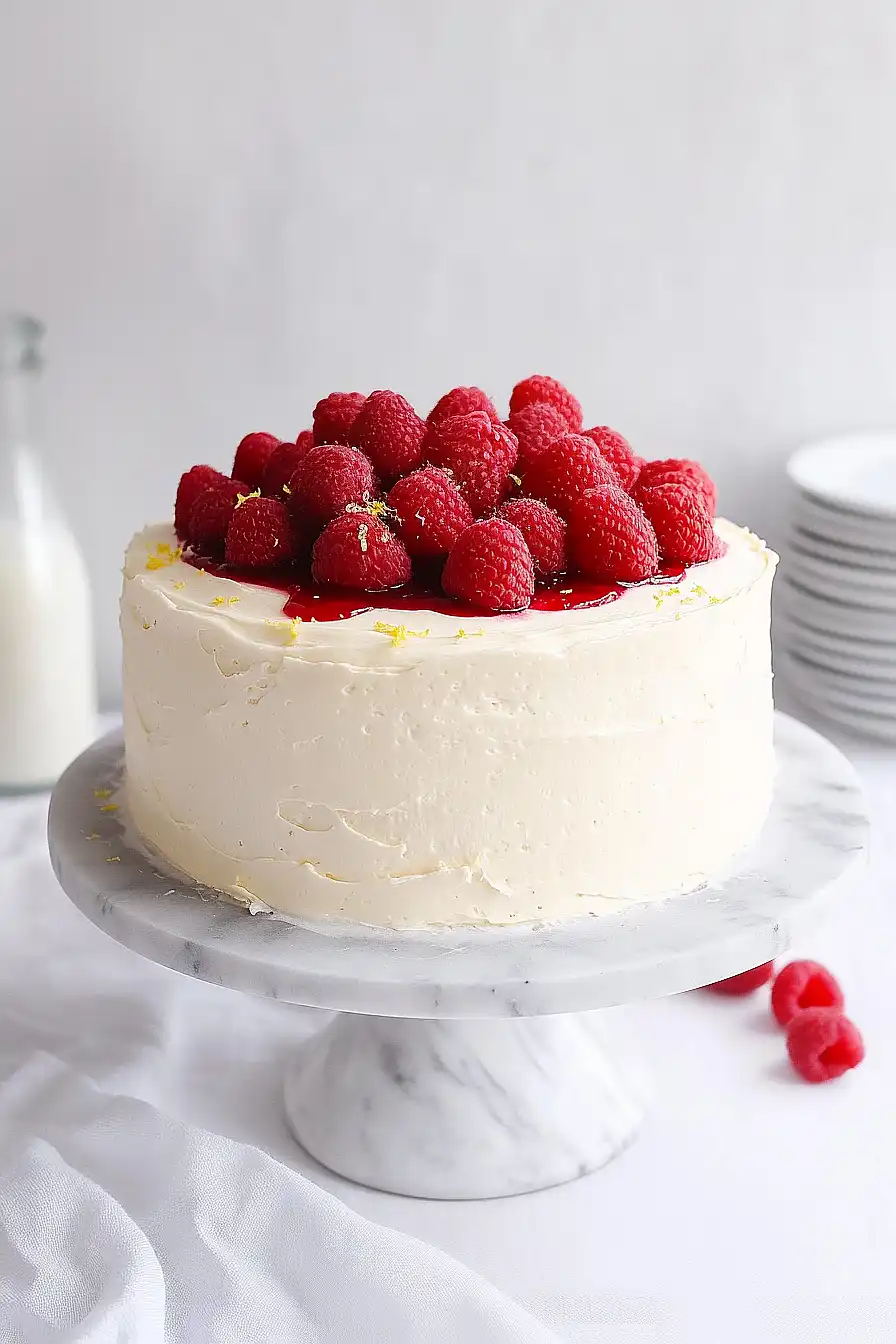
Why You’ll Love This Raspberry Lemon Cake
- Perfect balance of flavors – The bright citrus notes from fresh lemon zest pair beautifully with sweet-tart raspberries, creating a cake that’s not too sweet and not too tart.
- Made with basic ingredients – You’ll find most of these ingredients already in your pantry and fridge – no specialty items needed for this recipe.
- Quick preparation – This cake comes together in under an hour, making it perfect for last-minute gatherings or weekend baking projects.
- Great make-ahead dessert – You can bake this cake a day in advance and it will stay fresh and moist, thanks to the oil and butter combination in the recipe.
- Crowd-pleasing recipe – The classic combination of raspberry and lemon makes this cake a hit at parties, potlucks, or family gatherings – it’s one of those desserts that everyone seems to love.
What Kind of Raspberries Should I Use?
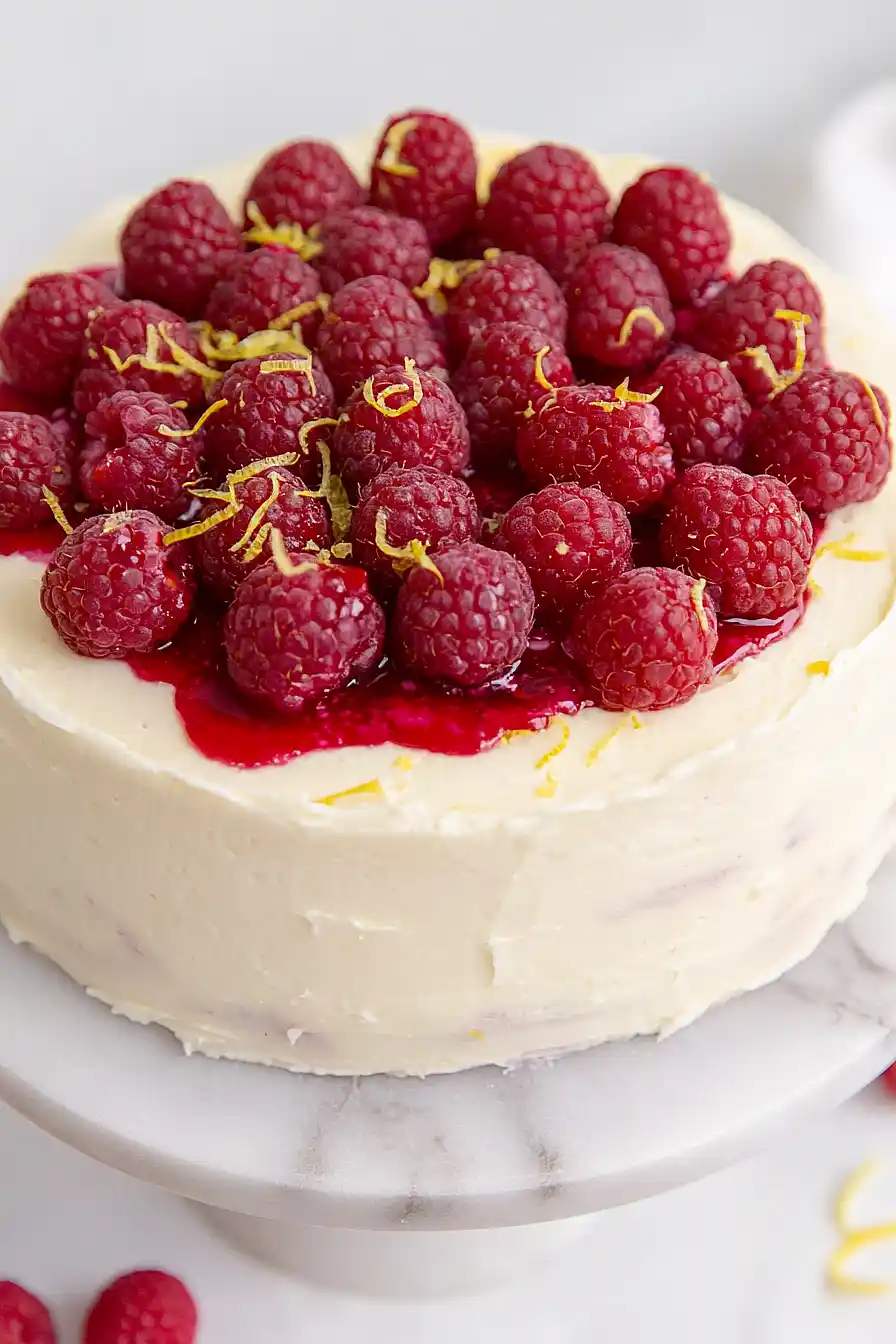
For this cake recipe, you’ve got two raspberry components to think about – the jam for filling and fresh berries for topping. When it comes to raspberry jam, look for a good-quality brand that’s not too runny – you want it to stay put between your cake layers without oozing out. For the fresh raspberries on top, pick ones that are bright red, plump, and firm to the touch. Fresh raspberries are pretty delicate, so try to buy them no more than a day or two before you plan to use them, and give them a quick check for any signs of mold or mushiness before adding them to your cake. If fresh raspberries aren’t in season, it’s totally fine to skip them as a topping – your cake will still be delicious with just the jam filling.
Options for Substitutions
This cake recipe has several ingredients that you can swap if needed. Here are some helpful substitutions:
- Vegetable oil: You can replace vegetable oil with canola oil, melted coconut oil, or even applesauce (though this will make the cake slightly denser).
- Lemon extract: If you don’t have lemon extract, use double the amount of fresh lemon juice and add an extra tablespoon of lemon zest. The flavor won’t be quite as strong, but it’ll still be tasty.
- All-purpose flour: Cake flour works great here – use 3 cups of cake flour instead of 2 2/3 cups all-purpose. For gluten-free needs, use a 1:1 gluten-free flour blend.
- Cream cheese: For the frosting, you can use mascarpone cheese instead of cream cheese. If you’re dairy-free, try dairy-free cream cheese alternatives.
- Raspberry jam: Feel free to swap with strawberry jam, blackberry jam, or even lemon curd for a different flavor profile. Just make sure it’s thick enough to spread easily.
- Milk: Any milk works here – whole milk, 2%, or plant-based options like almond or soy milk. Just note that plant-based milk might slightly change the texture.
Watch Out for These Mistakes While Baking
The temperature of your ingredients makes a huge difference in this raspberry lemon cake – cold eggs, butter, or cream cheese can lead to a lumpy batter and uneven texture, so make sure to let them sit at room temperature for at least an hour before starting. Another common mistake is overmixing the batter once you’ve added the flour – mix just until the ingredients are combined, as too much mixing will develop the gluten and make your cake tough instead of tender. When adding the lemon zest, be careful not to include any of the white pith, which can make your cake taste bitter – stick to the yellow part of the lemon peel only. For the smoothest frosting possible, beat the butter and cream cheese until completely smooth before adding the powdered sugar, and if your jam has seeds, consider straining it first for a more polished look and better texture between the layers.
What to Serve With Raspberry Lemon Cake?
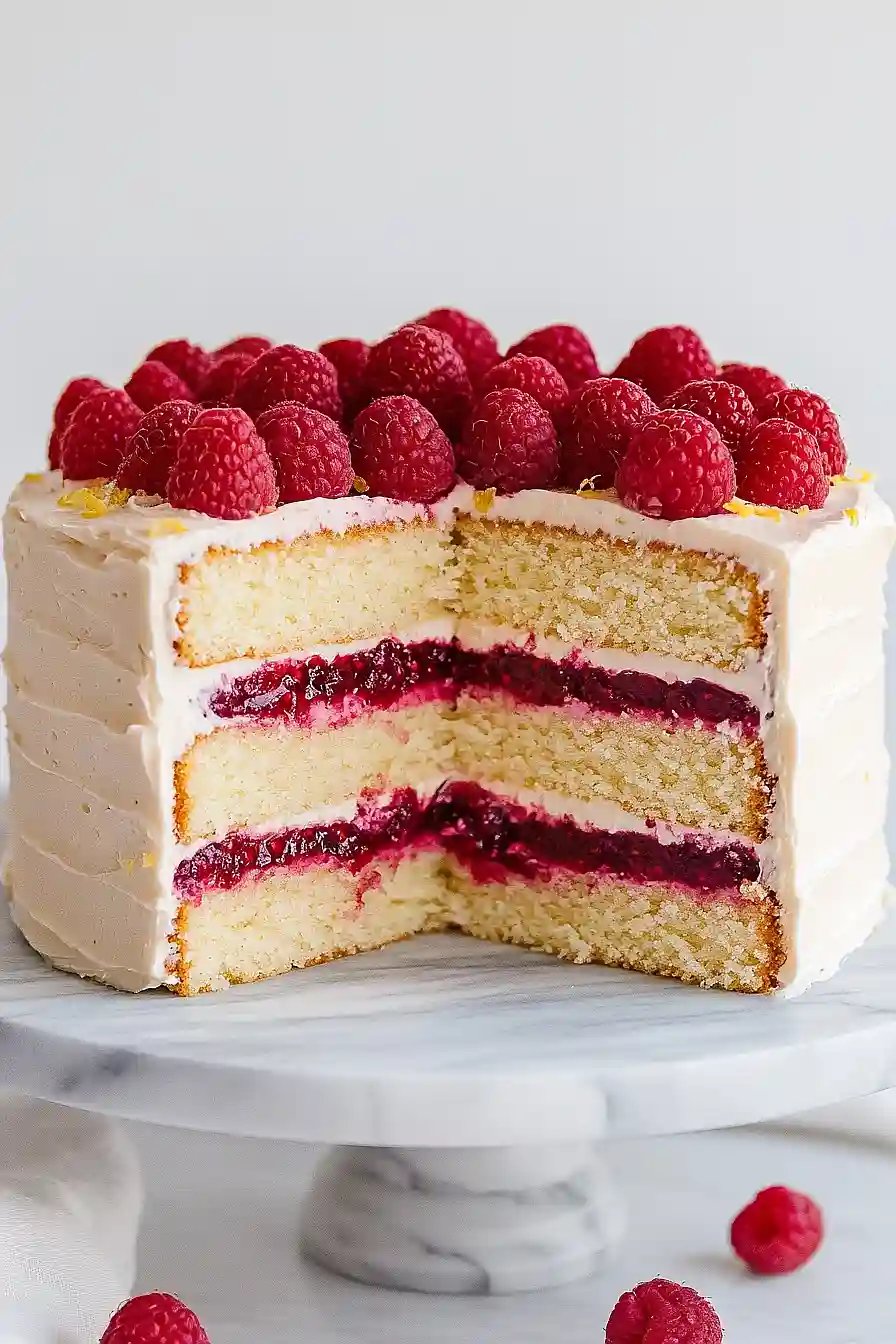
This sweet and tangy cake pairs wonderfully with a hot cup of Earl Grey tea or a smooth coffee to balance out the bright citrus and berry flavors. If you’re serving it for dessert, a scoop of vanilla ice cream or a dollop of fresh whipped cream makes the perfect creamy companion. For brunch gatherings, I like to serve this cake with a bowl of fresh berries on the side – strawberries, blackberries, and extra raspberries all work great. You could also add a sprig of fresh mint to each plate for a pretty pop of color and fresh flavor.
Storage Instructions
Keep Fresh: This raspberry lemon cake stays moist and fresh when stored in an airtight container at room temperature for up to 2 days. If you’ve already cut into it, press some plastic wrap against the cut sides to keep them from drying out. For longer storage, pop it in the fridge where it’ll keep well for up to 5 days.
Freeze: You can freeze this cake for up to 3 months! Wrap individual slices or the whole unfrosted cake tightly in plastic wrap, then in aluminum foil. I recommend freezing it without the frosting – the texture stays much better that way. Just frost it after thawing when you’re ready to serve.
Make Ahead: Want to get ahead? You can bake the cake layers up to 2 days in advance. Just wrap them well in plastic wrap and keep them at room temperature. The frosting can also be made 1-2 days ahead and stored in the fridge – just let it come to room temperature and give it a quick whip before frosting the cake.
| Preparation Time | 20-30 minutes |
| Cooking Time | 25-30 minutes |
| Total Time | 45-60 minutes |
| Level of Difficulty | Medium |
Estimated Nutrition
Estimated nutrition for the whole recipe (without optional ingredients):
- Calories: 4000-4500
- Protein: 30-40 g
- Fat: 230-250 g
- Carbohydrates: 500-550 g
Ingredients
For the cake layers:
- 1 1/2 cups white sugar
- 2 tsp lemon extract
- 3/4 tsp salt
- 1 tsp vanilla extract
- 4 large eggs (at room temperature, about 70°F, for better emulsion)
- 1/2 cup neutral oil (like vegetable oil)
- 2 2/3 cups all-purpose flour (I always use King Arthur all-purpose flour)
- 1 1/3 cups milk
- 2 tbsp lemon zest (from about 1 lemon)
- 1 tbsp lemon juice
- 1/2 cup unsalted butter (softened to room temperature)
- 2 1/2 tsp baking powder
For the frosting:
- 3/4 cup unsalted butter (softened slightly, not melted)
- 1/4 tsp lemon extract
- 1 tbsp lemon zest
- 1 to 2 tbsp milk
- A pinch of salt
- 4 oz cream cheese (room temperature, I use Philadelphia Cream Cheese)
- 3 1/2 cups powdered sugar
- 1 tsp vanilla extract
For assembling and decoration:
- Fresh raspberries (optional, for garnish)
- 2/3 cup raspberry preserves
Step 1: Prepare Cake Pans and Preheat Oven
Preheat your oven to 350°F (175°C).
Line the bottom of three 8-inch round cake pans with parchment paper and grease the sides with oil or butter.
This will help ensure the cakes release easily once baked.
Step 2: Make the Cake Batter: Cream Fats and Flavor Sugar
- 1/2 cup neutral oil (such as vegetable oil)
- 1/2 cup unsalted butter, softened
- 1 1/2 cups white sugar
- 2 tbsp finely grated lemon skin (zest from about 1 lemon)
In a stand mixer with the whisk attachment, combine the softened unsalted butter and neutral oil.
Beat on low speed to combine, then increase to medium-high and beat until the mixture is smooth, about 2 minutes.
Meanwhile, in a separate bowl, place the white sugar and finely grated lemon zest.
Rub the lemon zest into the sugar with your fingers until it becomes fragrant, enhancing the lemon aroma.
Step 3: Incorporate Sugar, Eggs, and Flavorings
- fragrant lemon sugar from Step 2
- 4 large eggs at room temp
- 2 tsp lemon flavoring extract
- 1 tsp vanilla flavoring
With the mixer running, slowly pour in the fragrant lemon sugar and continue beating on medium-high speed until the mixture turns light, fluffy, and pale yellow, about 2 minutes.
Scrape down the sides and bottom of the bowl as needed to ensure even mixing.
Add the eggs, lemon extract, and vanilla flavoring, then beat again on medium-high for about 2 minutes, scraping as necessary, until the mixture is light and airy.
Step 4: Combine Dry and Wet Ingredients Alternately
- 2 2/3 cups all-purpose flour
- 2 1/2 tsp baking powder
- 3/4 tsp salt
- 1 1/3 cups milk
- 1 tbsp freshly squeezed lemon juice
In a separate bowl, whisk together the all-purpose flour, baking powder, and salt.
In another bowl, combine the milk and freshly squeezed lemon juice.
With the mixer on low speed, alternately add the dry and wet mixtures into the batter: add half the dry mixture, then all of the wet, and finally the remaining half of the dry mixture.
Mix gently after each addition until just combined—this helps keep the cake tender.
I like to scrape the bowl after each addition to ensure a smooth, even batter.
Step 5: Bake and Cool the Cake Layers
- cake batter from Step 4
Divide the cake batter evenly among the prepared cake pans.
Bake in the preheated oven for about 25 minutes, or until the cakes have risen, the tops spring back when touched, and a knife or toothpick inserted into the center comes out clean.
Cool the cakes in the pans on a rack for a few minutes, then remove from pans and allow to cool completely before frosting.
I always let cake layers cool completely before handling to prevent them from breaking.