Greek food holds a special place in my heart, even though I didn’t grow up eating it. My first taste of moussaka was at a little family-owned restaurant in Portland, and I was hooked. The layers of eggplant, meat sauce, and that creamy bechamel on top – it was like comfort food I never knew I needed.
Making moussaka at home used to scare me. It seemed so complicated with all those layers and that fancy French sauce. But once I broke it down into steps, I realized it’s really just good planning. You can make the meat sauce one day, prep the eggplant the next, and assemble everything when you’re ready.
The best part? This feeds a crowd and tastes even better the next day. I love making it on Sunday and having leftovers for busy weeknight dinners. My kids weren’t sure about it at first, but now they ask for “that cheesy eggplant thing” all the time.
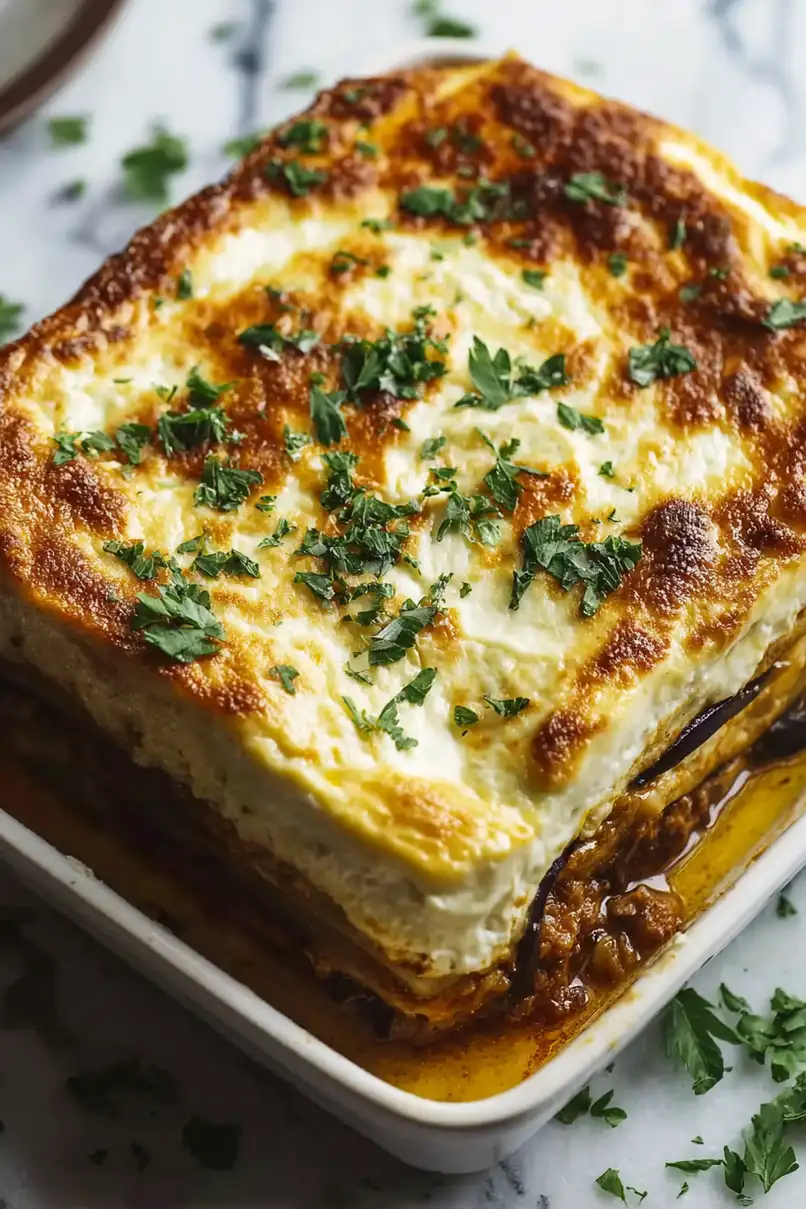
Why You’ll Love This Moussaka
- Authentic Greek flavors – This traditional recipe brings the real taste of Greece to your kitchen with layers of seasoned beef, tender vegetables, and creamy béchamel sauce.
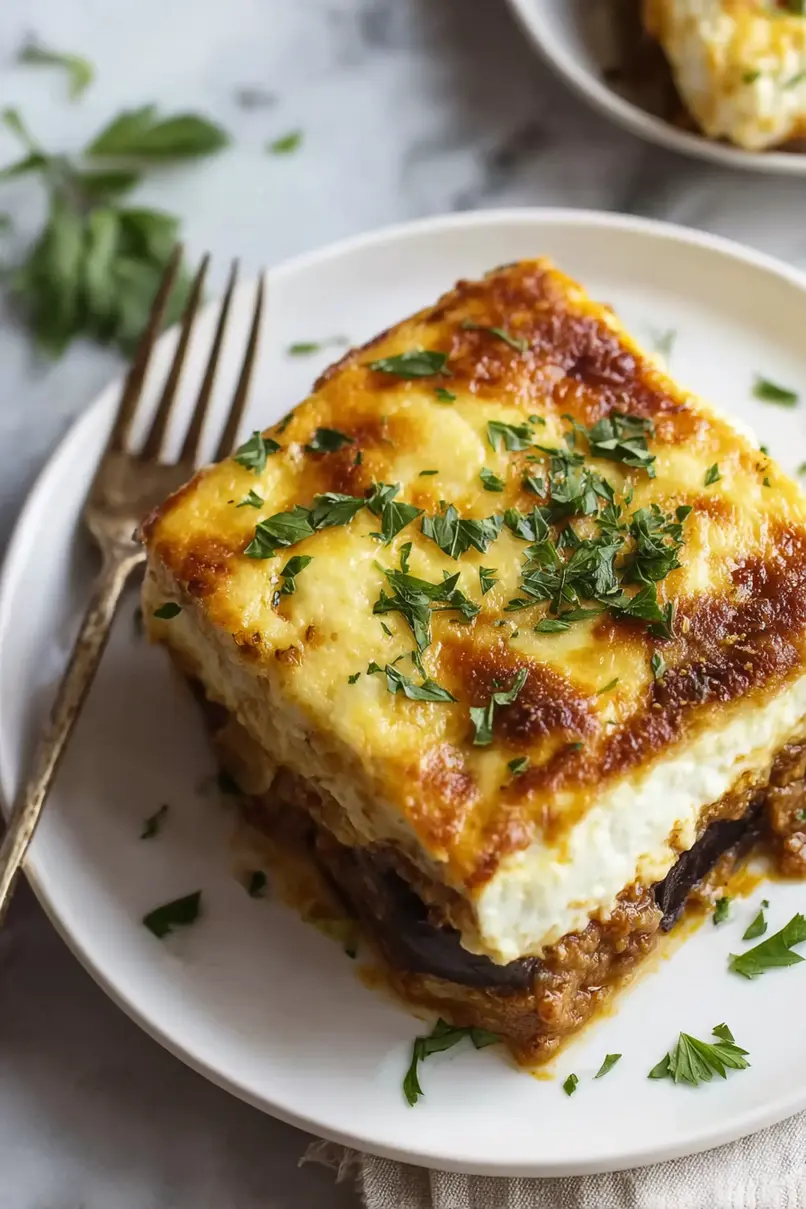
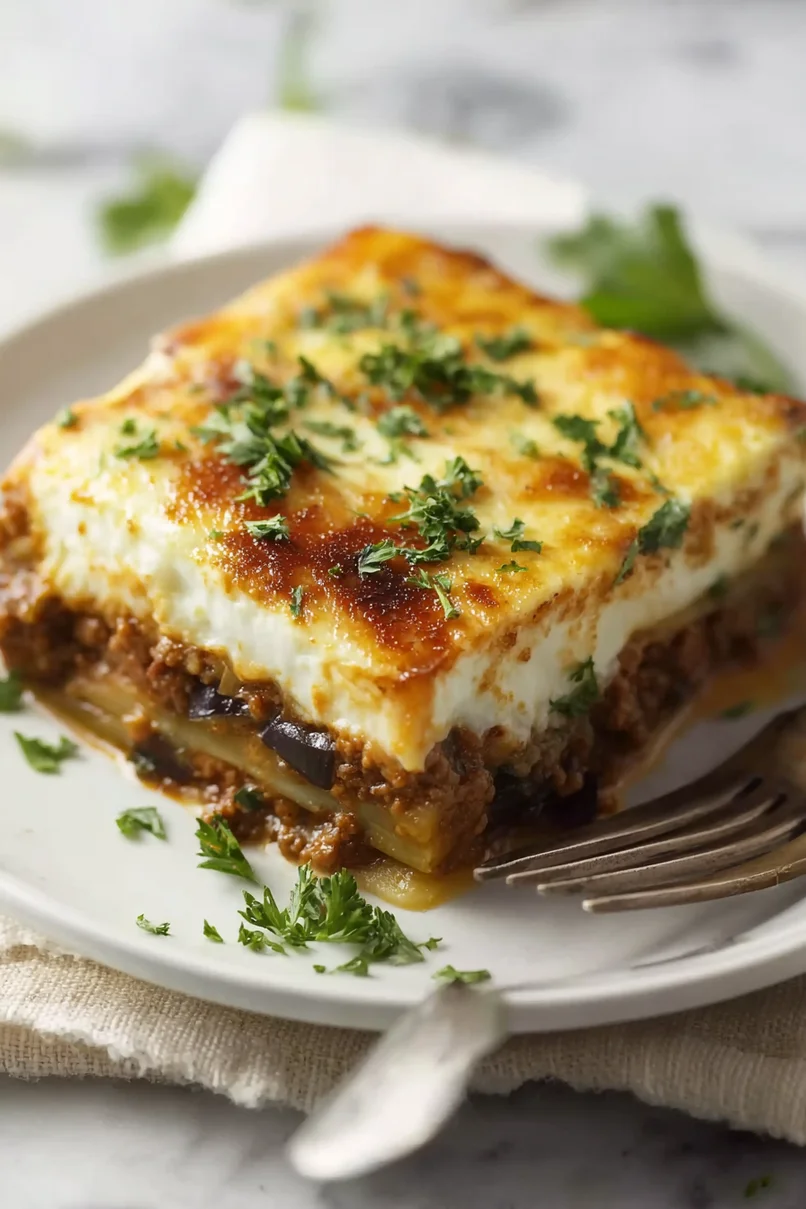
- Perfect for entertaining – Moussaka is a showstopper dish that looks impressive when you slice into those beautiful layers, making it ideal for dinner parties or special family meals.
- Make-ahead friendly – You can assemble this casserole a day ahead and bake it when you’re ready, which makes meal planning so much easier.
- Hearty and satisfying – The combination of rich meat sauce, creamy potatoes, and tender eggplant creates a filling meal that will keep everyone happy and full.
- Worth the effort – While it takes some time to layer everything together, the end result is so delicious that you’ll forget all about the prep work once you take that first bite.
What Kind of Eggplant Should I Use?
For moussaka, you’ll want to use regular globe eggplants – those large, dark purple ones you see at most grocery stores. They’re perfect because they slice into nice, even rounds that layer beautifully in your dish. Japanese or Chinese eggplants are too thin and won’t give you the substantial layers you need, while baby eggplants are just too small for this recipe. When picking your eggplants, look for ones that feel heavy for their size and have smooth, shiny skin without any soft spots or wrinkles. You’ll want to slice them about 1/3 inch thick, and don’t worry about salting them beforehand – modern eggplants aren’t as bitter as they used to be, so you can skip that step and save some time.
Options for Substitutions
This classic Greek dish has room for some helpful swaps if you need them:
- Ground beef: You can easily swap this for ground lamb (traditional in Greece), ground turkey, or even a mix of beef and lamb. If using turkey, add an extra tablespoon of olive oil since it’s leaner.
- Eggplant: This is the star of moussaka, so I wouldn’t recommend substituting it. However, if you must, you could use thick slices of zucchini or portobello mushrooms, though the texture will be quite different.
- Pecorino Romano: Parmesan cheese works perfectly as a substitute and is often easier to find. You could also use a mix of parmesan and gruyere for extra richness.
- Red wine: If you don’t cook with alcohol, just use extra beef stock plus a splash of red wine vinegar for that tangy depth.
- Fresh herbs: Dried herbs work fine – use about 1/3 of the amount called for. So 1 teaspoon dried thyme instead of 1 tablespoon fresh.
- Potatoes: While traditional, you can skip the potato layer entirely and just do eggplant and zucchini, or add a layer of thinly sliced sweet potatoes instead.
- Whole milk: For the bechamel, you can use 2% milk, but avoid skim milk as it won’t create the same creamy texture. Heavy cream mixed with milk also works beautifully.
Watch Out for These Mistakes While Cooking
The biggest mistake when making moussaka is not properly salting and draining the eggplant beforehand, which can leave you with a watery, bitter casserole – slice your eggplant, sprinkle generously with salt, let it sit for 30 minutes, then pat dry before frying. Another common error is making lumpy bechamel sauce by adding cold milk to the roux too quickly, so make sure your milk is at room temperature and whisk it in gradually to keep the sauce smooth. Don’t rush the frying process for your vegetables either – properly golden potatoes and eggplant create the foundation of great moussaka, so fry them in batches if needed rather than overcrowding the pan. Finally, resist the urge to cut into your moussaka right after baking, as letting it rest for at least 20 minutes allows the layers to set properly and makes serving much cleaner.
What to Serve With Moussaka?
Moussaka is such a hearty, rich dish that it pairs beautifully with light, fresh sides that help balance out all those creamy, savory flavors. A simple Greek salad with cucumbers, tomatoes, red onion, and feta cheese is my go-to – the crisp vegetables and tangy dressing cut through the richness perfectly. Warm pita bread or crusty bread is also great for soaking up any extra bechamel sauce on your plate. Since moussaka is already pretty filling on its own, I like to keep the sides simple with maybe some roasted vegetables like zucchini or a light lemon-dressed arugula salad.
Storage Instructions
Refrigerate: Moussaka actually gets better after a day or two in the fridge! Cover your baking dish tightly with foil or transfer portions to airtight containers and it’ll keep for up to 4 days. The flavors really meld together beautifully, making those leftovers taste amazing.
Freeze: This dish freezes like a dream, which makes it perfect for meal prep. You can freeze the whole casserole or cut it into individual portions first. Wrap everything well in plastic wrap and foil, and it’ll stay good for up to 3 months in the freezer.
Reheat: To warm up your moussaka, cover it with foil and bake at 350°F for about 20-30 minutes if it’s been in the fridge, or 45-60 minutes if frozen. You can also microwave individual portions, but the oven gives you that nice crispy top again. Let it rest for a few minutes before serving so you don’t burn your tongue!
| Preparation Time | 30-45 minutes |
| Cooking Time | 75-90 minutes |
| Total Time | 105-135 minutes |
| Level of Difficulty | Medium |
Estimated Nutrition
Estimated nutrition for the whole recipe (without optional ingredients):
- Calories: 4200-4600
- Protein: 160-180 g
- Fat: 320-360 g
- Carbohydrates: 210-240 g
Ingredients
For the beef filling:
- 1.6 lb ground beef (preferably lean)
- 1 large white onion (minced)
- 3/4 tsp salt
- 1 tbsp fresh thyme (chopped)
- 1/4 tsp black pepper
- 1/2 cup dry red wine
- 1/2 tsp ground cinnamon
- 2 garlic cloves (finely chopped)
- 1 tbsp olive oil
- 1-2 bay leaves
- 1 cup beef stock
- 1/2 tsp sugar
- 1/4 cup fresh parsley (diced)
- 2 tbsp tomato paste
- 1 cup tomato passata
For the vegetables:
- Salt and pepper
- 1 lb zucchini (1/3-inch sliced lengthwise)
- Parsley and pecorino romano cheese (for sprinkling)
- 2 cups neutral oil (such as vegetable or olive)
- 2 lb eggplants (sliced)
- 1.6 lb baking potatoes (peeled and 1/4-inch sliced)
For the béchamel topping:
- 1/4 tsp ground white pepper
- 4 oz all-purpose flour (I use King Arthur all-purpose flour)
- 4 cups milk (room temperature)
- 2 egg yolks
- 1/2 tsp salt
- 1 cup pecorino romano cheese (grated)
- 1/2 small nutmeg (freshly grated for best flavor)
- 4 oz unsalted butter (I prefer Kerrygold unsalted butter for this)
Step 1: Prepare the Beef Layer
- 1 tbsp olive oil
- 1 large white onion, minced
- 2 garlic cloves, chopped finely
- 1.6 lb ground beef, preferably lean
- 2 heaping tbsp tomato paste
- 1/2 cup dry red wine
- 1 cup strained tomato passata
- 1 cup beef stock
- 1/4 cup diced fresh parsley
- 1 tbsp chopped fresh thyme
- 1 or 2 bay leaves
- 3/4 tsp salt
- 1/2 tsp sugar
- 1/2 tsp ground cinnamon
- 1/4 tsp black pepper
Heat the olive oil in a large pan or pot over medium heat.
Add the minced onion and sauté until soft and golden.
Stir in the chopped garlic and cook for another minute until fragrant.
Add the ground beef and cook until completely browned, breaking up any lumps with a wooden spoon.
Stir in the tomato paste and cook for a couple of minutes before pouring in the red wine to deglaze the pan, scraping up any bits from the bottom.
Pour in the passata and beef stock, then add the fresh parsley, thyme, bay leaves, salt, sugar, cinnamon, and black pepper.
Mix thoroughly, bring to a gentle simmer, and cook uncovered for about 30 minutes, stirring occasionally, until the mixture is thickened and rich.
Step 2: Prep the Vegetables for Frying
- 2 lb (about 4 small) eggplants, sliced
- 1 lb (about 2 medium) zucchini, sliced lengthwise about 1/3 inch thick
- 1.6 lb (about 2) baking potatoes, peeled and sliced 1/4 inch thick
- salt and pepper for seasoning
On a clean surface, lay out slices of eggplant on a row of paper towels and sprinkle both sides with a pinch of salt.
Place two more layers of paper towels over the eggplants.
Layer the zucchini slices above, cover with more paper towels, then finish with the potato slices and another layer of paper towels.
Gently press down to soak up as much moisture as possible from all vegetable slices.
This process helps reduce oil absorption and ensures crispier vegetables.
Step 3: Fry the Vegetables
- 2 cups vegetable or olive oil (enough to submerge vegetables)
- potato slices from Step 2
- zucchini slices from Step 2
- eggplant slices from Step 2
Heat enough vegetable or olive oil in a deep pan to submerge the vegetables, aiming for about 150°C/300°F.
Carefully add the potato slices and fry until lightly golden and fork-tender on both sides.
Remove and drain on fresh paper towels.
Increase the oil temperature to about 170°C/340°F for the zucchini, frying until softened and lightly browned, then do the same for the eggplants.
Let all vegetables drain thoroughly on paper towels to remove excess oil.
You can use two pans simultaneously or consider baking the vegetables for a lighter option.
Step 4: Make the Béchamel Sauce
- 4 oz unsalted butter
- 4 oz all-purpose flour
- 4 cups milk, room temperature
- 1/2 tsp salt
- 1/2 of a small nutmeg, grated (or 1/4 tsp ground nutmeg)
- 1/4 tsp ground white pepper
- 1 cup pecorino romano cheese, grated
- 2 egg yolks
In a medium pot over medium heat, melt the butter.
Whisk in the flour to form a smooth roux, cooking for about 1 minute.
Gradually pour in the milk while whisking constantly to prevent lumps from forming.
Continue cooking and stirring until the sauce thickens enough to coat the back of a spoon.
Season with salt, grated nutmeg, and white pepper.
Remove from the heat and quickly stir in the grated pecorino romano cheese until smooth, then whisk in the egg yolks.
Reserve 1/2 cup of the finished sauce and stir it into the beef mixture from Step 1.
I like to add a little extra nutmeg here for a classic creamy flavor.
Step 5: Assemble the Moussaka
- fried potato slices from Step 3
- fried zucchini slices from Step 3
- fried eggplant slices from Step 3
- parsley and pecorino romano cheese to sprinkle between layers as desired
- salt and pepper for seasoning
- beef mixture with béchamel (from Steps 1 and 4)
- béchamel sauce from Step 4
Preheat your oven to 180°C/350°F.
In a large baking dish, start by layering fried potato slices on the bottom and sprinkle with fresh parsley, grated pecorino romano cheese, and a pinch of salt and pepper.
Add a layer of fried zucchini, again sprinkling with parsley, pecorino, salt, and pepper.
Arrange half of the fried eggplant next, seasoning lightly.
Press down to create a compact base.
Spread the beef mixture (with incorporated béchamel) over the vegetables, then top with the remaining eggplant slices.
Pour the rest of the béchamel sauce evenly over the top.
(For a richer taste, I sometimes add a bit more cheese between the layers.) Finish with a generous sprinkle of pecorino romano cheese.
Step 6: Bake and Serve
Bake the assembled moussaka in the preheated oven for 35-45 minutes, or until the top is deeply golden and lightly charred.
Let the moussaka rest for at least 15 minutes before slicing, which helps it keep its shape.
Serve in slices, garnished with extra chopped parsley and a bit more grated pecorino romano cheese.
I find that letting it cool slightly really allows the flavors to meld and makes it easier to serve neat portions.